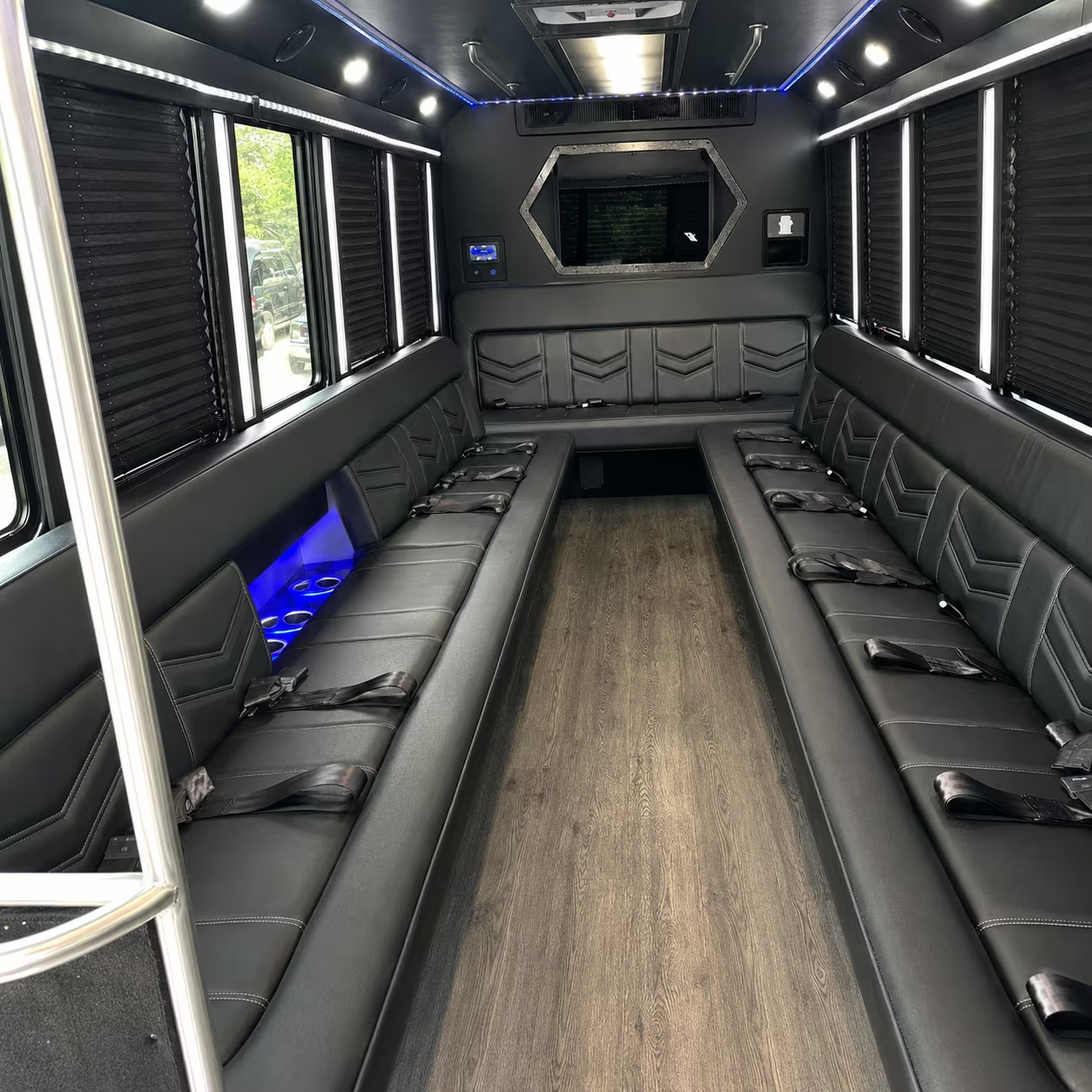
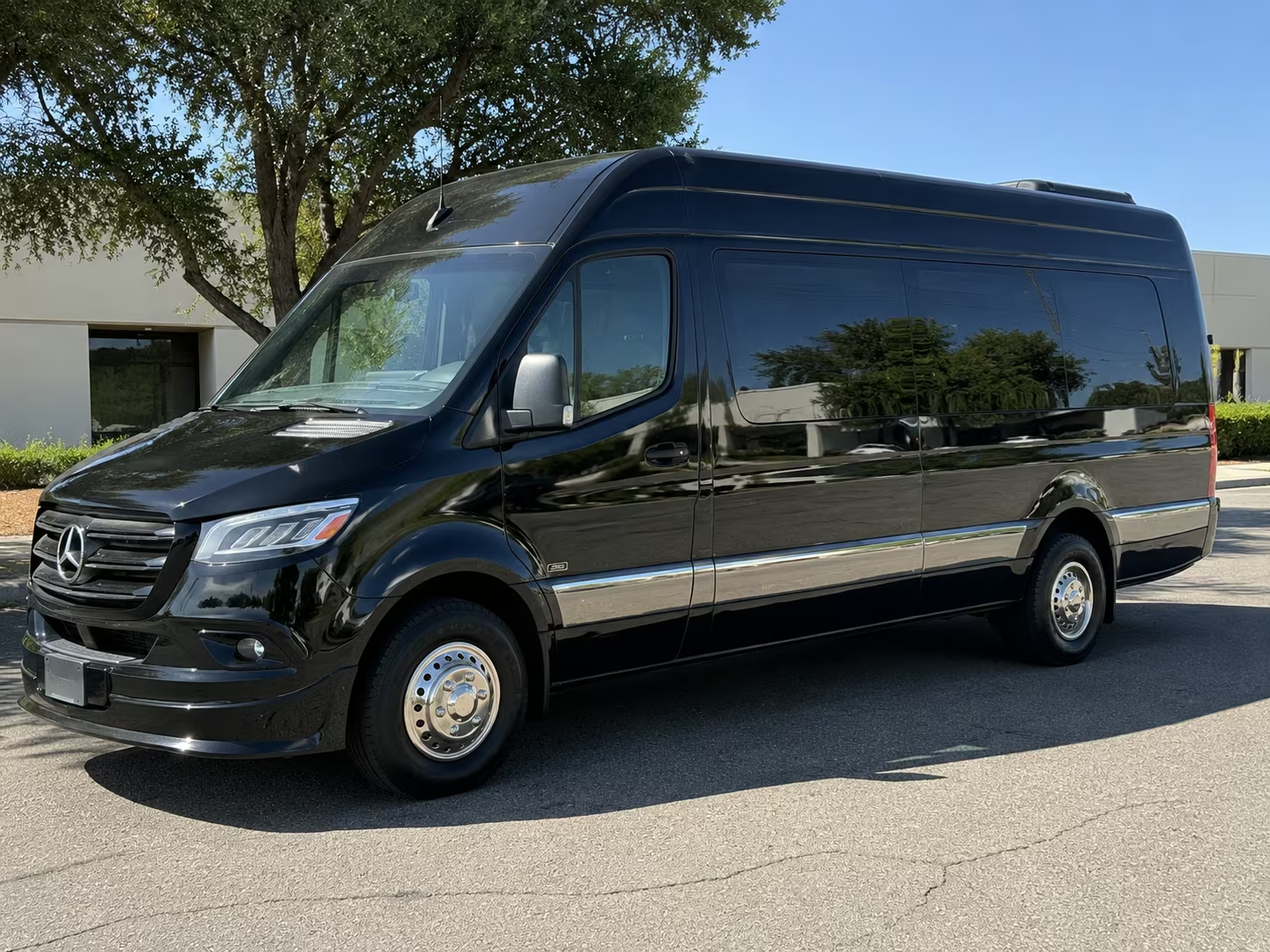
Bus wrapping means covering some or all of a bus’s exterior in printed adhesive vinyl — the body panels, and often the windows too. This guide gives you the published numbers behind it: what a wrap costs, what the film actually is, how long it survives, and what to do when the bus isn’t yours.
The short answer. Wrapping a full-size bus runs roughly $4,500 to $13,000 depending on the vehicle, what the quote covers and who is quoting — the low end is a transit agency’s own contracted production price and the high end a retail shop’s full wrap, so the two ends are not pricing the same job. It takes about eight weeks from design to road, and the film is good for five to seven years.
But most people who look this up don’t want that. Businesses that want their advertising on buses usually rent ad space on transit buses instead, and groups that need a branded bus for a single event use removable graphics on a rented bus — a permanent wrap takes weeks to produce and stays on for years.
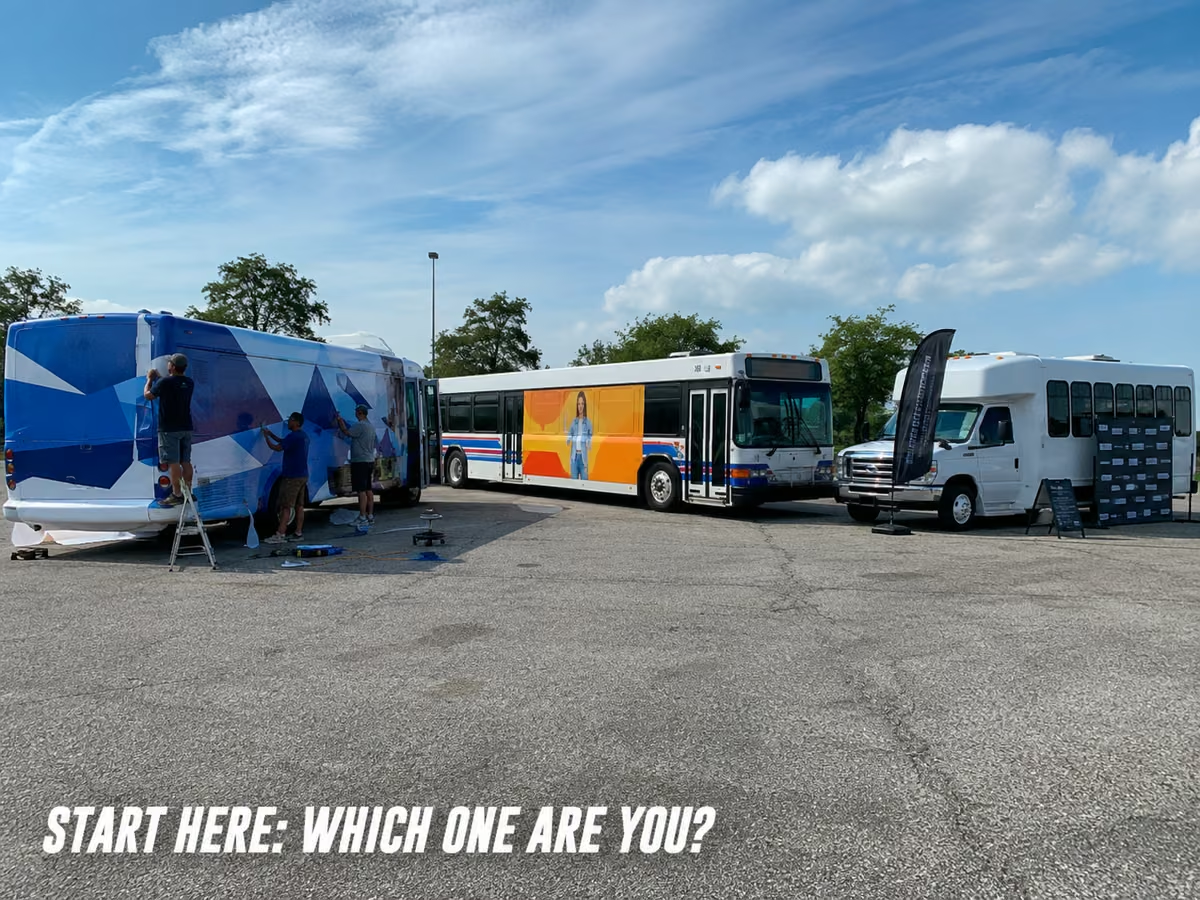
Start Here: Which One Are You?
| If this is you… | What you actually need | Where it is covered |
|---|---|---|
| You own the bus. A fleet, a school, a team, a congregation, a tour vehicle. | Materials, price per square foot, lifespan, removal risk | Part 1, wrapping a bus you own |
| You want your brand on buses. You will never touch the vehicle. | Transit agency rate cards, formats, cost per thousand impressions | Part 2, buying space on someone else's fleet |
| You need a branded bus for an event or tour. A conference shuttle, an activation, a multi-market run. | Why you cannot wrap a rental, and what to do instead | Part 3, branding a bus for one event |
One disclosure before any of it. Partybus-rental.net compares quotes and connects groups with the bus companies and transportation providers serving each area. It does not own buses, employ anyone who drives, operate trips, print vinyl, or install graphics, and nothing here is a quote for wrap work.
Every figure is linked to a named, dated source. Where this site helps is the third case: finding the bus.
Part 1: Wrapping a Bus You Own
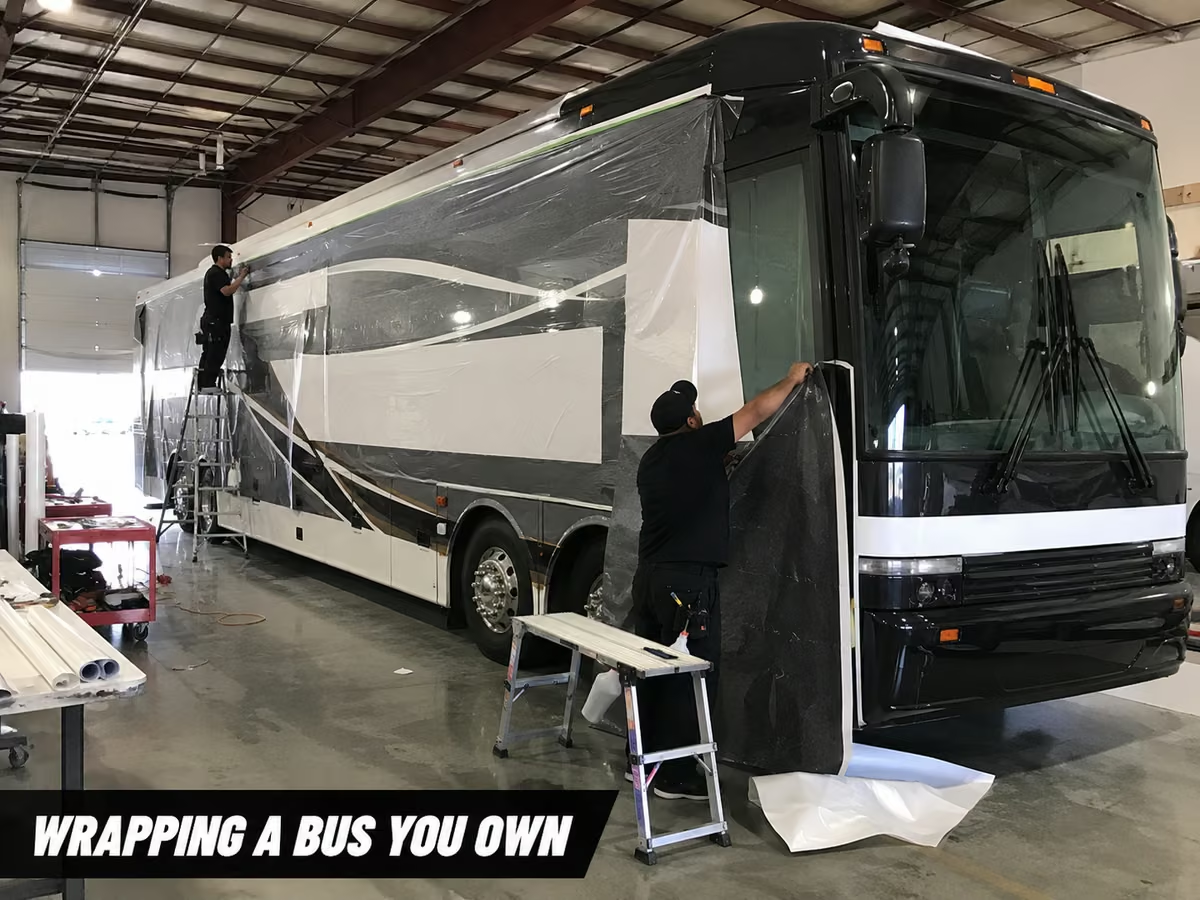
What It Costs
Built from published vinyl and installation rates from wrap suppliers, not from transportation pricing. Partybus-rental.net does not sell wrap, signage or advertising of any kind — get a shop quote against the measured vehicle.
| What is being priced | Published figure | Source and date |
|---|---|---|
| Print, produce, ship, install and remove full bus wrap graphics | Averages $4,500, stated as $5,000 elsewhere in the same document, design excluded | Gainesville RTS rate sheet, effective January 2017 |
| Full wrap, sides, rear and front, roof excluded | $8,000 to $13,000 | YesWrap price guide, 2025 |
| Partial wrap, one side, rear only, or a window band | $500 to $5,000 | Same guide, 2025 |
| Material, by area | About $8 to $12 per square foot | Wrapmate published rates, May 2026 |
| Installation labor, by area | About $2 to $3 per square foot on top | Same, May 2026 |
| Design | Roughly $500 to $2,000 | Influize cost breakdown, January 2026 |
| Removal labor | About $130 per hour; no hour estimate published, because removal time varies with the age and condition of the wrap and the paint under it | Wrapmate published rates, May 2026 |
Those first two rows are three thousand dollars apart, and neither source is lying.
The internet's answer to this is a single number. A widely circulated wrap calculator puts the average bus at 450 square feet and prices it near $6,750, which for a 25-foot shuttle is honest arithmetic.
Run it against a full-size coach and it falls apart, because "bus" is not a size. A 25-foot shuttle. A 45-foot coach.
A double-decker. Three vehicles that share a word and share almost nothing else.
A 45-foot coach is roughly 45 feet long by 11 feet tall per side — about 495 square feet per flank, close to 990 square feet for the pair, before the rear cap, the front, and the skirts. At the $10 to $15 per square foot installed that Wrapmate's published material and labor rates imply, the two sides by themselves land between $10,000 and $15,000.
Measure the actual vehicle and multiply by an installed rate. The charter bus seating capacity breakdown covers the dimensions that drive the bill.
The Film That Survives Rivets and Corrugations
A wrap is three things stacked: a printable vinyl film, ink printed into it, and a clear laminate that absorbs the UV and road grit so the ink doesn't have to. Skip the laminate and the sun-facing flank chalks and fades while the other side still looks new.
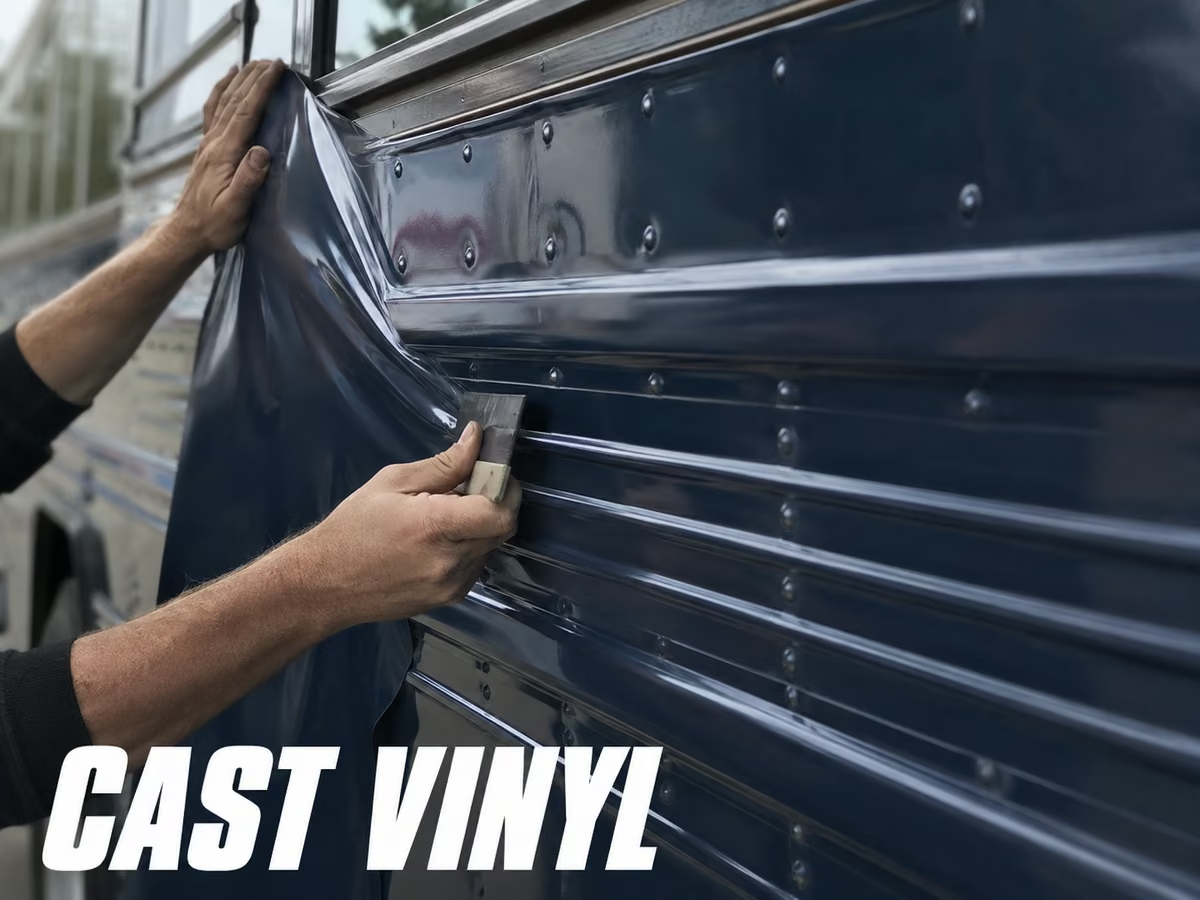
The film comes in two grades. Cast vinyl is poured as a liquid and cured flat, so it has no memory. Calendered vinyl is squeezed through heated rollers, which is cheaper and leaves the film wanting to snap back.
On a flat storefront window nobody would notice. On a bus, which is a parade of rivets, corrugated skirt panels, luggage bay doors and body seams, calendered film pulls itself back out of every recess and starts tenting within a season.
The reference material for fleet work is 3M's Controltac film with Comply adhesive, sold as IJ180Cv3. Per 3M's product page, it is a 2-mil cast film described as conforming to corrugations and rivets specifically, and the product bulletin adds the number that matters: many finished constructions stretch up to 130 percent, so a 10-inch piece can be pulled to 13 inches without primer or relief cuts and still resist lifting.
You don't have to take a shop's word for the grade. Transit agencies write it into their contracts. Gainesville RTS's rate sheet specifies 3M 40C or IJ46 with 8509 laminate for the body and IJ65 window perforation with 8518 laminate for the glass, or equivalents with a UV clear coat and removable adhesive.
If a bus wrap quote doesn't say the word "cast," ask. It's the one specification worth settling before you compare prices.
You can judge most of this from a photograph. Artwork that bridges flat across a skirt corrugation instead of dropping into the channel was too stiff for the surface, and those bridges lift first. One noticeably duller flank means the laminate is missing.
Curled edges and a dark halo of dirt under the film at the bay doors mean the adhesive is releasing.
Those Dots on the Windows
Glass gets a separate product. 3M's is Scotchcal 8170, and per the published bulletin it is a 4-mil cast film, white on the printed face and black on the reverse, offered as the 8170-P50 at 50 percent perforation and the 8170-P40 at 40 percent. Fewer holes, more image and less view out. More holes, clearer view and a softer image.
Three things catch people out:
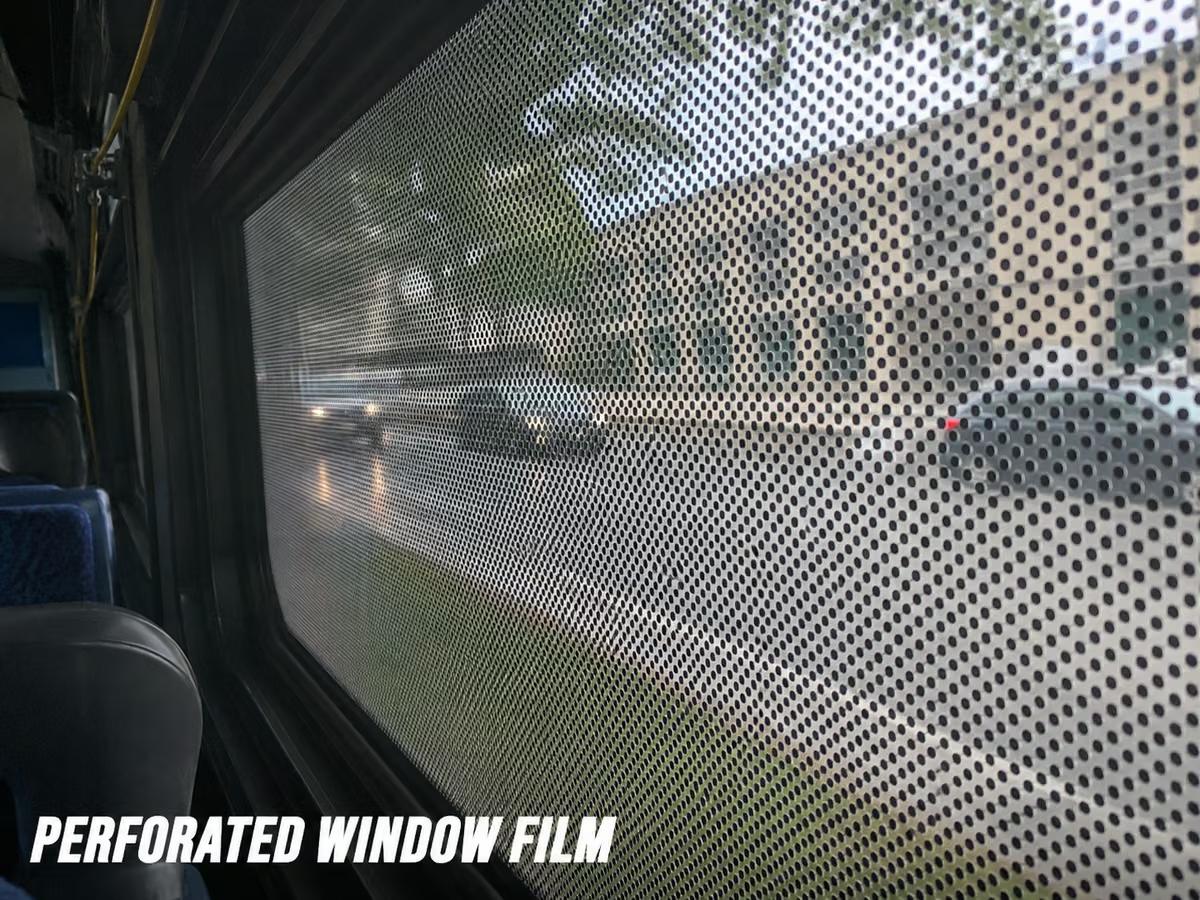
- Body glass only. 3M lists these films for vehicle windows that aren't subject to a minimum light-transmission standard, and puts the burden on the buyer to determine and comply with what each state requires — which is what keeps the windshield and the forward side glass clear. Vehicle owners also keep their own lists of glass and markings that stay uncovered, including fleet numbers and door lettering. Settle that list before artwork is approved, not after it is printed.
- Rain ruins it without laminate. Supply-house installer guidance is blunt: unlaminated perforated vinyl becomes very difficult to see through in rain, because water fills the perforations.
- It dies first. Published expected life for perforated window film is three years, against ten for unprinted body film. Replace window graphics on their own schedule and the whole wrap looks newer for longer.
How Long It Lasts, and How It Comes Off
3M lists a 10-year expected performance life for unprinted film applied flat and vertical outdoors. That is the laboratory ceiling, not your bus. Printed, laminated, stretched over rivets and parked in the sun, a fleet wrap is planned around five to seven years.
Unless the vehicle's owner says otherwise, which is the part the five-to-seven-year number leaves out. Gainesville RTS's rate sheet sets a two-year replacement cycle on all exterior ads to avoid vehicle damage — roughly a third of the film's rated life, written into the terms an advertiser signs. If your graphics live on somebody else's fleet, the contract sets your reprint budget, not the film.
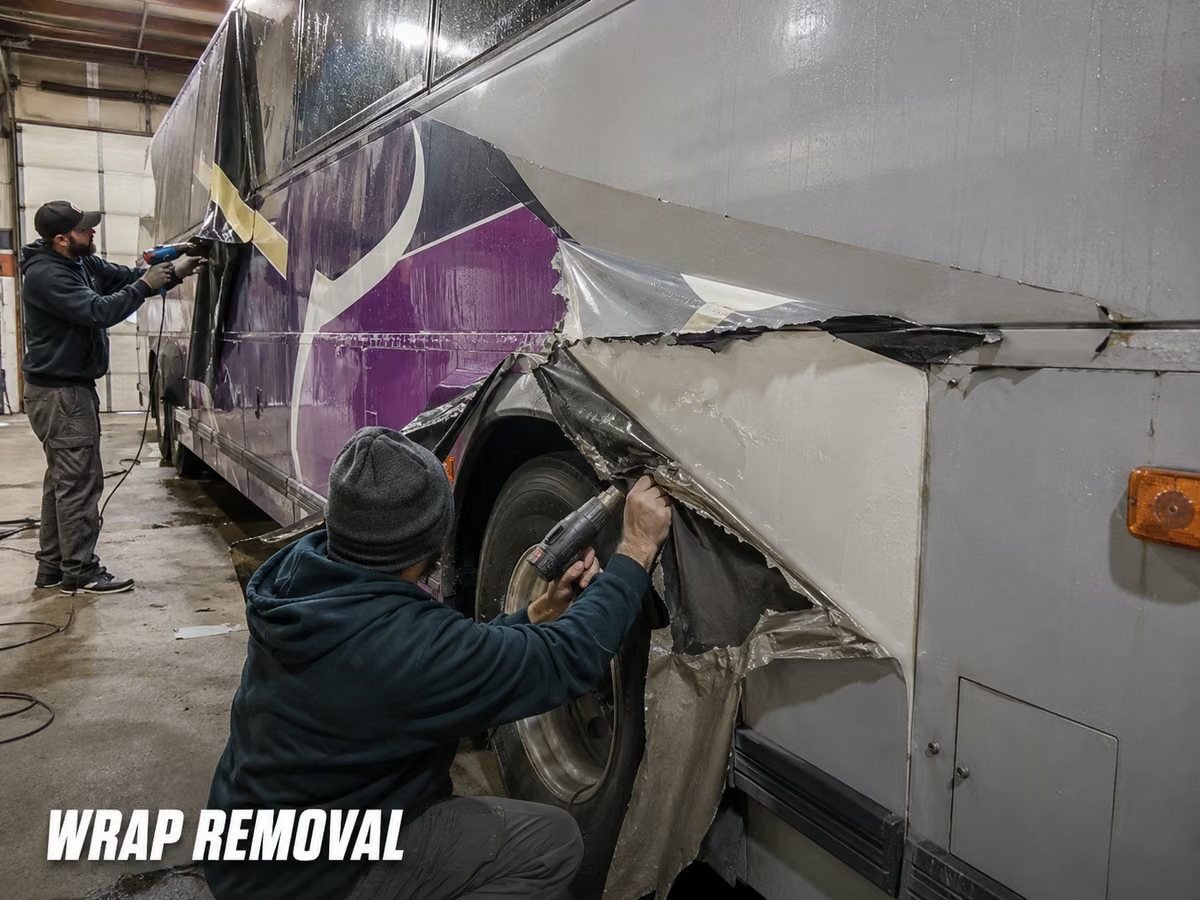
Removal is billed hourly at around $130, and the shop publishing that rate declines to publish hours with it, saying only that removal time varies with the age and condition of the wrap and the original paint surface. Ask for the hour estimate in writing rather than assuming one. Age decides how bad it gets.
A wrap pulled at year five comes off in long sheets. A wrap left to year eight goes brittle and comes off as confetti, and the hours climb with it.
The paint underneath is the real risk, and it is decided before the wrap goes on. Cast vinyl releases cleanly from healthy factory paint. It doesn't release cleanly from failing paint, because it has bonded to a clear coat that was already letting go and takes flakes with it.
If the bus has been repainted, has rust bubbling, or has lifting clear coat, photograph and document it before installation. Otherwise the argument about who caused the damage happens years later with no evidence.
Design for Three Lanes Away, and Start Eight Weeks Out
A wrap can fail without the vinyl doing anything wrong. The usual culprit is a design built on a laptop at arm's length that turns to mush at highway speed from three lanes away.
- One idea, big. A logo, about five words, one way to reach you. Nobody in moving traffic reads a bulleted service list.
- Design around the hardware, not through it. A face or logotype centered on a luggage bay door splits in half every time that bay opens, which is exactly when the bus is surrounded by people. Mirror arms, marker lights, fuel doors and wheel arches all live where artwork wants to be.
- Treat each side as a separate brief. The curb side gets pedestrians standing three feet away and can carry a QR code somebody might scan. The street side gets traffic at speed and should not.
- Give the rear real attention. The back of a bus draws the longest dwell of any panel on the vehicle, because the audience is stopped behind it at a light with nothing else to look at.
On timing, mobile tour producers recommend starting 8 to 12 weeks before launch. Design and approvals take two to four weeks, print and lamination three to seven days including cure time, and installation on a full-size bus is a multi-day job in a heated bay, because 3M sets 50°F as the minimum air and substrate temperature for the curved, corrugated and riveted surfaces a bus is made of, against 40°F for flat panels without rivets. Allow 24 hours before the first wash and no pressure washers for a week.
If you're buying agency space, add their gate: RTS asks for installation arrangements to be confirmed 10 working days before the start date.
Send These Four Things With Every Quote Request
Shops quote different scopes under the same word. Send all of this at once and the bids come back comparable.
- The vehicle, by make, model year and length, with photos of both flanks, the rear and the front.
- What counts as full. Front cap in or out. Skirts and bay doors in or out. Those lines account for much of the spread between $8,000 and $13,000. Roof in or out is a separate question, because the published $8,000 to $13,000 range excludes the roof — a wrap that includes it sits above the top of that range.
- Film grade and which glass. Cast film with a matching overlaminate, product code in writing, the perforation ratio for the windows, and a list of glass and lettering that stays uncovered.
- Removal and downtime, quoted now. An hourly rate and hour estimate for taking it off, how many days the vehicle sits, and a dated photo set of the existing paint agreed before anything is applied.
Part 2: Buying Space on Someone Else's Fleet
If the goal is impressions rather than owning a vehicle, this is the cheaper answer for most businesses. You rent placement by the four-week cycle, the bus keeps running its route, and your brand ends up on twenty buses covering a metro instead of one.
What Agencies Actually Charge
Most articles quote vague monthly ranges. Agencies publish rate cards.
| Format | Gainesville RTS, per bus, 4 weeks (effective January 2017) | Yolobus route buses, per bus, 4 weeks (2023 to 2024 media kit) |
|---|---|---|
| Tail, rear panel | Not listed | $250 (21 x 70 in.) |
| Queen, curb side | $320 (30 x 94 in.) | $350 (30 x 88 in.) |
| King, street side | $420 (30 x 144 in.) | $400 (30 x 144 in.) |
| Full back | Not listed | $600 (77 x 84 in.) |
| Kong / King Kong | $640 / $840 | $525 / $800 |
| Full side | $1,500 | Not listed |
| Full bus wrap, one bus | $3,000 | $3,500 (super wrap) |
Sources: the Gainesville RTS exterior advertising rate sheet linked above, and the Yolobus transit media kit. Both are small to mid-size markets, so read the dollars as a floor rather than a national average — two rate cards are not a price index. Large markets run higher: TCRP Synthesis 51, Transit Advertising Sales Agreements (National Academies, 2004) compiled rate cards from SEPTA, WMATA and San Francisco Muni and found kings selling at $520 to $735 per four-week posting and full wraps at $5,300 to $7,700 a month.
Those dollars are two decades old and should be read as structure, not current price.
What the Rate Cards Tell You to Buy
Three numbers off those cards decide almost every transit buy.
One. A wrap costs about seven buses' worth of panels. TCRP Synthesis 51 found full wraps priced at five to ten times a king at medium and small agencies.
Gainesville's card, thirteen years later, lists a king at $420 and a full wrap at $3,000 — a ratio of 7.1 to 1, right in the middle of the predicted band. The synthesis concluded that wraps suit product launches and major branding pushes where impact is the point, while day-to-day money works harder spread across more vehicles. Most advertisers should take the seven.
Two. Short flights are punishing. On the RTS card a single four-week wrap is $3,000, while 52 weeks is $11,645.
That annual buy works out to roughly $896 per four-week period, under a third of the short-flight rate. The length of your commitment moves the price more than any negotiation will.
Three. On a short campaign the graphics cost more than the space. RTS puts wrap production at $4,500 to $5,000 excluding design, against $3,000 for four weeks of space.
Run a one-month wrap and roughly 60 percent of your spend is vinyl you throw away. Production is fixed; space is rented. That's why agencies often set minimum commitments of twelve weeks or more on wraps in the first place.
Formats, and the One Name Nobody Agrees On
The king is the large side panel and the queen is the smaller one. Which side each faces is not standardized, and buyers get burned assuming it is. Gainesville RTS puts its queen on the curb side and its king on the street side.
Several national media-buying sites describe the king as the curbside panel. Both are accurate for their own markets, so confirm with the agency — a panel facing traffic and a panel facing a sidewalk reach different people at different distances.
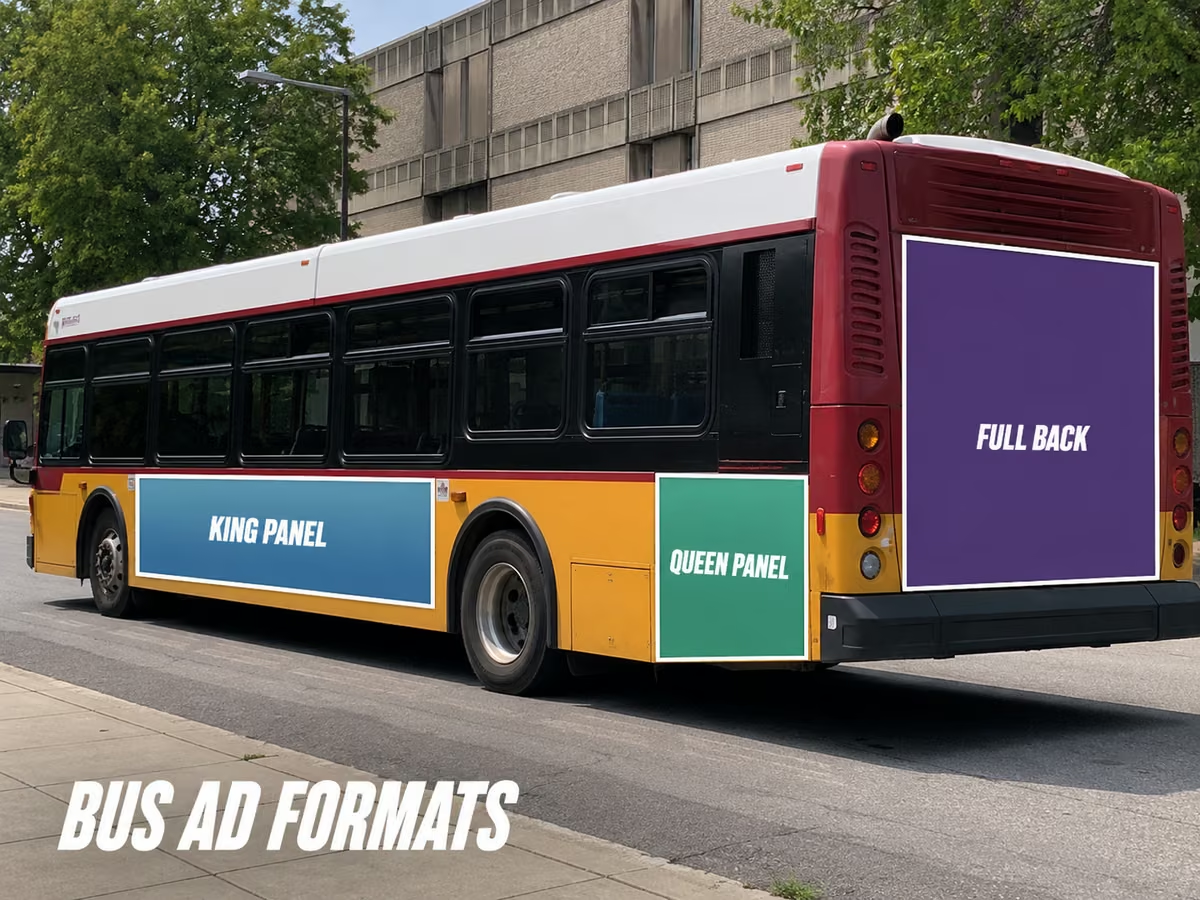
The rest is steadier. A tail is the rear panel around 21 by 70 inches, with the longest dwell time of any format. A full back covers the entire rear.
A kong runs wheel to wheel and rises to the window line. A full wrap covers everything including glass. OUTFRONT's rundown of New York formats covers kings, queens, super kings, kongs and tails; Contra Vision's format guide maps the same shapes under a different vocabulary — full back, full wrap, full side — and neither publishes dimensions, so take those from the agency.
Municipal systems publish their own menus, like Green Bay's transit advertising sizes page.
Is It Cheaper Than a Billboard?
Per thousand impressions, generally yes. Work by Solomon Partners with the Out of Home Advertising Association, summarized in Lamar's research writeup, puts out-of-home CPM between $2.18 and $3.19, and a 2026 cross-media benchmark places bus advertising near $3 and transit shelters near $5, against roughly $45 for broadcast primetime. A billboard delivers more impressions in one fixed spot; a bus delivers fewer per location but carries the message through many neighborhoods a day.
Vendor pages routinely claim a wrapped bus generates 30,000 to 70,000 impressions a day. Those are marketing estimates. The audited standard is Geopath, a non-profit that builds out-of-home audience figures from published traffic and transit ridership counts and then applies a visibility adjustment to convert people who could see a display into people likely to notice it; its methodology is published in full and the OAAA publishes a glossary of the terms you will meet on a proposal.
Ask whether a number is Geopath-measured. That one question separates a media buy from a guess.
Part 3: Branding a Bus for One Event or Tour
You can't wrap a bus you're renting for a weekend. Not the flanks. Not the glass.
Not on a vehicle that goes back Monday. A wrap is a multi-year asset bonded to the vehicle's paint, it takes about eight weeks to produce, and it belongs to the bus rather than to your trip. The economics don't work either: on a short run the graphics alone cost more than the vehicle.
What works instead, in rough order of cost:
- Brand the space, not the vehicle. Step-and-repeat backdrops, feather flags at the curb and staff shirts at the door do most of the visual work for a fraction of the cost. The bus just needs to arrive and look clean.
- Removable window clings and door decals. Printed in days, peeled off after the event.
- Magnetic panels on flat steel sections, on and off in minutes — though many bus body panels are aluminum or composite and won't hold them.
- Buy the media instead. If you want impressions rather than physical presence at one event, four weeks of kings across a fleet reaches more people than one wrapped vehicle, and Part 2 above shows what it costs.
The objection to all of that, and it's a real one: sometimes the wrap is right and the cheap answer is wrong. A genuine multi-market tour running for months is that case. The wrapped bus is the venue as well as the transport, production amortizes across every stop instead of landing on one weekend, and the lead time stops mattering when the run is measured in months.
If that's your program, buy the wrap and skip the clings.
Line Up the Vehicle First
The vehicle still has to show up. Partybus-rental.net lets you fill out one quick form or call and compare vehicles and online rates from a large network of bus companies in about a minute, with no account required and no obligation. That matters here because a single company's availability is a coin flip when you need three matching vehicles for a Tuesday in October.
Put these in the quote request when a trip has a branding component:
- Any exterior graphics at all, even magnetics or clings. Policies vary by vehicle, so raise it at quote time rather than on load-in morning.
- Cargo volume, honestly counted. Backdrops, road cases and folding tables eat undercarriage bay space fast, and bay capacity often decides whether you need one bus or two.
- Staging time. An activation isn't a point-to-point ride. Say how long the vehicle is dedicated to you and where it sits between moves.
- Vehicle count and matching. Three vehicles that look alike in a hotel loop is a different request from three that merely seat the right number of people.
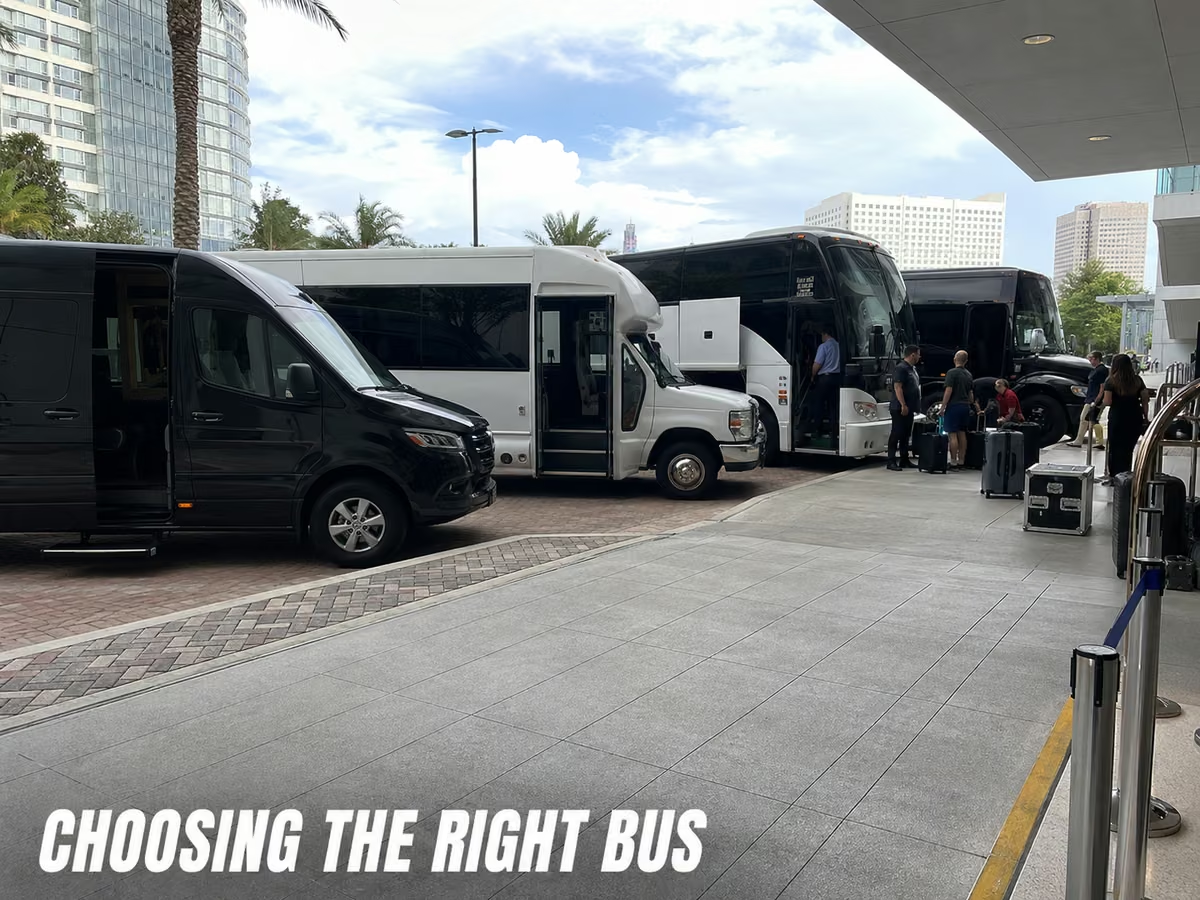
On size, the full lineup of bus types compares them side by side. The Sprinter van rental page covers the pick for small teams and press runs. A 15 to 35 passenger minibus is the practical shuttle-loop choice, with powerful A/C and better maneuverability on tight downtown streets.
A 40 to 56 passenger charter bus carries the big group and the deep undercarriage bays that take crates and cases; if the category is new to you, the guide to what a charter bus is covers what comes standard. A party bus is the pick for celebrations and evening programming.
What the Bus Costs While You're Budgeting the Graphics
These are the ranges groups plan around.
| Vehicle | Hourly | Full day |
|---|---|---|
| Sprinter van (12–15) | $150–$300 | — |
| Sprinter limo (14) | $175–$350 | — |
| Party bus (15–20) | $200–$375 | — |
| Party bus (20–30) | $250–$425 | — |
| Party bus / minibus (35–50) | $300–$500 | — |
| Minibus (15–35) | $150–$300 | $1,000–$1,800 |
| Charter bus (40–56) | $150–$300 | $1,200–$2,500 |
Those are example figures to help you plan, not quotes — the quote moves with your date, hours, mileage and how busy that weekend is. Set against them, four weeks of rented space on one bus at $3,000 is about one and a quarter to two and a half full days of a charter bus moving your group — vinyl is a cost you eat once, the vehicle you pay for only on the days it works.
The party bus prices page lays out the ranges in more detail, the walkthrough on how to rent a bus covers the process end to end, company projects start on the corporate event transportation page, and multi-vehicle programs on the group transportation services page. Call 833-458-7001 any time for a free quote, or use the online tool for pricing in about a minute.
Frequently Asked Questions
Can I wrap a bus I'm renting?
No. A wrap takes roughly eight weeks from design to road, bonds to the vehicle's paint, and stays on for years — it belongs to the bus, not your trip. For short-term branding, use removable window clings, magnetic panels where the body panel is steel, or brand the event space instead.
How much does it cost to wrap a bus?
Gainesville RTS tells its own advertisers to budget for a vendor to print, produce, ship, install and remove full bus wrap graphics, design excluded — its rate sheet gives that average as $4,500 in one place and $5,000 in another, so treat either figure as the same job priced twice rather than as a range. Vinyl retailers' 2025 guides put a full wrap excluding the roof at $8,000 to $13,000, with partial wraps at $500 to $5,000. By area, published rates run about $8 to $12 per square foot of material plus $2 to $3 for installation.
Surface area drives everything, so measure the actual vehicle rather than trusting a generic calculator.
Do bus wraps really have to be replaced every two years?
On some fleets, yes. The film itself is good for five to seven years, but Gainesville RTS sets a two-year replacement cycle for all exterior ads to avoid vehicle damage, written into its advertising terms. If your graphics live on a fleet you don't own, ask which clock applies before you budget a campaign around the longer one.
Should I buy a full wrap or several king panels?
For most advertisers, the panels. TCRP Synthesis 51 found full wraps priced at five to ten times a king at medium and small agencies, and Gainesville's card computes to 7.1 times — so a wrap budget buys roughly seven buses carrying kings instead of one wrapped bus. Buy the wrap when the impact itself is the point, like a product launch.
Will a wrap damage the paint?
Not if the paint was healthy going on and the wrap comes off on schedule. Cast vinyl releases cleanly from sound factory paint with heat and the right tools, but not from failing paint, repainted panels, rust or lifting clear coat, because it has bonded to a surface already letting go. Document and photograph the vehicle before installation, and remove the wrap before it goes brittle.
Why are the windows covered in tiny holes?
That is perforated window film. 3M's 8170-P50 is 50 percent perforated and the 8170-P40 is 40 percent, white on the printed face and black on the reverse, so the image reads solid from outside while passengers still see out. Some agencies specify the ratio themselves. Both need a clear overlaminate, because unlaminated perforated film becomes very hard to see through once rain fills the holes, and 3M lists the product for vehicle windows that aren't subject to a minimum light-transmission standard, leaving it to the buyer to check what each state requires.
How do I know if the impression numbers I'm quoted are real?
Ask whether they are Geopath-measured. Geopath is the non-profit providing audited out-of-home audience measurement in the United States, building impressions from published traffic and transit ridership counts and applying a visibility adjustment to estimate who actually notices a display. Claims of 30,000 to 70,000 impressions a day are marketing estimates unless something like that sits behind them.
Almost everyone arrives at this subject with a car wrap in their head, and that's where the confusion starts. One price, one vehicle, one weekend. A bus breaks all three: the surface area isn't a single number, the vehicle usually belongs to somebody else, and the film outlives the campaign by years.
Nobody is lying to you. The word just covers three transactions that have little to do with each other, and the one you actually need is usually the cheapest of the three.
Book the Bus, Then Decide About the Wrap
Wrapping is a two-month, four-or-five-figure decision belonging to whoever owns the vehicle. Getting the vehicle is a one-minute decision, and it's the one with a deadline attached. Partybus-rental.net makes it easy to compare party buses, charter buses, minibuses, Sprinter vans and Sprinter limos in one place, with pricing in about a minute, no account required and no obligation.
Call 833-458-7001 any time, any day, or fill out the quick form and see what's available for your dates.
How these figures were checked. Material specifications come from 3M's published product pages and bulletins for the IJ180 and 8170 film families. Transit advertising rates come from the Gainesville RTS exterior advertising rate sheet (effective January 2017), the Yolobus transit media kit (2023 to 2024), and TCRP Synthesis 51, Transit Advertising Sales Agreements, National Academies, 2004, whose dollar figures are historical and are used here for pricing structure rather than current cost. Wrap production and removal prices come from vinyl suppliers' and wrap shops' published 2025 and 2026 rate guides, which are commercial sources and are labeled as such above. Audience measurement definitions come from Geopath and the OAAA. The wrap-to-king ratio, the per-period rate and the production-versus-space share are this page's own arithmetic, performed on the linked rate cards so you can reproduce them. Figures last checked July 2026; transit rates and material specifications change between seasons and model years, so confirm the current figure with the agency or manufacturer before committing budget. Partybus-rental.net is a comparison and quote-request website — it does not own vehicles and does not provide the transportation itself, and it sells no wrap, signage or advertising service of any kind. Displayed rental amounts are example pricing. Corrections: contact page.