"Party bus" describes an interior, not a vehicle. Not a chassis. Not a size class.
Not a seat count you can trust from the name.
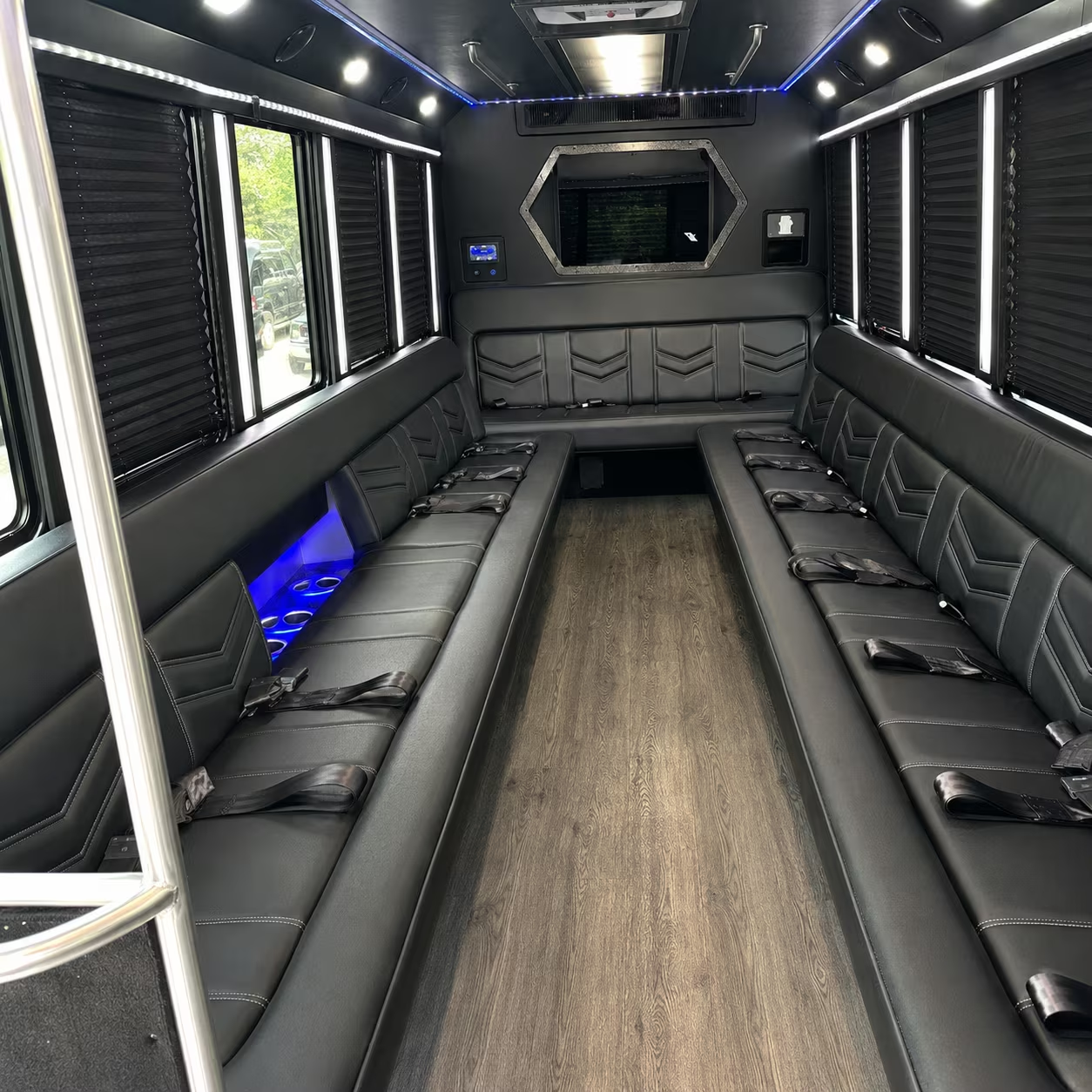
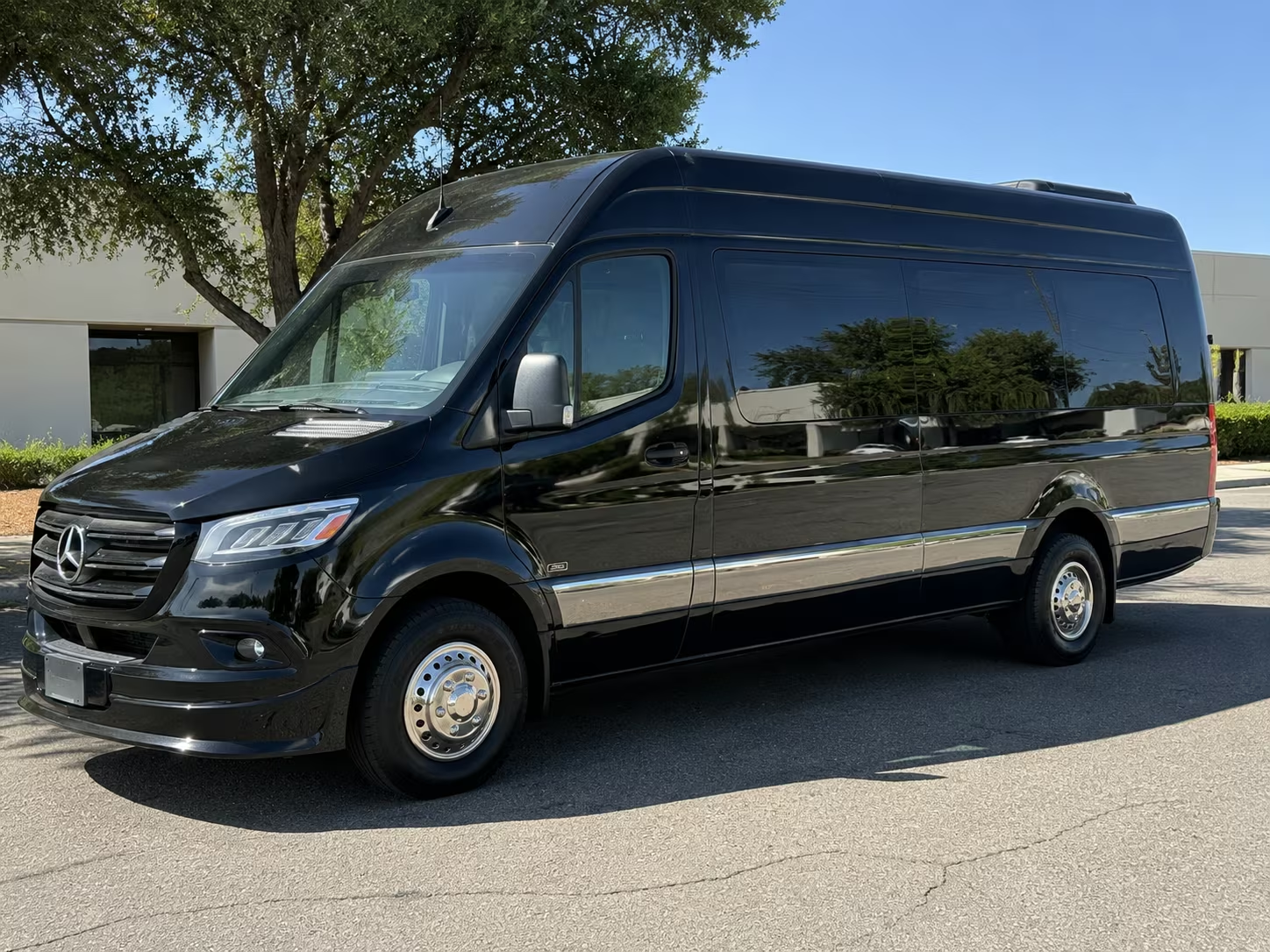
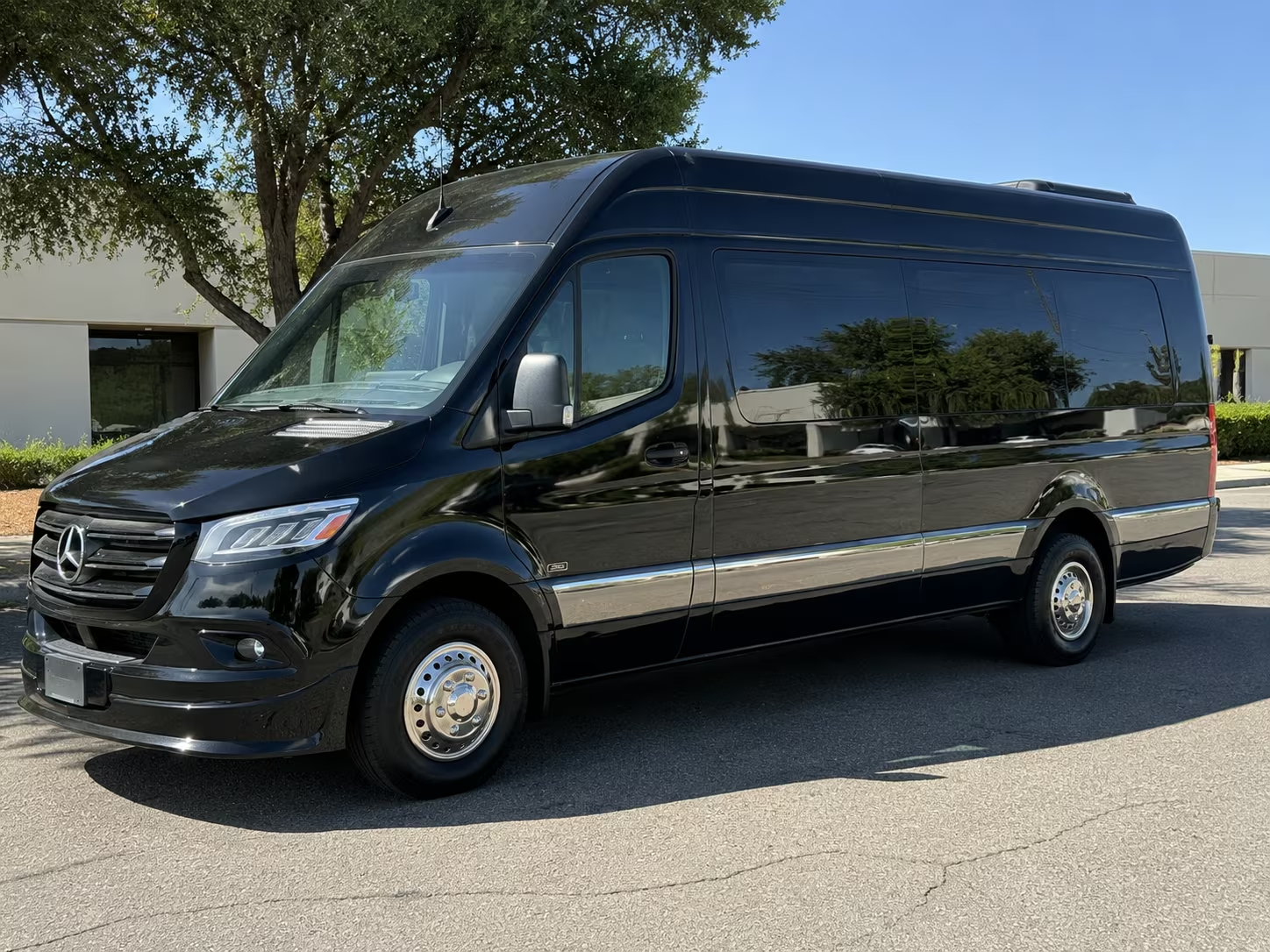
Party bus listings look nearly identical in photos: dark cabin, color-changing lights down the ceiling, a bar counter, a bench along the wall. But none of that tells you size. One of those vehicles can be 23 feet long; another can be 40 feet and unable to make the turn into your venue.
The same Ford E450 shell gets sold as a party bus with perimeter benches or as an executive shuttle with forward-facing rows — same chassis, same body, same shop, completely different product. Once you know the platform underneath, how long the finished vehicle is, and how the builder counts seats, the other differences make sense.
Everything below comes from the builders' own model pages — LGE Coachworks, Executive Coach Builders, Global Motor Coach, First Class Customs, Cabot Royale and Grech Motors. Where a builder doesn't publish a figure, this page says so instead of guessing.
The Short Answer
A party bus is a van or bus with a social cabin — lounge seating around the walls, an open center, upgraded lighting and audio, usually a bar — rented for a group, with someone else at the wheel so nobody has to skip the party. Beyond that, almost nothing is universal:
- Size runs from about 4 rear passengers to 57, across roughly 23 to 40 feet of vehicle on the lengths builders publish.
- Some are built new with the lounge already in them; others are older buses rebuilt inside. Both can be good.
- Published passenger counts are not consistent between builders. Some quote rear seats only, some include the two front cab seats, and some model names disagree with the model's own spec page.
- Restrooms are rare but genuinely available as an option — including on some Sprinters.
- Luggage capacity trades directly against seats, on a sliding scale the builders publish.
- Short, multi-stop, local trip? Party bus. Long distance, real luggage, restroom needed? Minibus or charter bus.
What Is a Party Bus?
A party bus is a bus or van whose interior is arranged so the group faces each other instead of forward. Benches run along the walls, around the rear, or in a J or U shape, leaving an open center. That layout is the definition.
Lighting, sound, bar cabinetry and ceiling treatments get added on top.
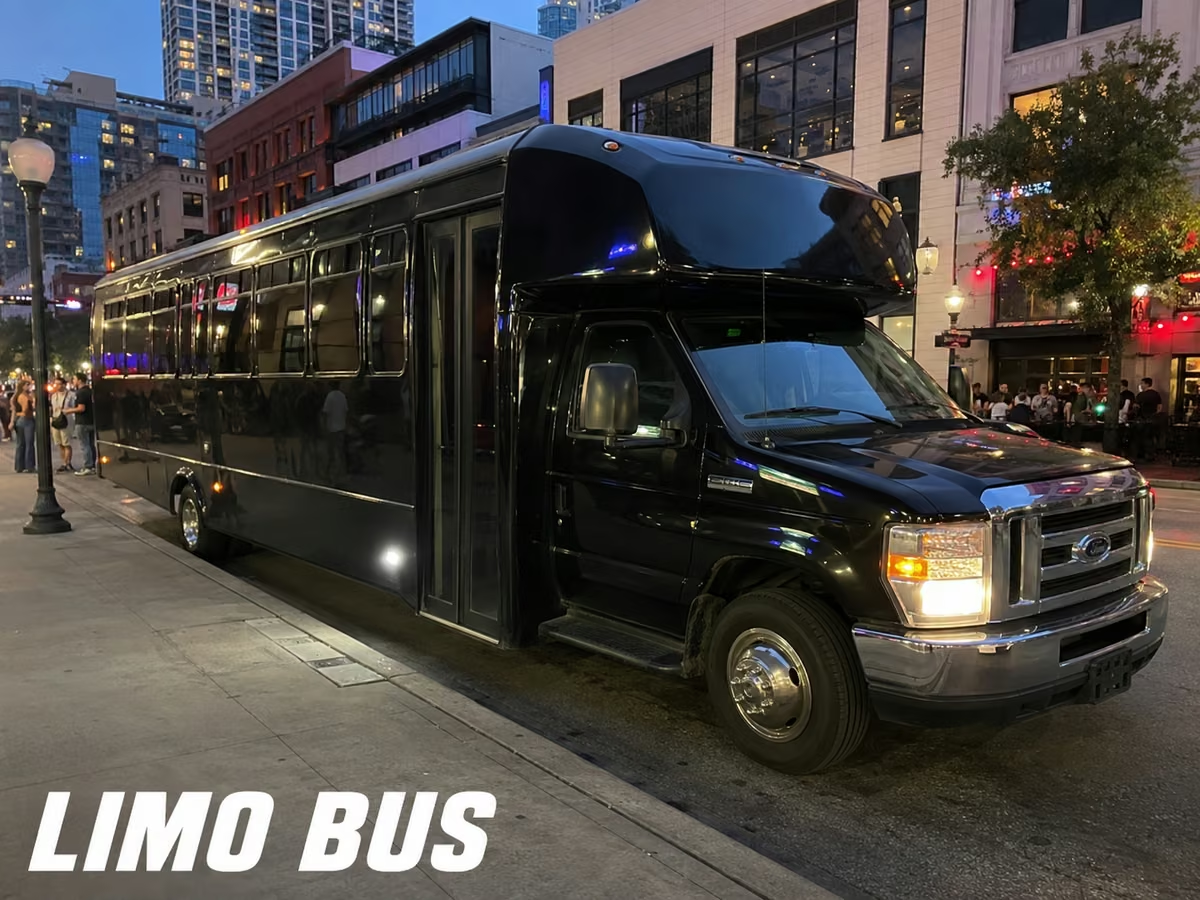
The proof is in a builder's own catalog. LGE Coachworks offers three interiors on the identical Ford E450: a classic three-bench party layout, a luxury coach layout, and an executive shuttle with forward-facing rows. Same chassis, same body, same shop — three different vehicles.
Executive Coach Builders markets the same underlying bus products as limo-bus applications, adding disco-style lighting, laser shows, smoke machines and surround sound to turn a shuttle platform into a party environment. The bus doesn't change. The build does.
"Party bus" is a marketing term, not a standardized product category. No shared definition, no common spec sheet — which is why two vehicles both advertised as "30-passenger party buses" can be genuinely different — and why comparing a few before you commit is worth it. Partybus-rental.net makes that comparison quick: one short form, and you compare vehicle types and example rates from a large network of bus companies and transportation providers serving your area.
How Long Is a Party Bus? The Table Nobody Publishes
Almost no rental page answers this one. A 40-foot bus can't make the turn into a residential cul-de-sac, sit under a hotel portico, or come down a gravel winery lane. Your headcount picks the class. Your pickup and drop-off points decide whether that class is possible.
LGE publishes a full length ladder for each chassis family:
| Platform | Published lengths | Weight rating | Rear A/C | Capacity as published |
|---|---|---|---|---|
| Mercedes Sprinter | Length not published (3500XD on a 170-inch wheelbase is the common base, about 22.9 ft finished) | Varies by chassis | 65,000 BTU | Up to 15 including the two front cab seats |
| Ford E450 | 25 ft / 27 ft / 29 ft | 14,500 lb | 97,000 BTU | Up to 25 including the two front cab seats |
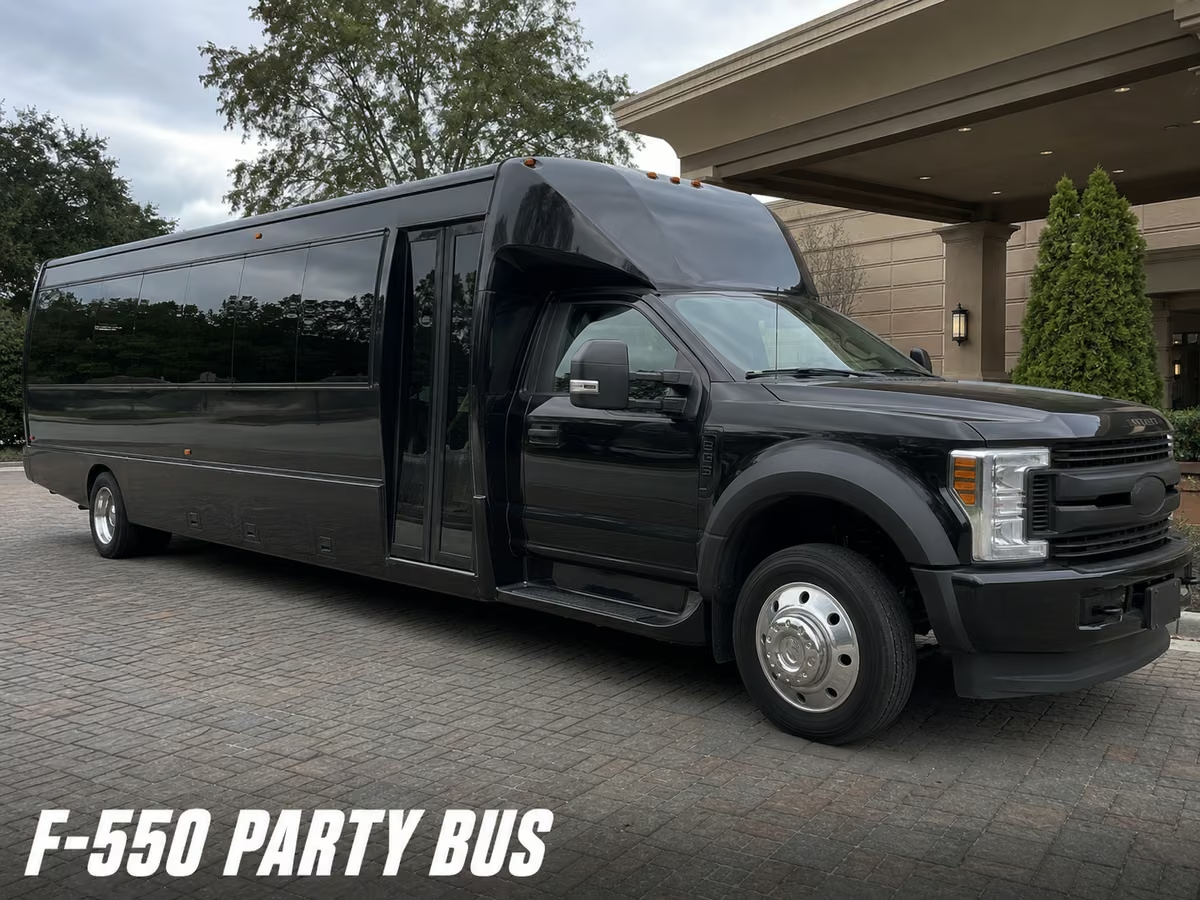
| Ford F550 | 31 ft / 33 ft / 35 ft | 19,500 lb | 127,000 BTU | Up to 31 including the two front cab seats |
| Ford F600 | 33 ft / 35 ft / 38 ft / 40 ft | 22,000 lb | 176,000 BTU | Up to 40 including the two front cab seats |
The same chassis comes in multiple lengths. "An E450" could be 25 feet or 29 feet — a four-foot swing on the same badge. If your venue has a tight approach, ask for the shorter build within the class rather than dropping a class and losing six or eight seats.
Air conditioning scales with the vehicle too, and steeply. An E450 build carries 97,000 BTU; the F600 carries 176,000; Executive Coach Builders' Supercoach 45 publishes 205,000 BTU. In the Sprinter class, Global Motor Coach lists 60,000 BTU and First Class Customs 62,000.
Those numbers exist because thirty people in a sealed cabin in July is a real thermal load. Ask about the rear climate system before you ask about the light package.
Check this against your parking garage. Sprinter dimensions are the one small-class figure published precisely. Global Motor Coach lists its Sprinter limousine family at 274.3 in. long × 80 in. wide × 110.9 in. high — about 22.9 ft × 6.7 ft × 9.2 ft.
Garage and portico clearances commonly post around 7 to 8 feet, so even the smallest vehicle in this guide usually stays outside. Full-size party buses run about 8.5 feet wide, which is why curb-side loading on a narrow street needs a plan rather than a hope.
The Passenger-Count Trap
Builders don't count the same way, and the gap lands on your booking. Some publish rear seats. Some publish everybody in the vehicle.
Some model names disagree with the model's own page.
| Published as | Actual guest seats | What the builder's page says |
|---|---|---|
| LGE Ford E450 — "up to 25" | 23 | Count stated as including the two front cab seats |
| LGE Ford F550 — "up to 31" | 29 | Count stated as including the two front cab seats |
| Royale Sprinter LC080 18p | 16 | Page describes up to 16 rear occupants |
| Royale Sprinter LC042 6P | 4 | Page describes four rear occupants |
| Global Motor Coach 4 Seat Limousine | 14 | Page states 14 in the rear, plus the two front seats |
| ECB Ecoach 28 | 19–23 | Rear count published separately from the front cab seats |
The Royale entries show it clearly. The model named "18p" seats 16 in the rear; the "6P" seats four. They're internal SKU conventions, not errors — never meant to be read as guest counts.
But they end up in listings, and then in planning notes, and then in a booking that seats fewer people than the name implies.
One question fixes all of it. Ask "how many guest seats are in the rear?" about every vehicle you compare and you're finally measuring them the same way.
One follow-up worth having ready: "is that the rated seat count or the comfortable one?" Perimeter benches rate to a shoulder-to-shoulder number, and nobody sits shoulder to shoulder for three hours. More on that arithmetic in the party bus capacity guide.
Luggage vs. Seats: The Curve, With Real Numbers
Interior photos never show the rear compartment, so luggage is the thing groups find out about late. And the tradeoff isn't a fixed penalty. It's a dial the builder sets, and some publish the whole range.
ECB's Ecoach 45 publishes all three settings:
| Luggage configuration | Passengers | Cost in seats |
|---|---|---|
| No rear luggage area | 51 | — |
| 40-inch luggage area | 47 | 4 seats |
| 65-inch luggage area | 43 | 8 seats |
The same pattern runs through the rest of the ECB line: the Ecoach 34 carries 27 with rear luggage or 31 without, and the Ecoach 40 carries 37 with luggage or 41 without. Grech publishes the same tradeoff on its GM33: 28 with rear luggage, 32 without.
So when a quote says "47 passengers," that vehicle may have a 40-inch luggage bay — or the company may have specified the 51-seat layout with no bay at all. Same model name. Completely different trip if you're going to the airport.
Rear bays on the larger builds take crates, coolers and checked bags; a build with no bay gives you the space under your own feet and nothing else.
Don't say "we have luggage." Say: 18 passengers, 14 checked bags, 6 carry-ons, 2 garment bags, one folding wheelchair. That gets a vehicle that works instead of one that technically seats everyone.
Three specifics do most of the work — bag count, largest bag size, and whether anything is rigid (golf clubs, ski bags, instrument cases, a cooler that can't tip).
For airport runs and cruise transfers, also compare a 15–35 passenger minibus, which keeps forward-facing rows and a real bay. The airport transportation page covers terminal-side logistics — where a bus can stage, and how far that is from baggage claim.
The Three Classes of Party Bus
The market splits into three tiers. Learn them and you can read almost any listing.
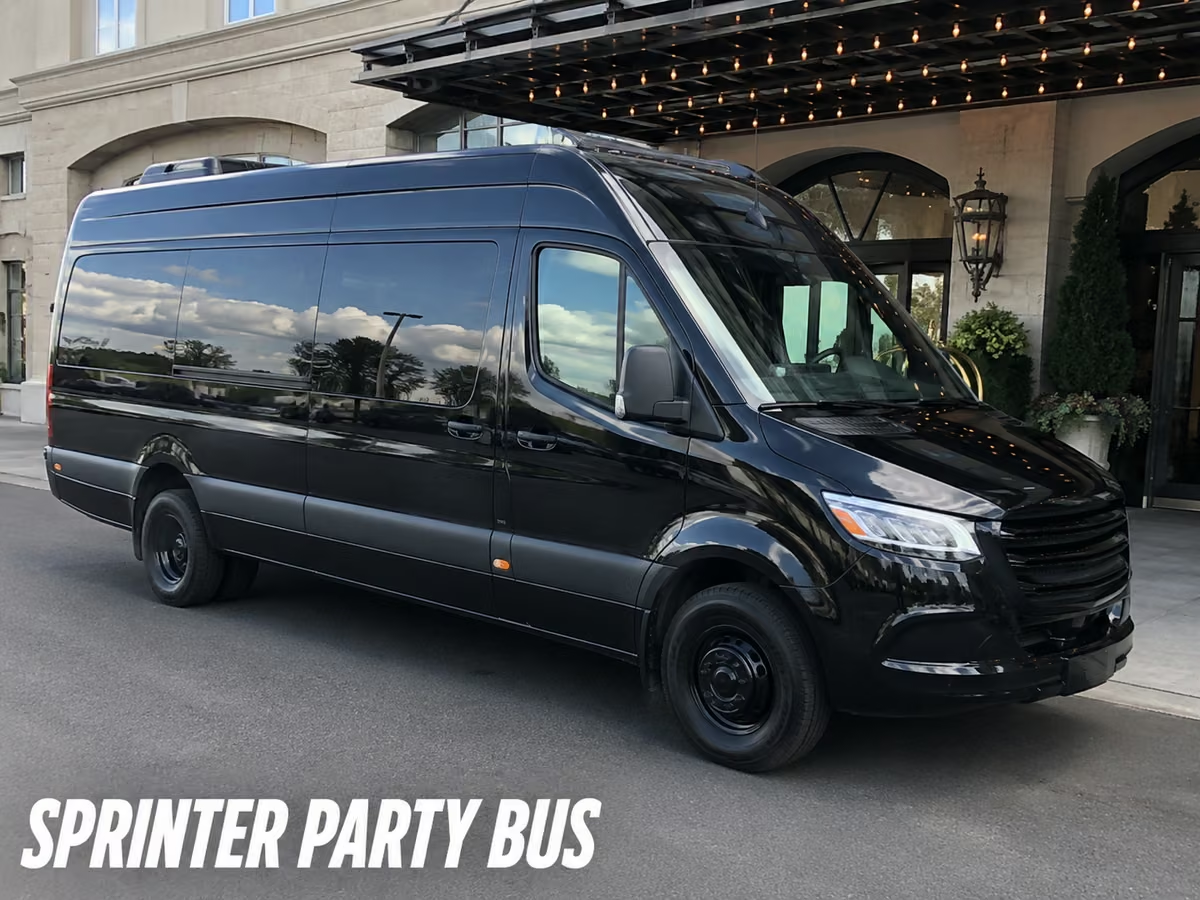
Class 1: Sprinter and Transit limo-vans — roughly 4 to 16 passengers
The premium small format, built almost universally on the Mercedes-Benz Sprinter 3500XD with a 170-inch wheelbase. Ford Transit versions exist too — Royale's Transit Limo Coach carries 10 passengers plus the two front seats on a J-seating plan with 32-inch and 42-inch screens.
Layouts vary more than you'd expect within one chassis. Global Motor Coach alone publishes a 4 Seat Limousine (14 rear), a 3 Seat Limousine (14 rear), a Double J Limousine (13 rear), an Executive Shuttle (13 luxury buckets with rear stadium seating) and a Corporate Shuttle. Royale's LC055 puts two reclining captain's chairs with available heating and massage in a 12-passenger cabin.
Best for: small groups, tight streets, wine tours, VIP transfers. Watch for: whether the count includes the front seats, and how much rear floor space survives the seating plan. Compare the 14-passenger Sprinter limousine against the plainer Sprinter van rental page — the van gives up the lounge and gains luggage room.
Class 2: Ford E450 and F550 limo buses — roughly 19 to 29 guest seats
The volume center of the market, and where most rentals land. ECB's Ecoach 28 carries 19–23 passengers on a Ford E-Series cutaway with a 14,500 lb weight rating. ECB's own spec page still lists a 6.8L Triton gas engine, while Grech's current GM28 on the same Ford E450 chassis publishes a 7.3L V8 at 325 hp.
The Ecoach 34 steps up to an F550 with a 102-inch wide body, a 19,500 lb weight rating, and a choice of 6.8L Triton gas or 6.7L Power Stroke diesel.
Best for: birthdays, bachelorette nights, wedding parties, prom, local event loops. Watch for: the rear-passenger number, the length within the class, and rear A/C performance in summer. The length question bites hardest here — a 35-foot F550 and a 25-foot E450 get listed with nearly identical photos.
Class 3: Freightliner and large cutaway — roughly 37 to 57 passengers
Where the numbers get serious. ECB's Ecoach 40 and 45 both run a Freightliner chassis with a 6.7L Cummins 300 HP ISB diesel and Allison automatic, at 29,500 and 33,000 lb weight ratings respectively. The Supercoach 45 pairs over 450 cubic feet of luggage storage with 205,000 BTU of air conditioning, and the Supercoach XL reaches up to 57.
Best for: large celebrations, corporate entertainment, big fan groups. Watch for: venue access above everything else. At 40-plus feet you're negotiating with the geometry of the parking lot, and the honest answer is sometimes two mid-size buses instead of one.
Restrooms: Rarer Than You Want, More Available Than You Think
Most guides get this wrong in the pessimistic direction, treating onboard restrooms as impossible. They're not.
Restrooms are uncommon on party buses, but they are genuinely available as an option — and not only on giant coaches. LGE publishes optional restroom and galley on its E450 and F600 luxury coach layouts. ECB's Supercoach XL has a dedicated bathroom page.
And most surprisingly, Royale's LC079 Day Cruiser — an 11-passenger Sprinter — includes a rear bathroom with toilet and vanity sink.
Across the builder pages they read as a premium add-on rather than standard equipment. If you need one, say so at the quote stage. It narrows the vehicle list considerably, but the list isn't empty.
One thing to pin down: ask whether the restroom on that specific vehicle is in service for your trip — a unit exists on some builds but isn't always put into use. If nothing suitable comes back, a 40–56 passenger charter bus has one as standard equipment, and the charter bus explainer covers what you trade to get it.
What's Inside: Remarkably Standardized
The core amenity package is nearly identical across manufacturers. Most of what a listing advertises is true of the whole category.
| Near-universal across builders | Varies by build | Premium options — confirm specifically |
|---|---|---|
| Dual screens, commonly 32–43 in., up to 50 in. | Screen sizes and placement | Onboard restroom |
| Premium audio with Bluetooth | Amplifier and subwoofer spec | Galley |
| RGB / LED programmable mood lighting | Fiber-optic or "stargazer" ceilings | Wheelchair lift and securement positions |
| Bar or refreshment console | Ice compartments, chillers, refrigerators | Laser lights, strobes, smoke effects |
| Privacy shades or blinds | Illuminated partitions and dividers | Underbelly luggage storage |
| Specialty flooring — Altro or Gerflor | Wood, bamboo or metallic finishes | Massage and heated captain's chairs |
| USB and 110V charging | HDMI, Apple TV, phone mirroring | Wi-Fi hotspot |
A few specifics that show the range. First Class Customs lists a Dometic drawer refrigerator, upgraded Alpine R Series audio, and 62,000 BTU A/C with separate floor heat on its Executive Class Sprinter. Global Motor Coach lists Maybach RGB ceilings, acrylic stargazer walls and self-draining coolers.
Royale lists champagne service and glassware across its Sprinter limousine line. The party bus amenities guide goes item by item.
How to actually compare two quotes. If both vehicles have screens, Bluetooth audio, LED lighting and a bar, you've learned nothing that separates them. The real differentiators are length, guest seat count, luggage configuration, air conditioning capacity and interior age.
Put those five in your message and the quotes come back comparable.
Accessibility, as a planning item
Some vehicles are accessible, though lounge inventory is less consistently accessible than shuttle inventory — the perimeter bench that defines a party bus leaves nowhere obvious to secure a chair. ECB lists an optional wheelchair lift and securement equipment on the Ecoach 28, so it exists at the manufacturer level, just not in most rental inventory.
Raise it when you request pricing, not after a vehicle is chosen, and ideally 48 or more hours out — far fewer vehicles are configured for it, and those book first. Be specific: manual chair, power chair or scooter; whether the passenger can transfer to a seat; how many securement positions; lift or ramp; room for a service animal. Expect the accessible configuration to cost seats the way a luggage bay does: one securement position typically takes the space of two or three bench seats.
How a Party Bus Gets Built
Two different things get called a party bus, and the difference affects what you're renting.
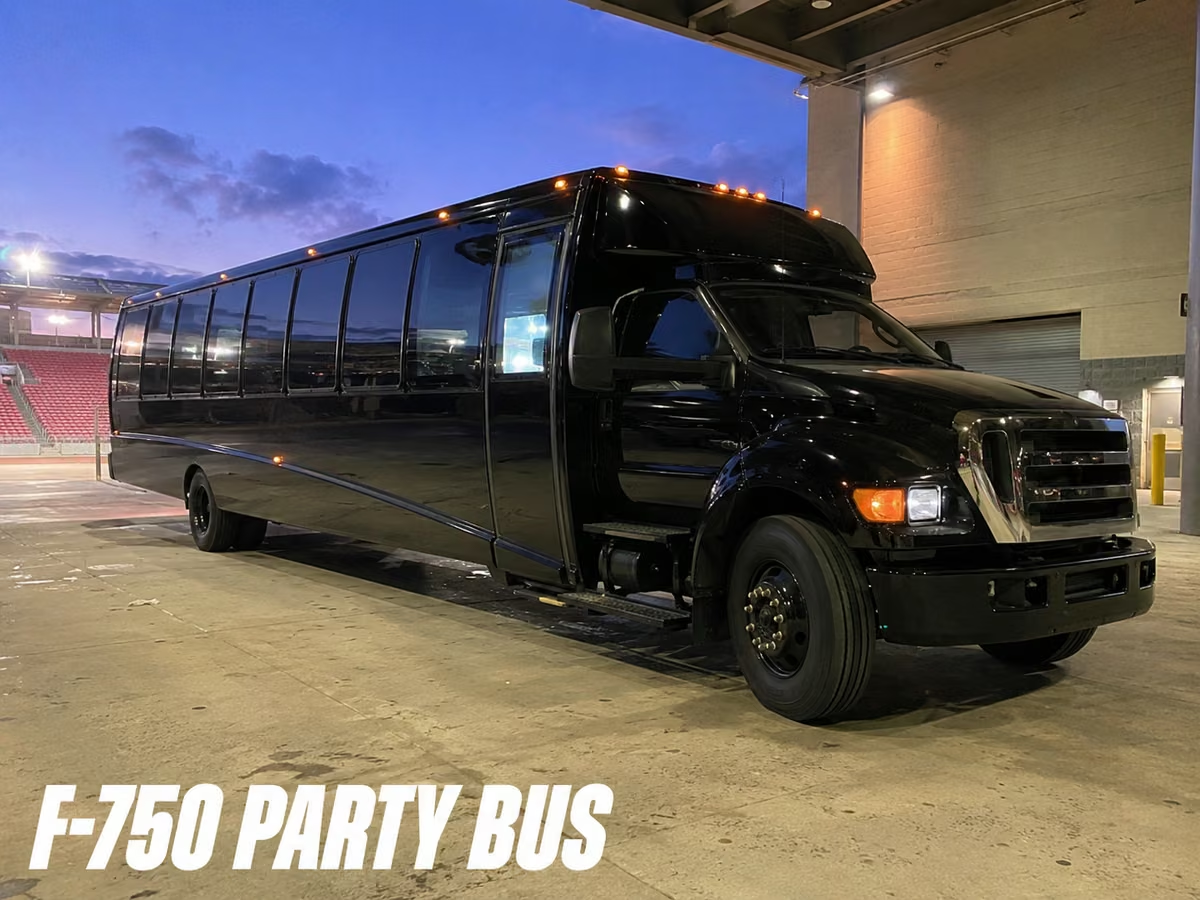
New manufactured builds
A manufacturer starts with an incomplete chassis from Ford, Mercedes or Freightliner, builds the passenger body, and finishes the interior — the vehicle leaves the factory new with the lounge already in it. Current builds include full steel cage construction, powder-coated body structure, one-piece impact-guard roofs, pressure-laminated sidewalls and solid foam wall insulation. ECB describes composite body and floor construction with a high-strength frame on its Freightliner coaches.
Rebuilds and remodels
An existing shuttle or coach gets stripped and refitted. Custom Way describes a 25-passenger project as emptying the interior, removing the seats and preparing the carcass, then rebuilding upholstery, storage, lighting and multimedia. Custom Mobile Conversions, which has built close to 200 party buses since 2008, offers steel or wood framed seating, straight or wavy seat profiles, and different bar and cooler configurations.
A rebuild can be excellent — the interiors are often newer and better finished than what came out of a factory five years earlier. But a fresh interior doesn't reset the age of the engine, brakes, suspension or wiring underneath.
The two dates that matter
A listing might read "2019 Ford E450 with conversion completed in 2023." That's a 2019 chassis and a 2023 interior. Neither number alone is "the year of the bus."
Ask for both — chassis year for the mechanical age, interior year for what you actually sit in. A 2015 chassis with a 2024 interior can be a great ride. You just want to know which you're getting, because the photos only ever show the newer of the two.
Why builds take months
Sprinter converter Patrol Vans publishes an 8-to-16-week build window once the chassis is in hand, on top of a 4-to-12-week design and configuration phase and the chassis lead time itself — four to seven months end to end. Custom Way reported three months for a 25-passenger rebuild. Nobody manufactures extra buses in the six weeks before prom.
The vehicles in your market on your date are the vehicles that exist.
Seating Layouts and What They're Called
| Layout | What it is | Where you'll see it |
|---|---|---|
| Perimeter | Benches along the walls facing inward, open center | The classic party bus arrangement |
| Wraparound / U-shape | Continuous seating down both sides and across the rear | Mid-size and large builds |
| J-seat / Double J | Benches curved into a J, often doubled | Primarily Sprinter and Transit builds |
| Three-bench | Two long perimeter benches plus a rear-facing bench | LGE's classic E450 and F550 layouts |
| Captain's chairs | Individual seats, sometimes with tables or recline | Executive and luxury coach layouts |
| Forward-facing | Conventional rows facing the windshield | Shuttle and minibus — not a party bus |
The fast test: perimeter, wraparound, three-bench or J means party bus. Forward-facing means shuttle. Ask for the floor plan — several builders publish downloadable floorplans, and five seconds with one tells you more than a paragraph of marketing copy.
You can read a listing photo too, as long as you treat it as a mood board rather than a spec sheet. A genuine 25-seat perimeter cabin shows a long unbroken run of upholstery down both walls, not two short benches and a lot of floor. If the shot is taken from the rear door with a wide lens and the bar fills the frame, you're looking at a small vehicle presented generously.
Ask for a photo taken from the front of the cabin looking back, and one of the rear luggage area with the door open.
The open center is part of the social layout, not extra capacity. Everyone still needs a seat of their own.
Sizing Your Group
| Your headcount | Start comparing | Size up when |
|---|---|---|
| 4–12 | Sprinter limo or Sprinter van | You have airport bags, winter coats or mobility equipment |
| 13–16 | Large Sprinter layout, or a 15-passenger party bus | The Sprinter would be at its published maximum |
| 17–23 | Ford E450 build, 25–29 ft — 18, 20 or 25 passenger | Everyone is in formalwear, or the layout has a large bar |
| 24–29 | Ford F550 build, 31–35 ft — 28 or 30 passenger | The quote counts front seats, or you need a luggage bay |
| 30–40 | F600 or Freightliner, 33–40 ft — 40 passenger | You need a restroom or underbelly storage |
| 41+ | 50-passenger party bus, two vehicles, or a charter bus | The trip is transportation-first or luggage-heavy |
Book one size above your headcount if the group is in formalwear. Twenty-three adults fit in a 23-seat bus. Twenty-three adults in gowns and tuxes with coats and gift bags is a different situation — usually by one class of vehicle.
Sizing up is the cheapest upgrade in this category.
The other reason to size up is stop count. A bus that's exactly full loses several minutes at every door, so if the itinerary has four or more stops, treat the next size up as the default.
Who Builds Party Buses
Six manufacturers publish detailed party and limo-bus model pages, plus several more building the shuttle platforms that get converted.
LGE Coachworks
Pennsylvania builder working across Mercedes Sprinter, Ford E450, F550 and F600. Publishes the clearest data of the builders here: length ladders, weight ratings, BTU ratings and multiple layouts per chassis, with optional restroom and galley on luxury coach configurations. The best reference for how one chassis becomes different vehicles.
Executive Coach Builders
Publishes the strongest engineering data — powertrain, weight ratings, body width and full luggage-versus-seating curves across the Ecoach 28, 34, 40 and 45 and the Supercoach 45 and XL, spanning Ford E450, F550 and Freightliner platforms up to 57 passengers.
Global Motor Coach
The most explicit small-platform specs of the builders here: chassis, wheelbase, exterior dimensions, HVAC figures and starting MSRPs across five Sprinter variants plus a Ford Transit limousine line.
First Class Customs
Sprinter specialist publishing actual inventory with year, stock number, build spec and list price — Executive Class, VIP Shuttle and VIP Limousine families on Sprinter 2500 and 3500XD. Notes that the Sprinter isn't cut or modified beyond original specifications, so the conversion works inside the body Mercedes engineered.
Cabot Coach Builders / Royale
The broadest Sprinter limousine lineup, published as individual SKUs — LC037a, LC042, LC055, LC079, LC080, LC083 — plus a Ford Transit limo coach, with downloadable floorplans for most models.
Grech Motors
California manufacturer whose shuttle platforms are widely converted. The GM28, GM33, GM40 and EG40 run Ford E450, Ford F600 and Freightliner S2 chassis, with fully welded steel tube cage and riveted aircraft-grade aluminum construction.
Also seen in inventory
Krystal Koach, Turtle Top, Tiffany Coachworks, Glaval, Starcraft, BT Customs, TWR and L.A. West. Chassis themselves come from Ford, Mercedes-Benz, Freightliner and International. The party bus manufacturers overview goes further on who builds what.
The builder name is the one thing in a listing that maps to specifications you can read yourself. If a quote names the model — "Ecoach 34," "GM33," "LC080" — you can look up the length, weight rating, BTU figure and luggage options in about a minute.
Where Party Buses Came From
Worth separating what's documented from what gets repeated.
The word
"Limousine" entered English in 1902, borrowed from French, from the region around Limoges and Limousin. The popular story — that it refers to a shepherd's cloak because the roof over the front compartment resembled one — is a real hypothesis, not settled fact. Merriam-Webster says plainly that the motivation behind the name hasn't been satisfactorily established, notes a problem with the cloak theory (from its earliest French appearance around 1900 the word referred to the whole carriage style, not the front-compartment covering), and records a competing 1904 explanation crediting the engineer Charles Jeantaud, born in Limoges.
Anyone stating the shepherd story as fact is repeating something the dictionary declines to confirm.
Stretching vehicles for working groups
The lineage runs through Armbruster, the Fort Smith, Arkansas coachbuilder. A local bus company asked whether a regular vehicle could be stretched for short touring runs; Armbruster had never done it, and took the job. The resulting vehicles moved big bands and their instruments between shows — advertised as "extended-wheelbase multi-door auto-coaches," known as big band buses — carrying acts including Glenn Miller and Benny Goodman.
Sources agree on place, era and purpose, and disagree on the exact year and who deserves credit — treat any confident invention date with skepticism. What's not in dispute: the ancestor of the party bus was built to move a group and their gear to a gig. The luxury association came later.
The modern party bus
The product grew out of the limousine, custom-van and coachbuilding trades through the 1980s and 1990s, as builders applied lounge seating, bars, audio and lighting to vans, cutaway buses and coaches. There's no documented moment of invention — it evolved across many shops, then spread once high-roof vans and commercial cutaway chassis made large lounge interiors practical. The longer version is in the history of buses.
Party Bus vs. Everything Else
vs. stretch limousine
| Party bus | Stretch limousine | |
|---|---|---|
| Base vehicle | Van, cutaway or commercial chassis | Lengthened sedan or SUV |
| Headroom | Often standing height | You duck in and stay seated |
| Capacity | 4 to 57 | Usually smaller groups |
| Luggage | Varies from none to 450+ cu ft | Limited trunk |
| Best for | The ride being part of the night | A formal arrival |
vs. minibus
Frequently the same chassis and the same builder — LGE and ECB both build party and forward-facing shuttle layouts on identical platforms. The minibus keeps the forward-facing rows, which makes it better for luggage, longer trips, and anyone who needs a conventional seat, including small children. If half your group would rather nap than dance, read the minibus explainer before you commit.
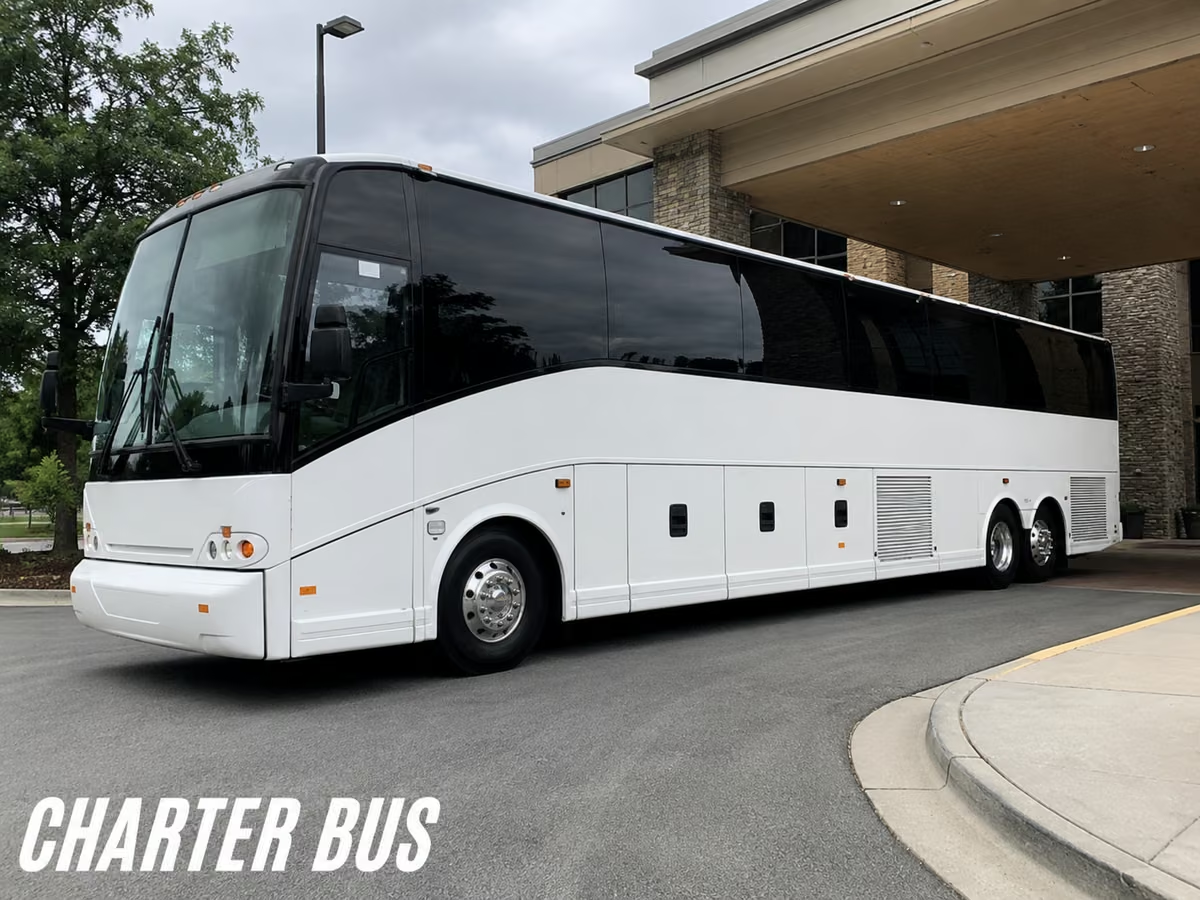
vs. charter bus
| Party bus | Charter bus | |
|---|---|---|
| Seating | Lounge, facing inward | Forward-facing reclining rows |
| Capacity | 4 to 57 | Commonly 40 to 56 |
| Luggage | Traded against seats | Deep undercarriage bays |
| Restroom | Premium option | Standard on full-size coaches |
| Best route | Local, multi-stop | Highway and intercity |
Also useful: the Sprinter van guide for the small end, and the complete bus types guide if you want every format side by side.
What a Party Bus Costs to Rent
Rental pricing is local, so there's no national rate. The same 23-passenger E450 prices differently in Nashville on a Saturday in May than in Detroit on a Tuesday in February. The range to plan against:
| Vehicle | Hourly (weekday) | Full day |
|---|---|---|
| Sprinter van (12–15) | $203–$273 | — |
| Sprinter limo (14) | $204–$318 | — |
| Party bus (15–20) | $204–$338 | — |
| Party bus (21–30) | $248–$374 | — |
| Party bus (31–50) | $294–$441 | — |
| Minibus (15–35) | $207–$246 | $1,098–$2,105 |
| Charter bus (40–56) | $206–$327 | $1,331–$2,841 |
Those are weekday example figures to help you plan, not quotes — Friday and Saturday dates price above the bands shown, and the quote moves with your date, hours, mileage and how busy that weekend is. Partybus-rental.net compares quotes and connects groups with the bus companies and transportation providers serving each area; it does not own vehicles, employ anyone at the wheel, or operate trips, and every amount shown here is example pricing rather than an offer. Enter your details or call 833-458-7001 and you can have pricing for your own trip in about a minute.
The party bus prices page breaks the ranges down by vehicle, and the party bus cost guide walks through what lands on a final invoice.
What Moves the Price
The number changes by market. The list of things that move it doesn't: vehicle class and length, interior age and spec, total hours booked, day of week, season and event demand, mileage and route, and which market you're in. Minimums are the other quiet factor: published rate cards commonly set a three-hour minimum on party buses and four hours on shuttle work, so a two-hour job frequently prices like a three-hour one.
Why the vehicles cost what they do
Purchase prices explain rental rates better than any rate chart does. These are vehicle purchase prices, not rental rates, published on builder sites. Global Motor Coach lists a starting MSRP of $129,800 for its Sprinter Corporate Shuttle and $164,900 for the 4 Seat Limousine Party Bus.
First Class Customs' inventory shows new Sprinter asks from roughly $145,900 to $229,900, with used units at $84,900 and $89,900.
So on those builder-published purchase numbers, a premium new Sprinter-class party bus is a $130,000 to $230,000 asset to own — a figure from the manufacturers' price sheets, not from any rental rate card. Larger cutaway and Freightliner builds mostly require quote requests, and run higher. That's why a recent build with strong HVAC rents above a ten-year-old conversion at the same seat count.
Why booking early actually works
It's structural, not a sales line. One Sprinter shop publishes 8 to 16 weeks of build time once the chassis is in hand, and four to seven months end to end. Supply can't flex for a demand spike.
Every high school in a metro holds prom inside the same six-week window, so the 29-passenger bus that was easy to get in December is priced up or gone by mid-April.
When a Party Bus Is the Right Vehicle
- Birthdays and milestones. Multi-stop local nights — exactly what the format is for. See birthday party bus rentals.
- Bachelor and bachelorette parties. One vehicle, one pickup sequence, one return, and nobody taking a separate car. See bachelor and bachelorette transportation.
- Prom and homecoming. Put the itinerary, approved stops and adult contacts in writing before the night. See prom party bus rentals and, for the school-side version, school event bus rentals.
- Weddings. Often great for the wedding party and wrong for the guest shuttle — formalwear and garment bags usually favor a second vehicle type. See wedding transportation.
- Concerts and festivals. Confirm the venue's bus entrance and the post-event pickup point — both are often different from where you were dropped. See concert transportation.
- Game days. Ask whether the vehicle can stay in the lot and whether a bus parking pass is required. See sporting event transportation.
- Winery and brewery tours. Where length matters most — a 35-foot bus and a gravel winery lane don't mix. See winery tour and pub crawl transportation.
- Corporate outings. Great for celebrations; a forward-facing executive shuttle is usually better for conferences. See corporate event transportation.
- Private parties and reunions. Anything where the group is the event rather than the destination. See private event rentals, or the broader group transportation services overview.
The honest objection to everything above: for a lot of groups, the party bus is the wrong buy. If the trip is one ride out and one ride back, nobody is getting up, and half the group has bags, a minibus does the job with real luggage room and an hourly range that tops out well below the lounge builds — $207 to $246 against $204 to $338 for a comparable party bus. The lounge only earns its price when the ride itself is part of the night.
The Booking Checklist
Give this up front
- Date, exact headcount including children, and every stop
- Requested start and end time
- Bag count and bag sizes, including anything rigid or oversized
- Mobility devices and accessibility needs
- Whether a restroom is required
- Any tight driveways, low clearances or venue restrictions you already know about
- Your three must-have amenities, and which items are only preferences
Confirm this before you pay
- How many guest seats are in the rear? Not "how many passengers."
- How long is the vehicle? An E450 could be 25 or 29 feet; an F600 could be 33 or 40.
- Chassis year and interior year, separately.
- Perimeter, three-bench, J-seat or forward-facing? Ask for the floor plan.
- Which luggage configuration? The same model can seat 43 or 51 depending on the bay.
- Rear A/C capacity, and when it was last serviced.
- Restroom, Wi-Fi, screens, pole or power outlets — on this specific vehicle, not on the fleet page.
- What is included in the total, and what triggers extra charges.
- When the clock starts and stops.
- Cancellation, rescheduling and substitution terms.
- Alcohol, smoking, food and decoration policies. A bar console is furniture, not permission — policies differ by company, by vehicle and by the age mix of the group, so get yours in writing.
The how to rent a bus guide walks the full sequence in order, the FAQ page covers the short questions, and an agent will do it live at 833-458-7001, any time, any day.
Frequently Asked Questions
How long is a party bus?
Roughly 23 to 40 feet on the lengths builders publish. LGE publishes E450 builds at 25, 27 or 29 feet; F550 at 31, 33 or 35; and F600 at 33, 35, 38 or 40. Sprinter limousines run about 22.9 feet.
Ask for length before you book if any stop has a tight approach.
How many people actually fit?
From about 4 rear passengers on a small Sprinter limousine up to 57 on the largest Freightliner coaches. The number that matters is guest seats in the rear on your assigned vehicle. Published counts often include the two front cab seats, and some model names don't match the model's own spec page.
Do party buses have bathrooms?
Rarely, but yes — as an option. LGE publishes optional restroom and galley on E450 and F600 luxury coach layouts, and Royale's LC079 Day Cruiser includes a rear bathroom with toilet and vanity sink on an 11-passenger Sprinter. Treat it as a premium add-on to request, not an impossibility.
Do party buses have luggage space?
It's a direct trade against seats, and builders publish the math. ECB's Ecoach 45 carries 51 passengers with no rear luggage, 47 with a 40-inch bay, or 43 with a 65-inch bay. The Ecoach 34 carries 27 with luggage or 31 without.
Ask which configuration you are being quoted.
Why does the same model list different passenger counts?
Because builders count differently and floor plans vary. Some publish rear seats only, some include the two front cab seats. Royale's LC080 is named "18p" and its page describes up to 16 rear occupants; the LC042 is named "6P" and describes four.
These are internal conventions, not errors — but they end up in listings.
Is every party bus a converted old bus?
No. Many are manufactured new with the lounge interior built in at the factory. Others are older shuttles or coaches rebuilt inside, which can also be excellent. Ask whether the interior was original or installed later, and get both dates.
Is a limo bus the same as a party bus?
Usually. Builders use both terms — LGE calls its pages "Limo & Party Bus," and ECB markets its bus line under a Limo Bus page. "Limo bus" sometimes signals a more formal finish, but the two terms describe the same category.
What chassis are party buses built on?
Mercedes-Benz Sprinter 3500XD, usually on a 170-inch wheelbase, dominates the small premium class. Ford E450, F550 and F600 cover the middle. Freightliner and larger cutaways handle everything above roughly 37 passengers.
Ford Transit and International also appear.
What engine is in a party bus?
Current E450 builds run Ford's 7.3L V8 gas, though some builder pages still list the older 6.8L Triton. F550 and F600 run gas or the 6.7L Power Stroke diesel. ECB's Freightliner coaches run a 6.7L Cummins 300 HP ISB with an Allison automatic.
Sprinters are diesel. The engine identifies the platform, but HVAC capacity and floor plan matter more to your night.
How much air conditioning does a party bus have?
It scales with size, and builders publish it: roughly 60,000–65,000 BTU in the Sprinter class, 97,000 on an E450, 127,000 on an F550, 176,000 on an F600, and 205,000 on ECB's Supercoach 45. For a summer event with a full bus, this is worth more attention than the light package.
How long does it take to build one?
One Sprinter builder publishes 8 to 16 weeks once the chassis is in hand, plus a design phase and the chassis lead time — four to seven months end to end; a conversion shop reported three months for a 25-passenger rebuild. That's why rental supply can't expand for a prom-season spike.
How much does a party bus cost to buy?
Builder-published pricing points to roughly $130,000 to $230,000 for a new Sprinter-class premium build — Global Motor Coach starts its Corporate Shuttle at $129,800 and its 4 Seat Limousine Party Bus at $164,900, and First Class Customs lists new Sprinters from $145,900 to $229,900. Used Sprinters appear around $84,900 to $89,900. Larger cutaway and Freightliner builds mostly require quote requests.
Those are example purchase prices published by the builders themselves — not rental rates, and not fixed prices.
Who invented the party bus?
Nobody, cleanly. The lineage traces to Armbruster in Fort Smith, Arkansas, which stretched vehicles to move big bands and their instruments. The modern party bus evolved across many builders through the 1980s and 1990s.
Treat confident single invention dates with suspicion.
Can children ride on a party bus?
Often, but give ages and sizes up front. A child seat doesn't attach to a side-facing lounge bench, so a forward-facing shuttle or minibus is usually the better vehicle for young children.
Is a party bus good for an airport transfer?
Only if the specific configuration includes a real luggage bay — and remember that the bay costs four to eight seats. For most groups with checked bags, start with a Sprinter shuttle, minibus or charter bus, and compare charter bus seating capacity against your headcount.
How We Sourced This Guide
Specifications on this page come from builder-owned model pages — lengths, weight ratings, BTU ratings, passenger counts, luggage configurations and MSRPs published by LGE Coachworks, Executive Coach Builders, Global Motor Coach, First Class Customs, Cabot Coach Builders' Royale division and Grech Motors. Chassis figures come from Ford and Freightliner. Rebuild scope and build-window figures come from the conversion shops' own project and pricing pages — Custom Way, Custom Mobile Conversions and Patrol Vans.
Etymology comes from Merriam-Webster. Historical material on Armbruster comes from secondary accounts that agree on place, era and purpose but disagree on the exact year — which is why no invention date is asserted here.
Builder sites are strong on capacity, seating, lighting, audio, HVAC and surfaces, and frequently silent on engine codes, transmission families, curb weight and full exterior dimensions.
Three caveats. "Party bus" isn't a standardized product category, so every range here is a planning range, not a specification. Passenger-count conventions differ between builders, and sometimes between a model's name and its own spec page.
And several models named here are also sold as forward-facing shuttles, so the exact vehicle on your quote always controls.
One more disclosure worth repeating. Partybus-rental.net is a comparison and quote-request website, not a bus company. With no single fleet behind it, you are comparing vehicle types and example rates from a large network of companies serving your area instead of taking whatever one office happens to have free that weekend.
Vehicle types, photos, amenities and prices shown are examples unless your booking documents identify the actual vehicle. More about how that works is on the about us page.
It's worth asking why "party bus" ever felt like it meant something precise. Every other vehicle you rent comes with a number attached to it: a 15-passenger van is a 15-passenger van, and a mid-size sedan is a mid-size sedan. A party bus is a set of decisions a shop made about a floor, and nobody standardized the floor.
That's why the photo tells you so little, and why one question about rear seats tells you so much.
See What a Party Bus Costs for Your Date
The last step takes about a minute. Enter your date, headcount, route and luggage, and compare vehicle types and example pricing on one screen — Sprinter limousines, mid-size party buses, large-format builds, minibuses and charter buses. Browse the full vehicle lineup, or call 833-458-7001 any time for a free quote.
No account required, no obligation, no waiting on callbacks. Just example pricing for your trip.
Specifications on this page come from the manufacturers' own published model pages and specification sheets, cited where they appear. Figures last checked July 2026; builders revise configurations between model years, so confirm the exact specification for the vehicle on your quote. Partybus-rental.net is a comparison and quote-request website — it does not own vehicles and does not provide the transportation itself. Corrections: contact page.