A quote for a group of 58 often comes back listing a 56-passenger charter bus, which leaves you finding a second vehicle or deciding which two people stay home. But that 56 isn't a fact about the bus. It's how that particular coach was ordered from the factory.
A 45-foot motorcoach doesn't have a capacity. It has a configuration. The same shell, length and axles leave the plant anywhere between 22 and 60 seats, depending on three order-form decisions: legroom between rows, whether to plumb in a restroom, and whether to build in a wheelchair lift.
Nearly every figure below comes from the manufacturers' own published spec sheets, and where one doesn't, this page says whose it is. For how a charter bus compares with the other vehicle types, see the guide to what a charter bus even is.
How Many Seats on a Charter Bus?
A full-size 45-foot charter bus seats 56 passengers as standard. That's the number on most quotes, and all three builders behind them print it on their own spec sheets.
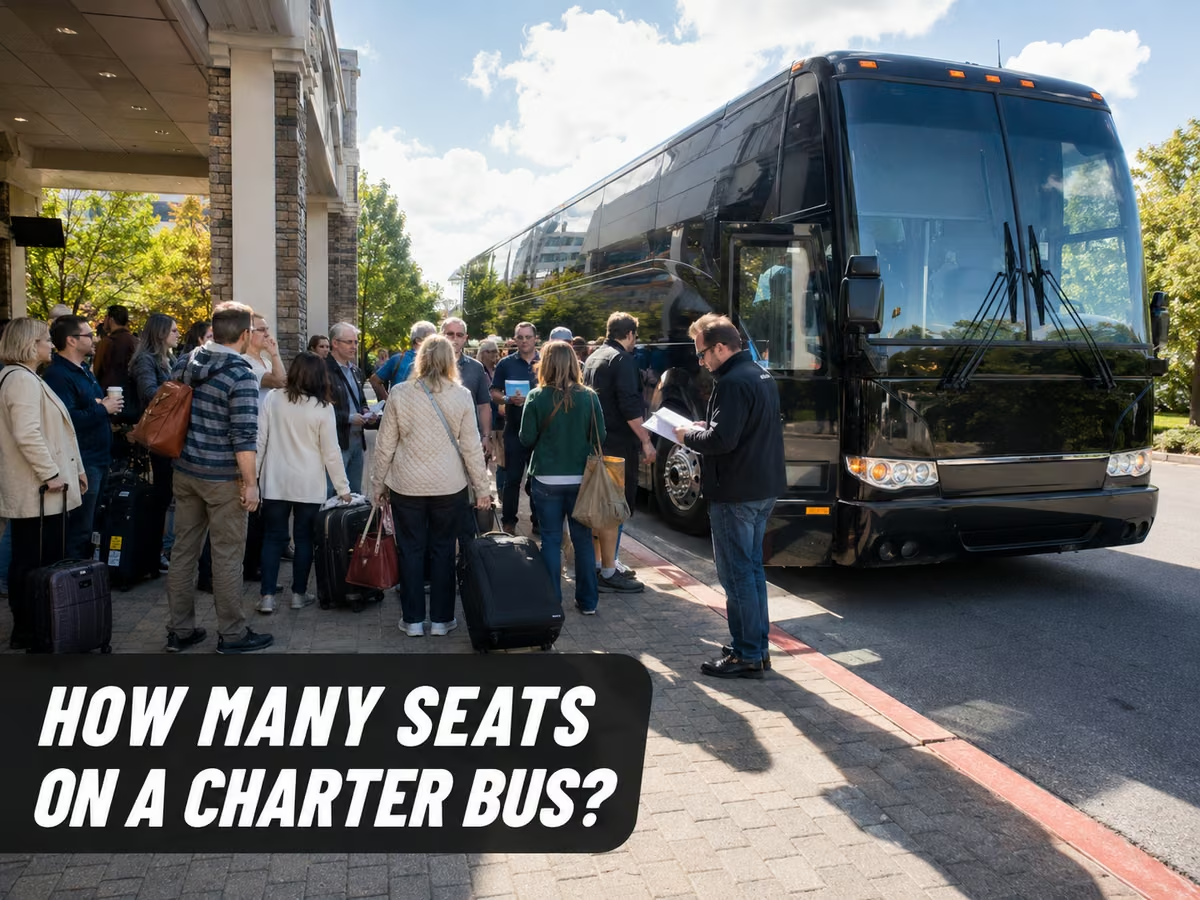
MCI's published J-Series specification table lists two lines, one right under the other: Standard Seating Capacity, 56 passengers. Optimal Seating Capacity, 60 passengers. Same coach, same 45 feet 7 inches — four extra seats purely from how tightly the rows are set.
Van Hool publishes the same split for the CX45: 56 standard, up to 60.
So the 56 is a default. Not a rating. Not a limit set by the shell.
A line somebody ticked on an order form long before your date.
Most of the time it holds up fine. Order a charter bus and a 56-seater is what pulls up, because that's the standard build all three publish. It's the exceptions that cost people seats.
The number on your quote describes the vehicle you're being offered, not the class it belongs to. Two 45-foot charter buses parked side by side can differ by 38 seats. If your headcount is anywhere near the edge of a band, ask for the seat count on the specific vehicle.
It'll save you a very bad morning at the curb.
Charter Bus Capacity by Vehicle Class
Find your headcount and the class more or less picks itself.
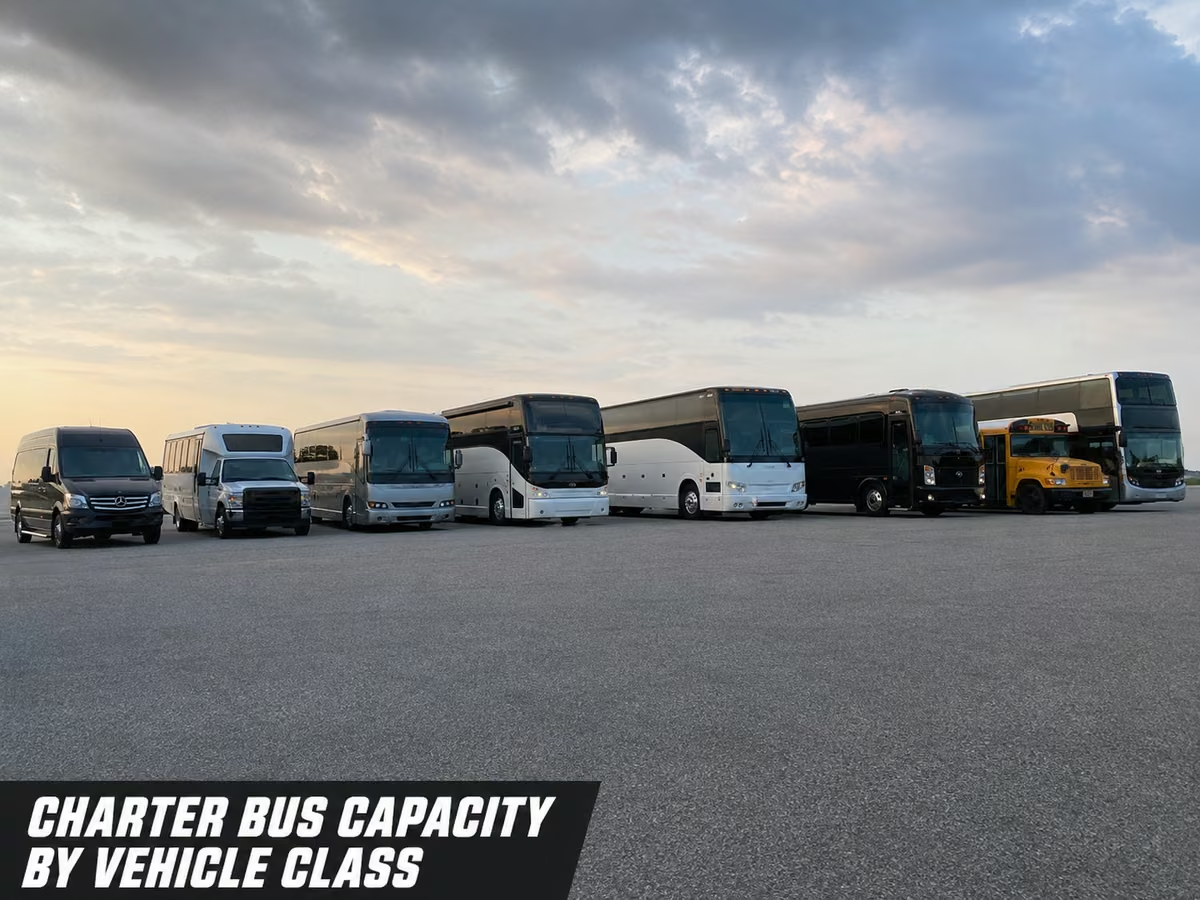
A planning estimate from published standard configurations, not a quote or a reservation. Every builder configures differently, so confirm the seat count for the specific vehicle you are offered.
| Vehicle class | Typical seats | Luggage | Onboard restroom | Trip length it suits |
|---|---|---|---|---|
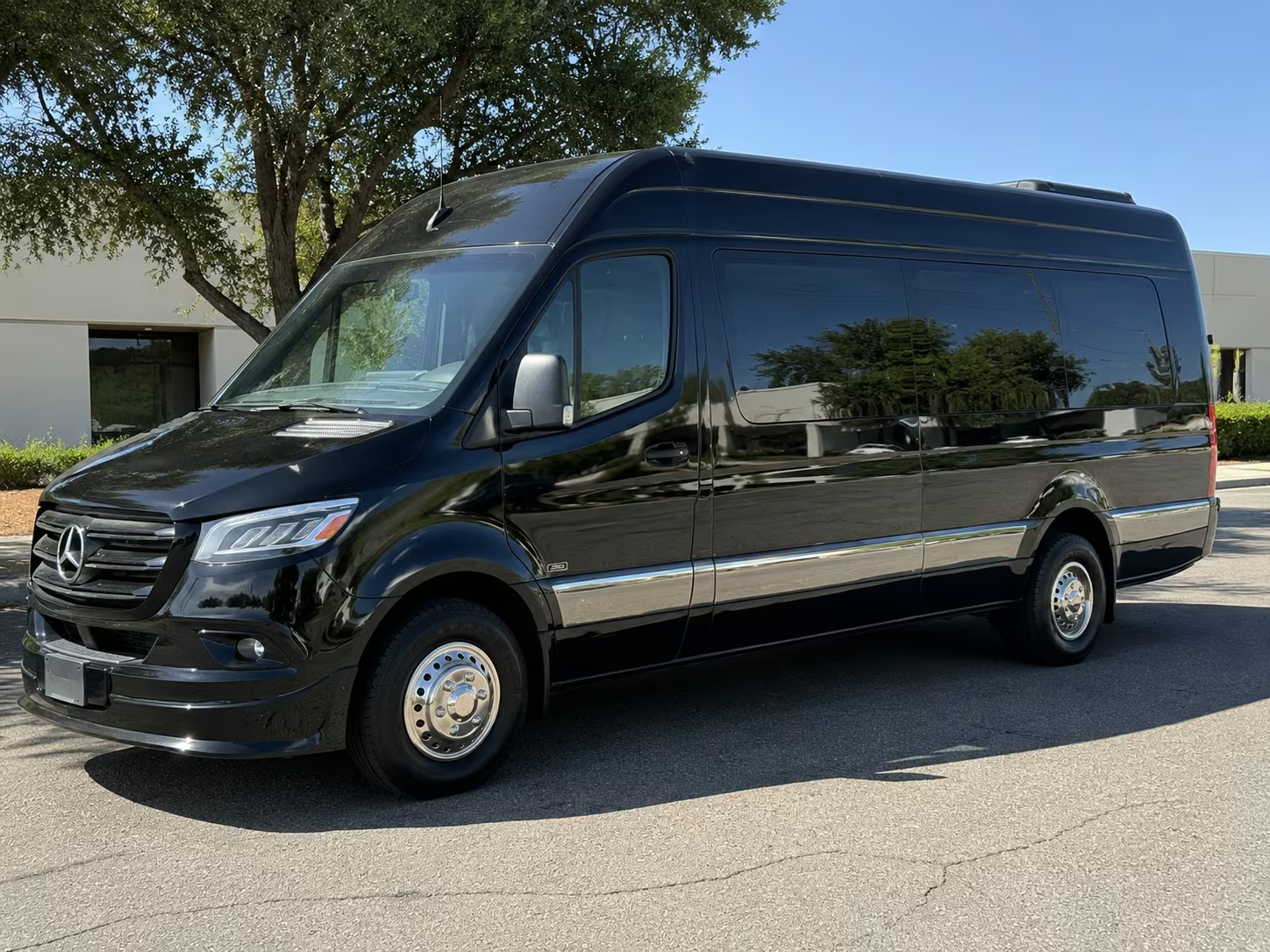
| Sprinter van / Sprinter limo | Up to about 14 | Rear compartment only | No | Airport runs, executive transfers, short hops |
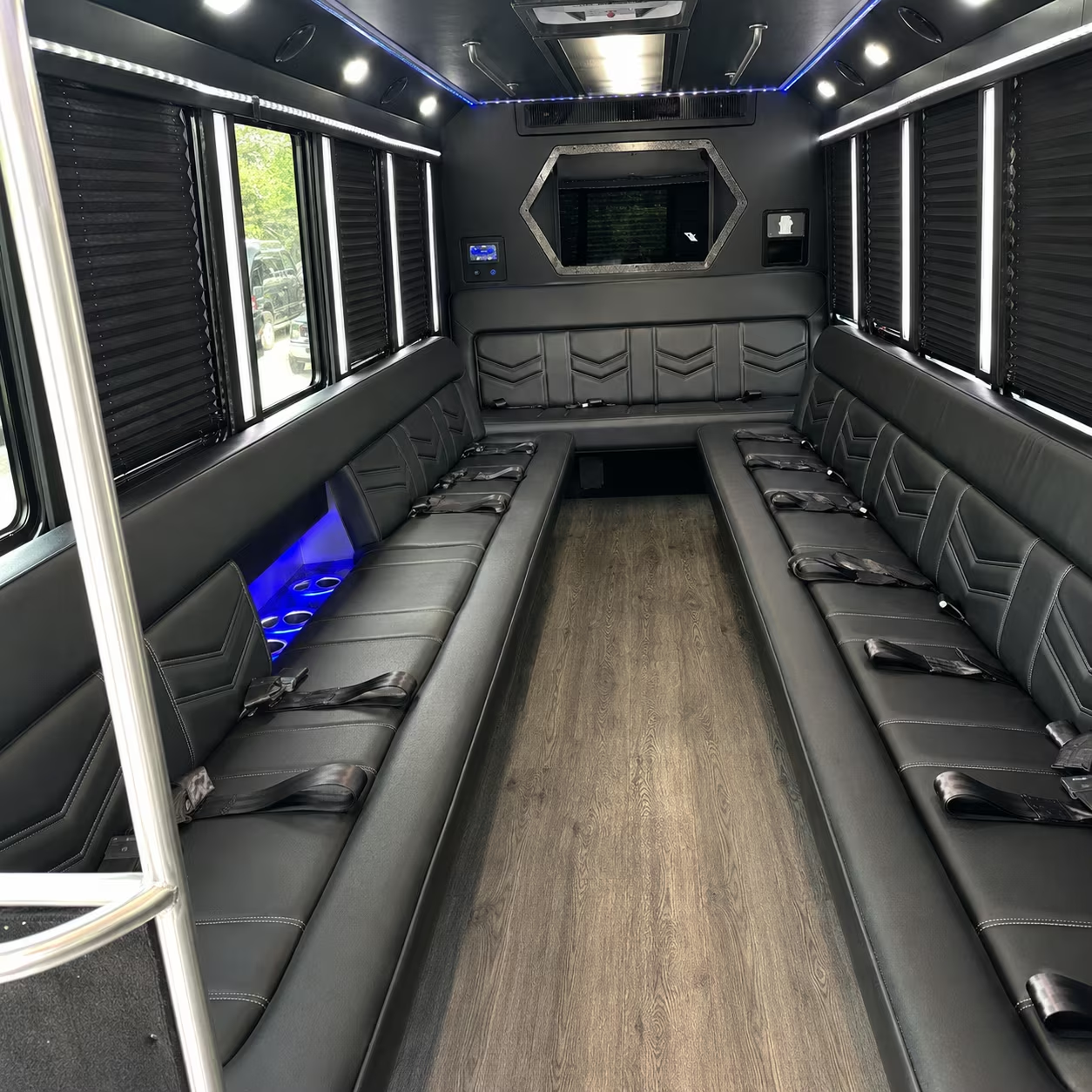
| Minibus / mini-coach | 15 to 35 | Rear luggage wall, sometimes a side bay | Rare | Day trips, city itineraries, hotel shuttles |
| Executive shuttle (mini-coach with bays) | Up to about 44 including the copilot seat, on a handful of models | Underbelly luggage storage | On some builds | Corporate moves, medium-haul |
| Mid-size coach (35 feet) | 38 to 44 | 215 to 285 cu ft underfloor | Usually yes | Long day trips, tight streets |
| Full-size charter bus (45 feet) | 56 standard, 22 to 60 built | 440 to 460 cu ft underfloor | Standard | Multi-day tours, long highway hauls |
| Party bus | 15 to 50, counted along the bench | Minimal onboard | On larger builds | Nights out, weddings, short loops |
| School bus | 72 children or roughly 48 adults | None, gear rides on laps or in the aisle | No | Short local runs |
| Double-deck coach | Up to 81 | Underfloor | Yes | Very large single-vehicle moves |
Two rows in that table trip people up. The school bus, where the printed number and the usable number aren't remotely the same thing. And the gap between minibus and full-size charter bus — roughly 36 to 44 seats — where only a handful of models cover the band at all.
If your group lands there, get your quote in early. Browse the full range of vehicle types to see the bands side by side; the bus types guide covers how the classes differ beyond seat count.
Which Coach Is Behind a 56-Passenger Quote
Almost certainly one of three. Knowing which one lets you check the figure yourself on the manufacturer's site in about ninety seconds.

| Model | Length | Seats (standard) | Seats (max published) | Underfloor luggage, no lift | Underfloor luggage, with lift |
|---|---|---|---|---|---|
| MCI J4500 | 45' 7" | 56 | 60 | 445 cu ft | 430 cu ft |
| Prevost H3-45 | 45' | 56 | 56, no higher figure published | 460 cu ft | 430 cu ft |
| Van Hool CX45 | 45' | 56 | 60 | 440.4 cu ft | 360.8 cu ft |
| MCI J3500 | 35' 10" | 40 | 44 | 285 cu ft | 270 cu ft |
| Van Hool CX35 | 35' | 38 | 40 | 281.5 cu ft | 244.4 cu ft |
| Temsa TS 35 | 35' | 40 plus one | 40 plus one | 215 cu ft | Varies by build |
Which of the three is behind your quote barely moves the seat count — all three print 56 as the standard build — but it moves everything around it. The MCI J4500 and the Van Hool CX45 are the two that publish a higher figure, 60, on the same shell. The Prevost H3-45 publishes no count above 56, but carries the biggest underfloor hold of the three at 460 cubic feet, per its published specification sheet, which matters if your group travels with ski bags or a week of suitcases.
The Van Hool CX45, whose specs are published in North America by ABC Companies, is the one to watch on accessibility: the wheelchair lift costs it nearly 80 cubic feet of hold, far more than the other two give up. The charter bus manufacturers guide covers who builds what.
Drop into the 35-foot band and the models change but the logic doesn't. Temsa's TS 35 spec page lists 40+1 seats and 215 cubic feet of luggage space. That "+1" isn't a rounding error, though Temsa never says on the page what it is.
Builders that do spell it out call it the copilot seat — Grech counts the EG40's 44 passengers "including Copilot" — and whether your quote counts that seat is why a number sometimes lands one off from what you expected.
You can usually tell the band from the photos on a quote. Count the bay doors: a full-size coach shows a run of tall luggage doors below the window line, while a minibus on a truck chassis has a smooth painted side and two or three steep steps at the door. A small tinted window at the rear quarter marks the restroom.
If the images look like stock photography, ask for a photo of the actual unit with its seat count.
How Much Does a Charter Bus Weigh?
A full-size 45-foot charter bus is rated at 54,000 pounds fully loaded — 27 tons. MCI publishes that gross vehicle weight for both the J4500 and the D4520, carried on three axles: 17,000 pounds at the front, 23,000 on the drive axle, 11,500 on the tag. Payload is listed at 16,170 pounds — passengers, bags and fuel — so the empty motorcoach accounts for the other 37,800 or so.
The 35-foot J3500 is rated at 42,000 pounds.
The exterior dimensions that come with that weight, from the same MCI table: 45 feet 7 inches long, 102 inches wide, and 141.75 inches — 11 feet 10 inches — tall. Width is the number that never moves. Every full-size coach is 102 inches across, which is a full traffic lane once you count the mirrors.
Weight decides where the vehicle is allowed to go, not just where it fits. Posted bridge limits are written in tons of gross weight, and a loaded coach is 27 of them, so an old town bridge or a rural approach road can be closed to your bus while every car in the group crosses it without a thought. Parking structures fail twice over: the posted clearance stops a coach at the entrance, and where a deck posts a per-vehicle weight limit, a full-size coach is nowhere near it.
That is why a coach loads at the curb or in a surface lot rather than under the building.
The smaller classes sit well below that line — the Ford F-600 chassis under a 40-foot minibus build is rated at 22,000 pounds, and a Mercedes Sprinter 3500 at 11,030 — which is part of why two smaller vehicles can reach a property one coach can't. If your route crosses a posted bridge, a private drive or a resort causeway, put it in the quote request alongside the headcount.
What Actually Changes the Seat Count
Three factory decisions do almost all of the work. None of them are visible from the parking lot, and all of them are published.
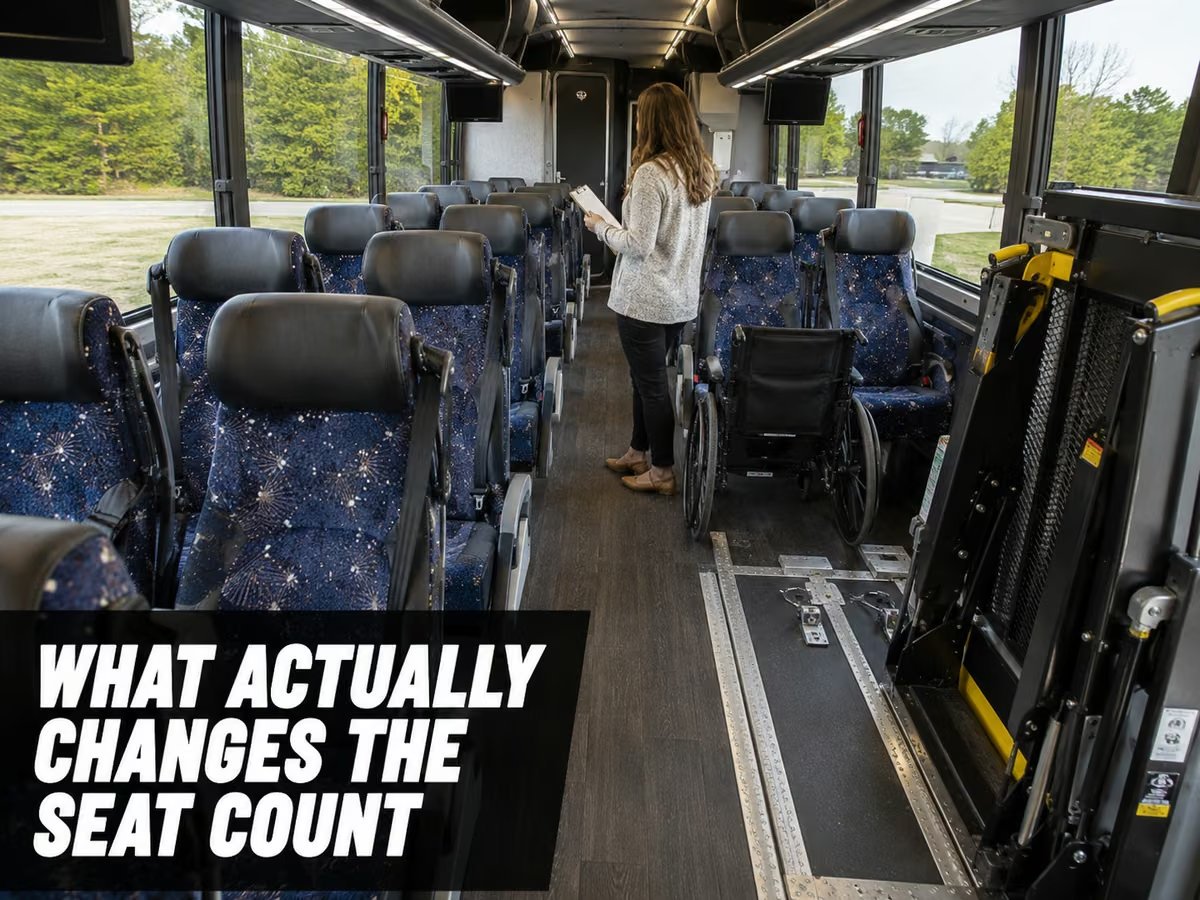
Seat Pitch: The Legroom Trade
Rows can be set tight or generous, and every inch of pitch you give back to passengers' knees is a seat you don't sell. That's the entire gap between 56 standard and 60 optimal on the identical J4500 shell.
At the far end of that scale, one premium intercity service runs 45-foot motorcoaches with just 22 seats — first-class seats, each over 20 inches wide, per its own published customer material — where a standard coach of the same length carries 56 narrower ones.
Prevost also lists a 2+1 layout as a factory option on the H3-45: two seats on one side of the aisle, a single wide seat on the other. Its spec sheet publishes no seat count for that build — the only capacity line on the sheet is the standard 56 — so if a 2+1 coach is what you are being offered, the count has to come from the fleet that owns it.
Pitch is the one variable you can trade on purpose. Tall athletes on a five-hour run: ask what the pitch is and take the roomier build even at a lower seat count. A wedding party going twenty minutes across town: ask for the tight-pitch build by number.
Restroom Fitment: Four Seats, Give or Take
An onboard restroom takes real floor area, and that area used to be seats. On a full-size charter bus you never notice, because a lavatory is standard on the H3-45 and its rivals and the 56 already accounts for it. On smaller vehicles the trade is stark, and published.
Grech Motors publishes two floor plans for the same model on the same chassis. The GM33 mini-coach comes as 28 passengers with rear luggage, or 32 without it. One shell, two numbers, a four-seat difference — straight from the builder's own plans.
Wheelchair Positions: Four to Five Seats Each
A coach built to carry mobility devices gives up floor space for the lift, the aisle clearance and the tie-downs, and that space comes out of the seat count. You can see it in the luggage columns above: every model loses hold volume the moment a lift goes in.
It shows up in seat counts too. One operating fleet lists its coach at 51 seats plus one wheelchair position, and 48 with two aboard. Another publishes 52 passengers plus one wheelchair, or 46 plus two.
Different floor plans, same pattern: each wheelchair position costs roughly four to five standard seats.
If anyone in your group uses a wheelchair or scooter, say so on the quote request, ideally 48 hours or more ahead. Vehicles with a wheelchair position exist across the network, but they're a smaller slice of what's on the road on any given Saturday, and their seat counts differ from the standard build. Sorting that out at the quote stage is a two-minute conversation.
On the morning of a wedding it's not.
Why a "72-Passenger" School Bus Doesn't Hold 72 Adults
Because it's a number rated in grade-schoolers.

The capacity painted on a school bus assumes three small elementary school students per typical 39-inch bench. What that bench actually holds is three elementary students — or two adults.
Run the numbers. A bus rated at 72 has 24 benches. Load it with adults at two per bench and you get 48 people, a third fewer than the number painted on the side — and every one of them rides a flat bench with no bays for their bags.
For a school group trip with actual children the math works fine. For adults on a two-hour highway run, a mid-size coach at 40 seats is the better vehicle even though the number is smaller.
The same gap turns up on any bench-seat vehicle, so ask two things whenever the seat type isn't spelled out: individual reclining seats or a bench, and is the number based on adults.
Party Bus Capacity Is Measured Along the Bench
Everything above assumes forward-facing seats in rows, which you can count. A party bus doesn't have rows. It has a wraparound perimeter bench, and its capacity is bench length divided by the room one person takes up — a number that assumes everyone sits at once, shoulder to shoulder, without coats.
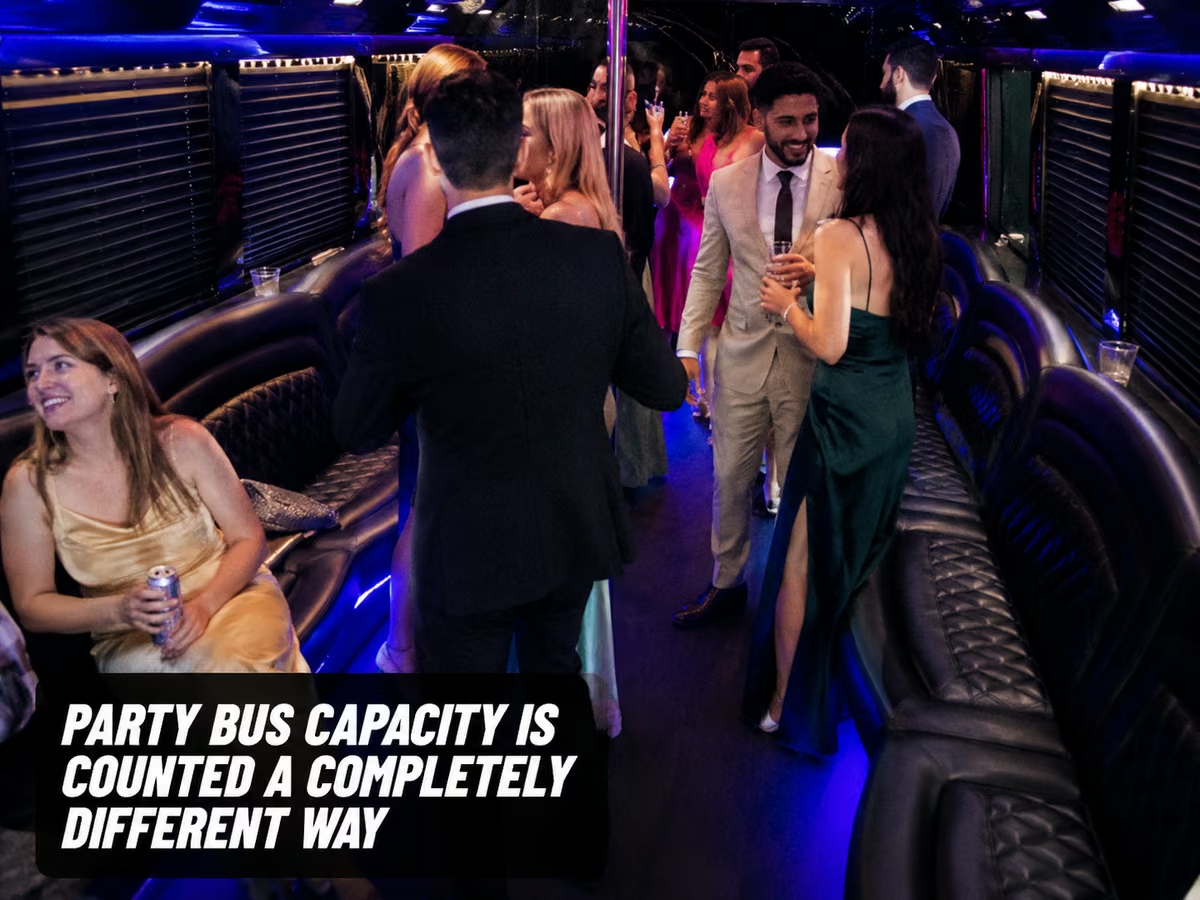
Nobody rides a party bus like that. People stand, move around, leave gaps, and in December everyone's in a coat. The practical rule: a 25-passenger party bus is comfortable at around 20, and a 50 is comfortable in the low forties.
In formalwear, or with anything to carry, knock ten to fifteen percent off the published figure before you decide. The party bus capacity guide breaks down the bench math by size.
Luggage Is a Separate Question From Seats
Seat count answers whether your people fit. It says nothing about whether their bags do.
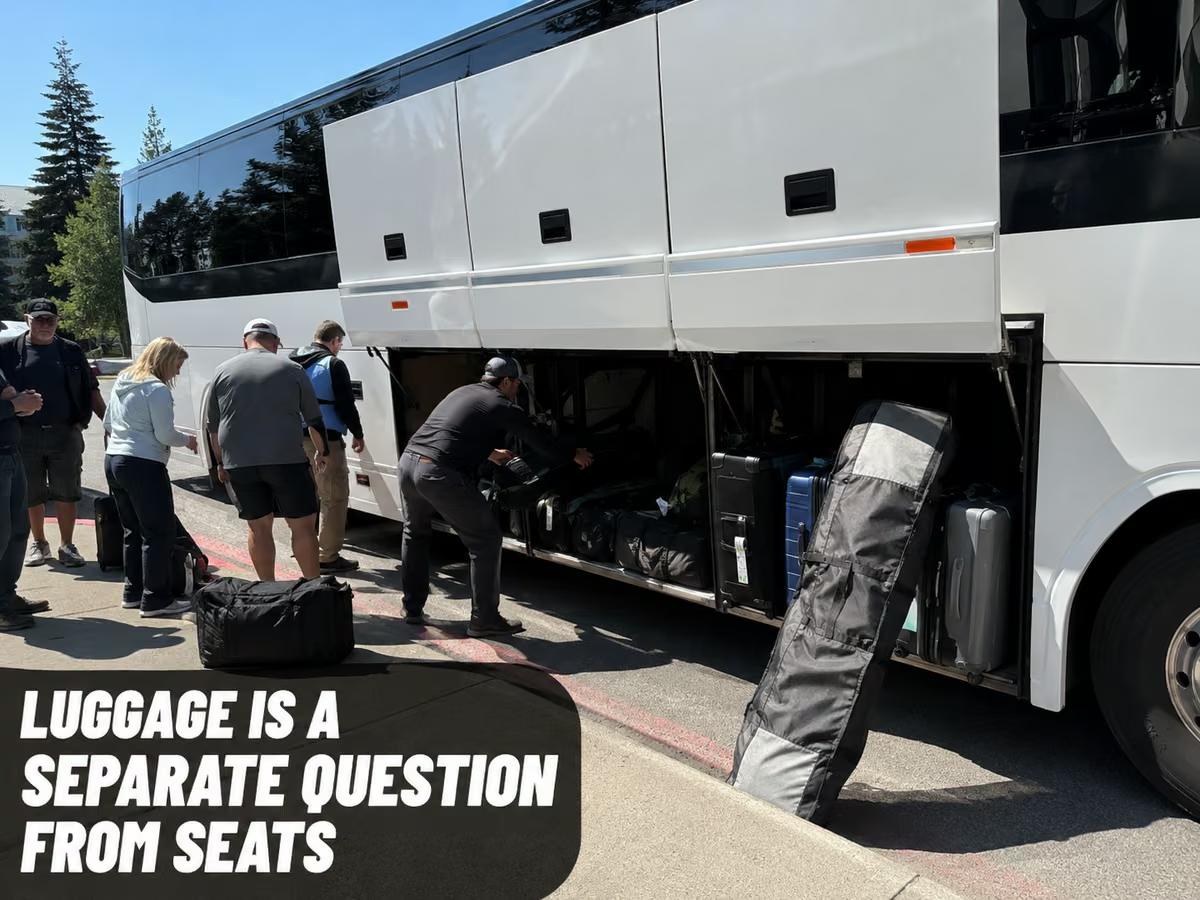
A full-size charter bus carries roughly 440 to 460 cubic feet in the underfloor bays plus another 87 to 131 cubic feet in the overhead parcel racks. Across 56 passengers that's about eight cubic feet of hold per person — a large checked suitcase each, with room left for a few coolers. It's why multi-day tours default to full-size coaches even when the group would fit in something smaller.
Now the two traps.
Trap one: minibuses have no underfloor bays at all. They're built on cutaway truck chassis, so there's a frame rail where a coach has a hold. Storage is a rear luggage wall behind the last row, or nothing — which is exactly why the Grech GM33 comes two ways.
Grech's larger EG40 mini-coach is one of the exceptions, seating up to 44 including the copilot seat, with the underbelly luggage storage Grech publishes for it. Ask about it by name if you need 40-ish seats and real bag space.
Trap two: the wheelchair lift eats the hold. On a Van Hool CX45 the underfloor volume drops from 440.4 to 360.8 cubic feet when the lift goes in — an 18 percent cut. Book an accessible coach for a five-day tour assuming a 45-footer is a 45-footer, and you find out while your bags sit on the sidewalk.
The charter bus amenities guide goes deeper on what is and isn't standard.
Size the bag problem before you request anything: a suitcase and a carry-on per person for a multi-day trip, one small bag each for a day trip, then list the odd items separately — golf bags, cellos, ski gear and drum hardware are what actually fill a bay.
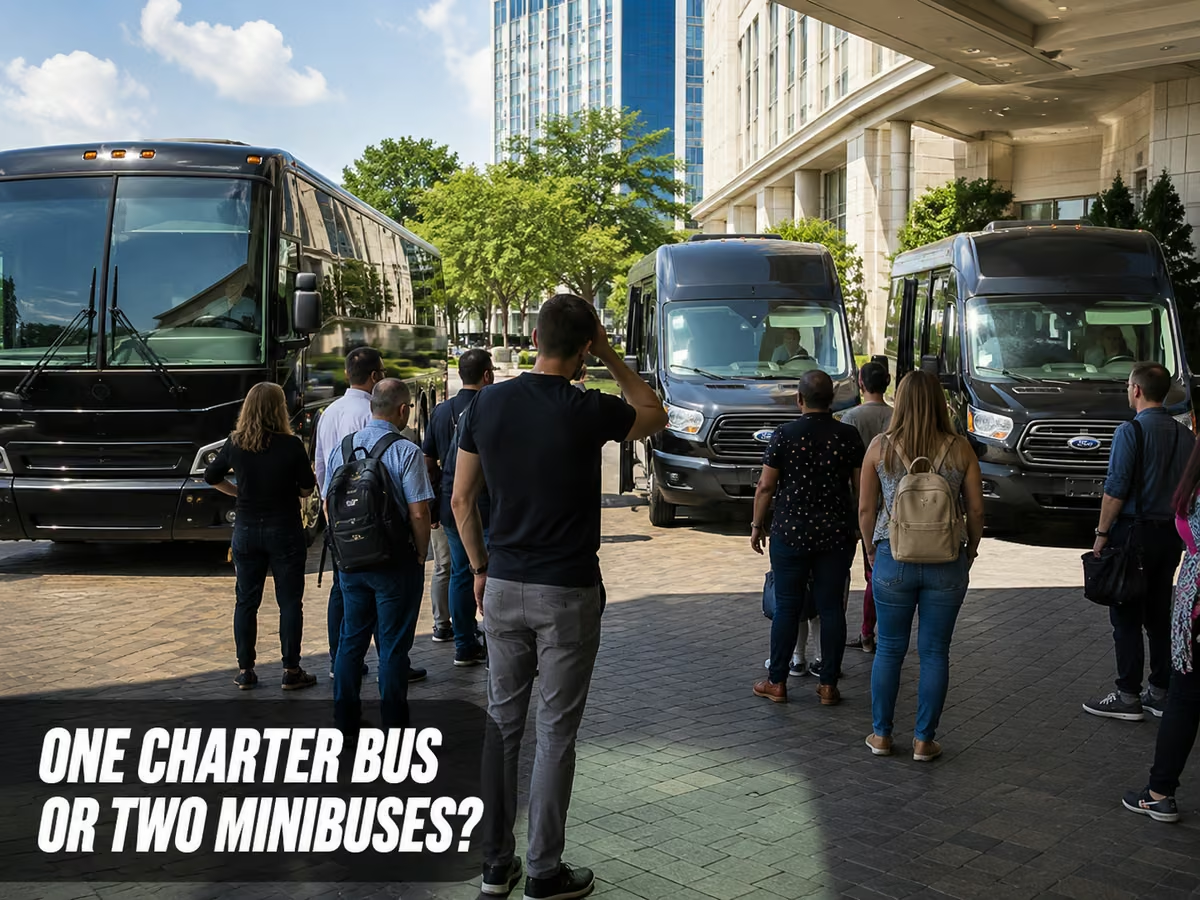
One Charter Bus or Two Minibuses?
The question usually arrives with a group of 40 to 65 people.
| One full-size charter bus | Two minibuses | |
|---|---|---|
| Seats | 56 standard, up to 60 | Typically 28 + 28 |
| Luggage | 440 to 460 cu ft in the bays | Rear walls only, and seats come out to get them |
| Restroom | Standard | Rare |
| Group stays together | Yes, one vehicle, one arrival | No, two arrivals, two head counts |
| Tight streets and low clearances | Harder, a 45-foot coach needs a wide swing to turn | Easier, ten feet shorter turns tighter, and a cutaway tighter still |
| Split itineraries | Everyone goes everywhere | Two groups can do two things |
| Cost shape | One rate across the whole group | Two rates, two vehicles |
For a straight highway run to one destination, one vehicle wins on almost every row above. The per-head math is usually better too, since you split one rate across 50-odd people instead of paying for two vehicles — the charter bus cost breakdown gets into it.
Two smaller vehicles win in three situations. A downtown itinerary with multiple stops, where a 45-footer has nowhere to sit at the curb and a minibus does. Historic districts, resort properties, and hotel porte-cocheres with height or turning limits a full-size coach can't clear.
And a group that genuinely splits, like a wedding where half the guests leave at ten. If any of those describe your day, two vehicles is the smarter build even though the math looks worse on paper. See the group transportation options for how multi-vehicle days are put together.
None of this argues for the biggest vehicle on the lot. A minibus costs less, parks where a 45-footer can't, and for a group under 35 on an afternoon run the coach's bays and restroom buy you nothing you'll use. The right vehicle is the smallest one that carries the people and the bags.
The awkward zone is 57 to 60 people. You're over a standard 56 and nowhere near needing two coaches. Three ways out: ask for a 60-seat configuration, which both MCI and Van Hool build; add a 14-passenger Sprinter limo for the overflow, which often carries the wedding party or the VIPs anyway; or move to a double-deck coach, built for up to 81.
Quoting all three takes about a minute, and the cost gap is often smaller than people assume.
What Capacity Does to the Price
Capacity and price don't move in a straight line together. A 56-seat coach and a 35-seat minibus often start in the same hourly band, because the hourly figure tracks the vehicle and the hours more than the seat count. Capacity shows up in the per-head math instead.
As a planning anchor, a charter bus in the 40 to 56 band commonly runs $206 to $327 per hour on a weekday, or $1,331 to $2,841 for a full day, and a minibus in the 15 to 35 band $207 to $246 per hour or $1,098 to $2,105 for the day. Example figures, not quotes — the real number moves with your date, hours, mileage and how busy that weekend is. The prices page lays out the bands by vehicle, and the common questions page covers how hours and minimums work.
What to Put in Your Quote Request
Seven lines, and the answer comes back right the first time:
- Your headcount, plus two. Somebody always brings a plus-one, and a chaperone always materializes. Sizing to the exact number is how groups end up one seat short at 6am.
- Adults or children. This changes the answer completely on a school bus and slightly on everything else.
- Bags per person. One carry-on each is a different vehicle than a suitcase each, and a suitcase each is a different vehicle than a hockey team's gear.
- Restroom, yes or no. It rules the minibus band in or out immediately.
- Whether you need a wheelchair position, ideally 48 hours or more ahead. It changes both the seat count and the luggage volume, so it belongs in the first message.
- Single destination or multi-stop. This is what decides one vehicle versus two.
- The seat count on the specific vehicle, not the class. Asking for the actual count on the unit being offered heads off the 56-versus-60 problem.
Everyone treats 56 as a fact for an understandable reason: it's the only number in the chain anybody writes down. Pitch, lavatory and lift all get settled on an order form years earlier, by a fleet buying a coach for routes that have nothing to do with your trip. By the time the vehicle reaches your quote, every one of those decisions has collapsed into two digits.
Partybus-rental.net turns those lines into pricing without you calling company after company and describing the trip over and over. Fill in the quick form or call 833-458-7001, and compare vehicles and online rates across a large network of bus companies. Free quote, no account required, any time, any day.
Charter Bus Seating Capacity FAQ
How many seats does a charter bus have?
A full-size 45-foot charter bus has 56 seats as standard, though builders publish a range rather than a single figure: MCI lists 56 standard and 60 optimal for the J4500, Prevost lists 56 for the H3-45, and Van Hool ships the CX45 with 56 and offers up to 60. Mid-size 35-foot coaches run 38 to 44, minibuses 15 to 35, and Sprinter vans up to about 14.
Is there such a thing as a 60-passenger charter bus?
Yes, and it's the same vehicle as the 56. Both MCI and Van Hool publish an upper configuration of 60 passengers on their 45-foot models, achieved by tightening the seat pitch. It's a real option rather than a marketing number, but it's less common on the road than the standard 56, so a group of 57 to 60 should ask for it by that number.
What is the biggest bus you can rent for a group?
Double-deck coaches are the largest single vehicle in regular charter service in North America, built for up to 81 passengers. Below that, the 45-foot single-deck charter bus at 56 to 60 is the workhorse. Above roughly 60 people, most groups move to two vehicles, because two 45-footers are far easier to source on a given date than a double-decker.
How many people fit on a 45-foot charter bus?
Between 22 and 60, depending entirely on how that coach was configured at the factory. Fifty-six is the standard build. Sixty is the tight-pitch build.
In the other direction, premium intercity operators such as Vonlane run 45-foot coaches with as few as 22 first-class seats, and Prevost lists a 2+1 layout as a factory option on the H3-45 without publishing a seat count for it. That's why the seat count on the specific vehicle you're quoted matters more than the class.
Does a wheelchair lift reduce the number of seats?
It does, on both seats and luggage. Published floor plans show a coach carrying roughly 51 or 52 passengers with one wheelchair aboard and 46 to 48 with two, so budget about four to five seats per wheelchair position. Luggage takes a hit at the same time: a Van Hool CX45 drops from 440.4 to 360.8 cubic feet of underfloor storage when the lift is fitted, and MCI's J4500 and Prevost's H3-45 both lose hold volume too.
How many adults fit on a school bus?
Roughly two-thirds of the number printed on the bus. Rated capacity is set by fitting three small elementary school students per typical 39-inch bench, while what actually fits on that same bench is three elementary students or two adults. A 72-passenger school bus therefore carries about 48 adults, with no luggage bays and no restroom.
What does the "+1" in a seat count like 40+1 mean?
It's the seat up front, listed apart from the main run of passenger rows. Temsa publishes the TS 35 at 40+1 without defining that extra seat anywhere on the page; builders that do define it, like Grech Motors, call it the copilot seat and fold it into the headline figure instead — the EG40 is "up to 44 passengers including Copilot". Two builders, two conventions, which is exactly why quotes land one off.
Grech Motors' own model pages also list its Executive Sprinter at up to 14 in shuttle form with 13 of those behind the cab. If your headcount sits on the edge of a band, ask whether the figure you were given counts that seat.
What size bus do I need for 40 people?
Forty sits in the narrowest part of the range, right between the biggest common minibus and the standard full-size coach. Three vehicles cover it: a 35-foot mid-size coach at 40 to 44 seats with underfloor bays and a restroom, a 44-seat executive mini-coach with underbelly luggage storage, whose 44 counts the copilot seat — a single-model niche rather than a whole class, so ask for it by model name — or a full-size 56-seat charter bus with room to spare. If your group has real luggage or a run over two hours, the coach options are worth the small step up.
Why do party bus capacities look so different from charter bus capacities?
Because they're measured differently. A charter bus has fixed forward-facing rows you can count. A party bus has a perimeter bench, so its capacity is a length measurement that assumes everyone is seated at once, shoulder to shoulder, with no coats.
Plan a party bus at roughly ten to fifteen percent under its published figure and the night is far more comfortable.
How much luggage does a charter bus hold?
A 45-foot charter bus carries 440 to 460 cubic feet underfloor plus 87 to 131 cubic feet in the overhead racks, which works out to roughly eight cubic feet per passenger at full occupancy. Mid-size coaches carry 215 to 285 cubic feet. Minibuses have no underfloor bays at all, only a rear luggage wall that trades directly against seats.
How far ahead should I book once I know my group size?
As soon as the headcount is firm, and sooner if you need something outside the standard 56. The less common configurations — 60-seat builds, coaches with a wheelchair position, 44-seat mini-coaches, double-deckers — are the first to run out on peak dates like prom season, graduation weekends and conference weeks. Standard vehicles are usually workable at two to four weeks out.
The unusual ones are not.
How This Guide Was Put Together
Every seat count and luggage volume here comes from the manufacturer or distributor that publishes it: MCI's J-Series specification table, Prevost's H3-45 specification sheet, ABC Companies' Van Hool CX pages, Temsa's TS 35 product page, and Grech Motors' model pages. The weight, axle and exterior dimension figures come from MCI's J-Series and D-Series specification tables, with the minibus and Sprinter weight ratings from the chassis figures Ford and Mercedes-Benz publish. The school bus figures are the standard bench arithmetic, three small elementary students per 39-inch bench as rated against two adults as actually loaded.
The wheelchair-position seat counts come from floor plans published by operating fleets. One figure sits outside the builder rule and is marked as such where it appears: the 22-seat first-class count comes from a carrier's own published customer material for the coaches it runs, and it describes that one service rather than a configuration any manufacturer catalogues. Nothing here is drawn from first-party booking records, and no figure is an estimate dressed up as a specification.
Specifications on this page come from the manufacturers' own published model pages and specification sheets, cited where they appear. Figures last checked July 2026; builders revise configurations between model years, so confirm the exact specification for the vehicle on your quote. Partybus-rental.net is a comparison and quote-request website — it does not own vehicles and does not provide the transportation itself. Corrections: contact page.
Find a Bus That Fits Your Group
Since 56 is a starting point rather than a rule, the useful next step is seeing what is available for your date at your headcount. Partybus-rental.net is a comparison site, not a bus company — it does not own vehicles, employ anyone at the wheel, or operate trips, and every amount shown on this page is example pricing rather than a quote. Instead of calling fifteen companies and repeating your trip to every one of them, you fill out one quick form or call once, and vehicles and online rates come back to you from the bus companies and transportation providers serving your area.
You are never limited to one fleet.

Whether that ends up being a 56-passenger charter bus for a multi-day tour, a pair of minibuses for a downtown itinerary, or a Sprinter limo alongside a coach to catch the overflow, the quote takes about a minute. Call 833-458-7001 any time, any day, or use the online tool to see what is available for your date. No account, no obligation, free quote.