Two quotes for the same trip — same date, same twelve people, the same run from the hotel to the airport — can come back at very different prices even when both say Sprinter van.
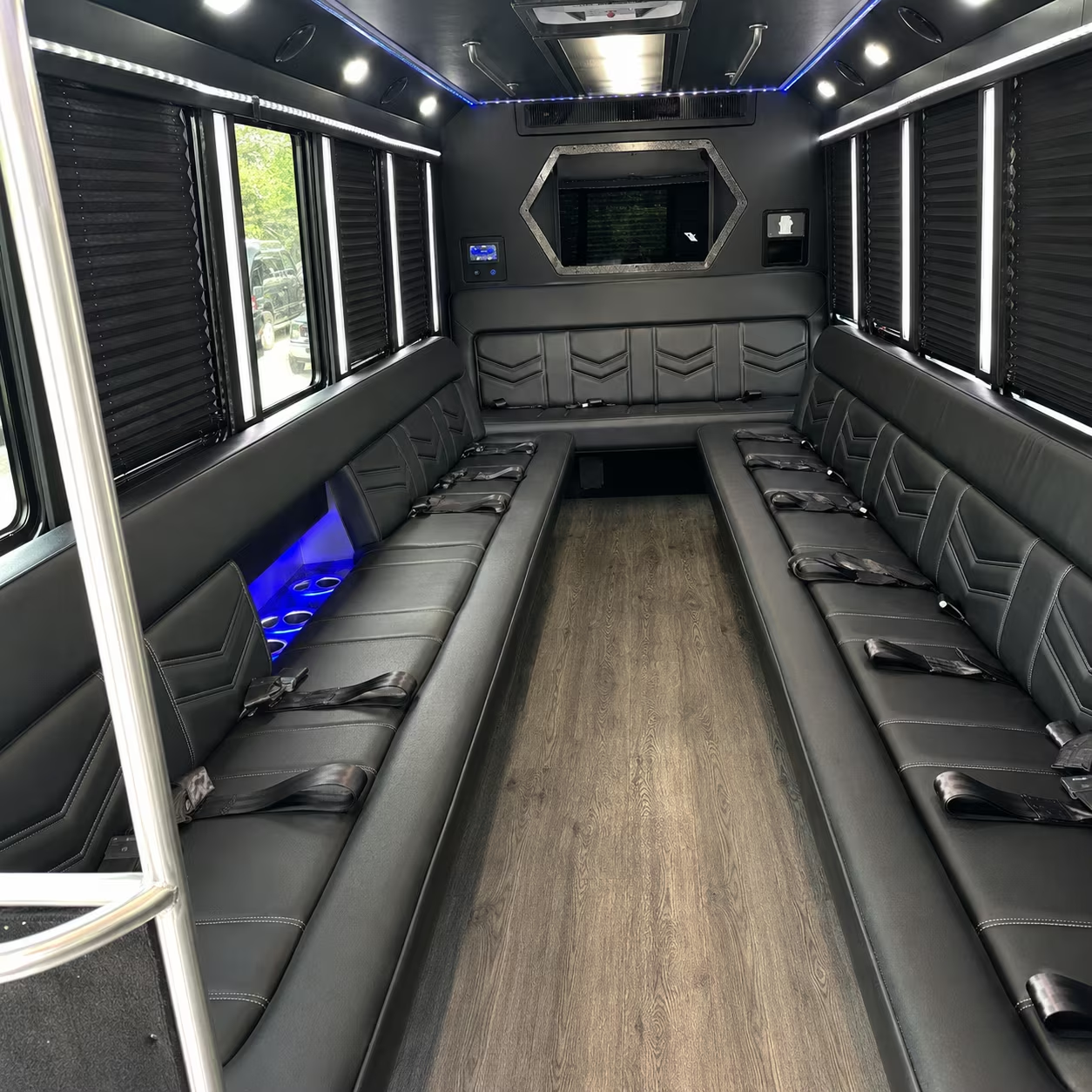
Neither company has made a mistake. But "Sprinter" describes the outside of the vehicle and tells you almost nothing about the inside. One quote may be for four rows of cloth bench seats; the other for individual leather captain's chairs, a partition, a table and a 32-inch screen.
Same vehicle.
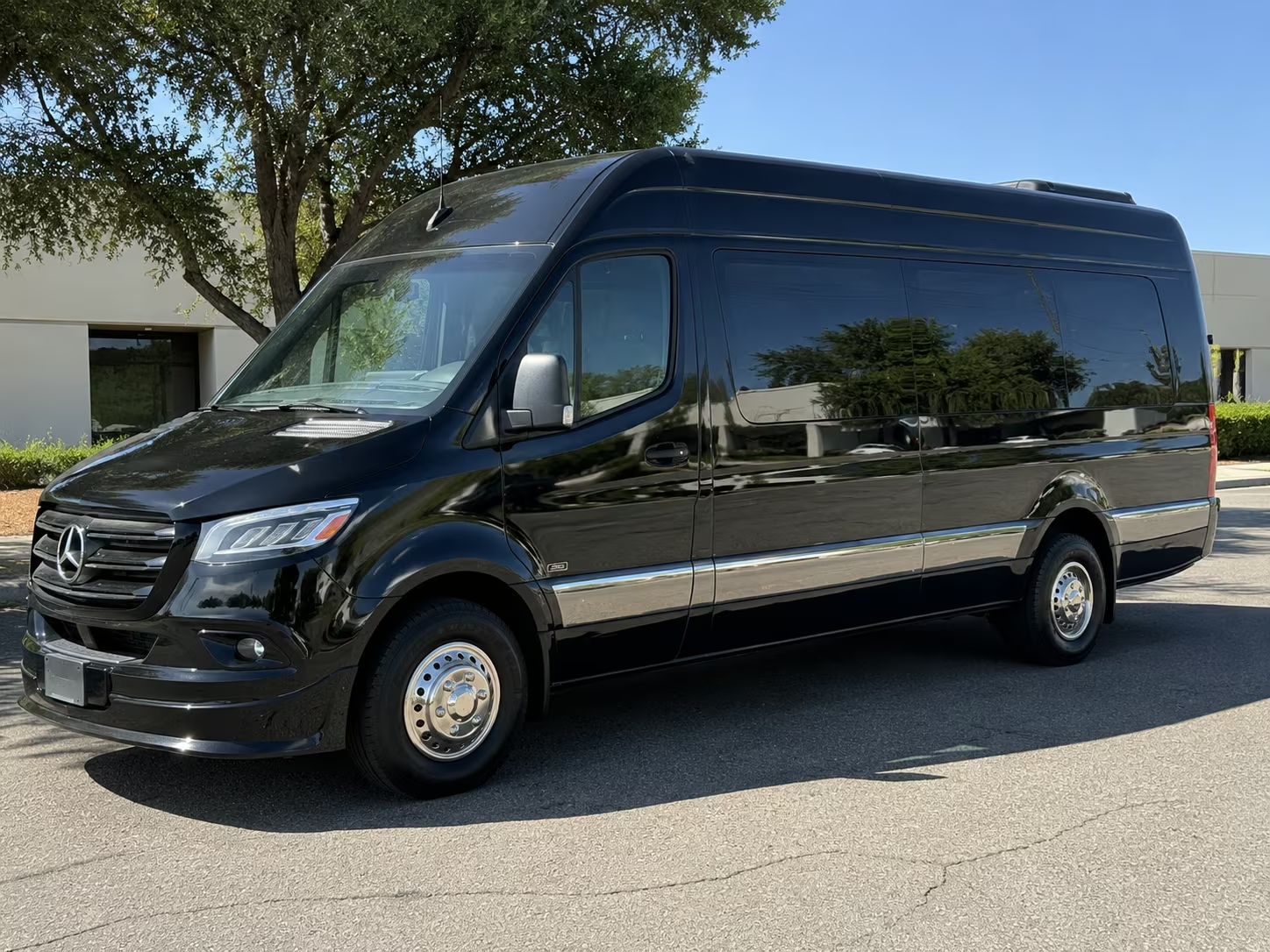
A Sprinter is one specific Mercedes-Benz model, not a category of vehicle, and what you actually ride in depends entirely on who fitted the interior. Not a size class. Not a seating layout.
Not a price tier. Everything in this guide follows from that one distinction.
The short answer. A Sprinter van is a full-size Mercedes-Benz commercial van, built in cargo, two-row and passenger configurations — the factory passenger van seats 12 or 15 depending on body length. Anything sold as a "Sprinter limo" or an "executive Sprinter" is that same van with an interior built afterward by a separate company.
Ask which one you're getting.
What is a Sprinter van?
"Sprinter" gets used the way "Kleenex" does: a generic word for a tall van. The shorthand isn't stupid, either — every Sprinter really is the same narrow, high-roofed shape, and from the curb they all look alike.
But it's one product line from one manufacturer, sold in a handful of factory configurations — cargo, two-row, passenger and cab chassis among them, only three of which carry passengers at all — with everything behind the front seats handed to outside conversion companies.
The confusion costs real money at quote time. Ford builds the Transit, which it lists at up to 15 passengers — a genuine like-for-like alternative when what you actually mean is "a tall van for twelve people." Ram builds the ProMaster, which is not the same substitute: its current US lineup runs cargo, window and cutaway bodies, and the version with a second row of seats tops out at six.
Insist on the badge and you narrow the field; assume every tall van seats fifteen and you're in for a surprise.
Midwest Automotive Designs alone publishes more than 13,000 vans crafted since it was established in 2000, at a current rate of nearly 1,800 a year. That's the scale of the aftermarket sitting behind one model name.
The configurations you'll actually be offered
Three come from Mercedes. Two don't.
| Configuration | Who builds the interior | Typical seats | What it's for |
|---|---|---|---|
| Cargo van | Mercedes-Benz | 2–3, front row only | Trades and delivery. Not a passenger vehicle — listed here so you can rule it out. |
| Two-row van | Mercedes-Benz | Up to 5 | A small work group plus their gear. Two rows of seating, cargo bay behind. Also not a group-transportation vehicle. |
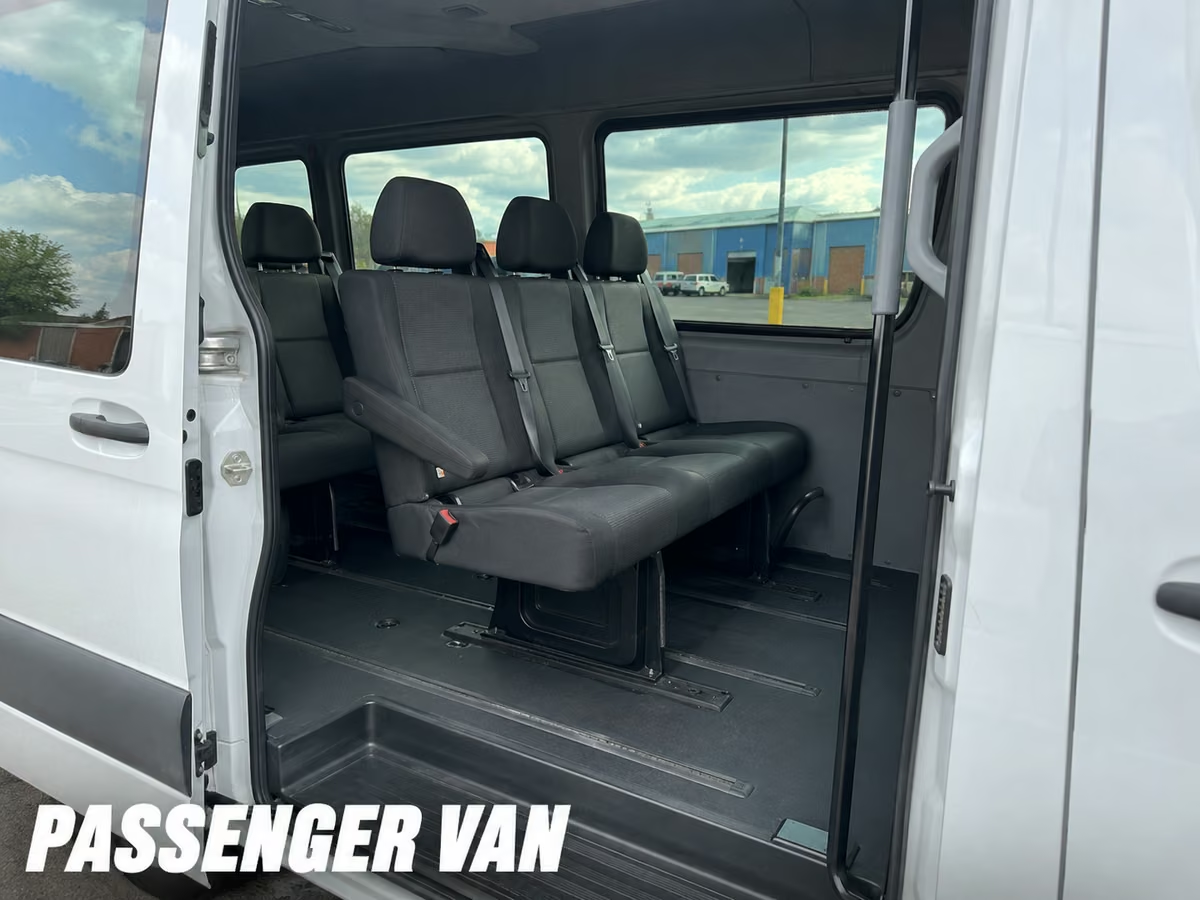
| Passenger van | Mercedes-Benz | 12 or 15 | Forward-facing rows, factory trim. Shuttles, teams, airport runs, school and church groups. |
| Sprinter limo | An aftermarket builder | Roughly 10–15 | Perimeter or face-to-face lounge seating along the walls. Events, weddings, celebrations. |
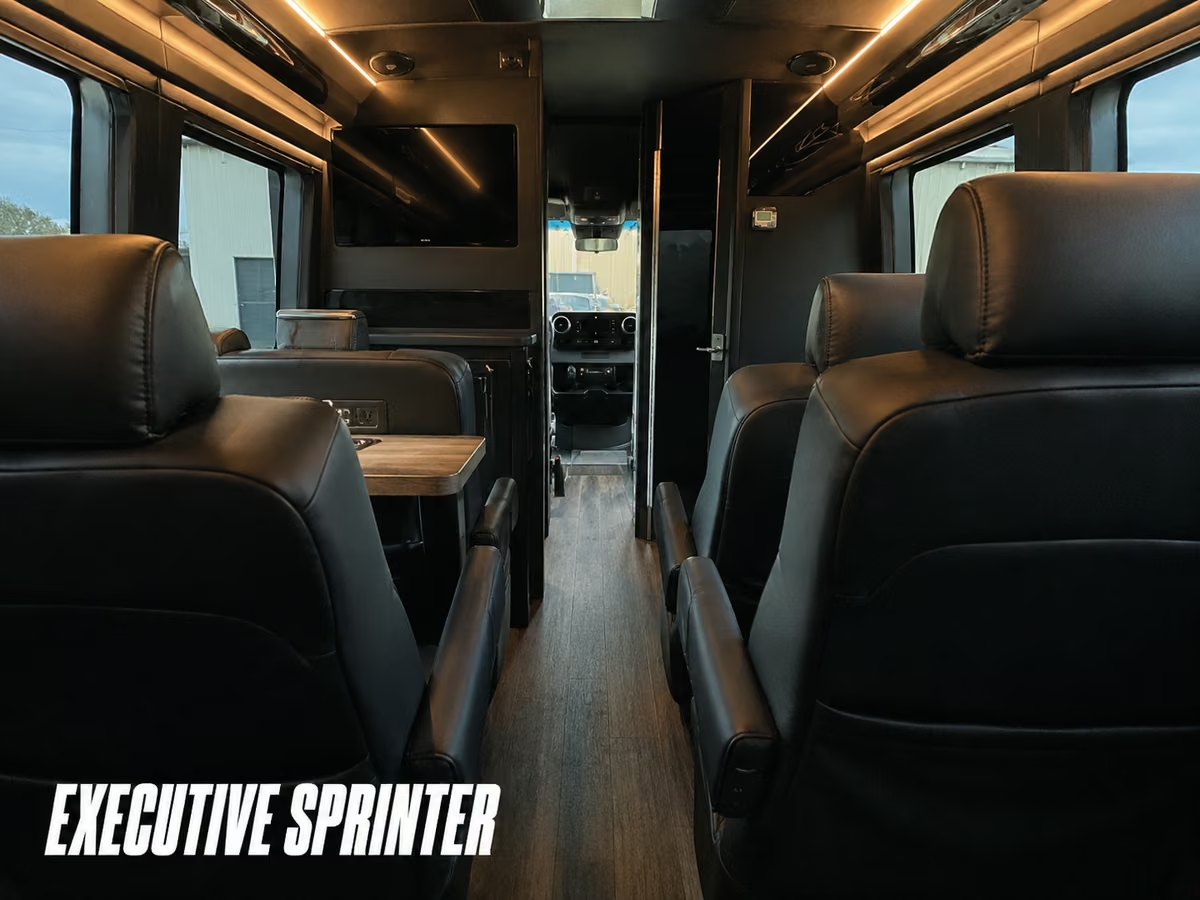
| Executive Sprinter | An aftermarket builder | Roughly 11–15 | Individual forward-facing captain's chairs, tables, power at the seat, often a partition. |
The first three are catalog items you can look up on Mercedes-Benz's Sprinter pages. The last two are not. Mercedes doesn't build a limo, and it doesn't build an executive shuttle.
It builds a van and points you at its upfitter program.
Underneath the model names there are really only three archetypes:
- The factory passenger van. Mercedes seating, Mercedes trim, maximum seats. Most people, fewest features.
- The fleet executive shuttle or limo conversion. Built for group work: 13–15 seats, heavy rear climate control, power at every row, luggage space, a screen, a partition. This is what most "Sprinter limo" and "executive Sprinter" rentals actually are.
- The lounge or coach-style build. Far fewer seats — often 6 to 11 — traded for swivel captain's chairs, big battery and inverter systems, cabinetry, and sometimes plumbing. Impressive to ride in, and the wrong tool if you have fourteen people.
Factory seats versus an aftermarket interior
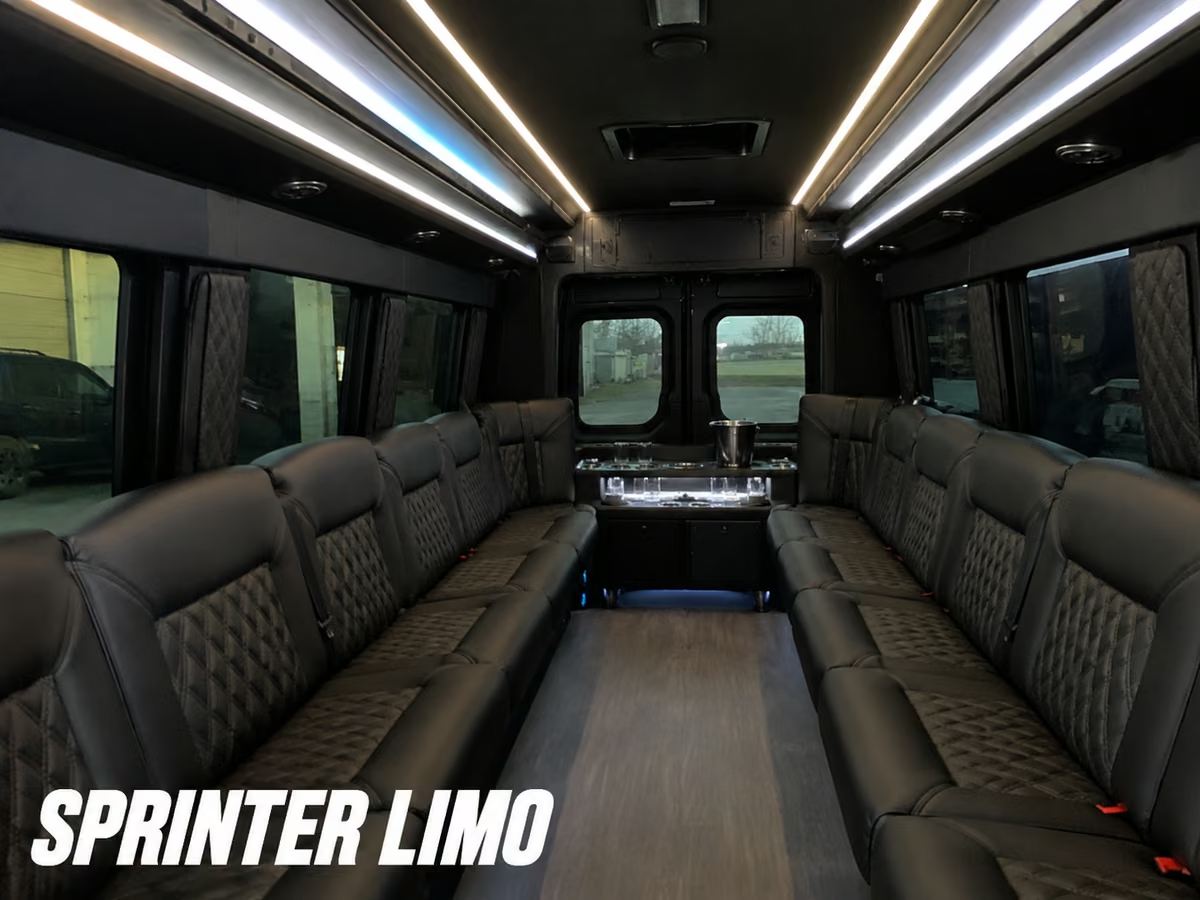
Mercedes-Benz runs a formal conversion program — it publishes an upfitting and van conversion page — and a set of approved companies build the passenger interiors that show up in group transportation. Those companies are not Mercedes. They buy the van, strip or skip the factory seating, and build what they build:
- Midwest Automotive Designs (Elkhart, Indiana; founded 2000) builds Business Class mobile-office layouts — Standard, Dual Bench, J Club and Metro, for which it publishes no seat count — an Executive Shuttle in the 14–15 range, and a limo layout with face-to-face seating and a rear bar console.
- Grech Motors builds its Executive Sprinter and its Limo Sprinter on the 3500 170-inch extended high-roof chassis — published at up to 13 and up to 14 rear passengers.
- LGE Coachworks builds Sprinter limo and executive shuttle layouts, both published at up to 15 total including the front row.
- Executive Coach Builders (Springfield, Missouri) and Royale Limousine Manufacturers both build on the Sprinter chassis alongside their sedan and bus lines.
The split is physical, not marketing. The vehicle gets assembled in two stages by two companies. Mercedes builds and ships an unfinished van: chassis, body, engine, front seats, bare metal behind them.
A separate company buys that van and builds the part you actually sit in — the floor, the seating and its mounts, the wiring, the rear climate system, the cabinetry, the trim, the screens.
Whoever finishes the van decides what it is. So when a listing says "Sprinter," it names the half Mercedes built and stays quiet about the half that determines your ride. The description is badge-deep.
Two vans with identical badges can differ by a partition, a table, standing headroom, which way the seats face, and more than a thousand dollars a day.
How to tell which one you're looking at, from the photos
You'll see pictures before you see a spec sheet. Four things in a photo settle the question:
- Seats along the walls, facing each other? Limo conversion. A factory Sprinter has never left Mercedes with perimeter seating.
- Rows of individual high-back chairs with armrests? Executive conversion. Factory bench seats are three-across and share one cushion.
- Two-tone gray plastic trim, exposed grab rails, a rubber floor mat? Factory van. A partition, an upholstered ceiling with LED strips, a plank floor or a rear counter with cup recesses all mean conversion.
- Count the side window bays. The long 170-inch body shows four behind the front area; the short 144-inch body shows three — which tells you your luggage space and your turning circle.
And if a listing shows a stock manufacturer photo rather than the actual unit, ask.
How many people fit in a Sprinter van?
Straight from Mercedes' published 2026 Sprinter Passenger Van specifications. These counts are total seats in the vehicle, front row included — so a "15-passenger Sprinter" is really 14 seats behind the front.
| Build | Wheelbase | Roof | Seats | Overall length | Overall height | Cargo volume behind the last row |
|---|---|---|---|---|---|---|
| Passenger Van 2500 | 144 in | Standard | 12 | 234 in | 103 in | 70 cu ft |
| Passenger Van 2500 | 144 in | High | 12 | 234 in | 114 in | 82 cu ft |
| Passenger Van 2500 | 170 in | High | 15 | 274 in | 113 in | 117 cu ft |
| Two-row van | 144 in / 170 in | Standard / High | Up to 5 | — | — | Most of the van |
| Cargo Van | 144 in / 170 in | Standard / High | 2–3 | — | — | All of it |
All-wheel-drive versions sit higher: 106 in on the standard roof and 118 in on the high roof at the 144-inch wheelbase.
Aftermarket builds land in a narrower band, and usually below the 15-seat factory ceiling, because lounge seating and captain's chairs eat floor space that a bench doesn't:
| Builder and model | Chassis | Published capacity, as each builder states it | Seating style |
|---|---|---|---|
| Grech Motors Executive Sprinter | 3500, 170 in ext. high roof | Up to 13 rear passengers | Forward-facing, shuttle layout |
| Grech Motors Limo Sprinter | 3500, 170 in ext. high roof | Up to 14 rear passengers | Limousine, shuttle or mobile-office layouts |
| Midwest Automotive Designs Business Class, mobile office | Sprinter | No seat count published | Individual seating, front and rear partitions |
| Midwest Automotive Designs Executive Shuttle | Sprinter | 14–15 | Forward-facing rows, 110V at every row |
| LGE Coachworks Sprinter limo | Sprinter | Up to 15 including front row | Twin perimeter benches plus rear-facing bench |
That column is not one scale. Grech counts rear passengers and leaves the front row out, so add one for a vehicle total; LGE's figure already includes the front row. Ask any published number the same way you'd ask a rental company's: does that total include the front row?
The practical read: if your group is 8 to 14 people, a Sprinter is squarely in range. At 15 you're at the ceiling of the factory van and above most converted ones — price a 15–35 passenger minibus alongside it rather than trying to squeeze. At 16 or more, the Sprinter conversation is over.
Wheelbase, roof height and where the bags actually go
Two numbers decide almost everything about how a Sprinter feels inside, and neither one usually appears in a quote.
Wheelbase — 144-inch or 170-inch. The short body is 234 inches end to end; the long one is 274 inches. That extra 40 inches is roughly one more row of seats plus deeper space behind the last row — comparing high roof to high roof, the difference between 82 and 117 cubic feet of cargo volume.
It also costs you maneuverability.
Roof — standard or high. A high-roof Sprinter publishes 75.5 to 76 inches of standing height inside. That's a person of average height walking upright to the back row.
A standard roof gives 64 inches of interior height, which means everyone ducks, and on a wedding day with hair and dresses, ducking is not a small thing. The side door opening on the high roof is 71 inches tall and 51 inches wide.
A Sprinter has no coach-style underfloor luggage bays. Those through-bays are a 40–56 passenger charter bus feature; they don't exist on a van. On a factory passenger Sprinter, every bag rides behind the last row, or on laps.
On a 15-seat 170-inch van that's 117 cubic feet — enough for 15 carry-ons and a few checked bags, not enough for 15 people flying home from a week-long conference with a roller bag each.
Some converters build a dedicated rear luggage compartment into shuttle and executive layouts, and it helps. It's still a fraction of what a coach carries underneath, and it usually costs you a row of seats.
The payload ceiling
Payload can be a harder limit than cubic feet, and it rarely appears in a quote. Mercedes publishes 3,109 pounds of payload on the 15-seat 170-inch high-roof passenger van. That's everything you put in: people, bags, gear.
Arithmetic on the manufacturer published payload figures for a factory passenger van. A converted interior spends part of that allowance before you load anything, so treat this as the optimistic case.
Do the arithmetic. Fifteen adults at a conservative 180 pounds each is 2,700 pounds. That leaves a little over 400 pounds for all luggage combined — about 27 pounds per person.
A single 50-pound checked bag each would put the van roughly 340 pounds past its published payload before anyone's carry-on goes in.
The numbers reverse on the smaller van. The shorter 12-seat van publishes up to 3,307 pounds of payload. Twelve adults is 2,160 pounds, which leaves around 1,100 pounds — call it 90 pounds a head.
The small Sprinter carries roughly three times as much per person as the big one.
And a conversion spends payload before you do. Cabinetry, heavier seating, batteries, inverters and rear climate systems all come out of the same allowance, which is part of why a heavily built Sprinter seats fewer people than a factory one. If your group is at the top of a van's seat count and traveling with bags, price a minibus instead, and say your bag count out loud when you request a quote.
It changes the vehicle, not just the price.
What's actually inside a converted Sprinter
Rental listings describe Sprinter interiors in adjectives. Builders describe them in numbers, and the numbers are public. Here is what two fleet builders publish as standard on their current Sprinter models — a way to test whether a listing is describing a real vehicle.
| Grech Motors Executive Sprinter | Midwest Automotive Designs Executive Shuttle | |
|---|---|---|
| Chassis | 3500, 170 in extended high roof; 11,030 lb GVWR | Sprinter 3500, 170 in extended |
| Capacity | Up to 13 rear passengers, shuttle floor plan | 14- and 15-passenger floor plans |
| Climate | Roof-mounted rear HVAC, dual compressor, 55,000 BTU | High-output rear air and heat, dual compressor, condenser and evaporator |
| Power at the seat | 110V and USB at every row, inverter-fed | 110V outlets with USB at each seat row; 1,000-watt inverter; dual battery charging |
| Screens and audio | 32-inch TV and table; upgraded sound; LED accent and under-seat floor lighting | 32-inch TV with speakers; rear speaker upgrades; color-changing ceiling accent lights |
| Luggage and storage | Rear luggage compartment on shuttle builds | Lighted rear luggage area, rear wall storage shelf, overhead cabinets with netting |
| Quiet | Complete insulation package | Complete insulation plus an interior sound-deadening package |
| Boarding and privacy | Power passenger entry step; electric sliding door; tinted rear windows; full limo wall on the 13-passenger plan | Fiberglass running board with step; rear intercom |
| Small things that matter | Entry grab handle | Cup holder at every seat; dual rear clothes hangers |
Two of those deserve a second look. 55,000 BTU of roof-mounted rear cooling is a serious number, and it exists because fourteen people in a metal box in July is a genuinely hard cooling problem — if your trip is a summer airport run in Phoenix or an August wedding in Charleston, rear HVAC capacity matters more than the upholstery. And dual rear clothes hangers sound trivial until you are moving a wedding party in garment bags, at which point they are the feature you remember.
Interior heights on the converted side run a little lower than the factory van, because the build eats into it. Midwest publishes roughly 74 inches of interior height across its executive lines against Mercedes' 75.5–76 inches on a bare high roof.
What the builders don't publish. Several things buyers assume are documented simply aren't: insulation materials and R-values, acoustic ratings, exact window tint percentages, amplifier wattage and speaker counts, and detailed seat-mounting engineering. Those live in engineering packages, not brochures.
Where a page is silent, the honest answer is unspecified — not a guess dressed up as a spec. If a rental listing cites numbers that no manufacturer publishes, that is worth a question rather than a click.
Why a Sprinter won't fit in a parking garage
A Sprinter's height changes where it can physically go, and rental copy rarely mentions it. The shortest factory passenger Sprinter, on a standard roof, is 103 inches tall. The high roof is 114 inches.
The all-wheel-drive high roof is 118 inches, which is nine feet ten. Across the range, a Sprinter stands 8.5 to nearly 10 feet tall.
Parking structures run lower than that. Posted clearances at garage entrances commonly run about 6.5 to 7 feet, and newer decks that advertise oversized access tend to post 7 to 8. Those are common postings, not a code minimum.
Covered hotel entrances are their own trap: the canopy over the front door is often lower than the garage behind it, and it is the one place a hotel will tell you to pull in.
A Sprinter does not go into a parking structure. The sign at the entrance is the number that counts.
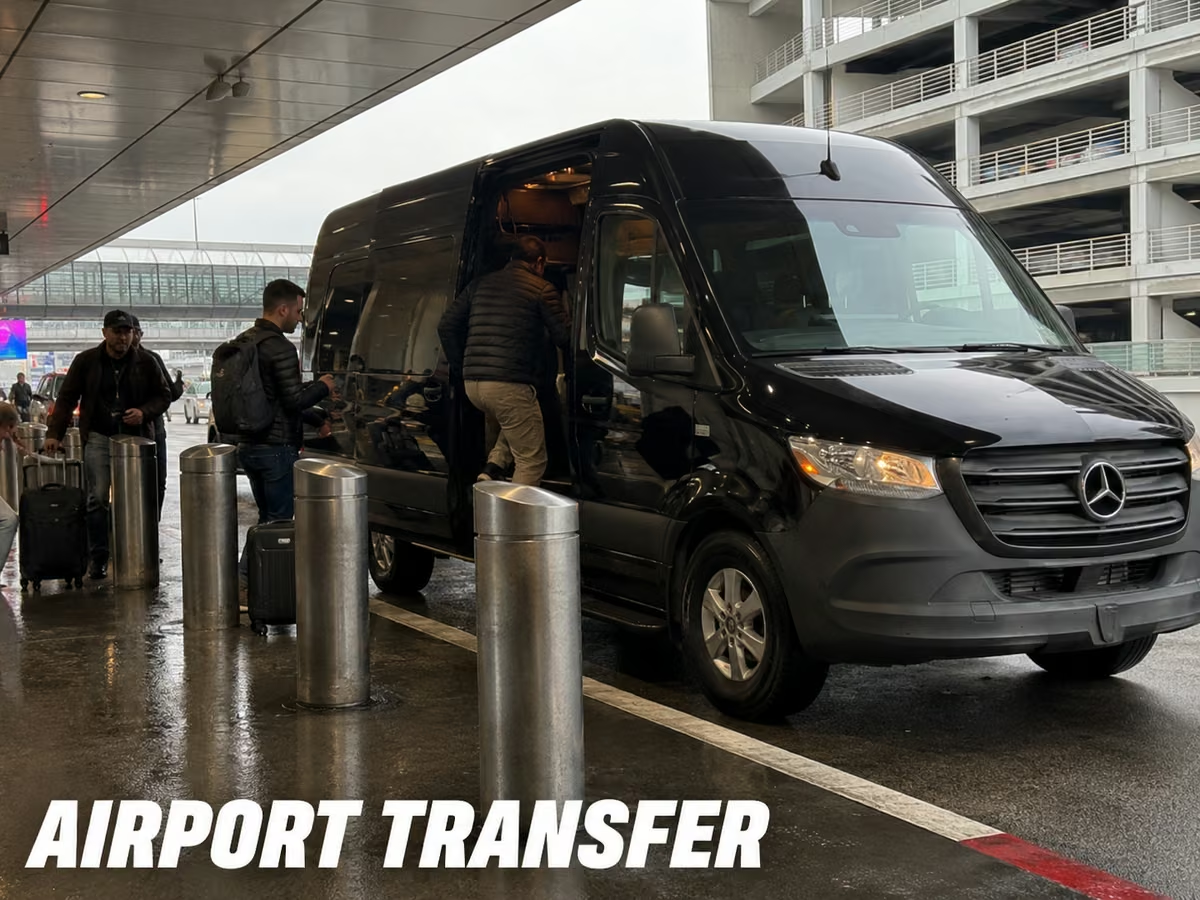
What that means for your trip: treat a Sprinter as a curbside and loading-zone vehicle. Plan the stops around a curb — an open-air hotel entrance, the arrivals-level commercial lane at an airport, a venue's passenger loading zone, a surface lot. That is also the argument for the vehicle in the first place: your group gets set down at the door instead of walking up out of a parking structure.
Four things worth checking before your date:
- Each venue's preferred oversized drop-off. Ask one question: where do you want an oversized van to set down passengers? Most places answer immediately, because caterers and shuttles ask them every week.
- The hotel entrance, specifically. Ask whether the covered entrance has a posted height. If it does, the pickup happens at the street instead, and everybody should know that before the bags come down to the lobby.
- How your airport handles van-sized vehicles. Some route anything larger than a car to a commercial lane or ground-transportation island rather than the arrivals curb, which changes where your group waits with their luggage.
- Any arch on the entry drive. Wineries, historic estates, gated neighborhoods and country clubs often have a stone or timber arch on the way in. Those are rarely posted at all, and they stop a tall van cold.
Turning circle: why the short Sprinter gets places the long one can't
Mercedes publishes a curb-to-curb turning diameter of 45 feet for the 144-inch wheelbase and 52 feet for the 170-inch. Seven feet does not sound like much until it is a switchback on a winery access road, a hotel roundabout built in 1978, or a residential cul-de-sac where the wedding party is getting picked up.
The practical rule: if any part of your itinerary involves narrow streets, tight courtyards or a historic downtown grid, the 144-inch body is the one to ask for — and you pay for it with three fewer seats and, at the same high roof, 35 fewer cubic feet of luggage space. If your day is highway, hotel, big venue, big lot, take the 170-inch and enjoy the room. Mention the tightest stop on your itinerary when you request a quote; that one detail decides the wheelbase.
Van or bus? It depends on the seat count — and that shapes your quote
Ask ten rental companies whether a Sprinter is a van or a bus and you will get both answers, because the market does not split those words the way a dictionary would. It splits them by seat count — and that decides which page of a company's website your trip lands on and which rate card comes back. Roughly where the line falls:
| Seats | What the market calls it | What that means for your search |
|---|---|---|
| Up to about 10 | Van, executive van, sometimes "Sprinter limo" | Lounge and executive conversions live here. Shop by floor plan, not seat count. |
| About 11 to 15 | The crossover zone: van, shuttle, Sprinter limo, minibus, occasionally "small party bus" — all for the same vehicle | Search more than one word. A 14-passenger Sprinter limousine and a 15-passenger shuttle can be the same body with different seats bolted in. |
| About 16 to 35 | Minibus — or party bus, if the interior is lounge seating | A body built onto a cutaway chassis: more seats, some underfloor storage, a wider aisle. The same shell gets listed either way depending on what is bolted inside it, so search both words at this size. |
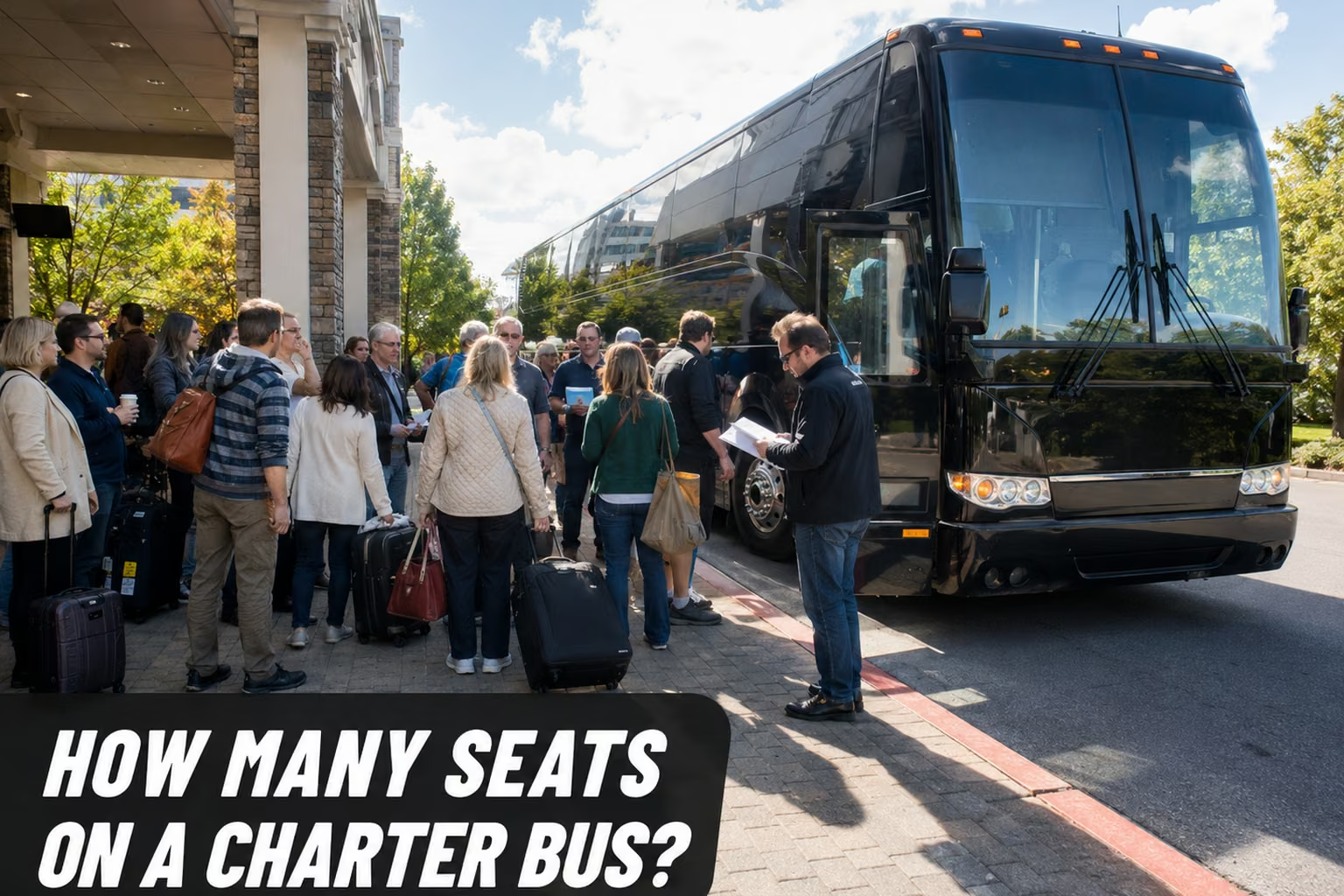
| 36 and up | Party bus, charter bus, motorcoach | Underfloor luggage bays, a restroom on the coach side, a longer-day rate. |
Two things follow. First, the noun does not set the price — the seat count and the hours do. Calling a 14-seat vehicle a limo instead of a van moves nothing on the invoice.
So lead your request with the number of people and the number of bags and let the company tell you which of its vehicles fits, rather than picking a name first and discovering it doesn't hold everyone.
Second, the crossover zone is where the useful comparisons hide. Around 12 to 15 passengers you may be quoted a plain factory shuttle, a converted executive Sprinter and an entry-level minibus for the same trip, and those three can sit hundreds of dollars apart with real differences in luggage room and aisle width. Price all three — the group transportation options at that headcount are wider than most people expect.
In everyday conversation, everyone calls all of them vans anyway.
Sprinter vs. minibus vs. stretch limo vs. party bus
A Sprinter sits in a specific gap: bigger than an SUV, smaller than anything with luggage bays.
| Sprinter van / Sprinter limo | Minibus | Stretch limousine | Party bus | |
|---|---|---|---|---|
| Typical capacity | 10–15 | 15–35 | 6–20 | 15–50 |
| Construction | One-piece factory van body | Cutaway chassis with a body built on it | A production car cut and lengthened | Cutaway or bus chassis with a lounge interior |
| Standing headroom | Yes on high roof (about 76 in) | Yes | No — you slide in and stay seated | Yes |
| Luggage | Behind the last row only. No underfloor bays. | Overhead plus some underfloor | Trunk, usually small | Onboard, limited |
| Tight streets | Best in class — 45 ft turning circle on the short body | Moderate | Poor — long overhangs, low ground clearance | Poor |
| Parking garages | No — 103–118 in tall | No | Sometimes, if the deck is tall enough | No |
| Best at | Airport runs, executive transfers, small wedding parties, tastings, 8–14 people | Mid-size groups, longer distances, more bags | Arrival moments, short hops, a wedding couple | Celebration nights where the ride is the venue |
The clean dividing lines: a minibus is the next size up and is built differently — a body constructed on a cutaway chassis rather than a factory van shell — which is why it gains seats and some underfloor storage. A stretch limousine is a passenger car that has been cut and lengthened, so it wins on entrance drama and loses on headroom, luggage and any street narrower than it is long. A party bus is a different job entirely: the interior is the destination.
If you want the whole lineup side by side, the bus types guide covers every vehicle class, and party bus capacity by vehicle compares the seat counts once you count bags too.
When a Sprinter is the right call — and when it isn't
Worth saying before the list: on plenty of trips none of this matters. If twelve people are going hotel-to-airport at six in the morning with roller bags, the plain factory passenger van is the cheaper vehicle and the better one. Captain's chairs and a 32-inch screen are wasted on a 25-minute run.
A conversion earns its price only when people sit in it long enough to notice it.
It's the right pick when:
- Your group is 8 to 14 people. This is the sweet spot. Below eight you are paying for empty seats; above fifteen the vehicle doesn't exist.
- You're doing an airport run. One vehicle at the arrivals curb beats three rideshares with three arrival times and three fare receipts. Ask for flight tracking when you request an airport transfer quote.
- It's a client or executive move. Forward-facing captain's chairs, power at the seat, a table and a partition make the ride usable working time. That's the whole point of the executive configuration, and why it fills so many corporate transportation itineraries.
- The route is tight. Winery access roads, historic districts, mountain switchbacks, residential pickups. The 144-inch body goes places a minibus won't attempt, which is what puts it on so many tasting-room and brewery tour days.
- It's the wedding party, not the guest list. A 14-passenger Sprinter limousine holds a bridal party and gets them to the door with the dresses intact. Guest shuttles are a different vehicle and a different plan.
- Nobody wants to take the wheel. One vehicle means no one skips the evening and nobody follows in a separate car.
It's the wrong pick when:
- Everyone has checked luggage. The payload arithmetic above is why: a full van with one checked bag each is already past the published ceiling.
- You're over fifteen people. Two Sprinters usually cost more than one minibus and give you two arrival times instead of one.
- You're on the road four hours each way. Factory passenger Sprinters have no onboard restroom, and most rental-market executive and limo Sprinters don't either. On a long haul that's stops you didn't schedule.
- Your itinerary is garage-dependent. If every stop is a parking structure with a posted clearance, you're fighting the vehicle all day.
- You want people moving around. A high roof lets you stand; it does not make an aisle wide enough to socialize in. That's what a party bus is built for.
What does it cost to rent a Sprinter van?
Sprinter rentals price by the hour, and the two configurations sit in different bands — a plain factory passenger van at the bottom, a converted limo or executive interior at the top. The next two sizes sit alongside because 12 to 15 passengers is where all of them compete for the same trip.
| Vehicle | Example hourly | Example full day |
|---|---|---|
| Sprinter van, 12–15 passengers | $203–$273 | — |
| Sprinter limousine, 14 passengers | $204–$318 | — |
| Minibus, 15–35 passengers | $207–$246 | $1,098–$2,105 |
| Charter bus, 40–56 passengers | $206–$327 | $1,331–$2,841 |
Those are example figures to help you plan, not quotes — the quote moves with your date, hours, mileage and how busy that weekend is. Notice the crossover: at the top of a converted Sprinter's range, a minibus with more seats and more luggage room can come back at or below it. Price both rather than assuming smaller is cheaper.
Partybus-rental.net compares quotes and connects groups with the bus companies and transportation providers serving each area; it does not own vehicles, employ anyone at the wheel, or operate trips, and every amount shown here is example pricing. You don't have to guess at your own number: put your trip details in once and you could have pricing for your trip in about a minute, or call 833-458-7001 any day of the year. No account, no obligation.
The pricing page has more on what moves a rate.
Four things move the number:
- Which interior. A factory passenger van and a converted executive Sprinter are different products at different prices, even though both get quoted as "Sprinter."
- Total hours. Including any time the vehicle waits between stops.
- Date and demand. Prom weekends, graduation weekends, and conference weeks in a convention city tighten van supply first, because vans are the smallest and most-requested unit.
- Mileage. A hotel-to-airport hop prices differently from a 90-mile wine-country loop.
Vague requests come back as vague ranges. Put all of this in the form: exact headcount, bag count split into checked and carry-on, every stop in order with the tightest flagged, real start and end times, seating preference, and anything oversized coming along.
Six questions to ask so your quote and your vehicle match
- "Is this a factory passenger van or a converted interior?" This is the question that explains a price gap.
- "Forward-facing rows or perimeter lounge seating?" Forward-facing for airport runs, working transfers and anyone prone to motion sickness. Perimeter for a group that wants to face each other.
- "Which body — 144-inch or 170-inch, standard roof or high roof?" Two numbers that set your headroom, your luggage space and whether the vehicle can make a tight turn.
- "How many bags fit behind the last row, with all seats in place?" Say your real bag count. This is the answer that decides between a Sprinter and a minibus.
- "Can you name the floor plan, or show me photos of this unit?" Real builds have named configurations — Grech's Executive Sprinter shuttle floor plan, Midwest's 14- and 15-passenger Executive Shuttle plans, Midwest's Business Class layouts called Standard, Dual Bench, J Club and Metro. If a vehicle can be mapped to a named factory or builder configuration, the amenity list is manufacturer data. If it can't, it's marketing copy.
- "Does any stop on my itinerary have a low clearance?" Ask yourself this one. If the answer is yes, sort out the drop-off point before you compare prices, not after.
The badge stuck because it is the only part of the vehicle both halves share. Mercedes sells the shell; someone else sells the room inside it; "Sprinter" is the one word that survives the handoff from factory to conversion shop to rental listing. It's an accurate word.
It just names the part of the van you'll spend the least time looking at.
Frequently asked questions
What is a Sprinter van in simple terms?
A Sprinter van is a full-size commercial van built by Mercedes-Benz. It is one model from one manufacturer, not a category of vehicle. Mercedes sells it as a cargo van, a two-row five-seat van and a passenger van; separate companies buy those vans and build limousine and executive interiors inside them.
That is why the same two words can describe a bare shuttle or a fully finished lounge.
How many people fit in a Sprinter van?
A factory Mercedes-Benz Sprinter Passenger Van seats 12 on the 144-inch wheelbase or 15 on the 170-inch wheelbase, counting every seat including the front row. Converted Sprinter limos and executive Sprinters typically seat fewer — roughly 10 to 15 — because lounge seating and individual captain's chairs take more floor space than a bench.
What is the difference between a Sprinter van and a Sprinter limo?
The chassis is identical. The interior is not. A Sprinter passenger van has factory forward-facing rows in cloth or basic trim.
A Sprinter limo is that same van with an aftermarket interior built inside it — perimeter or face-to-face seating along the walls, upgraded upholstery, accent lighting, sound and often a rear bar console. Grech Motors, LGE Coachworks, Midwest Automotive Designs, Executive Coach Builders and Royale Limousine Manufacturers all publish Sprinter-based limo and executive models.
What is an executive Sprinter van?
An executive Sprinter is a converted Sprinter set up for business travel rather than celebration: individual forward-facing high-back seats, tables or workstations, power and USB at the seat, and frequently a partition between the cabin and the front. Grech Motors publishes its Executive Sprinter at up to 13 rear passengers on the 170-inch extended high-roof chassis; Midwest Automotive Designs publishes an Executive Shuttle in the 14–15 range with 110V at every row.
Does a Sprinter van have a bathroom?
Usually not, but "never" is too strong. Factory Mercedes-Benz passenger Sprinters do not come with an onboard restroom, and most executive and limo Sprinters in the rental market don't have one either — neither Grech's Executive nor its Limo Sprinter lists plumbing of any kind. A handful of specialty builds do: LGE Coachworks advertises optional onboard restroom and galley packages on its Sprinter coach layout, Midwest Automotive Designs offers an optional rear bath with toilet and sink on its Day Cruiser, and custom builders like Bespoke Coach produce Sprinters with a built-in restroom.
Note the trade-off: those builds give up a lot of seats to do it, often landing around six to eight passengers. If a restroom is genuinely required for your route, ask about it specifically and price a full-size coach alongside the van.
What amenities come in a Sprinter limo or executive Sprinter?
It varies by builder, but the fleet-oriented models publish a fairly consistent list: individual or lounge seating, 110V and USB power at every seat row fed by an onboard inverter, a 32-inch screen, upgraded audio, LED and color-changing accent lighting, heavy rear air conditioning and heat, tinted rear windows, an insulation and sound-deadening package, overhead cabinets, and a rear luggage area. Higher-end office builds add front and rear partitions, a second screen, an intercom and a larger inverter. What is generally not published anywhere is amplifier wattage, speaker counts, insulation R-values or tint percentages — so treat any listing quoting those as unverified.
How much luggage fits in a Sprinter van?
Only what fits behind the last row of seats — there are no underfloor luggage bays on a van. Mercedes publishes 70 cubic feet behind the seats on the 144-inch standard roof, 82 on the 144-inch high roof, and 117 on the 170-inch high roof. As a planning rule, a full 15-passenger load with a checked bag each will not fit; either reduce the headcount and fold a row down, or move up a vehicle size.
How tall is a Sprinter van, and will it fit in a parking garage?
Between 103 and 118 inches depending on roof and drivetrain — roughly 8.5 to nearly 10 feet. It will not fit in a typical parking structure. Garage entrances commonly post clearances around 6.5 to 7 feet, so every version of this van is taller than the sign.
Plan your stops around curbside drop-offs, loading zones and surface lots.
Is a Sprinter a van or a bus?
It comes down to the seat count. Up to about 10 seats is a van; 11 to 15 gets called a van, a shuttle, a Sprinter limo or occasionally a small bus, depending on who wrote the listing; 16 and up is minibus territory. The word does not change the rate — the seat count and the hours do.
What's the difference between a Sprinter, a Ford Transit and a Ram ProMaster?
The Sprinter and the Transit are direct rivals for the same job. Ford lists the current Transit Passenger Van at up to 15 passengers across two body lengths and three roof heights, so if what you need is a tall van for 12 to 15 people, ask for pricing on both rather than specifying a badge. Both also get converted into executive and limo interiors by the same set of conversion companies.
The ProMaster is a different animal in the current US lineup: Ram sells it in cargo, window and cutaway bodies, and the version with a second row of seats holds up to six, so it is not a factory 12- to 15-seat passenger equivalent the way the Transit is.
Is a Sprinter van cheaper than a minibus?
Per hour, not necessarily. A factory passenger van and an entry-level minibus quote in the same example band, and a converted executive or limo Sprinter can price at or above a plain minibus. Per person it flips fast — once you're near 15 people, a minibus that fits everyone in one vehicle with room for bags often beats two Sprinters on both cost and coordination.
Compare both for your date rather than assuming.
How far in advance should I book a Sprinter van?
It depends on how specific you're being. If the exact configuration matters — a high roof, a limo interior, a particular seat layout — give yourself three to six months, because there are only so many of any one build in a given market and they don't multiply on demand. If you just need a tall van for twelve people on an ordinary weekday, a few weeks of lead time usually works.
Peak dates compress all of it: vans are the smallest and most-requested vehicle class, so they thin out first around prom and graduation weekends, big conferences and holiday weekends.
Can I get a wheelchair-accessible van?
Wheelchair-accessible vehicles can be requested. They are a small share of any market's fleet, and the lift plus the securement position take up floor space, so an accessible build seats fewer people than the same van without one. Ask for a wheelchair position when you request pricing, ideally 48 hours or more ahead.
More answers are on the questions page.
How this guide was put together
Seating counts, wheelbases, roof heights, cargo volumes, payload, GVWR, door openings and turning diameters come from Mercedes-Benz's published 2026 Sprinter Passenger Van specifications. Conversion capacities, floor-plan names, climate output, inverter ratings and interior equipment come from each builder's own current model pages — Grech Motors, Midwest Automotive Designs and LGE Coachworks — because a conversion company is the only authoritative source for what it builds. Competing-van seat counts come from Ford and Ram's own current model pages.
The clearance figures are the ranges commonly posted at garage and covered hotel entrances, not a survey. The payload arithmetic is ours, built on Mercedes' published figures at an assumed 180 lb per adult.
Where a manufacturer or builder does not publish a figure, this guide says so rather than estimating. Rental-company amenity pages were not used as sources for any specification on this page.
Specifications on this page come from the manufacturers' own published model pages and specification sheets, cited where they appear. Figures last checked July 2026; builders revise configurations between model years, so confirm the exact specification for the vehicle on your quote. Partybus-rental.net is a comparison and quote-request website — it does not own vehicles and does not provide the transportation itself. Corrections: contact page.
Compare Sprinter van rentals for your trip
Partybus-rental.net lets you compare factory Sprinter vans, Sprinter limousines, minibuses and full-size coaches side by side — pictures, configurations and online rates from a large network of bus companies, all in one place. If the van is the shape you already know you want, start on the Sprinter van rental page. No account required, no obligation, and a free quote whether you do it online or by phone.
Fill out the quick form or call 833-458-7001 any day of the year, and you could have pricing for your date in about a minute. Browse the full vehicle lineup if you want to see what else is out there first, or read how to rent a bus for the step-by-step version.