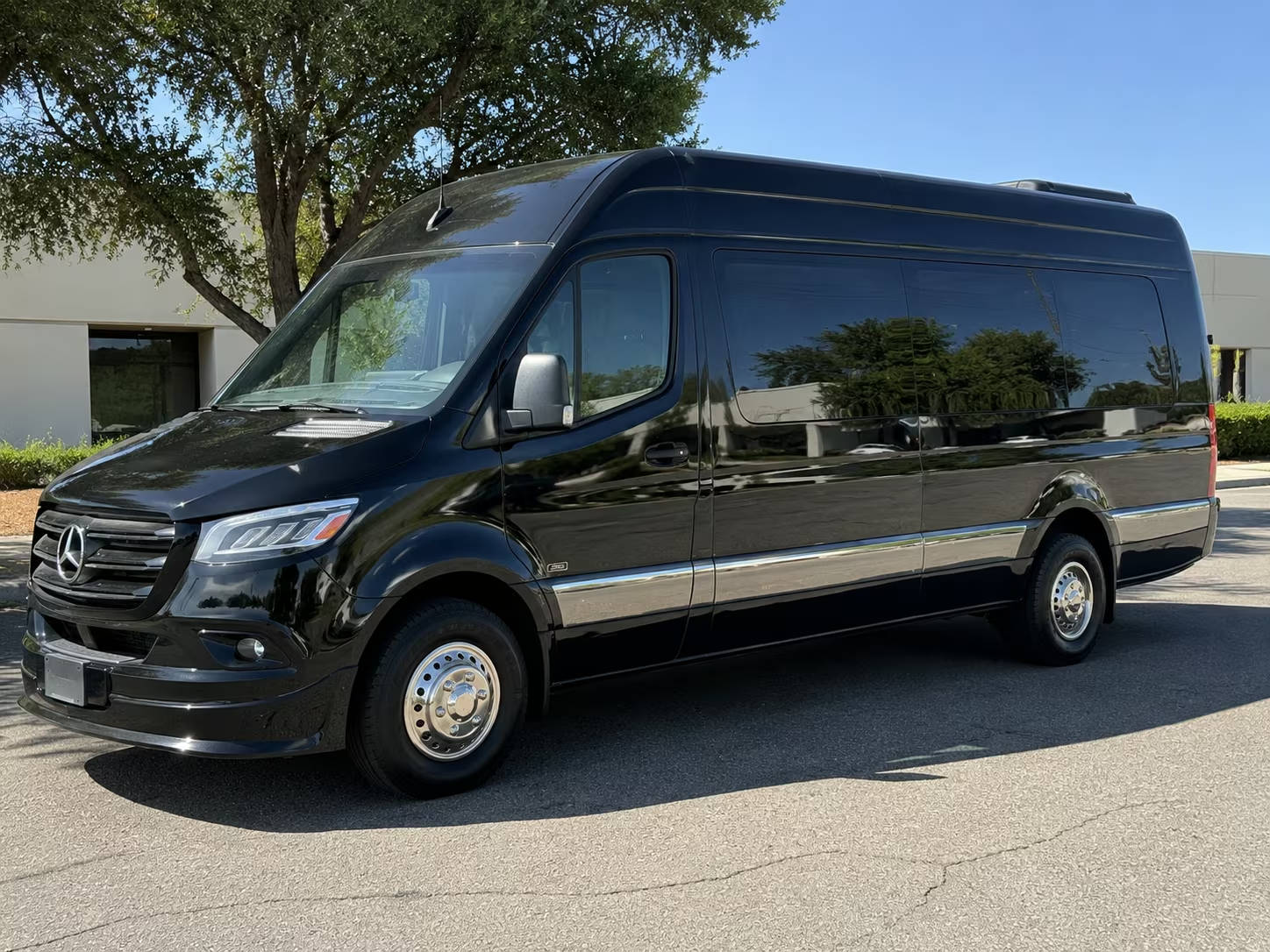
This guide gives you what a party bus actually holds, band by band — the chassis underneath each size and the seat count the builder itself publishes.
But the number on the badge is not the number of people who fit. Cabot Coach Builders sells a Sprinter limousine called the LC080 18p. The floorplan on that page is labeled 18-Pass.
The body copy on the same page says it seats up to 16 rear occupants.
That isn't dishonesty. The model name counts one thing and the body copy counts another, because there is no industry-wide rule for what the number on the label means. Some builders count the two front cab seats.
Some count only the back. Some publish both figures on the same page, and at least one publishes a model name that disagrees with its own spec text.
Which means if you have 18 people and you book the bus called 18p, two of you are standing.
Every number here traces back to a builder's own model page rather than to averages collected off rental listings. Partybus-rental.net is a comparison website, not a bus company, so there is no fleet here to talk up and no reason to tell you a bus is bigger than it is. Fill out the quick form or call 833-458-7001 with your headcount and you can compare vehicles and online rates from a large network of bus companies in about a minute.
How Many People Fit in a Party Bus?
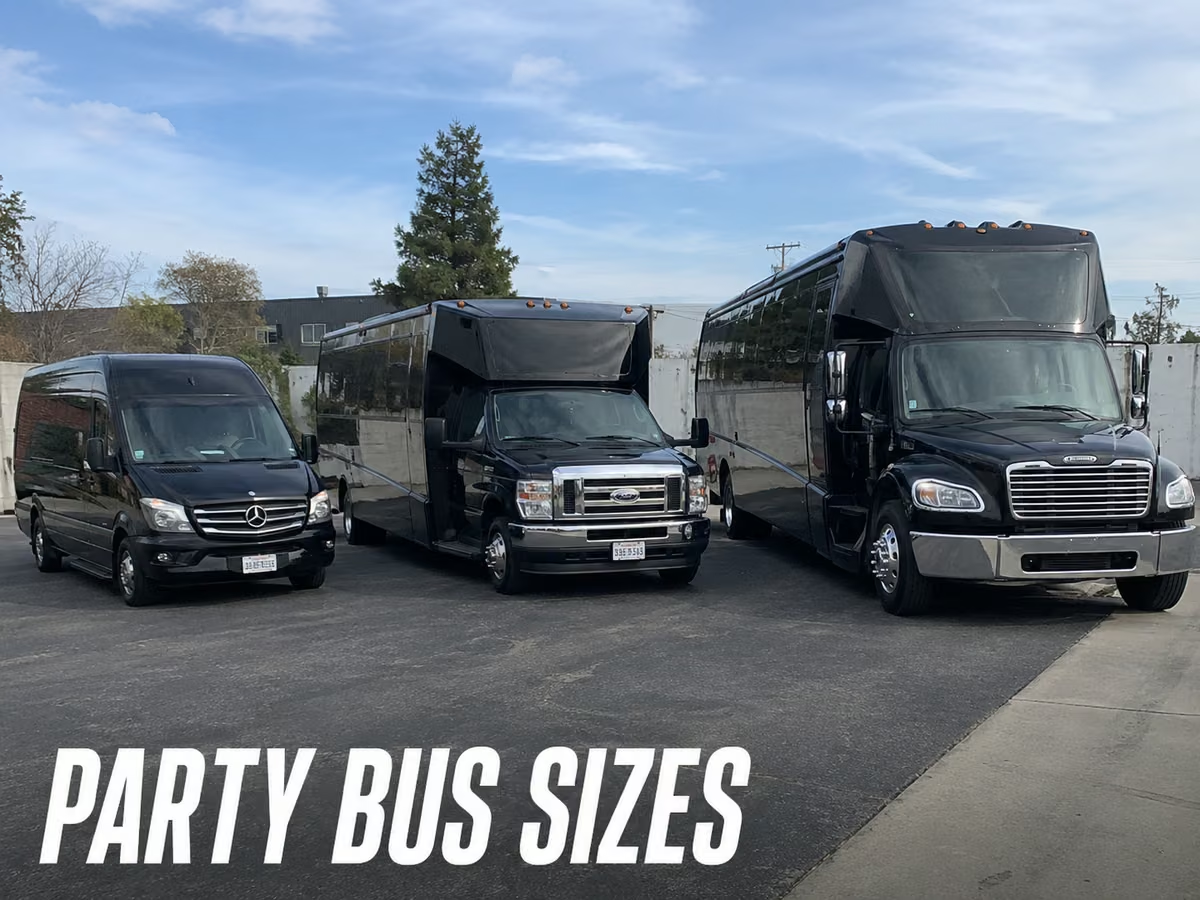
Party buses hold roughly 10 to 50 passengers, and the number is set by the vehicle the interior was built into. Small builds sit on a Mercedes-Benz Sprinter or Ford Transit and hold 10 to 16. Mid-size builds sit on a Ford E-450 or F-550 cutaway and hold 19 to 31.
Large-format builds sit on a Ford F-600 or a Freightliner chassis and reach 37 to 51.
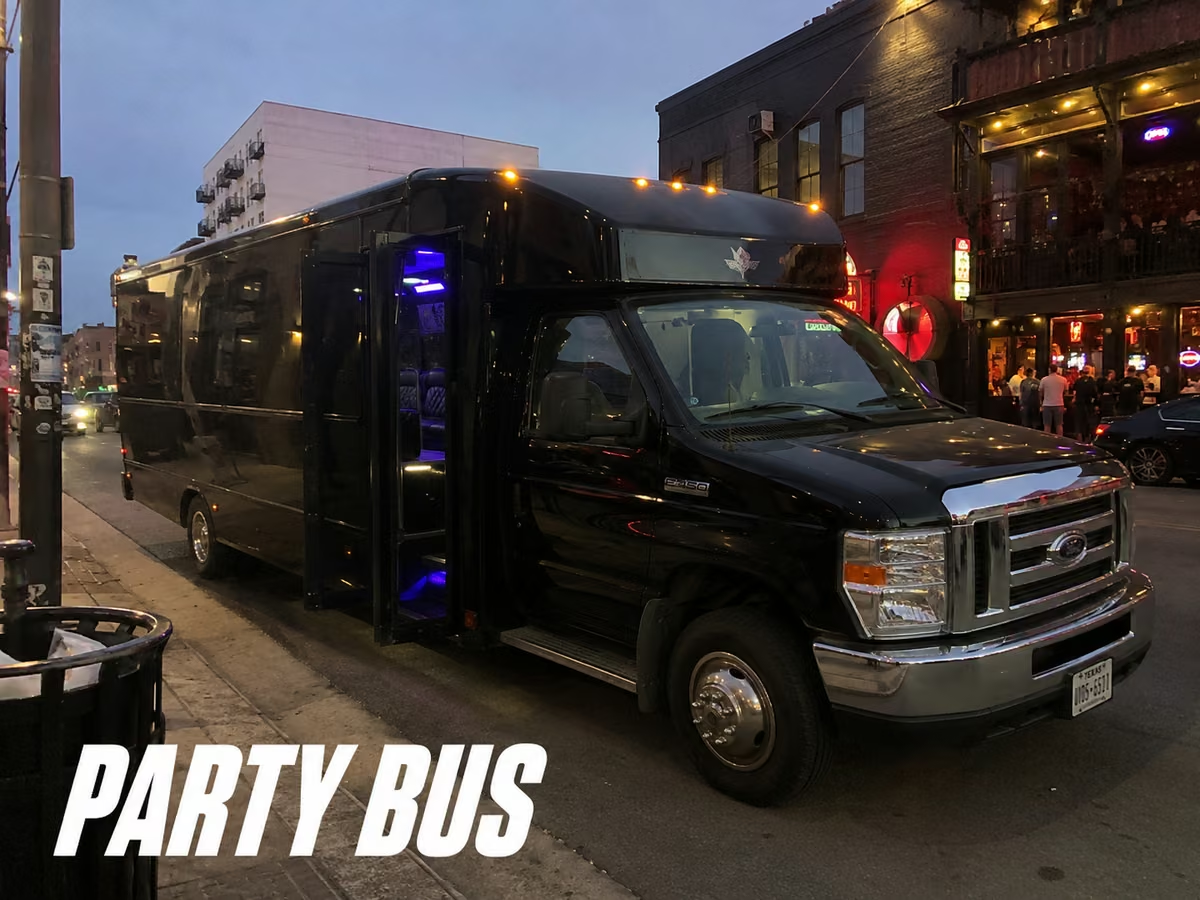
Those aren't marketing categories. They're three different base vehicles, and the step between them is a physical step in wheelbase and weight rating, from around 14,500 pounds to 33,000. That's why party bus sizes cluster instead of running smoothly from 10 to 50.
Most of the market you'll be quoted on sits between 15 and 40.
The short answer: most party buses hold 10 to 50 passengers, and the published ceiling for a party interior is 51 plus the front seats. Whether the figure on a listing already includes those two front seats depends entirely on who published it.
Party Bus Capacity by Size
Every band below is a real builder platform, not a round marketing number. Each base vehicle has a fixed floor length and a fixed weight rating, and the interior has to live inside both.
| Capacity band | Base vehicle | Rough body length | Builder models in this band | What it suits | See vehicles |
|---|---|---|---|---|---|
| 10–14 | Mercedes-Benz Sprinter, Ford Transit | Van length, about 23 ft | Royale LC055 12p, LC079 Day Cruiser (11), LC037a (up to 14), Transit Limo Coach (10 plus front seats) | Small bachelorette groups, dinner runs, wedding party on the day itself | 14-passenger Sprinter limo · Sprinter van page |
| 15–20 | Sprinter at the top end, Ford E-450 at the bottom | 23 to 27 ft | LGE Sprinter (up to 15), Royale LC080 (16 rear), ECB Ecoach 28 (19–23) | Birthday groups, concert runs, small proms, brewery loops | 15-passenger · 18-passenger · 20-passenger |
| 20–25 | Ford E-450 cutaway | 27 to 29 ft | LGE E-450 (up to 25 including front seats), ECB Ecoach 28 (19–23) | The workhorse mid-size. Quinceañeras, Sweet 16s, mid-size bachelorette parties | 25-passenger party bus |
| 25–31 | Ford F-550 cutaway | 31 to 35 ft | LGE F-550 (up to 31 including front seats), ECB Ecoach 34 (27–31 plus front seats) | Large birthday groups, prom blocks, wedding guest shuttles | 28-passenger · 30-passenger |
| 33–41 | Ford F-600 cutaway, Freightliner | 33 to 40 ft | LGE F-600 (up to 40 including front seat), ECB Ecoach 40 (37–41 plus front seats) | Where "35 person party bus" listings live. Corporate outings, big prom groups | 40-passenger · 15–35 passenger minibus |
| 43–51 | Freightliner, 33,000 lb chassis | 40 ft and up | ECB Ecoach 45 (43, 47 or 51 plus front seats), ECB Supercoach 45 (47–51) | The top of the party bus market. Large weddings, company parties, multi-family events | 50-passenger party bus |
| 51+ | Freightliner, shuttle format | 40 to 45 ft | ECB Supercoach XL (up to 57), not offered with the party interior | Past the party bus ceiling. This is charter bus territory | 40–56 passenger charter bus |
Notice where the bands overlap. A 25-person group could go either way, and a 31-person group sits right on a hinge. The same headcount prices differently depending on which platform happens to be free on your date, so ask to see both sizes rather than guessing which one you belong in.
Read the Seat Count Before You Trust It
Builders publish capacity three different ways, and all three are in current use on official model pages.
| Convention | Who publishes it this way | What it means for you |
|---|---|---|
| Total including the front seats | LGE Coachworks states its capacities as including the two front cab seats across its Sprinter, E-450, F-550 and F-600 pages | Subtract two. An "up to 25" E-450 seats about 23 in the party area |
| Rear passengers, front seats stated separately | Executive Coach Builders lists the Ecoach 45 as 47–51 passengers plus the two front cab seats, stated separately | The headline number is already your group. Nothing to subtract |
| Model name and page text disagree | Cabot Royale's Sprinter Limo LC080 18p describes up to 16 rear occupants. Its LC037a is named 15p and described as up to 14 | Trust the description, not the badge |
Those two front seats matter more than they sound like they should. They sit up beside the windshield, behind a partition on most builds, and they're not where your group is sitting. Grech Motors publishes its GM40 mini coach at up to 40 including the front co-pilot seat, which is the same convention LGE uses.
Do the subtraction before you shortlist anything: a "25-passenger" E-450 seats about 23 in the back, a "31-passenger" F-550 seats about 29, and a "40-passenger" build seats about 38. If your group is 24, a 25-passenger bus is already one seat short before anybody brings a bag.
Global Motor Coach states it the unambiguous way: its Sprinter 4 Seat Limousine Party Bus is listed as 14 passengers in the rear, with the two front cab seats named separately on top. First Class Customs writes it the same way, listing its VIP Shuttle as 13 rear passengers plus the two front seats.
The only question that resolves all of this: "how many seats are in the back?" Ask it about every vehicle you compare and you're measuring all of them the same way. A two-seat error sounds trivial until it's your two cousins standing on a curb in July.
Two conventions also explain a quirk you'll notice while comparing quotes: the same physical bus shows up as a "40 passenger" on one page and a "38 passenger" on another. Both are honest. One is counting the cab and one isn't.
Once you have the rear count, there are still three more numbers in play, and confusing them is why groups end up on a bus that technically fits and practically doesn't.
| The number | What it means | Where it comes from | How much to trust it |
|---|---|---|---|
| 1. Advertised maximum | The headline on a listing, often the platform's ceiling rather than that specific bus | Marketing copy | Treat as a category, not a count |
| 2. Rear seated count | The fixed seating positions in the passenger compartment, front cab seats excluded | The builder's spec for that unit | The quote. Ask for it by name |
| 3. Comfortable loading | How many fit with coats, dresses, bags and people moving around | A planning judgment, not a rating | Roughly 80 to 85% of the rear seated count on a long evening |
| 4. Wheelchair-position layout | The count once securement positions are fitted in place of seats | The builder's floorplan for that configuration | Always lower than the standard layout |
Seated Capacity vs Comfortable Capacity
Rated capacity and comfortable capacity are different numbers. The gap is roughly 15 to 20%.
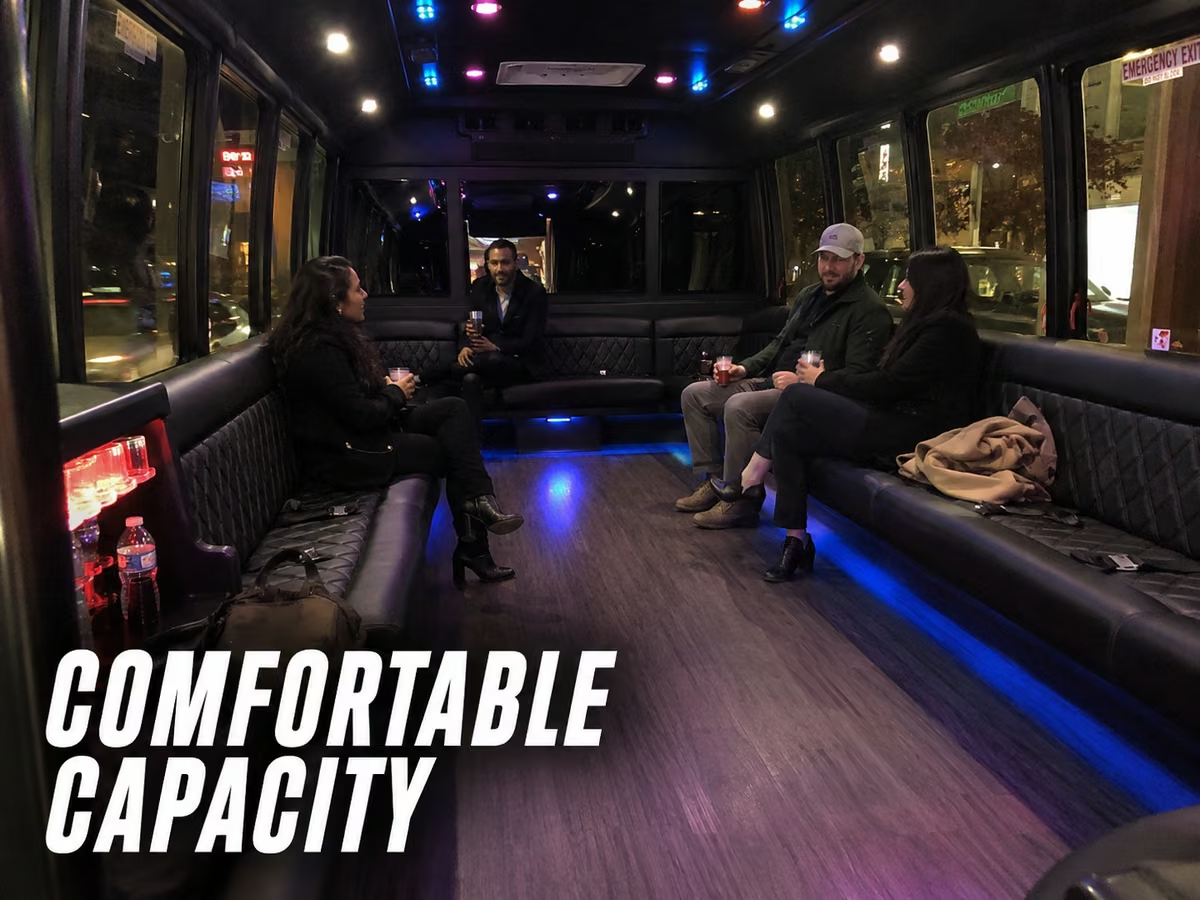
A planning rule of thumb, not a specification. Builders publish rated seats; comfortable capacity is a judgment. Confirm the rear seated count on any vehicle you shortlist.
Rated capacity assumes everyone is sitting down. Fair enough on a forward-facing shuttle. Not what happens on a party bus.
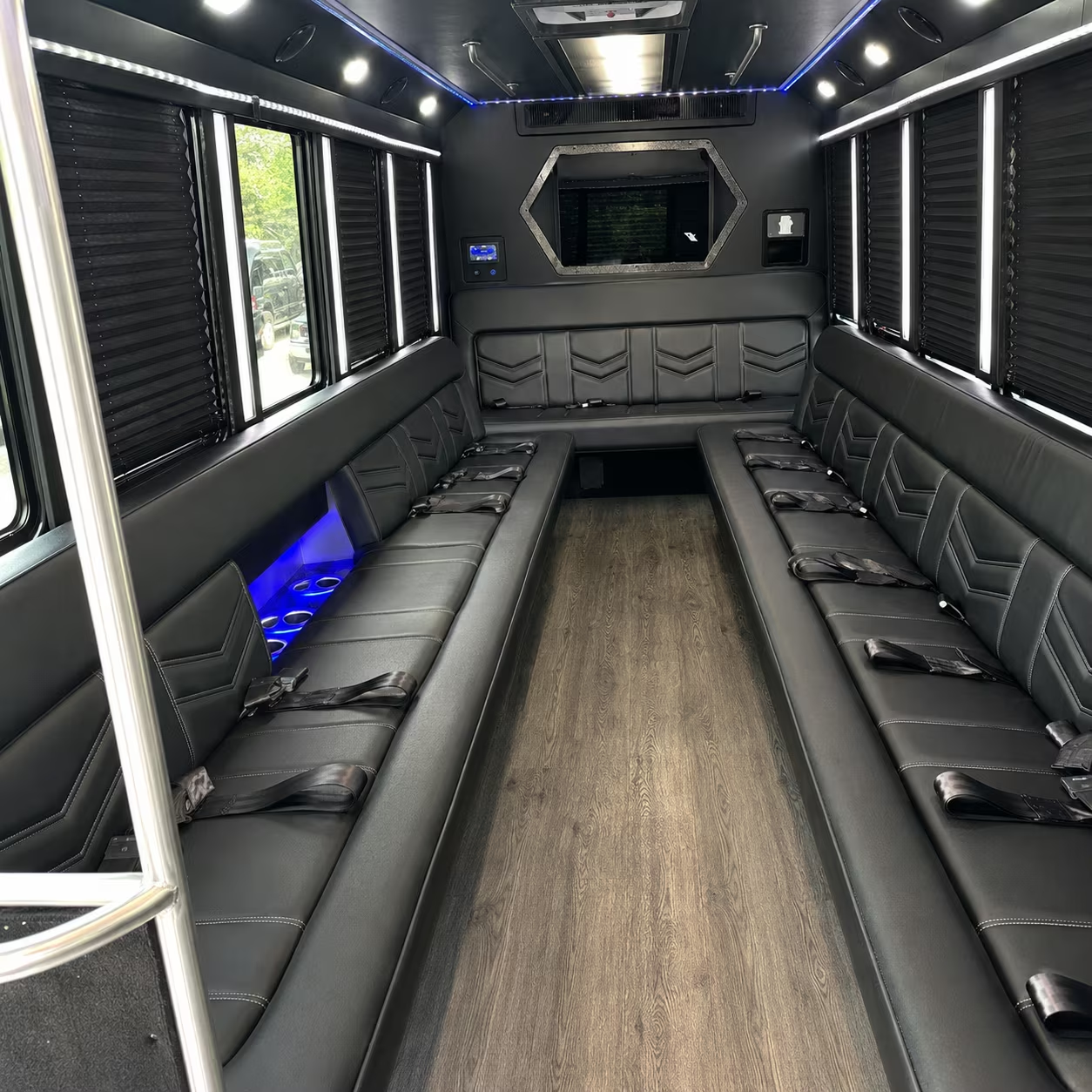
Party bus interiors use perimeter seating, benches running along the walls with an open floor down the middle, and the entire point of that layout is that people get up, move around, switch seats and stand. A bus rated for 30 seats 30 people who stay put.
The rated figure is hip-width math. Bench seating has no armrests and no dividers, so the count is linear inches of bench divided by a standard hip width. Honest arithmetic.
It just assumes a very tidy load of passengers.
Then reality arrives. Quinceañera and prom dresses take up two people's worth of bench each. Winter coats do the same.
Somebody sets a bag down. Two people stand to reach the bar unit and nobody can walk past. None of that is a defect; it's what the vehicle is for.
Operators who publish both figures land in a consistent place. One describes a 30-person party bus as best at 24 to 27 if you want people mingling. Another lists a 15 to 20 rated bus as comfortable for 12 to 16, and a 25 to 35 rated bus as comfortable for 20 to 28.
A third simply tells customers to add 10% to the headcount and round up. A listing for a 27-seat build describes it as comfortable for 24. Worth saying plainly: no builder publishes a comfortable-capacity figure, so that range comes off rental listings, not spec sheets.
Now the honest objection, because it's a real one: the smaller bus is cheaper, and for plenty of groups it's the better call. Nobody will stop you booking a 30-passenger bus for 30 people. It's available, it costs less per head, and on a 20-minute hotel-to-venue transfer where everyone sits down and gets off again, the full seated number is the right number.
Paying for a bigger bus there is money you don't need to spend. The cushion below is for the four-hour night, not the shuttle run.
The rule of thumb, and it is a rule of thumb, not a spec: plan on filling about 80 to 85% of the rated seats. Put another way, take your headcount and add roughly 15 to 20% before you choose a size. A group of 20 is comfortable on a 25.
A group of 25 is comfortable on a 30. For a long evening in formalwear, work from the bottom of that range.
One more thing that is not capacity: open floor. A dance area doesn't raise how many the bus holds, because the count comes from seating positions. A build with a big open floor usually holds fewer people than a same-length build packed with bench, because the floor came out of the seating.
Party Bus, Executive Shuttle, or Mini Coach? Same Chassis, Different Interior
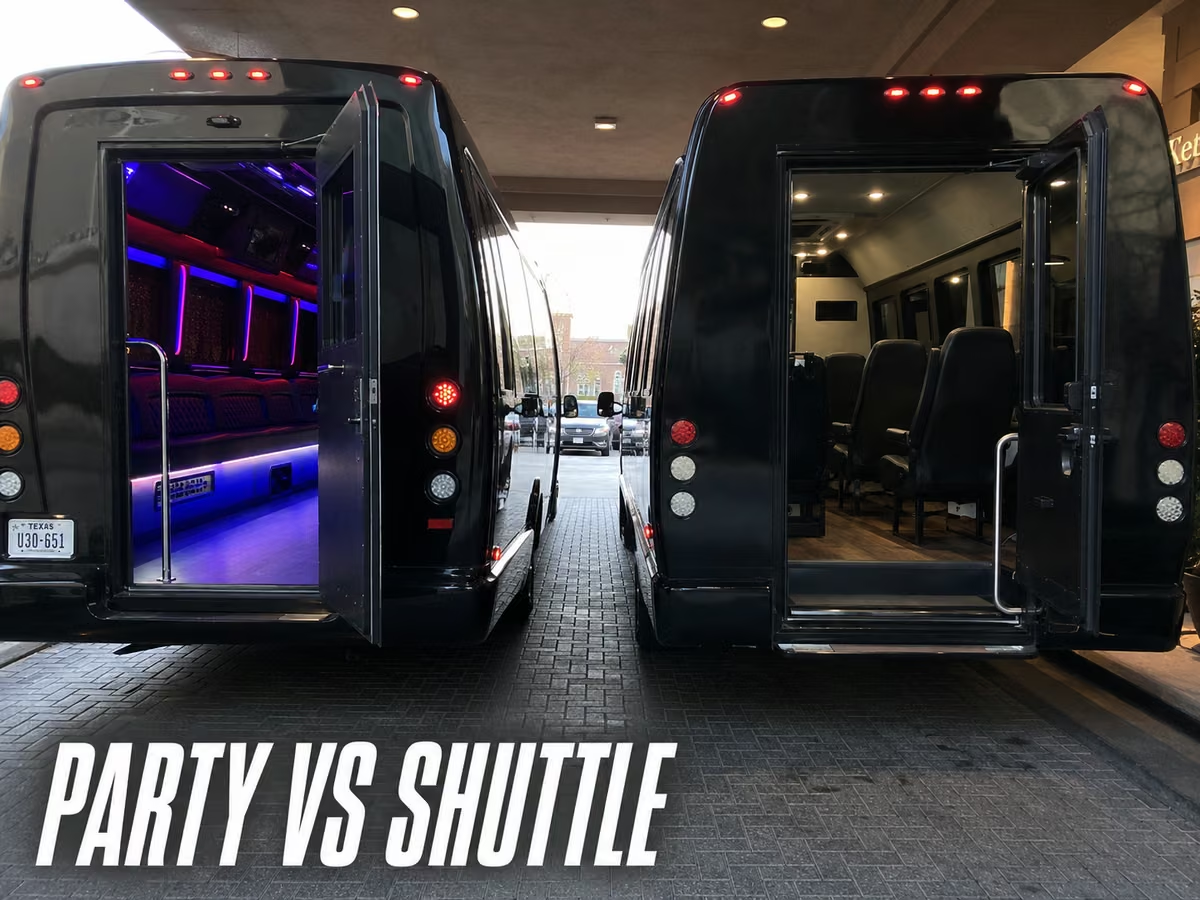
A party bus is not a chassis. It is an interior program fitted to a chassis that also gets built as a shuttle and as a mini coach. LGE lists the same E-450, F-550 and F-600 platforms with a lounge layout, a captain's-chair layout and a forward-facing shuttle layout side by side.
Same body. Very different vehicle.
| Vehicle type | Typical base | Interior logic | Practical capacity | Best for |
|---|---|---|---|---|
| Van-based limo bus | Mercedes-Benz Sprinter | Short lounge benches or captain's chairs | About 10 to 15 | Small nightlife groups, wedding party moves, dinner runs |
| Cutaway limo bus | Ford E-450 | Perimeter benches, rear bench, small rear luggage area | About 15 to 25 | Classic small-to-mid party bus work |
| Medium-duty limo bus | Ford F-550 | Lounge or executive layouts | About 25 to 31 | Proms, wedding movements, larger social groups |
| Heavy-duty limo bus | Ford F-600 | Lounge, club seating or shuttle | About 33 to 41 | Big events where the ride is part of the event |
| Mini coach and large limo bus | Freightliner S2 and similar bus chassis | Forward-facing high-back seats, or a lounge interior on the ECB builds | About 37 to 51 | Corporate transport, airport transfers, the largest party formats |
| Full-size coach | 35 or 45-foot integral coach | Forward-facing reclining seats, deep underfloor bays | About 40 to 56 | Distance, luggage, the largest groups |
Two 30-passenger vehicles from adjacent rows hold the same number of people and feel nothing alike. The lounge build trades aisle discipline and luggage room for social space; the shuttle build does the reverse. The bus types guide lays out the whole family, and the explainer on what a party bus actually is covers the lounge interior in detail.
The interior type is worth stating in a quote request. "30 passengers" gets you both vehicles. "30 passengers, lounge interior, open floor" gets you the one you pictured.
How the Base Vehicle Sets the Capacity
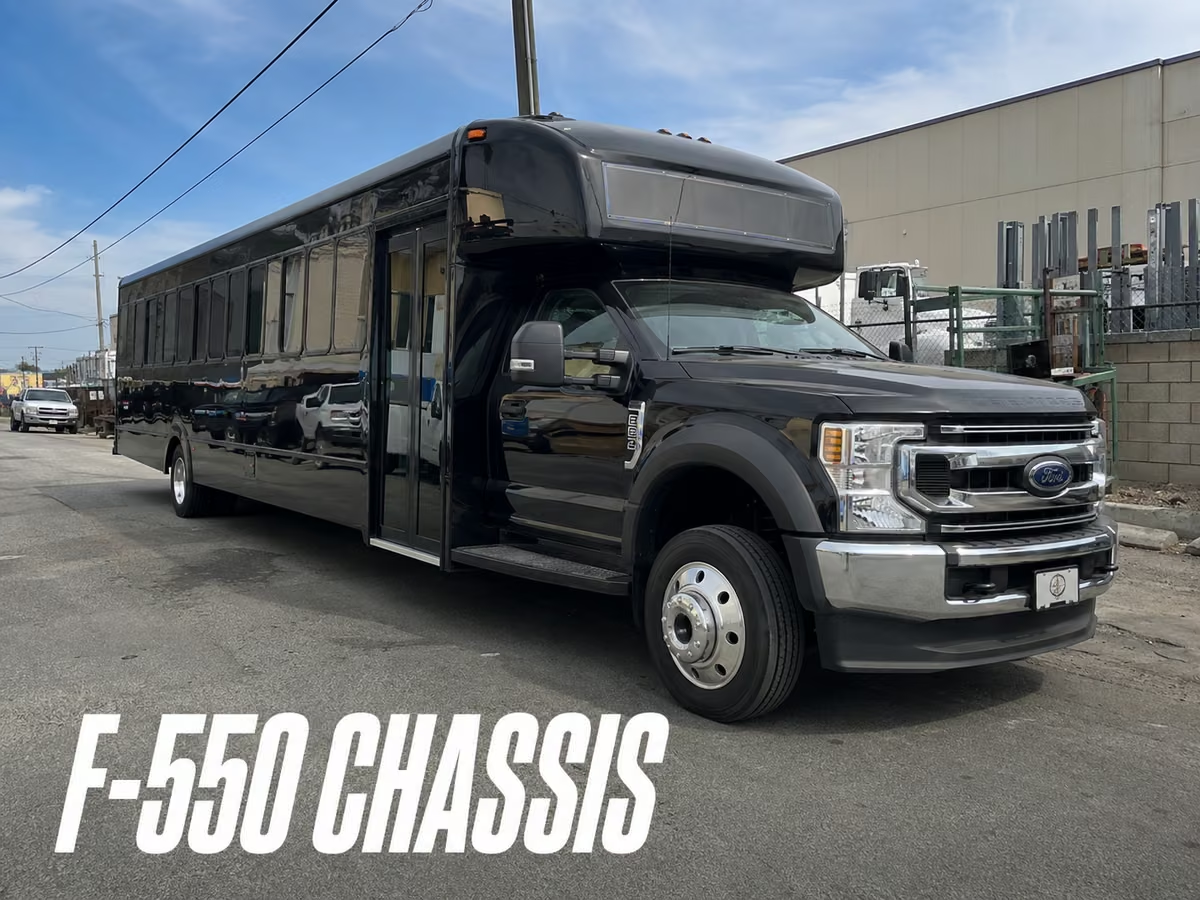
Party bus capacity is not a dial a builder turns. Party buses are conversions: a builder takes a commercial chassis, drops a body on it, and fits an interior. The chassis decides how long the body can be and how much weight it can carry, and those two limits decide how many people fit.
Only a handful of chassis are in common use, and two builders publish their whole range by chassis.
LGE Coachworks, by chassis
| Base chassis | Published lengths | Published capacity | Weight rating (GVWR) | Air conditioning |
|---|---|---|---|---|
| Mercedes-Benz Sprinter | Single, super single and dual wheel options | Up to 15 including front seats | Varies with chassis size | 65,000 BTU |
| Ford E-450 | 25' · 27' · 29' | Up to 25 including front seats | 14,500 lb | 97,000 BTU |
| Ford F-550 | 31' · 33' · 35' | Up to 31 including front seats | 19,500 lb | 127,000 BTU |
| Ford F-600 | 33' · 35' · 38' · 40' | Up to 40 including front seat | 22,000 lb | 176,000 BTU |
Executive Coach Builders, by model
ECB's range runs higher and publishes capacity ranges rather than single figures, because the same shell is offered in several seating densities. Its limo bus page confirms the party interior is available across the Ecoach 28, Ecoach 34, Ecoach 40, Ecoach 45 and Supercoach.
| Model | Capacity (plus front seats) | Chassis | Weight rating (GVWR) |
|---|---|---|---|
| Ecoach 28 | 19–23 | Ford E-450 | 14,500 lb |
| Ecoach 34 | 27–31 | Ford F-550 | 19,500 lb |
| Ecoach 40 | 37–41 | Freightliner | 29,500 lb |
| Ecoach 45 | 43, 47 or 51 depending on luggage area | Freightliner | 33,000 lb |
| Supercoach 45 | 47–51 | Freightliner | 33,000 lb |
| Supercoach XL | Up to 57, shuttle format only | Not published | Not published |
One caveat on that column heading: ECB states the plus-front-seats convention in so many words on its Ecoach 34, Ecoach 40 and Ecoach 45 pages, but the Ecoach 28 and Supercoach 45 pages publish the range on its own without restating it. The convention runs through the range; the wording does not appear on every model page, so confirm it on those two.
Both tables show the same pattern: every step up in capacity is a step up in chassis weight rating. You cannot put 40 seats on an E-450, because the chassis underneath will not carry it. A "30 passenger party bus" and a "20 passenger party bus" are not the same vehicle with different seats.
They are different trucks. The jump from an E-450 to an F-550 is a jump from 14,500 to 19,500 pounds of rating, and it buys roughly six more feet of body and six more seats. That is why quotes step up at that boundary rather than sliding smoothly.
The tables show a second pattern: the same platform gets built to wildly different counts. ECB publishes its 28-foot E-450 limo bus at 19 to 23 passengers on its Executive Bus Builders site, the same range its Ecoach 28 page carries — a four-seat swing on one identical shell. Federal Coach's Spirit Executive line, on the E-350 and E-450 at 21 to 27 feet, spans 8 to 27 passengers.
Same chassis family, a 19-seat spread, entirely down to body length and floorplan. If you want the detail on who builds what, the party bus manufacturers guide covers the builders individually.
The practical takeaway for a group organizer: the bands are real, and there is very little between them. There is no 45-passenger cutaway. If your group is 34 people, the honest options are a 31-seat build that will be full or a 37-plus build that will be comfortable.
There is no third choice hiding somewhere.
What Is the Largest Party Bus You Can Rent?
The largest party-configured bus published by a builder holds 51 passengers plus the two front seats. That's Executive Coach Builders' Ecoach 45 and Supercoach 45, both on a 33,000 lb Freightliner chassis, and both listed on ECB's limo bus page as available with the party interior.
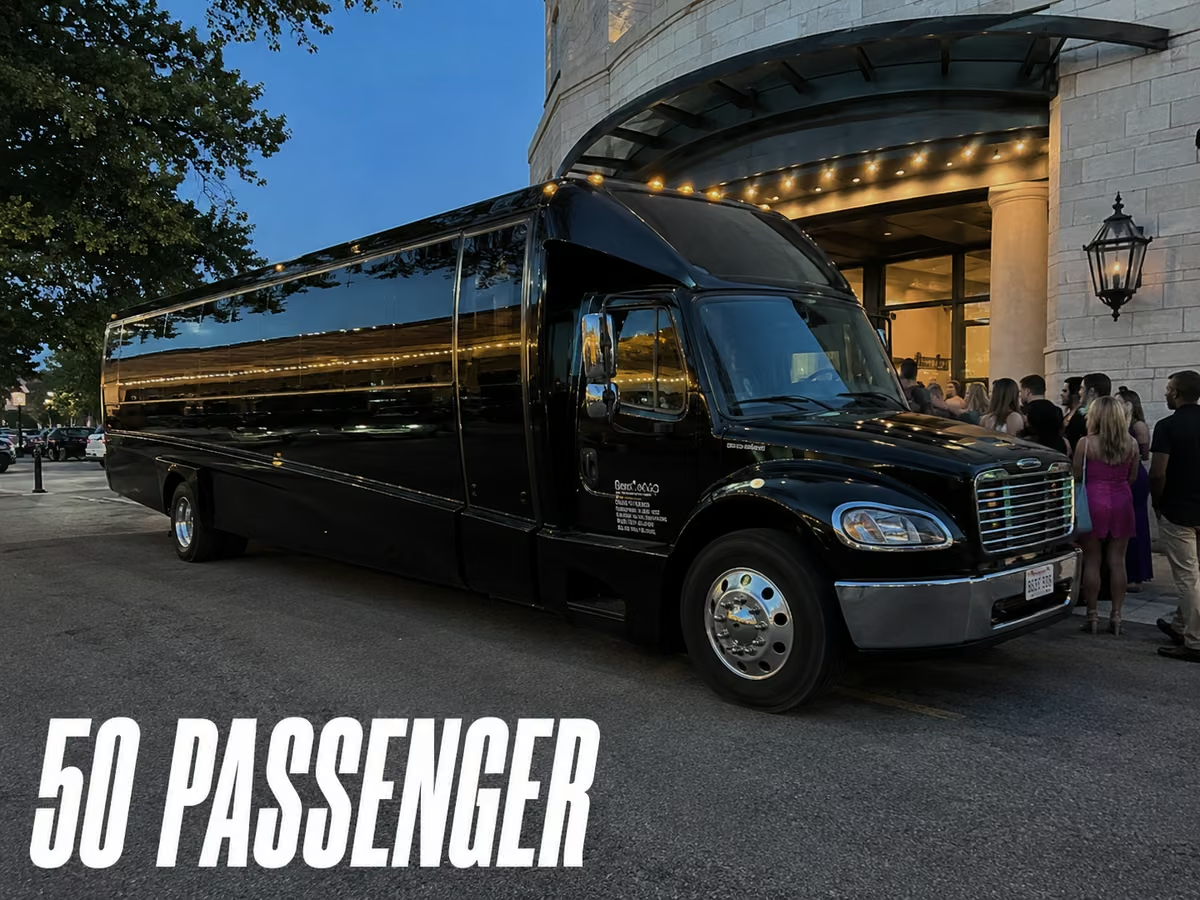
That figure sits well above the rest of the field. Published maximums from the other purpose-built limo bus companies cluster in the high 30s to mid 40s. LGE lists its F-600 builds at up to 40 occupants on bodies of 33 to 40 feet with a 22,000-pound rating.
Federal Coach's Premier Limo, on the Federal Coach model page at TESCO, is published at 31 to 44 passengers on a bus chassis at 36 to 40 feet. Turtle Top publishes its Terra Transit at up to 42 occupants across its chassis options. ECB's own Ecoach 40, one rung below its largest builds on a 29,500-pound Freightliner, is published at 37 passengers with the rear luggage area or 41 without it.
Step across into the mini coach class and the ceiling barely moves: Grech publishes its GM40 at up to 40 including the co-pilot seat with a rear luggage area, and its EG40 on the same Freightliner S2 chassis at up to 44 including the co-pilot seat, with the bags moved underbelly instead. Both figures are published on the same convention, so the comparison is like for like — but confirm it anyway on whatever you are quoted.
So the top of the market is a narrow shelf. That's why you see 50-passenger party buses advertised and almost nothing above them. ECB does build a Supercoach XL up to 57 passengers, but it isn't on the limo bus availability list, so at that size you're looking at a shuttle or charter bus format: forward-facing rows, overhead storage and underfloor bays instead of perimeter benches and an open floor.
Two things to know before you go hunting for a 50:
- Very few models reach this size. On the builder pages surveyed here, only ECB's Ecoach 45 and Supercoach 45 are published at 51 in a party interior; every other purpose-built limo bus line tops out somewhere in the high 30s to mid 40s. The choice at the top of the market is narrow before you ever check a calendar.
- They fill first for the obvious dates. Prom season, homecoming weekends, New Year's Eve and the wedding calendar all pull on that same narrow slice of the fleet. If your group is over 40 and your date is a Saturday between April and June, getting the quote in early is the whole game.
Over 40 people? The date is your constraint, not the bus. A 22-passenger bus can usually be found two weeks out.
A 50-passenger one on prom Saturday often cannot be found two months out. Lock the vehicle to the date first and sort the details after.
There's a second answer for longer trips. If you need more than about 45 seats and you're traveling any real distance, the right vehicle probably isn't a party bus at all. Prevost publishes its 45-foot H3-45 coach at 56 standard seats with 460 cubic feet of underfloor luggage capacity and 77 inches of floor-to-ceiling height.
Nothing in the limo bus class comes close on either count. The charter bus seating capacity guide covers where that line falls.
Can a bus hold 50 people? Yes, and comfortably closer to 40 to 42 of them once perimeter seating and open floor are accounted for.
What Else Eats Into the Seat Count
Two buses on the same chassis can have very different capacities, because everything inside competes for the same floor. Some fixtures cost far more seats than others, and one builder publishes the exact exchange rate.
Luggage, and this one is measured in seats
Luggage does more than take up space. Executive Coach Builders offers the Ecoach 45 in three configurations on one identical shell, which prices the trade exactly:
| Rear luggage area | Passengers (plus front seats) | Cost in seats |
|---|---|---|
| 65 inches | 43 | 8 fewer seats |
| 40 inches | 47 | 4 fewer seats |
| None | 51 | Baseline |
A little over three feet of luggage space costs four seats. Five and a half feet costs eight. Grech makes the same trade across two models at the other end of the class: 40 passengers in the GM40 with its rear luggage area, 44 in the EG40 with the bags moved underbelly.
Whatever your group is carrying comes out of the seat count.
Where the bags go depends on how big the bus is
Party buses are often said to have no underfloor luggage bays. That is true up through the cutaway classes, but not at the top of the market.
- Sprinter, E-450 and F-550 builds have a rear luggage area inside the vehicle and no underfloor bays. LGE lists a rear luggage area as standard across its Sprinter, E-450, F-550 and F-600 pages, though it publishes no dimension for it. It is a compartment sized for coolers, gift bags and a few carry-ons. It does not handle 25 suitcases.
- Freightliner-based builds can have both. ECB's Supercoach 45 includes an underbelly luggage area, and the Ecoach 45 offers optional underbelly storage that the builder describes as holding 51 full-size suitcases alongside seating for 51.
If your group is traveling with real luggage, the vehicle class matters more than the seat count. An airport transfer or a hotel-to-venue wedding shuttle wants underfloor bays, which means a Freightliner-based build, a 15 to 35-passenger minibus or a charter bus. For a night out where everyone brings a jacket and a phone, any party bus is fine.
Layout, on the same chassis, changes everything
LGE's E-450 in a three-bench layout, with two long perimeter benches and a rear-facing bench at the back, reaches its published 25. The same E-450 in the Luxury Coach layout, with individual captain's chairs, tables and a rear bench, seats far fewer. The chassis didn't change.
The furniture did.
Which is why a listing that says only "30 passenger" is incomplete. Perimeter benches fit the most people. Captain's chairs are more comfortable per person and cost you seats.
Forward-facing rows sit in between. You can usually tell which one you're looking at straight from the photos: benches running the length of the walls with a clear strip of floor down the middle is a lounge build, evenly spaced high-back seats all facing forward is a shuttle build, and a handful of wide individual chairs around small tables is an executive build with the lowest count of the three. If the listing shows only exterior shots, that's the first thing to ask for.
Restrooms and bars cost seats too, and restrooms are rare
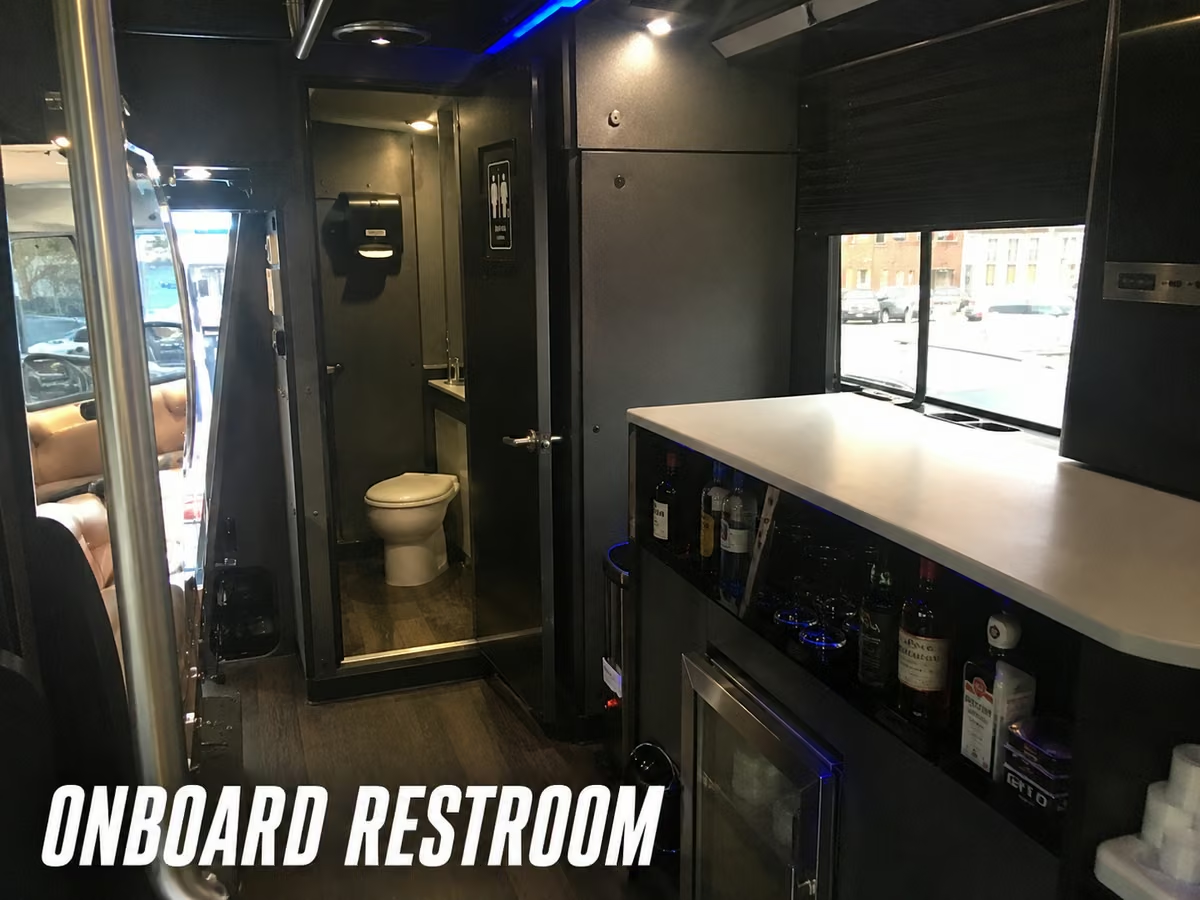
Every fixture occupies floor that could have held people. Bar units, subwoofer boxes and open dance floor live in the same cubic feet as passengers. The clearest evidence is Cabot Royale's Sprinter line, where three models on the same platform step down as equipment goes in: the LC037a is listed at up to 14, the LC055 at 12, and the LC079 Day Cruiser at 11 with a rear bathroom, toilet and vanity.
Onboard restrooms are the exception rather than the rule across builder catalogs. They show up as a differentiator on a small number of models, or as an option callout on larger builds such as LGE's Luxury Coach layouts. If a restroom matters for your trip, treat it as a requirement to state up front rather than something to assume, and expect it to cost you seats.
The party bus amenities guide covers what is typically fitted.
Wheelchair positions trade seats for floor space
Wheelchair securement positions occupy floor where seats would otherwise be, so the stated capacity of a vehicle changes once it is set up that way. ECB lists an optional wheelchair lift and equipment on the Ecoach 28. Fleet specs make the trade explicit: one coach seats 34 in standard seats, takes a maximum of two wheelchairs, and states the passenger count drops by two per position.
Another publishes alternate configurations of four wheelchairs plus eight seats, or three plus ten. A third lists 14 passengers with no wheelchair, or 12 with one. On smaller shuttle bodies the trade is steeper: Endera publishes B-Series configurations running from two positions with six seats to four positions with two seats, using fold-away seating.
Glaval's Entourage on the F-550 is listed by dealers at 24 to 32 seated passengers with up to two positions, the seated number moving with the configuration. That top figure is a dealer count and it sits one above the 31 LGE publishes for the same chassis, so read it as the outer edge of what dealers list rather than as a builder specification. The three unnamed configurations above come off fleet listings rather than builder model pages as well: they show the pattern reliably, but not the spec of any particular vehicle you will be quoted.
Roughly two seats per position is the pattern. Vehicles set up for a wheelchair are available through the network, but fewer of them are, so ask for a wheelchair position when you request pricing and ask early, ideally 48 hours or more ahead. The count you are quoted will reflect that configuration rather than the model's headline number.
Standing room changes the usable number
Whether passengers move around while the vehicle is rolling varies by build and by operator policy, and it changes how many people the bus holds in practice. A high-roof build with an open center aisle gives a group somewhere to be that is not a seat. A shuttle-style build with narrow aisles and forward-facing rows does not.
Full-size coach builders publish interior height for exactly this reason, and Prevost lists 77 inches floor-to-ceiling on the H3-45; limo bus builders generally publish length, occupancy and weight rating instead. If your group will spend the ride on its feet, ask about the specific vehicle rather than assuming, because that detail matters as much as the seat count.
Sizing Three Real Groups: Wedding, Airport, Prom
This all lands differently on real groups. Three that come up constantly:
| The group | What fits on paper | What actually works | Why |
|---|---|---|---|
| 22 adults, wedding, formalwear, multi-stop photos | A 22 or 25-passenger lounge bus | A 28 to 31-passenger bus | Dresses, wraps and gifts consume bench faster than the count assumes, and multi-stop means constant boarding and re-boarding |
| 18 passengers, airport to hotel, checked bags | An 18 or 20-passenger party bus | A minibus or mini coach | Eighteen checked bags will not fit in a rear area built for coats and carry-ons. The seats are not the constraint; the luggage is |
| 42 for prom or grad night | A "50-passenger party bus" | A Freightliner-based build booked months out, or a charter bus | Only the Freightliner class reaches the mid-40s and above, and that class is the narrowest part of the market, so the date has to be locked early |
The pattern across all three: size to the most restrictive real factor, not to the headcount. Sometimes that factor is bodies. More often it is dresses, bags, or the calendar.
One Bus or Two?
Groups of 32 to 45 face the one-or-two-buses question most sharply, because that headcount sits above every cutaway build and inside the thin band where large party formats and charter buses overlap.
When your group falls between bands, splitting across two smaller vehicles is almost always the worse call. The whole reason to put a group on one bus is that it stays a group. The trap isn't the price, though two rates usually do beat one.
It's arrival time. Two buses leaving the same curb don't reach the same venue together, and the group spends the first 20 minutes of the night waiting on the second half.
| Approach | How it works | What you give up | Best when |
|---|---|---|---|
| One larger party bus | An F-600 or Freightliner-based build in the 33 to 51 range | Fewer available on peak dates, so book earlier | The group staying together is the point of the night |
| Two smaller party buses | Two 20-passenger buses instead of one 40 | Two rates, two arrival times, two loading points, and a split group | Two genuinely separate pickup locations |
| A charter bus | 40 to 56 forward-facing seats with deep luggage bays | The lounge interior and the open floor | Distance, luggage, or a daytime schedule |
Sizing up one band buys the thing you actually wanted: room to move, somewhere for the bags, no argument about who rides where.
Two buses genuinely does make sense in three situations:
- Your group is over 51. There's nothing bigger in a party format, so a second vehicle is the only option if you want the lounge interior.
- You have two pickup points on opposite sides of the metro. One bus zig-zagging across town costs everyone an hour.
- Half the group leaves early. A wedding where parents go back at 10pm and the party runs to 2am is two different trips, and one vehicle can't do both.
Outside of those, book the bigger bus. For events running several vehicles or multiple pickups, the group transportation services page covers how those come together, and corporate shuttles are usually planned the same way.
How to Size Your Group and What to Ask For
Headcounts drift. This method holds up:
- Start with confirmed yeses, not the invite list. Invite lists overstate by a lot.
- Add the plus-ones nobody mentioned — usually two to four at a prom or quinceañera — and add the adults. Parents and chaperones are the most commonly forgotten seats on the bus.
- Do not subtract early leavers. Everyone is aboard for the first leg, which is the leg that has to fit.
- Apply the constraint that actually binds. Formalwear or a long night? Add 20 percent. Checked bags? Move to a minibus or coach. Wheelchair position needed? Say so now.
- Round up to the next band, not the next seat. Vehicles come in bands, so a headcount of 22 shops a 28 or a 30, not a 25.
Then ask for four things on any vehicle you shortlist: the rear seated count, the interior layout (lounge, executive or forward-facing), the luggage arrangement, and any wheelchair positions. Those four answers settle it. Put them into the quote request alongside your date, your hours, your pickup point and your headcount, and the options that come back will be comparable to each other instead of a pile of numbers counted four different ways.
What Size Party Bus for Your Group
Take your final headcount and find it below. The 15 to 20% cushion is already built into these rows, so don't add it twice.
| Your headcount | Book this size | Why |
|---|---|---|
| 8–11 | 14-passenger Sprinter | Sprinter and Transit builds run 10 to 16 in the back. Fits a small group with coats and bags without going up a chassis class. |
| 12–17 | 18 to 20-passenger | A Sprinter is tight at 14 for a long night. An E-450 build gives real floor space. |
| 18–21 | 25-passenger | The middle of the E-450 band, and the size most listings cluster around. |
| 22–25 | 30-passenger | Moves you onto an F-550, which is a genuinely bigger vehicle, not just more seats. |
| 26–34 | 35 to 40-passenger | F-600 and Ecoach 40 territory. This is where "35 person party bus" listings sit. |
| 35–42 | 50-passenger | The next real step is a Freightliner build. Book early, because only a couple of models reach that size. |
| 43+ | Charter bus, or two vehicles | At the party bus ceiling. A charter bus seats everyone; two buses keeps the party format. |
Sizing shifts a little by occasion: wedding shuttles often run multiple loops, so the bus can be smaller than the guest list, while prom and birthday groups all ride at once and need the full headcount in one vehicle. Bachelor and bachelorette groups tend to want the floor space more than the seats. Call 833-458-7001 if you want a second opinion on which band you belong in before you request anything.
Party Bus vs Minibus vs Charter Bus: Which Holds More?
Capacity is only half the comparison. What the seats face, and where the bags go, is the other half.
| Vehicle | Typical capacity | Seating | Bags | Suits |
|---|---|---|---|---|
| Sprinter van and Sprinter limo | 10 to 15 | Captain's chairs or short benches | Rear area, modest | Small groups, airport runs, wedding parties |
| Party bus | 15 to 51 | Perimeter benches, open floor | Rear area on cutaways, underbelly on Freightliner builds | Evening events where the ride is part of the night |
| Minibus and mini coach | 15 to 44 | Forward-facing, reclining | Overhead plus rear or underfloor | Shuttles, corporate transfers, day trips |
| Charter bus | 40 to 56 | Forward-facing, reclining, restroom on many | Deep underfloor bays, 460 cubic feet on a 45-foot coach | Distance, luggage, large groups |
A 30-passenger party bus and a 30-passenger minibus solve different problems. If the ride is the event, the party bus wins on floor space and loses on luggage. If the ride is transport between two points, the minibus wins on both bags and comfort per mile.
What Each Size Costs to Rent
Capacity and price move together, but not one-for-one. The bands price out roughly as follows on a weekday, with weekend dates running higher.
| Vehicle | Hourly | Full day |
|---|---|---|
| Sprinter van (12–14) | $203–$273 | — |
| Sprinter limo (14) | $204–$318 | — |
| Party bus (15–20) | $204–$338 | — |
| Party bus (25–30) | $248–$374 | — |
| Party bus (40–50) | $294–$441 | — |
| Minibus (15–35) | $207–$246 | $1,098–$2,105 |
| Charter bus (40–56) | $206–$327 | $1,331–$2,841 |
Those are example figures to help you plan, not quotes — the quote moves with your date, hours, mileage and how busy that weekend is. Partybus-rental.net compares quotes and connects groups with the bus companies and transportation providers serving each area; it does not own vehicles, employ anyone who drives, or operate trips, and every amount shown here is example pricing rather than an offer. The party bus cost guide breaks down what moves a quote up or down, and the party bus prices page shows the same ranges next to the vehicles.
Run the arithmetic across a band boundary before you decide you cannot afford the bigger bus. The hourly step from a 25-to-30 build to a 40-to-50 build is real, but so is the extra headcount sharing it, and the larger vehicle is often the one that comes back cheaper per seat. That holds inside the party bus ladder.
It does not hold across formats: the table above puts a 40 to 56-passenger charter bus roughly a quarter to a third below the hourly of the largest party buses, so at the top band the cheapest seat is on the charter bus. What the party bus buys at that price is the lounge interior and the open floor, which is a different thing to be paying for.
Party Bus Capacity FAQ
How many people does a party bus hold?
A party bus holds roughly 10 to 50 passengers depending on the chassis it is built on, with most of the market between 15 and 40. Sprinter and Transit builds hold 10 to 16, Ford E-450 and F-550 cutaway builds hold 19 to 31, and Freightliner builds reach 37 to 51. Check whether the figure you are reading includes the two front cab seats, because builders differ on this.
Can a bus hold 50 people?
Yes. Executive Coach Builders publishes its Ecoach 45 and Supercoach 45 at up to 51 passengers plus the front seats, both on a 33,000 lb Freightliner chassis, and both available with the party interior. In rental terms these are the 50-passenger party buses you see advertised.
They are comfortable at roughly 40 to 42, and only a couple of published models reach that size at all, so availability usually decides your date.
How many people fit in a 20-passenger party bus?
Somewhere between 18 and 20 in the party area, depending on whose convention the listing uses. Comfortably, plan on 15 to 17 if the group will be up and moving for a few hours. A group of exactly 20 is better off on a 25-passenger bus.
What size party bus do I need for 25 people?
A 30-passenger party bus. If the 25-passenger bus you are looking at counts the front seats, it seats about 23 in back, which leaves a group of 25 two people short before anyone brings a bag. The 30 sits on a Ford F-550, a longer and heavier vehicle, and it gives 25 people room to actually use the floor.
If it is a 20-minute shuttle and nobody is in formalwear, a larger E-450 can work, but confirm the rear count first.
What size do I need for 20, 30 or 40 people?
For 20, look at a 25-passenger E-450 build. For 30, look at a 35 to 40-passenger F-600 or Ecoach 40 build, because a 31-seat F-550 would be full for the whole night. For 40, you are into the Freightliner class near the top of the market, so start early and expect fewer options on peak weekends.
What is the largest size party bus?
51 passengers plus the front seats, on a Freightliner chassis. Other purpose-built limo bus lines publish maximums in the high 30s to mid 40s, so 51 is the outlier at the top rather than the norm. Above that, vehicles move to shuttle and charter bus formats with forward-facing rows and underfloor bays rather than perimeter benches and an open floor.
Can you get a 30-seater party bus?
Yes, and it is one of the more common sizes. It is normally a Ford F-550 build, 31 to 35 feet long. LGE publishes its F-550 at up to 31 including the front seats, while ECB publishes its F-550-based Ecoach 34 at 27 to 31 plus the front seats.
Most groups find this size comfortable at 24 to 27.
Does the advertised capacity include the front seats?
It depends on the builder, which is the whole problem. LGE states its capacities as including the two front cab seats. ECB states its as rear passengers, with the two front cab seats counted separately on top.
Cabot Royale uses model names like 18p on a vehicle its own page describes as up to 16 rear occupants. Ask how many seats are in the back and you sidestep all of it.
Does standing room increase how many people fit?
No. Capacity is counted from seating positions, so an open dance floor does not add to the number. A build with a large open floor usually holds fewer people than a same-length build packed with bench, because the floor came out of the seating. What the open floor buys you is somewhere to be that is not a seat, which is why a 30-seat lounge build feels roomier than a 30-seat shuttle.
Do bags and coolers reduce how many people fit?
Measurably. ECB publishes the same Ecoach 45 shell at 51 passengers with no rear luggage area, 47 with a 40-inch area, and 43 with a 65-inch area. Grech shows the same four-seat trade across two mini coach models: 40 in the GM40 with a rear luggage area, 44 in the EG40 with underbelly storage.
Below the Freightliner class there are no underfloor bays at all, so everything comes inside to the rear luggage area, or onto the floor.
Are wheelchair-accessible party buses available, and how does that affect capacity?
Yes. ECB lists an optional wheelchair lift and equipment on its Ecoach 28, and vehicles set up for a wheelchair are available through the network, though fewer of them are. Each securement position takes the floor space of roughly two seats, and published fleet specs reflect that trade directly.
Ask for the position when you request pricing, ideally 48 hours or more ahead, and the count you are quoted will reflect that configuration rather than the model's headline number.
Should I book for my exact headcount?
No. Plan on filling about 80 to 85% of the rated seats, which means adding roughly 15 to 20% to your headcount before choosing a size. Booking at exactly capacity means every seat occupied for the whole ride, with coats and bags on laps and nowhere to stand.
Does a bigger party bus cost more per person?
Usually less. A bus is quoted as one vehicle for a block of hours, not per head, so the same rate divided among 40 people lands lower per person than it does among 20. That is why a large group's cheapest seat is normally on the largest single vehicle that fits, not on two smaller ones.
Is a 30-passenger party bus the same as a 30-passenger shuttle?
Same headcount, different vehicle. The party bus uses perimeter lounge seating and open floor; the shuttle uses forward-facing seats with an aisle and better luggage treatment. Builders offer both interiors on the same chassis, so ask which layout the vehicle has rather than going by the seat count.
How far in advance should I book?
Two to four weeks is workable for a 15 to 25-passenger bus outside peak season. For anything over 32 passengers, or any date in prom season, homecoming or New Year's Eve, get your quote in as soon as your date is confirmed. The largest vehicles are the scarcest in every market, and they go first.
Why do two buses with the same seat count feel so different?
Because the count is the last step, not the first. Body length, layout, bar placement and how much open floor the builder left all move the number, and builders publish ranges for a single model precisely because of it. One 28-foot E-450 line is published anywhere from 19 to 23 passengers depending on floorplan.
The reason the badge misleads isn't that anybody set out to mislead you. A model name is a product code, written for dealers and operators who already know whether the cab seats count. You're reading somebody else's paperwork and treating it as a promise about your Saturday night.
Ask how many seats are in the back and it stops being somebody else's paperwork.
How This Guide Was Put Together
Capacity figures, chassis specifications, lengths and weight ratings on this page are taken from builder-owned model pages published by the companies that manufacture these vehicles: LGE Coachworks (Mercedes-Benz Sprinter, Ford E-450, F-550 and F-600), Executive Coach Builders (Ecoach 28, 34, 40 and 45, Supercoach 45 and XL, and its limo bus page), Cabot Coach Builders' Royale division (Sprinter and Transit limousine models), Grech Motors (GM40 and EG40 mini coaches), Turtle Top (Terra Transit), Federal Coach (Premier Limo and Spirit Executive listings), Endera (wheelchair-position configurations), Prevost (H3-45 coach dimensions), Global Motor Coach (Sprinter 3500XD dimensions and layouts) and First Class Customs. Where sources disagree, builder specifications outrank dealer listings and dealer listings outrank rental marketing. Dealer listings, operator fleet pages and third-party summaries were used only to orient the research, with two exceptions, both flagged where they appear: the seated-versus-comfortable ranges are drawn from capacity figures that rental operators publish alongside their rated seat counts, because builders do not publish a comfortable-capacity figure at all; and the three unnamed wheelchair-position configurations, together with the Glaval Entourage seat range, are drawn from fleet and dealer listings rather than from builder model pages. No figures on this page come from Partybus-rental.net's own records. Figures last checked July 2026; builders revise configurations and seating options between model years, so confirm the exact rear seat count and layout for the vehicle on your quote. Partybus-rental.net is a comparison and quote-request website — it does not own vehicles and does not provide the transportation itself. Corrections: contact page.
Compare Party Buses by Capacity
Once you know your band, the rest is quick. Partybus-rental.net is not a bus company and does not own any of these vehicles, which is the useful part: you are not limited to whatever one fleet happens to have in your size on your date. Enter your date, headcount and pickup point once, and you can compare vehicles and online rates from a large network of bus companies in about a minute, with no account required and no obligation.
If your number sits on a band boundary, ask to see both sizes and ask for the seats in the back on each. Those two questions are worth more than any capacity chart.
Browse the full range of bus types to see every size side by side, or start with the guide to renting a bus if this is your first time. The FAQ answers the rest.
Or skip all of it and call 833-458-7001 any time, any day. Tell them your headcount, and ask for the seats in the back. You could have pricing for your trip in about a minute.