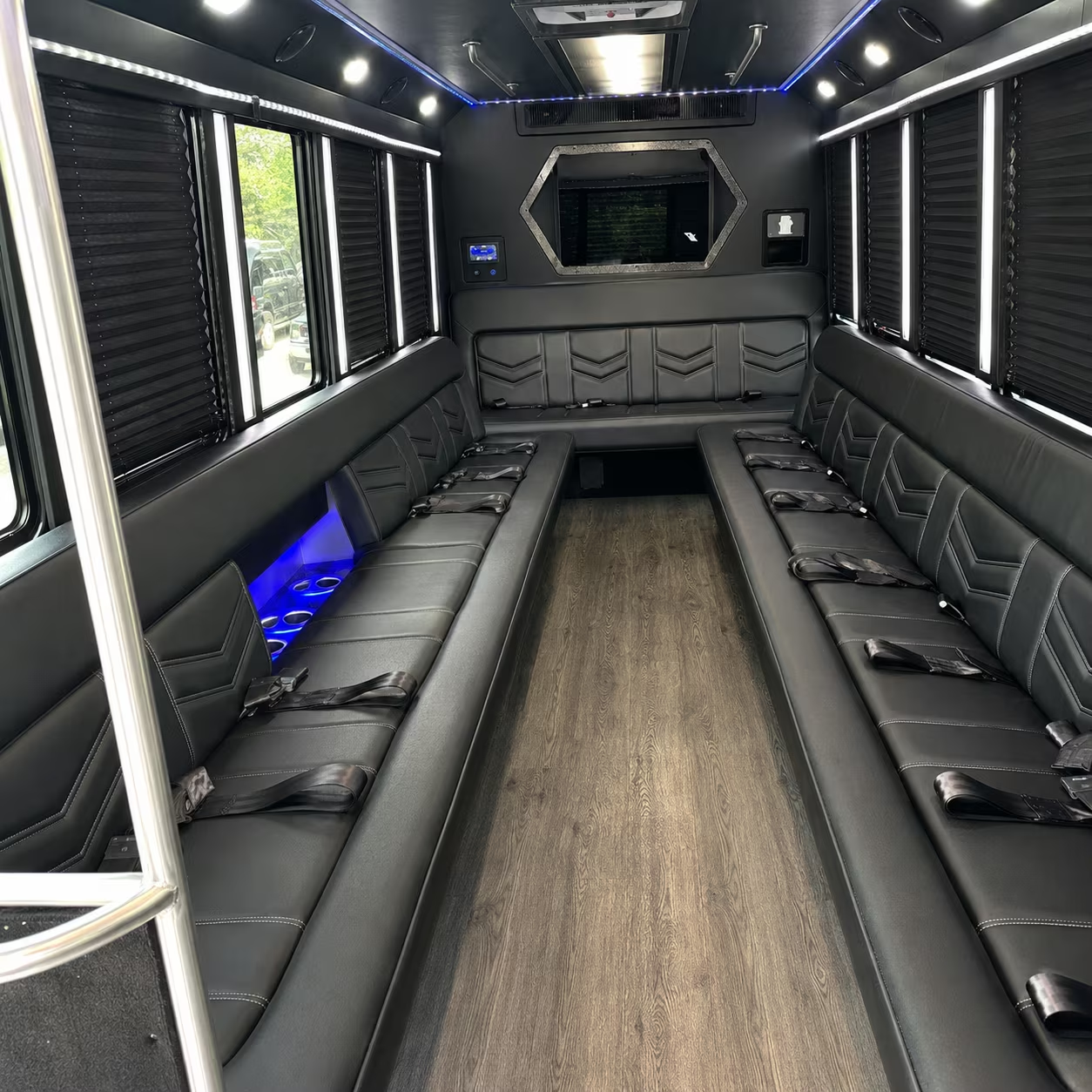
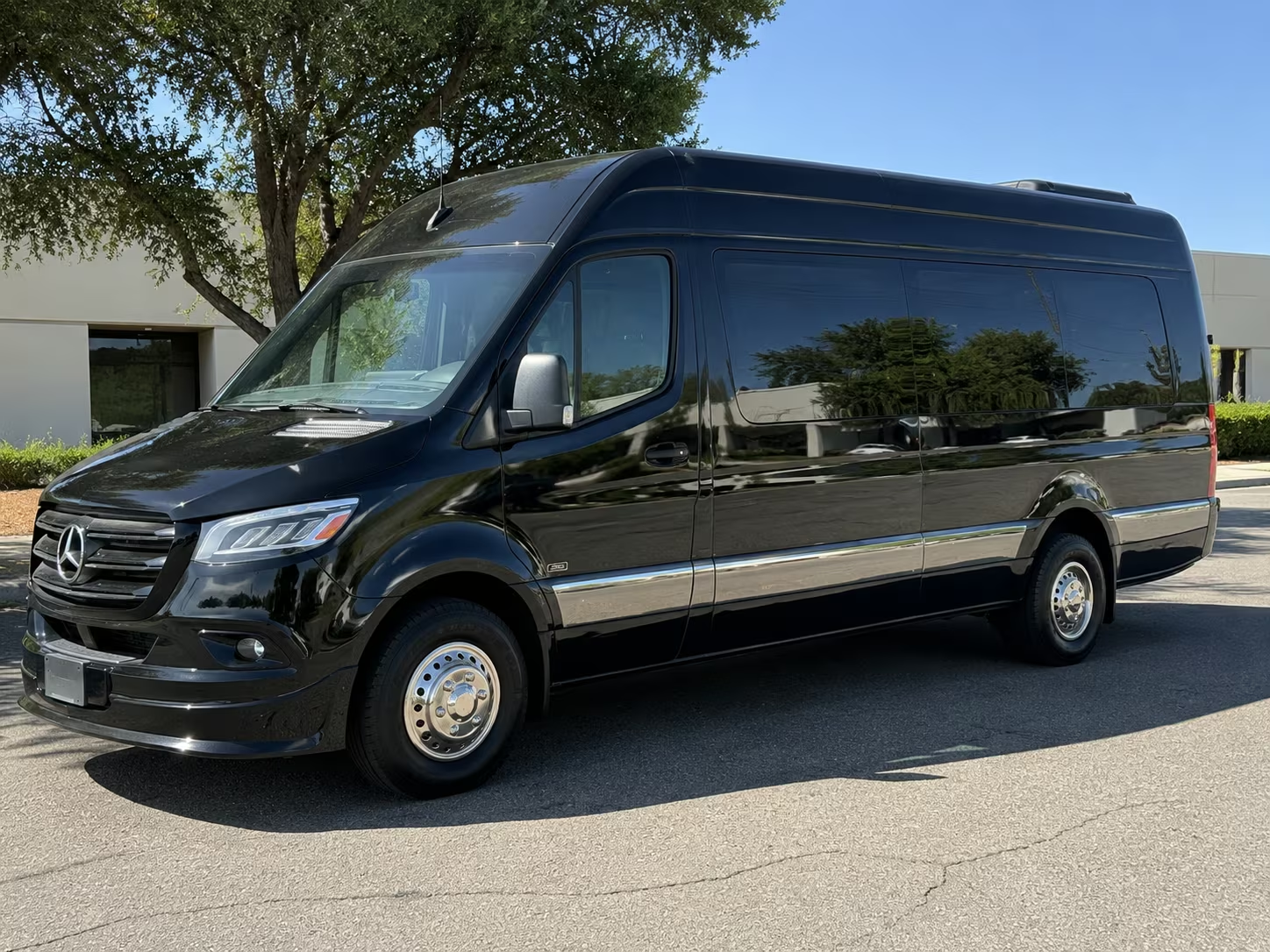
Party buses rent for roughly $204 to $441 an hour, with trip lengths of three to six hours — which puts a realistic total somewhere around $600 to $2,650 before anything is added on top. And the add-ons matter: the percentage charges outside the hourly rate routinely turn a $1,615 booking into just under $2,000 before gratuity.
But the same 18-passenger party bus can sit near the bottom of that range on a Tuesday in a quiet market and near the top on a Saturday in a busy one. Same vehicle, same week, more than 40% apart.
So skip the average. What matters is how the number gets assembled: the rate, the minimum, the basis the clock runs on, and the nine things outside all three.
Those are example figures to help you plan, not quotes — the quote moves with your date, hours, mileage and how busy that weekend is. The quote form takes about a minute and needs no account, or call 833-458-7001.
Example Party Bus Rates by Vehicle Size

| Vehicle | Seats | Example hourly rate | Minimum you should expect | Common extras on top |
|---|---|---|---|---|
| Sprinter van | 12–15 | $203–$273 | 3 hours | Service charge (often around 20%) · gratuity, usually 15–20% and separate · card charge of about 2.9–3% · out-of-zone travel past a radius · overtime in fixed increments · seasonal adders |
| Sprinter limo | 14 | $204–$318 | 3 hours | |
| Party bus | 15–20 | $204–$338 | 3–4 hours | |
| Party bus | 25–30 | $248–$374 | 4 hours | |
| Party bus | 40–50 | $294–$441 | 5 hours | |
| Minibus (shuttle fitout) | 15–35 | $207–$246 Full day $1,098–$2,105 | 4 hours | Same list, plus mileage past an included allowance on longer runs |
| Charter bus | 40–56 | $206–$327 Full day $1,331–$2,841 | 5 hours |
Example figures, not quotes — the number moves with your date, hours, mileage and demand.
The rate is set by the local market, not by the industry. How many buses of that size exist within an hour of you, and how many groups want one that night — once you’ve fixed the vehicle size, that’s what moves the number.
Plenty of companies never publish a rate at all — but most will tell you their minimums and terms if you ask, and those are the numbers that catch people out. A six-hour floor commits you to twice as much as a three-hour floor before either rate is quoted.
What sits on top varies more than the rate itself. Two companies can publish the same hourly number and bill more than 20% apart.
Party Bus Rates in Your City
These pages carry local pricing and local vehicles:

- New York party bus rentals and rent a bus in Boston
- Houston party bus rental, San Antonio bus rentals and party bus rental in Dallas
- bus rental in Cincinnati, Columbus party buses, Louisville party bus rentals and Detroit party bus rental
- Los Angeles party bus rental and rent a bus in San Francisco
- Nashville party bus rentals, Atlanta party bus rental and Minneapolis bus rentals
Not listed? The service area page covers the rest. For ranges broken out by vehicle type across every class, the party bus prices page goes deeper.
The Four Numbers Behind Every Party Bus Quote
Almost every party bus is sold as a block of hours, not as a trip. You reserve the vehicle for a window, and it’s yours whether you’re moving or parked outside a restaurant for ninety minutes. A rideshare charges you for the ride; a party bus charges you for the vehicle’s evening.
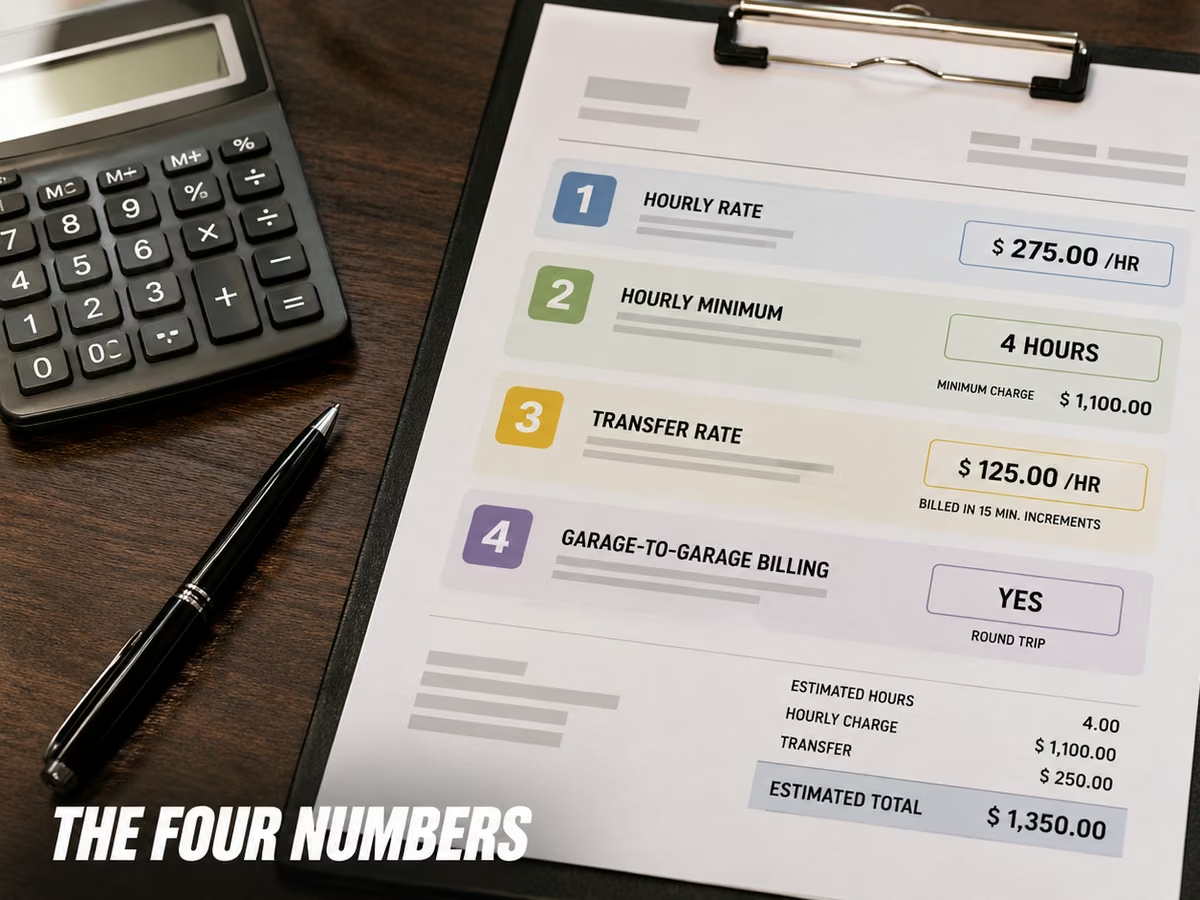
1. The hourly rate
The headline, set mostly by vehicle size and local demand. A 15-to-20-passenger party bus sits in the $204 to $338 band; a 25-to-30-passenger bus, $248 to $374. Bigger vehicle, bigger number.
It’s also the least reliable of the four, because it says nothing about how many hours you’re committed to or where the clock starts.
2. The hourly minimum
The floor, and the reason short trips rarely make sense. Three hours is a common minimum on a party bus and four on a larger shuttle or minibus. Book two hours and you pay for three.
The minimum isn’t fixed to the vehicle, either. It moves with the day and the season — a six-hour floor on a party bus against three hours on a van from the same company, or a floor that climbs from four hours midweek to six on a Saturday. It rises on exactly the nights the rate rises, so the two multiply.
That’s the part the hourly rate never shows you.
Minimums are set by each bus company, not by this site, and there is no standard figure to carry from one quote to the next. Many companies set a floor of around four to five hours on a weekend evening; others price a short transfer flat on that same date.
What moves it is what else the company could sell that evening. On a date it can fill twice over — prom season, a wedding Saturday, homecoming, a big local event — a short booking costs it the rest of the night, so those dates are commonly sold as packages with a longer floor. An ordinary weekday transfer costs it nothing else, so the floor is often shorter or absent.
So ask what the minimum is for your specific date before anything else, because the same company can quote one floor for a Tuesday and another for a prom Saturday. And because this site collects quotes from several companies at once, a long floor at one of them is something you can check against what another quotes for the same date, rather than taking the first floor you’re given as the number.
3. The flat transfer rate
Some trips price point-to-point instead of hourly, and for a straight run it’s almost always cheaper. A one-way airport pickup, a hotel-to-venue leg, a single drop after a reception — those are transfers, and a transfer is typically priced at roughly an hour and a half to two hours of the equivalent hourly rate rather than at the full minimum.
On a 15-to-20-passenger party bus that’s the difference between a flat figure of $306 to $676 and an $816 to $1,352 four-hour floor for a 45-minute job. If your trip is one direction with no waiting, ask for the transfer rate by name — many companies won’t volunteer it, because the hourly booking is worth more to them. The airport transportation page covers how those runs are structured.
4. Garage-to-garage billing
The one that surprises people, and a common reason two companies quoting the same rate bill differently.
On many contracts the clock doesn’t start when the bus reaches you. It starts when the vehicle leaves its base and stops when it gets back — published terms in this industry routinely say exactly that.
It’s usually conditional, which nobody explains up front. A common structure: your time starts at pickup as long as you’re within about a 30-minute drive of the base, and only starts at the base if you’re further out. Others apply it to events outside a home county.
And an unscheduled extra stop added on the night can flip a booking onto that basis mid-trip.
Two quotes at $323 an hour are not the same quote. If one starts the clock at your door and the other starts it 40 minutes away at a depot, the second bills roughly 80 extra minutes across the round trip before anyone boards — about $431 on a five-hour booking, more than a quarter of the total. Ask which basis applies, where the base is, and what would switch you onto the other basis.
What Moves a Party Bus Price
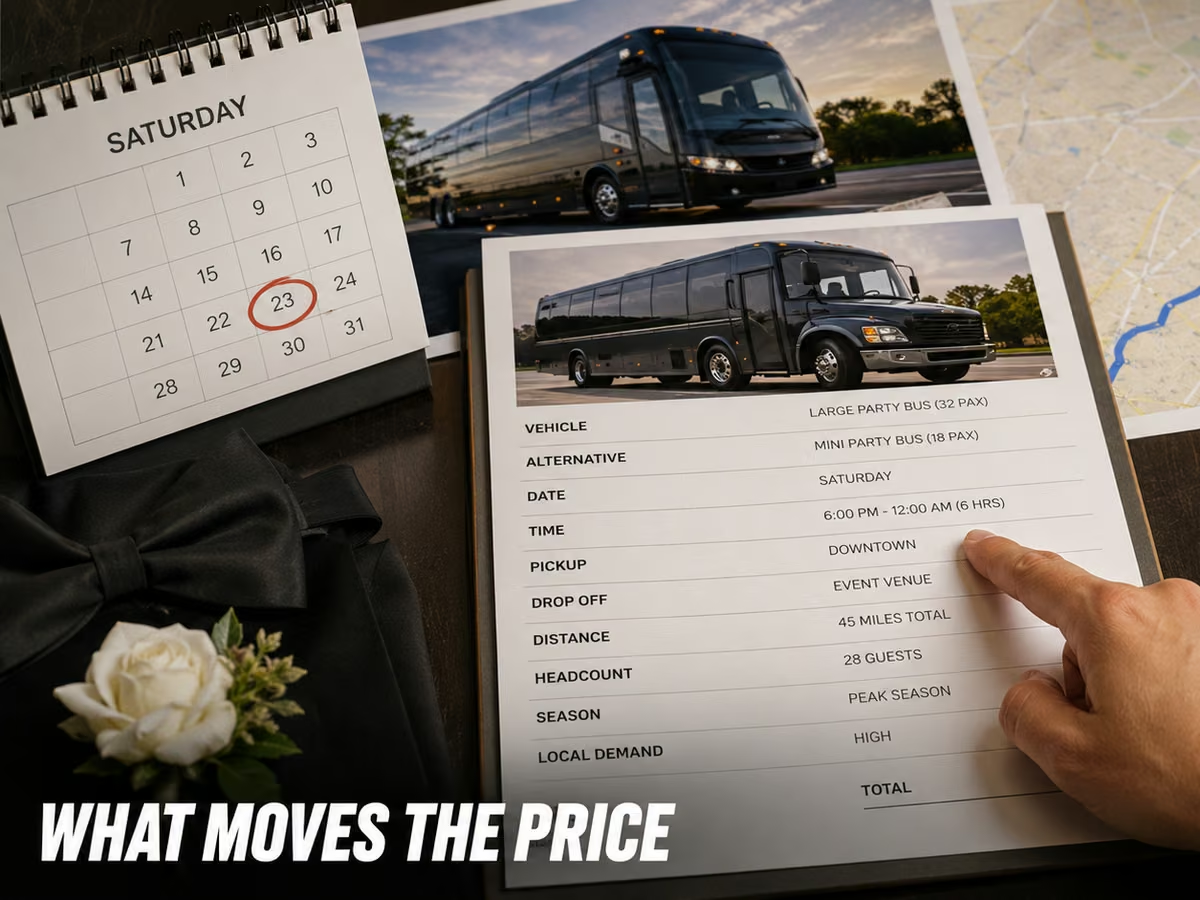
Six things move the number, ranked by how much they can swing one booking:
| Cost factor | Direction | Rough magnitude |
|---|---|---|
| Vehicle size | Up with capacity | $204/hr at 15–20 seats to $441/hr at 40–50 seats — the widest lever on the page |
| Day of week | Up on Friday and Saturday | Rate commonly +4% to +26% on a Saturday against Sunday–Thursday, before the minimum moves |
| Hourly minimum | Up on weekends and peaks | 4 hours midweek to 5–6 hours Saturday on the same vehicle; 6 hours common in prom season |
| Season and date | Up in named peaks | Flat adders around $100 per reservation in the busy months, roughly April through October |
| Distance and deadhead | Up outside the base radius | $25 past 10 miles beyond the zone and $50 past 20, or a switch to garage-to-garage past a 30-minute drive |
| Local market | Varies widely, no national pattern | The same 18-passenger bus can price near $268 in one metro and near $378 in another the same weekend |
One thing is missing from that list: how far you actually travel. On an hourly booking, mileage barely registers until you leave the zone — a night parked outside three bars costs the same as a night covering 90 miles.
The Two Levers That Move Together on a Saturday
Weekends cost more than the hourly rate suggests, because the rate and the minimum rise together:
| Vehicle | Midweek floor | Saturday floor | Rate increase | Floor increase |
|---|---|---|---|---|
| 14-passenger Sprinter limo | $783 (3 hrs × $261) | $1,126 (4 hrs × $281.50) | +7.9% | +43.8% |
| 18-passenger party bus | $1,192 (4 hrs × $298) | $1,615 (5 hrs × $323) | +8.4% | +35.5% |
| 25-passenger party bus | $1,148 (4 hrs × $287) | $1,562.50 (5 hrs × $312.50) | +8.9% | +36.1% |
| 30-passenger minibus | $906 (4 hrs × $226.50) | $1,175 (5 hrs × $235) | +3.8% | +29.7% |
| 40-passenger party bus | $1,587.50 (5 hrs × $317.50) | $2,397 (6 hrs × $399.50) | +25.8% | +51.0% |
Worked from the ranges above: the midpoint of the weekday band midweek, the midpoint of the weekend band on Saturday. Floors shown before service charge, card charge or gratuity. Example figures, not quotes.
On the 14-passenger limo the rate looks 8% higher. The real floor is 44% higher. Both levers moved.
The rate card only shows one of them.
So a flexible date is worth real money. Shifting a birthday dinner to a Thursday saves hundreds, not tens. Friday usually sits between the two; if the weekend is fixed, ask for Friday pricing before you accept Saturday pricing.
What Is Not in the Hourly Rate
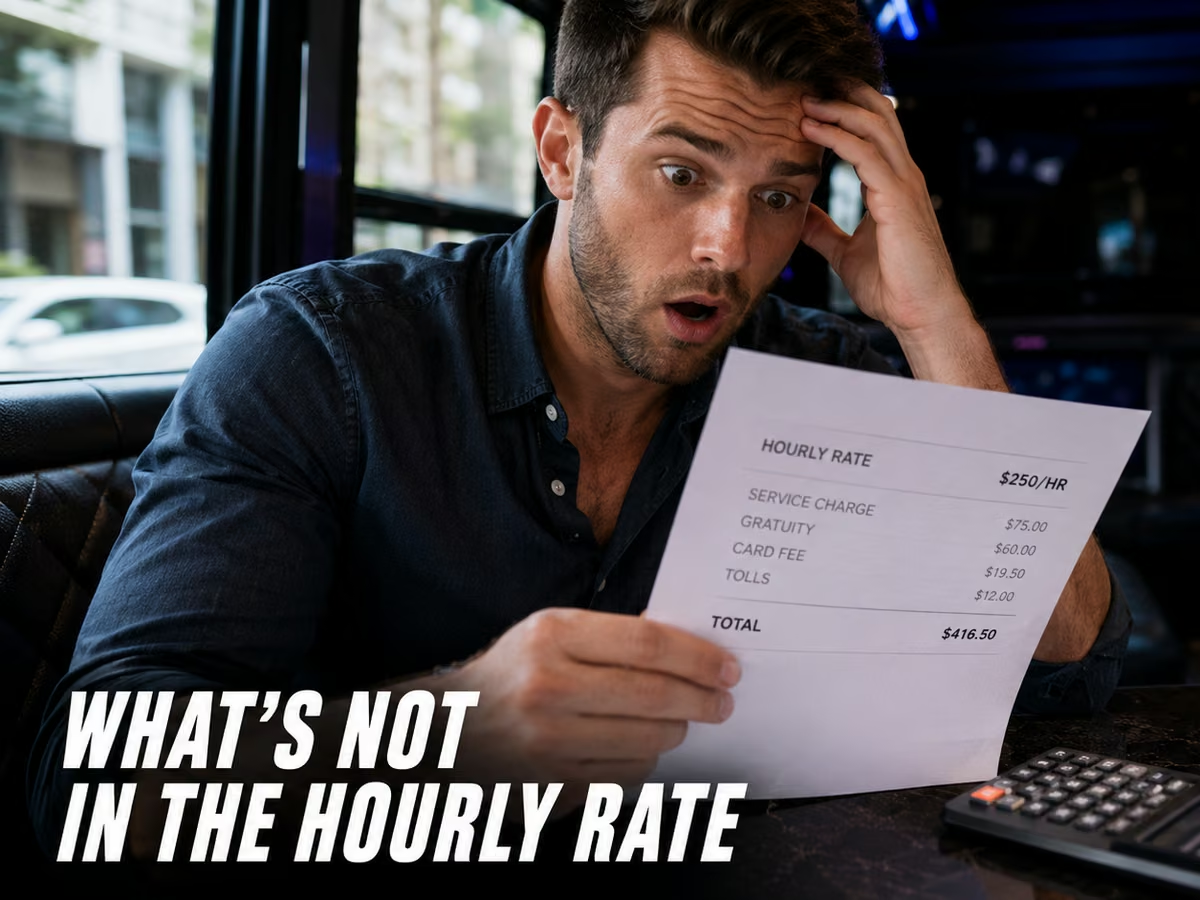
These charges rarely appear together in one place, which is why quotes surprise people. Every item here turns up in standard terms somewhere in this market.
| Item | What it looks like | Typical size |
|---|---|---|
| Service charge | A percentage on everything, separate from gratuity | Around 20% of the pre-tip subtotal |
| Gratuity | Often excluded; sometimes collected automatically if you do not raise it | 15–20% suggested; terms may take 18% from the deposit if overlooked |
| Card charge | A percentage for paying by card, applied after the service charge | 2.9% to 3% |
| Out-of-zone travel | A flat adder past a radius, or a switch to garage-to-garage billing | $25 past 10 miles beyond the zone, $50 past 20 |
| Overtime | Billed in fixed increments, so partial hours round up | Full one-hour increments are common — eleven minutes over costs an hour |
| Waiting time | Charged per few minutes past a grace period, mostly on transfers | Around $10 per five minutes after the grace window |
| Local charges | Passed straight through, and very regionally specific | Congestion charges in some downtowns, plus an airport access charge per pickup |
| Deposit and cancellation | Refundable only inside a window that closes early | Refundable to about 30 days out; up to 50% forfeited inside two weeks, 100% inside 48 hours |
| Peak adder | A flat sum on any reservation in the busy months | Around $100 per reservation, commonly April through October |
Put the common ones on one booking — the Saturday floor for an 18-passenger party bus above:
5 hours × $323.00 = $1,615.00
+ 20% service charge = $323.00
subtotal = $1,938.00
+ 3% card charge = $58.14
Total before gratuity = $1,996.14
23.6% above the headline arithmetic, with gratuity still to come.
A lower hourly rate isn’t a lower price. Not once the service charge lands. Not once the card charge lands on top of that.
A company quoting $323 with 20% on top costs more than one quoting $375 stated as a single total.
Plenty of companies do price the second way, quoting one total inclusive of charges and taxes with only the tip left over. You just can’t tell which kind you’re dealing with from the hourly figure. Compare all-in totals, never hourly rates, and if a quote shows no bottom line, ask for one in writing before you put down a deposit.
What Size Bus Your Group Needs
Pick the vehicle from the headcount, not the other way round.

| Group size | Vehicle class | Sizes commonly available | Worth knowing |
|---|---|---|---|
| Up to 14 | Sprinter limo or the Sprinter van rental page | 12, 14, 15 seats | Cheapest hourly rate here, and the highest per-seat cost of any party vehicle |
| 15–22 | 15-passenger party bus up to a 20-passenger party bus | 15, 18, 20, 22 seats | The most commonly booked band, and where day-of-week swings hit hardest |
| 23–30 | 25-passenger party bus, 30-passenger party bus or a minibus | 24, 25, 28, 30 seats | Five and six-hour trip lengths start appearing at this size on weekends |
| 31–45 | 40-passenger party bus | 35, 40, 45 seats | Fewest units per market, so it books out earliest and carries the biggest weekend floor |
| 46+ | Charter bus | 47, 50, 54, 56 seats | Priced on a different logic again, with real full-day rates — see charter bus cost |
Round up, not down. Two people more than the vehicle holds means a second vehicle and a second minimum, which costs far more than one size up. And stated capacity is a seating count, not a comfort count: a bus rated for 20 is comfortable for about 16.
The party bus capacity guide covers the gap between the two numbers.
Two adjustments before you settle on a size. If anyone needs a wheelchair position, ask for it when you request pricing and give as much notice as you can — ideally more than 48 hours, because far fewer vehicles are configured for it and a position costs two to four seats.
And if the night involves luggage, coolers or gear, count that too: a party bus has no separate bay, so bags ride in the aisle and cost you seats. A minibus or charter bus has underfloor bays that take crates and cases without eating the cabin.
Party Bus Cost Per Person
Per person is the number groups actually compare, and it’s where a party bus stops looking expensive. Divide the all-in total by the people actually riding — not by capacity, which is the mistake that makes the math look better than it is.

Per-seat cost falls as the vehicle gets bigger
Take a six-hour Saturday booking and run mid-band weekend example rates across the classes:
| Vehicle | Seats | Example rate | 6-hour total | Per seat, full |
|---|---|---|---|---|
| Sprinter limo | 14 | $281.50/hr | $1,689 | $120.64 |
| Party bus | 18 | $323/hr | $1,938 | $107.67 |
| Party bus | 20 | $304/hr | $1,824 | $91.20 |
| Party bus | 25 | $312.50/hr | $1,875 | $75.00 |
| Party bus | 30 | $366/hr | $2,196 | $73.20 |
| Party bus | 40 | $399.50/hr | $2,397 | $59.93 |
| Minibus | 30 | $235/hr | $1,410 | $47.00 |
| Charter bus | 50 | $278/hr | $1,668 | $33.36 |
Arithmetic from mid-band weekend example rates, before service charge, card charge and gratuity. Example figures, not quotes.
So the bigger bus is rarely the more expensive choice, as long as you fill it. Moving from the 20-passenger bus to the 30-passenger adds $372 to the total and takes $18 off every head. Ride that same 30-passenger bus with only 18 people and your per-seat cost jumps from $73.20 to $122 — worse than booking the 18-passenger bus at $107.67 a head.
An empty seat rides at full price. Lock the headcount first, and get a firm yes rather than a maybe.
A shuttle-style bus cuts the per-seat cost by a third to a half
The last two rows make the point: a 30-seat minibus at $47 a seat and a 50-seat charter bus at $33.36 undercut every party bus on the list — the charter bus by more than half on all but the largest. The difference is fitout, not distance covered.
A minibus or charter bus has forward-facing seats, luggage space and no entertainment build. A party bus has wraparound perimeter seating, LED lighting, a sound system, a bar counter and floor space to stand up in — and you pay for that build every hour whether you use it or not. If the job is moving guests between a hotel and a venue rather than celebrating on board, the plainer vehicle does the same work for a third to a half less per seat.
The bus types guide covers where each class fits, what a party bus actually is explains what the entertainment build buys, and what a minibus is covers the plainer option. Groups often book both — a party bus for the wedding party, a minibus for the guest shuttle — because the two jobs price so differently.
There’s an honest objection to most of this page: for plenty of groups the cheapest right answer isn’t a party bus at all. Under about 14 people, the Sprinter-based vehicles carry the highest per-seat cost on the page and still the smallest total bill. If nobody is going to stand up and use the entertainment build, none of the pricing above is the decision that matters.
A worked example
Twenty-two people, six hours on a Saturday, one vehicle:
- 25-passenger party bus at an example $312.50 an hour, six hours: $1,875
- Divided by 22 riders: $85.23 per person
- Add 18% gratuity: roughly $101 per person for the night
- If the quote carries a 20% service charge and a 3% card charge, budget closer to $125 per person
Then weigh that against what the group is choosing between: six rideshares across town and back, at surge, on a Saturday night, everyone arriving at different times, and somebody having to skip the party to drive. The per-head figure lands in the same neighborhood, and the bus keeps twenty-two people together from the first stop to the last.
Prom, Weddings and Peak Dates
Named peaks come with their own rules, not just higher numbers. The rules are written down, so you can ask before you commit.

Prom repricing is time-windowed, not just date-based
In prom season the repricing often applies to a window, not to specific dates. A typical structure runs prom pricing through the end of May, requires any Saturday booking to finish before 5pm to stay off prom rates and the six-hour minimum, then returns to standard rates from around 10pm with limited availability and a shorter minimum.
That reprices the entire Saturday evening, all season — not one date. A birthday dinner with nothing to do with prom pays prom pricing if it runs 6pm to 10pm in May. Move it earlier, later, or to a Friday, and you’re back on standard pricing for the identical vehicle.
Elsewhere the peak shows up as a longer floor rather than a higher rate: a six-hour minimum through prom season and for major local events, against three to five hours the rest of the year. Some companies say outright that their published rates don’t apply for prom or homecoming. Ask whether your date falls inside a prom, homecoming, graduation or festival window, and if it does, what an alternative start time would cost.
Season adders are flat, not proportional
A flat adder of around $100 per reservation across the busy months is common, and because it’s flat regardless of vehicle or duration, it stings a short booking far more. On a three-hour, 18-passenger booking at an example $298 an hour, $894 becomes $994 — another 11.2%. On a ten-hour wedding day it is noise.
If your booking is short and your date is in season, ask about that adder specifically.
How far ahead to book
Lead times cluster tightly:
| Occasion | Book this far ahead | What runs out |
|---|---|---|
| Ordinary weekend night | 4–8 weeks | Saturday slots in spring and summer, especially in the 15–22 seat band |
| Prom | 4–6 weeks minimum, 2–3 months better | Everything at once — every school in the metro books the same four Saturdays |
| Large vehicles in prom season | 6–8 weeks before the major dates | The 30-seat-plus units first; there are only a handful per market |
| Weddings and holiday parties | 2–4 months | Multi-vehicle bookings, which need several units free on one day |
| Peak season generally | As early as you can commit | April through October is peak in most markets, with adders across it |
What runs out first is size, not availability in general. A group of 26 that starts looking three weeks out ends up choosing between two 20-passenger buses and a compromise — and two vehicles means two minimums, two service charges and two gratuities. Booking early isn’t about a discount.
It’s about not being forced into the expensive shape.
The prom party bus page, wedding transportation and bachelor and bachelorette pages cover the timing for each, and group transportation services covers multi-vehicle days.
Questions to Ask Before You Accept a Quote
Six questions, each mapping to a mechanic above.
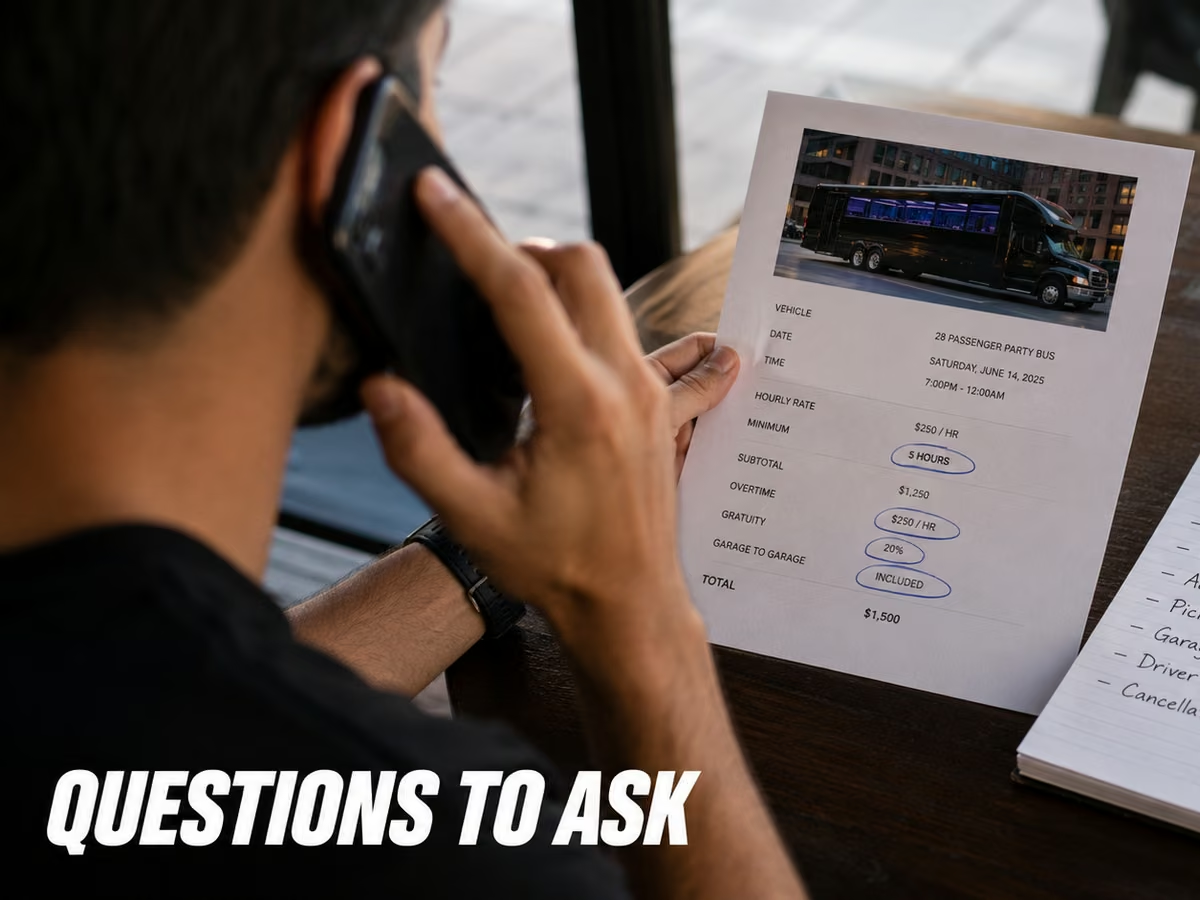
- Is billing garage-to-garage or pickup-to-drop? And if conditional, what triggers it — distance from the base, an added stop, a county line? This is where two identical hourly rates turn into different bills.
- What is the minimum for my specific day? Not generally. Saturday minimums commonly run one to two hours longer than midweek, and prom season adds more.
- What is the overtime rate, and in what increments? Full one-hour increments mean eleven minutes over costs a whole hour. Half-hour increments cost half that.
- Is gratuity included, and collected automatically? Some terms take 18% from the deposit if you never raise it. Others state one total covering everything except the tip.
- What sits on top of the rate? Service charge, card charge, out-of-zone travel, seasonal adder. Ask for the bottom line, then compare bottom lines — never hourly rates.
- What is the deposit, and when does the refund window close? Thirty days out is common and closes earlier than people expect. Inside two weeks, half the total can be gone.
The FAQ page covers the rest of the process, and how to rent a bus walks the steps in order.
What to Put in a Quote Request
Quotes come back inconsistent mostly because the requests going out are inconsistent. Six lines of detail fix that:

- Date, start time and end time. The real window, including the wait while people take photos. Padding by an hour costs less than overtime in one-hour increments.
- Headcount, firm. The people who have said yes, plus whether it might grow. That decides the vehicle, and the vehicle decides the rate band.
- The full stop list with addresses. Every pickup and drop, in order. This determines zone charges and whether you fall outside a base radius.
- Continuous or split service. A group that needs the bus at 6pm and again at 11pm is often quoted two transfers rather than five idle hours, which can be much cheaper.
- What the vehicle needs to have. Standing room, a sound system you can connect to, coolers, a restroom on a long run, a wheelchair position, luggage space. Each one narrows the fleet and moves the price.
- Your ceiling. Naming a budget gets you a vehicle you can afford instead of three quotes you decline.
Ask in writing what the vehicle actually is, too. Photos on rental sites are often stock, so ask for the seat count, the model year and a picture of the specific bus. The vehicle lineup shows what each class looks like, and the party bus amenities guide lists what the fitout includes at each size.
How These Figures Were Built
The hourly bands and full-day figures on this page are the example planning ranges this site publishes for each vehicle class, last reviewed in July 2026. They’re deliberately wide, because a rate that is accurate in a small market is wrong in a large one, and a rate that is accurate on a Tuesday is wrong on prom Saturday.
The arithmetic in every table — floors, percentage changes, per-seat and per-person figures — is worked from those bands and shown in full so you can check it. Midweek examples use the midpoint of the weekday band and weekend examples the midpoint of the weekend band, and each table says which. The add-ons, minimums, increments, refund windows and peak structures are the standard mechanics of how this industry bills: patterns to expect and ask about, not any particular company’s terms.
Rates change without notice. Treat every figure here as evidence of how billing works rather than a price anyone can be held to, and get your own number for your own date before budgeting around it.
The reason a quote so often lands higher than the arithmetic suggests isn’t that anyone hid anything. It’s that the hourly rate is the one number this industry says out loud, so it’s the number people compare. It was never the price.
Figures on this page are example planning ranges rather than quotes, last checked July 2026; pricing in this industry moves with season, market and demand, so confirm the exact number for the vehicle and date on your quote. Partybus-rental.net is a comparison and quote-request website — it does not own vehicles and does not provide the transportation itself. Corrections: contact page.
Frequently Asked Questions About Party Bus Cost Per Hour
How much does a party bus cost per hour?
Roughly $204 to $441 an hour, with three-to-six-hour trips — $204 to $338 at 15 to 20 seats, $248 to $374 at 25 to 30, and $294 to $441 at 40 to 50. Smaller Sprinter-based vehicles run $203 to $318. Rates are set locally, so the figure for your city is the one that matters.
Those are example figures to help you plan, not quotes — the quote moves with your date, hours, mileage and how busy that weekend is. The quote form returns a local number in about a minute, or call 833-458-7001.
What is the cheapest a party bus can realistically cost?
Around $612 — three hours at $204 for a 15-to-20-passenger bus, midweek, in a market where rates sit at the bottom of the band. Add a 20% service charge and a 3% card charge and it becomes $756.43 before gratuity. If you need less than that, a Sprinter van is the cheaper shape.
Why is my quote higher than the rate times the hours?
Three reasons stacked. The minimum: if the floor is five hours and you asked for three, you’re billed five. Percentage charges on top: 20% then 3% on the new subtotal turns $1,615 into $1,996.14 before gratuity.
And garage-to-garage billing, where the clock starts when the vehicle leaves its base. Ask for the bottom line in writing and all three become visible.
What is garage-to-garage billing?
Hourly billing that runs from the moment the vehicle leaves its base until it returns, rather than from pickup to drop-off. It’s frequently conditional — commonly applied only when your first pickup is more than about a 30-minute drive from the base, and an unscheduled extra stop can switch a booking onto it mid-trip. On a five-hour booking it can be a quarter of the total.
Is there a minimum number of hours?
Effectively always, and it changes with the day. Minimums commonly run three to four hours midweek and five to six on Saturdays, with six hours widespread through prom season — and it’s normal to see six hours on a party bus against three on a van from the same company.
Who sets the minimum, and does it change with my date?
Each bus company sets its own, and it moves with the date and the occasion rather than being fixed to the vehicle. Many companies set a longer floor on peak dates — prom season, wedding Saturdays, homecoming, big local events — and price an ordinary weekday transfer with a shorter floor or none at all. On a night a company can fill twice over, a short booking costs it the rest of the evening.
Ask for the minimum on your specific date, and see what a second company quotes for that same date before you accept the first floor you hear.
Are weekends really more expensive?
Yes, by more than the rate suggests. Saturday rates commonly run 4% to 26% above Sunday-to-Thursday, but because the minimum also rises by an hour or two, the amount needed to make the booking climbs 30% to 51%. Both levers move at once, which makes a flexible date the largest saving left to most groups once the vehicle size is settled.
How do I work out cost per person?
Divide the all-in total by the people actually riding, not by capacity. On a six-hour Saturday booking, example per-seat costs at full capacity run about $121 on a 14-passenger limo, $91 on a 20-passenger party bus, $73 on a 30-passenger bus and $60 on a 40-passenger bus. Ride that 30-passenger bus with 18 people and the same total works out to $122 a head.
Is a minibus cheaper than a party bus?
Considerably, per seat. A 30-seat minibus at an example $235 an hour works out to about $47 a seat for six hours, against $73 to $108 on party buses of similar or smaller size. The difference is fitout: forward-facing seats, luggage bays, no entertainment build.
For moving guests between hotel and venue it does the same work for a third to a half less per seat.
Does booking more hours lower the hourly rate?
Often, and it’s always worth asking. Full-day pricing shows it most clearly: a minibus at $207 to $246 an hour is commonly quoted at $1,098 to $2,105 for a full day, and a charter bus at $206 to $327 an hour at $1,331 to $2,841 — both well under the hourly rate multiplied across ten or twelve hours. Ask for the block price and the overage rate side by side, because some companies discount the block and others charge a premium for overtime instead.
What is the difference between hourly and flat transfer pricing?
Hourly reserves the vehicle for a block of time; a flat transfer prices one point-to-point run. For a straight airport run the transfer is usually far cheaper, because you’re not paying a four-hour minimum for a 45-minute job — expect roughly an hour and a half to two hours of the hourly rate instead of the full floor. Ask for the transfer rate by name.
How far ahead should I book?
4 to 8 weeks for an ordinary weekend, and 4 to 6 weeks minimum, two to three months better, for prom. Larger vehicles go 6 to 8 weeks before major prom dates, and multi-vehicle weddings want two to four months. What runs out first is the size you need, not availability in general — a group of 26 booking late gets split across two smaller vehicles and pays two minimums.
Does Partybus-rental.net set these prices?
No. This site compares quotes and connects groups with the bus companies and transportation providers serving each area. It does not own vehicles, employ anyone who operates them, or run trips, and every amount shown here is example pricing rather than an offer. It puts vehicles and rates from a large network of companies in one place, so you compare in one pass instead of calling company after company and waiting on callbacks.
More on the about page.
Compare Party Bus Prices for Your Date
What’s left is a figure for your city, your date and your headcount.
Partybus-rental.net puts vehicles and rates from a large network of bus companies in one place, so you fill out one form instead of describing your trip to eight companies and comparing quotes that never line up. No account required, no obligation, pricing in about a minute. Use the quote tool, or call 833-458-7001 — and bring the six questions above with you, because the answers are worth more than the headline rate.