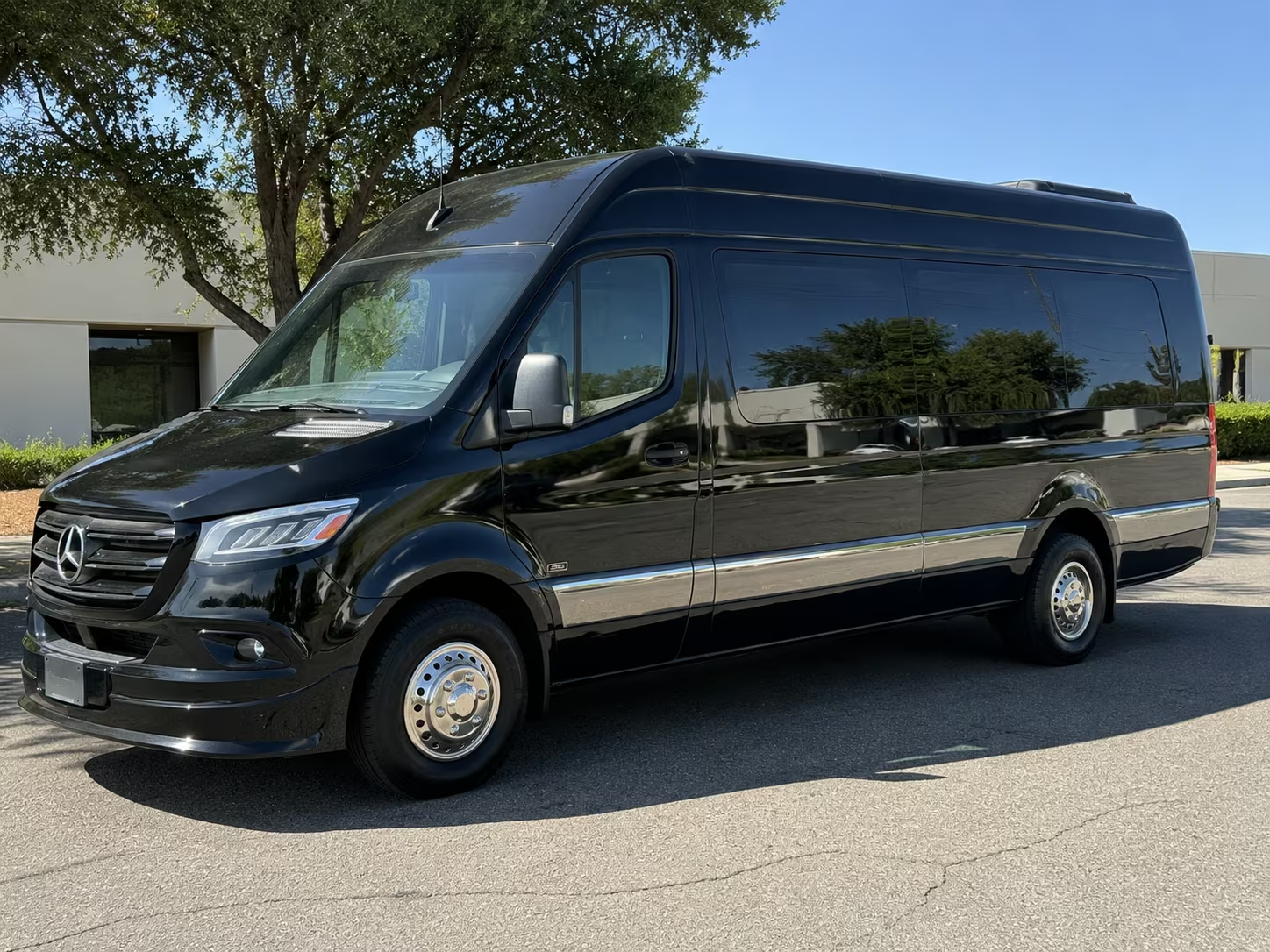
There are more than forty named bus types in regular use, and they sort into six families: transit buses, motorcoaches, school buses, minibuses, shuttle buses, and party buses.
But the names are the least reliable thing about them. Send the same trip to three companies — 48 people, one hotel, one venue, back at midnight — and one answer says motorcoach, one says coach bus, one says 56-passenger charter bus. Same 45-foot vehicle, three names.
Three numbers sort them out where the words don't: how many seats, how long the vehicle is, and whether luggage rides in sealed bays underneath. That third one decides more trips than people expect.
A bus gets filed by what it does, what shape it is, how you step onto it, what powers it, and what a fleet calls it — all at once, all valid. This guide covers road passenger vehicles, not the CAN bus in automotive wiring: every type, the numbers that decide trips, what each costs to rent, and how to tell them apart from one photo.
The six families, in one pass:
- Motorcoach — 45–57 seats, 45 ft, sealed luggage bays. Distance and bags.
- Minibus — 15–35 seats, 25–35 ft, little or no luggage. Mid-size groups, tight streets.
- Party bus — 15–50 seats facing inward, no luggage. The ride is the event.
- Shuttle bus — 12–35 seats. A job, not a shape: short loops, repeated.
- Transit bus — 30–42 seats plus standees. Agency-owned; you ride it, you don't rent it.
- School bus — 10–90 seats, labeled A through D by how the body meets the chassis.
Where the line between a van and a bus falls
In the rental market the split is a headcount, and it lands lower than most people guess: fleets stop saying van and start saying bus around 14 to 15 seats. Below that you're shopping vans, SUVs and executive sedans. At and above it, everything on this page applies.
Which explains a quirk you'll hit immediately: the same Sprinter is a van on one company's page and a small bus on the next.
Two consequences. First, search both words — a group of 14 that only asks about buses misses half the vehicles that fit. Second, pin the count down, because whoever is at the wheel occupies a seat.
Ask for passenger seats available to your group, in those words.
School buses sit outside this vocabulary entirely. Dealers and fleets label them A through D, by how the body meets the chassis.
Every bus type in one table
Every vehicle type on this page, in one table. Click a column heading to sort; the button below downloads it as a CSV. Seated capacity is standard configuration — a wheelchair position or a lavatory moves the number.
"Enclosed luggage" means sealed underfloor bays you load from outside: not overhead racks, not the aisle. Browse the full vehicle lineup once you know which row you're in.
| Type | Category | Typical seated capacity | Nominal length | Enclosed underfloor luggage | What it's for |
|---|---|---|---|---|---|
| Motorcoach | Service | 45–57 | 45 ft | Yes — large | Long-distance group travel |
| Intercity coach | Service | 45–57 | 40–45 ft | Yes | Scheduled city-to-city service |
| Charter / tour bus | Service | 45–57 | 40–45 ft | Yes | Contracted group trips |
| Transit bus | Service | ~30–42 seated (low-floor; ~44 high-floor) | 40 ft | No | Urban stop-to-stop routes |
| Articulated bus | Body shape | ~55–65 seated | 60 ft | No | High-ridership transit corridors |
| Bi-articulated bus | Body shape | ~70–80 seated | 75–82 ft | No | Heavy BRT corridors (rare in the U.S.) |
| Single-decker bus | Body shape | 25–57 | 25–45 ft | Type-dependent | Fleet-list term for "the normal one" |
| Double-decker bus | Body shape | ~70–85 | 42–45 ft | Sometimes | Capacity in a short footprint |
| School bus (Type A) | School | ~10–30 | 20–25 ft | No | Small and rural student routes |
| School bus (Type B) | School | ~15–30 | 20–30 ft | No | Student routes (hardest type to spot today) |
| School bus (Type C) | School | Up to ~77 | ~35–40 ft | No | Conventional student transportation |
| School bus (Type D) | School | Up to ~90 | ~40 ft | No | High-capacity student routes |
| Multifunction school activity bus | School | Body-dependent | 20–40 ft | No | Athletics, clubs, activity trips |
| Type III vehicle | School | 10 or fewer | Car / van length | No | Van-sized student transport, not a bus |
| Shuttle bus | Service | 12–35 | 20–35 ft | Rarely | Short repeating loops |
| Group / employee shuttle | Service | 15–56 | 25–45 ft | Vehicle-dependent | Recurring staff and shift runs |
| Minibus | Body shape | 15–35 | 25–35 ft | Sometimes (rear or side bay) | Mid-size groups, tight streets |
| Minicoach | Body shape | 24–35 | 30–38 ft | Yes | Mid-size groups with bags |
| Midibus | Body shape | ~25–35 seated | ~30–35 ft | No | Low-demand transit routes |
| Cutaway bus | Body shape | 14–30 | 20–30 ft | No | Shuttles, paratransit, hotel runs |
| Sprinter van | Body shape | 12–15 | ~19–24 ft | No (rear cargo area) | Small groups, airport runs |
| Sprinter limo | Body shape | 12–14 | ~24 ft | No | Small groups, night out |
| Party bus | Service | 15–50 | 25–45 ft | No | Celebrations, the ride is the venue |
| Sleeper coach | Service | 8–16 bunks | 45 ft | Yes | Overnight touring travel |
| Open-top sightseeing bus | Service | ~50–80 | 40–45 ft | No | City tours |
| Paratransit vehicle | Service | 8–16 + wheelchair positions | 20–28 ft | No | Door-to-door accessible service |
| BRT vehicle | Service | ~40–65 seated | 40–60 ft | No | Dedicated-lane rapid transit |
| Trolleybus | Powertrain | ~35–60 seated | 40–60 ft | No | Wired urban routes |
| Police bus | Specialist | Not standardized | 30–45 ft | No | Detainee transport or mobile command |
| Training bus | Specialist | Most seats removed | Donor vehicle length | No | Vehicle handling instruction |
| Off-road bus | Specialist | 20–50 | 25–45 ft | Sometimes | Mine sites, camps, unpaved routes |
| Neighborhood bus | Specialist | 10–25 | 20–28 ft | No | Community circulator routes |
| Guided bus | Specialist | ~40–60 seated | 40–60 ft | No | Curb-guided busway systems |
| Bookmobile / mobile clinic | Specialist | Not passenger-rated | 30–45 ft | No | Libraries, clinics, command centers |
Boarding height and powertrain aren't rows because they're attributes, not vehicles — a 40-foot transit bus is low-floor and battery-electric and still one row. The trolleybus is the exception: its power source produces a vehicle you can identify from the sidewalk.
What each bus type costs to rent
Rentals are priced by the hour almost everywhere, with full-day rates on longer vehicles.
| Vehicle | Typical hourly range | Full-day | What moves the number |
|---|---|---|---|
| Sprinter van (12–15) | $203–$273 | — | Airport runs price differently than night hours |
| Sprinter limo (14) | $204–$318 | — | Weekend evenings run at the top of the range |
| Party bus (15–20) | $204–$338 | — | Prom and wedding season |
| Party bus (25–30) | $248–$374 | — | Saturday nights, holiday weekends |
| Party bus (40–50) | $294–$441 | — | Size and date together |
| Minibus (15–35) | $207–$246 | $1,098–$2,105 | Multi-stop shuttling adds hours, not rate |
| Charter bus (40–56) | $206–$327 | $1,331–$2,841 | Mileage on long hauls |
Those are example figures, not quotes — the quote moves with your date, hours, mileage and how busy that weekend is.
A full-size charter bus is often the cheapest vehicle per seat on the list. The hourly rate barely rises while capacity nearly quadruples: 56 seats at $206 an hour is about $3.68 per seat, while 15 seats at $204 an hour is more than $13. And party buses top out well above minibuses of the same size, because you're paying for the interior, not the transportation.
Two things sit behind almost every quote. Minimums: party bus work usually carries a three-to-five-hour minimum on weekend evenings, shuttle work often four, so a two-hour trip and a four-hour trip can land on the same total. One number or several: some quotes arrive as one total, others itemize base rate, mileage and gratuity — you can't compare two until you know which style each is written in.
Fill out the quick form or call 833-458-7001 and you could have pricing for your own trip in about a minute — no account required, no obligation. Deeper breakdowns live in the charter bus cost guide and the party bus cost guide, with rate ranges by city on the party bus prices page.
How to identify a bus type in four glances
A quote lands with a photo attached, and you can't tell whether you're looking at a minicoach, a minibus, or a party bus — three vehicles doing completely different jobs at similar prices. Four checks settle it from one exterior photo.
Glance 1 — the nose. A visible hood means a Type C school bus or a vehicle built on a truck or van chassis: a cutaway, most minibuses, many mid-size party buses. A flat front, windshield straight down to the bumper, means a motorcoach, a transit bus, or a Type D school bus.
Glance 2 — the flank. A row of wide, low doors below the window line means sealed underfloor luggage bays, which means a motorcoach or a minicoach. A smooth, uninterrupted side means no underfloor luggage at all — transit bus, school bus, party bus, most minibuses.
This is the decisive glance: it settles the luggage question before anyone asks it.
Glance 3 — the windows. Rows of seat backs visible through the glass mean a coach, minibus, or transit vehicle. Blacked-out glass with no seat backs, often smaller windows set higher on the body, means the interior faces inward — a party bus or limo conversion.
Glance 4 — the entry door. Ahead of the front wheels means a Type D school bus or a transit-style body. Behind them means a Type A, B, or C school bus, or a motorcoach.
It's the one detail the A-through-D letters actually hang on.
| What you see | What it is | What that means for your trip |
|---|---|---|
| Flat front + luggage bay doors along the side | Motorcoach | Long trips, full luggage, 45–57 seats |
| Hood + luggage bay doors, shorter body | Minicoach | Mid-size group with bags |
| Hood + smooth side, 25–35 ft | Minibus | Mid-size group, minimal bags, tight streets |
| Smooth side + blacked-out glass | Party bus | The ride is the event; no luggage space |
| Flat front + smooth side + wide double doors | Transit bus | Not a rental vehicle |
| Hood + yellow + stop arm | Type C school bus | Student transportation |
| Flat front + yellow + door ahead of front wheels | Type D school bus | Highest-capacity student routes |
| Yellow body, no stop arm, no roof lamps | Multifunction school activity bus | Activity trips, not home-to-school routes |
| Tall van body, factory nose, 12–15 seats | Sprinter | Small group; fits where buses don't |
Two pairs fool people. A minibus and a minicoach are nearly identical from the front, and the bay doors on the flank decide whether 30 suitcases have anywhere to go. A Type D school bus and a transit bus share a silhouette; the yellow paint, stop arm and roof lamps separate them.
Three more tells, because photos are usually shot from the angle that hides the flank. Count the axles: two means 40 feet or less, three means a 45-foot coach. Check the window line: coach windows sit high above the wheel arch because passengers ride on top of the bays.
Look for a bolted-on rear box: party bus conversions often add one, a giveaway that there are no bays.
A stock image is a brochure bus. Ask for a photo of the actual unit, plus one interior shot.
Buses sorted by the job they do
Transit bus (city bus)
A transit bus is a high-capacity vehicle built for short trips with constant boarding — wide doors, a low floor, grab poles, and standing room designed in from the start.
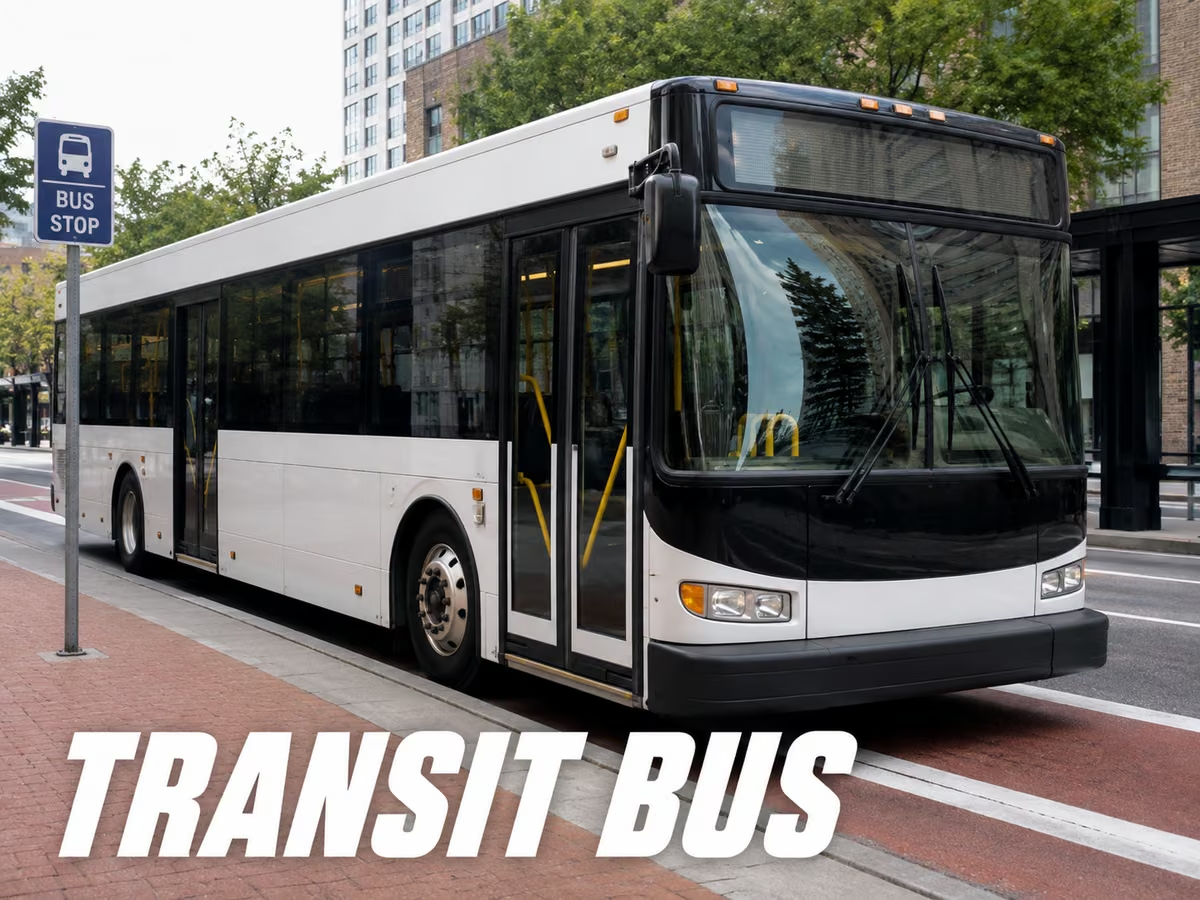
Typical capacity: ~30–42 seated on the low-floor buses that fill current fleets, 60–80 total with standees. Older high-floor transit buses seat slightly more — roughly 44 — because the low-floor layout gives up seating space to the flat entry. Nominal length: 40 ft.
Enclosed luggage: None.
You would ride one, not rent one — these belong to transit agencies and run fixed routes. Not to be confused with a motorcoach: the seats face forward in both, but a transit bus has no undercarriage bays, no reclining seats, and a ride tuned for city blocks rather than interstates.
Motorcoach (coach bus)
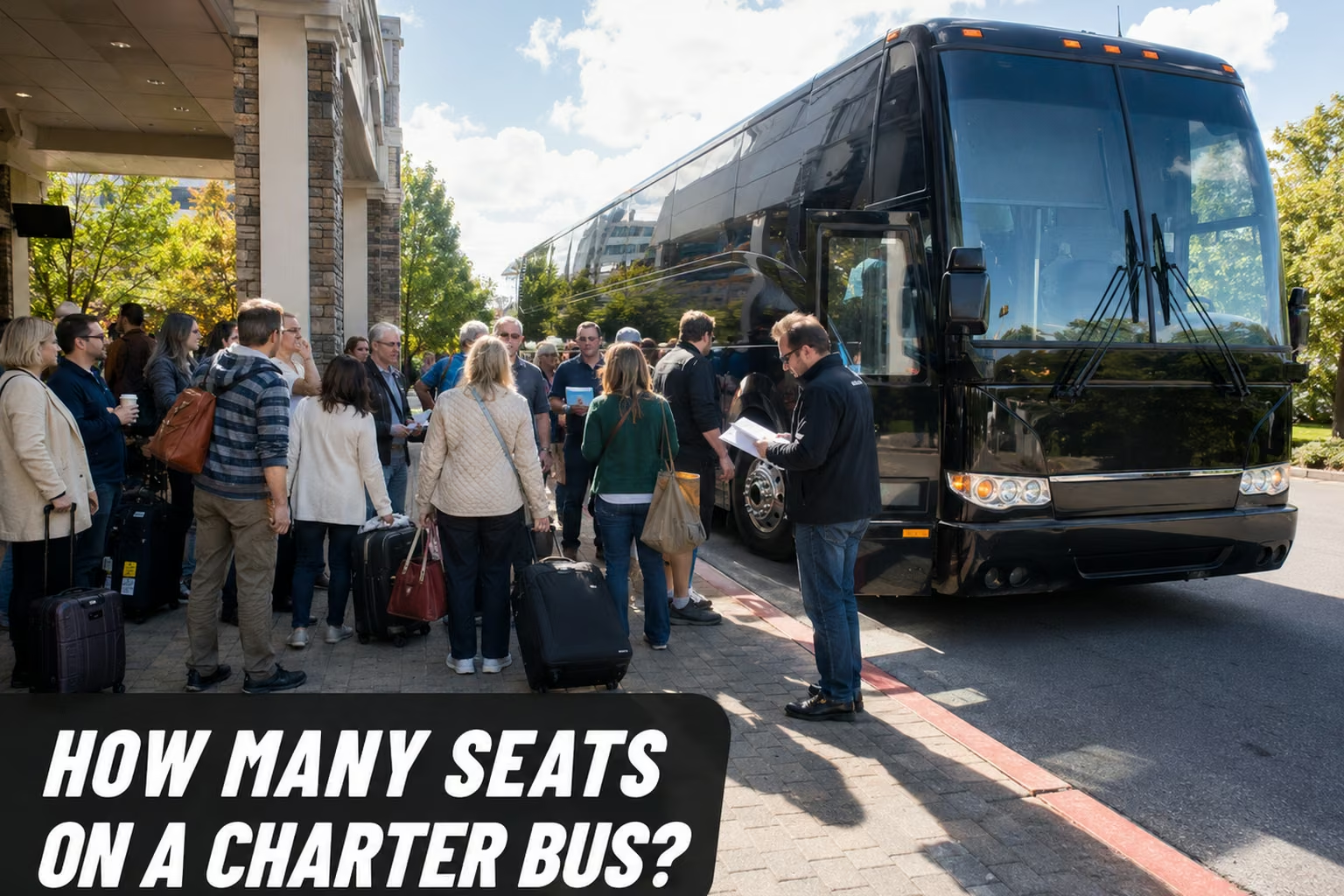
A motorcoach is the full-size, high-floor, long-distance vehicle most people picture when they hear "charter bus" — passengers ride above the wheel wells, and their bags ride in sealed compartments underneath.
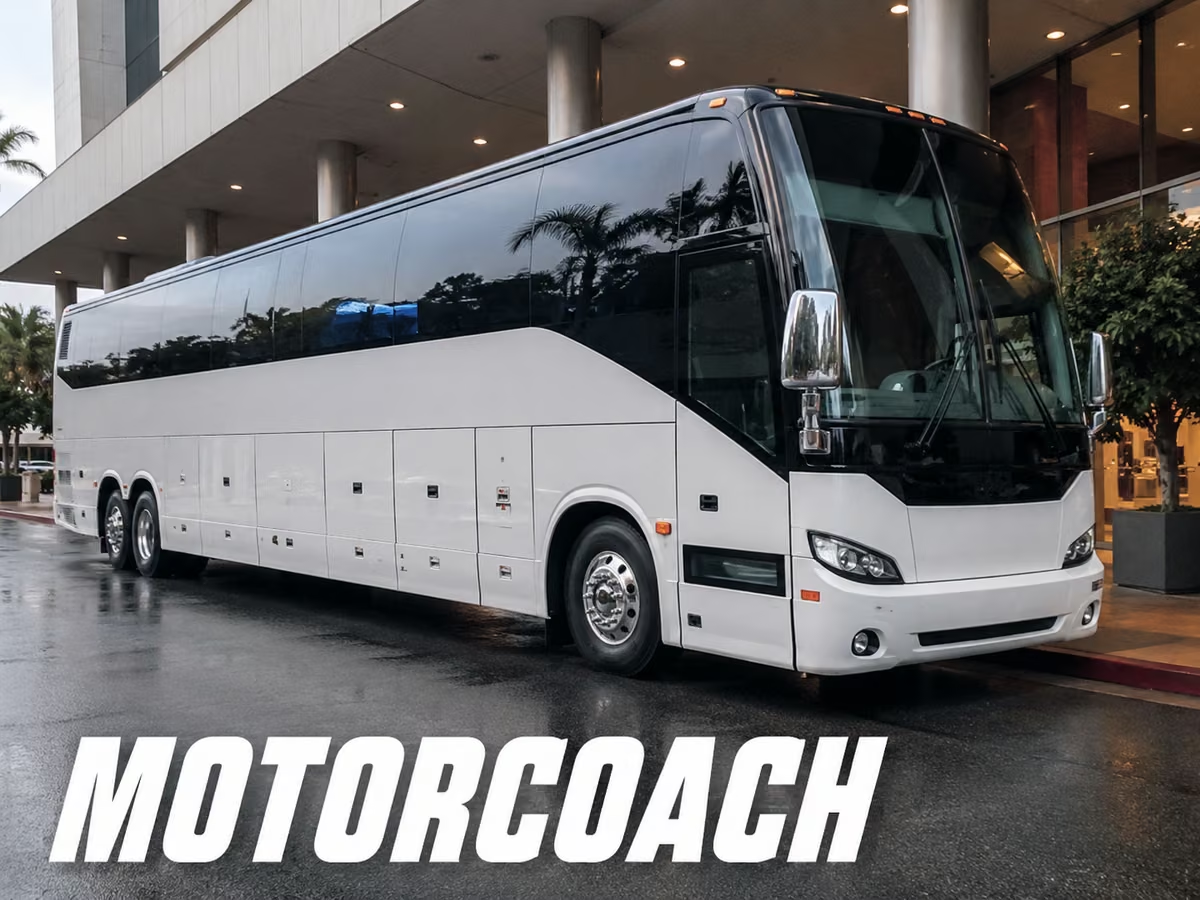
Typical capacity: 45–57 seated — 57 only on builds that skip the lavatory, which is why 56 is the number quoted almost everywhere. Nominal length: 45 ft on three axles. Enclosed luggage: Yes — roughly a suitcase per passenger in the undercarriage bays.
This is the vehicle for anything over about 90 minutes or anything with luggage: airport arrivals, multi-day tours, fan travel, conventions. The 40 to 56-passenger charter bus is the same vehicle under a rental-industry name. Not to be confused with a transit bus — the giveaway is the luggage bay doors along the side and the raised passenger deck.
See what typically comes standard in the charter bus amenities guide, and who builds them in the charter bus manufacturers rundown.
Intercity coach
An intercity coach is a motorcoach running scheduled, ticketed service between cities on a published timetable — same hardware, different business model.
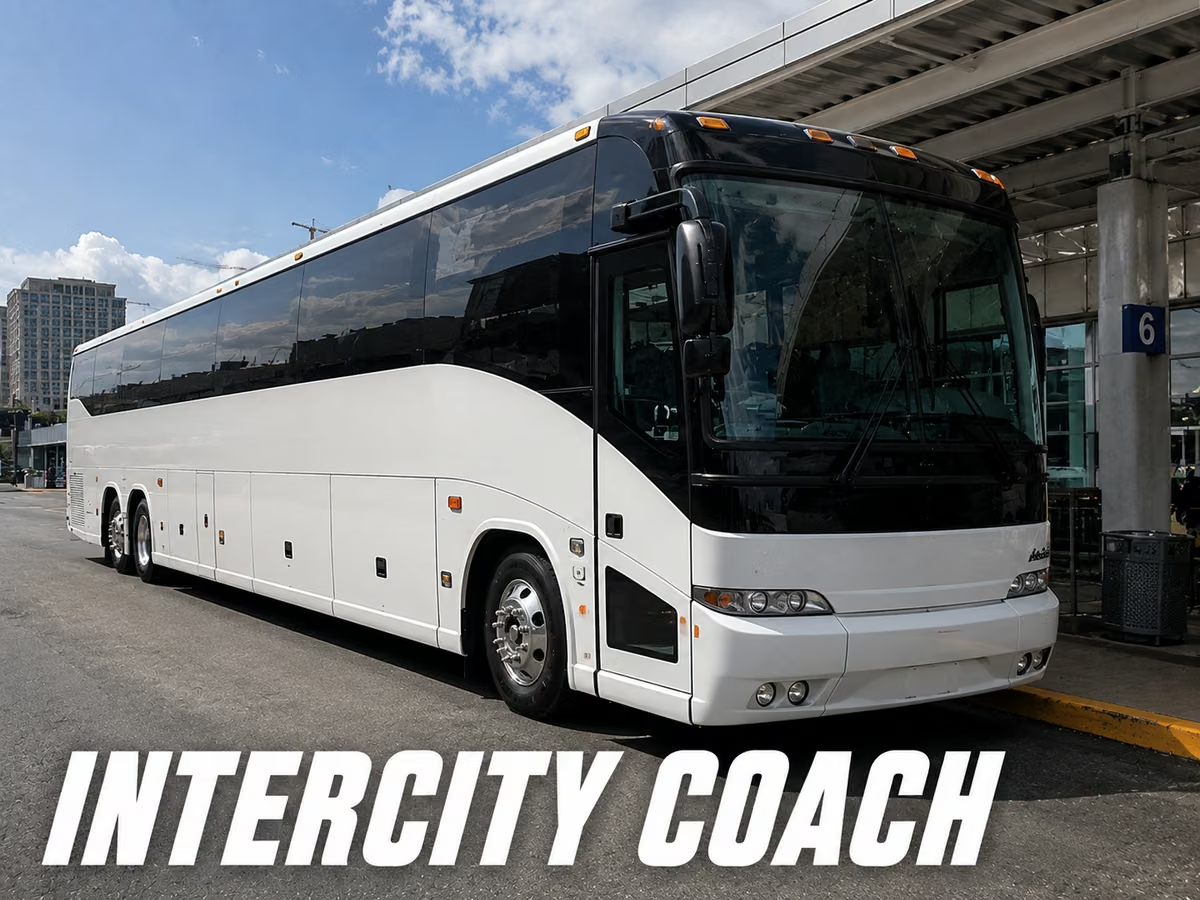
Typical capacity: 45–57. Nominal length: 40–45 ft. Enclosed luggage: Yes.
You buy a seat, not a vehicle, and you share it with strangers on a fixed departure. Not to be confused with a charter bus: the distinction is contractual, not mechanical. If you're picking the departure time and the route, you're chartering.
If a timetable is picking them for you, it's intercity service.
Charter and tour bus
A charter bus is a motorcoach hired as a whole vehicle for one group, on that group's route and schedule — the word describes the arrangement, not the metal.
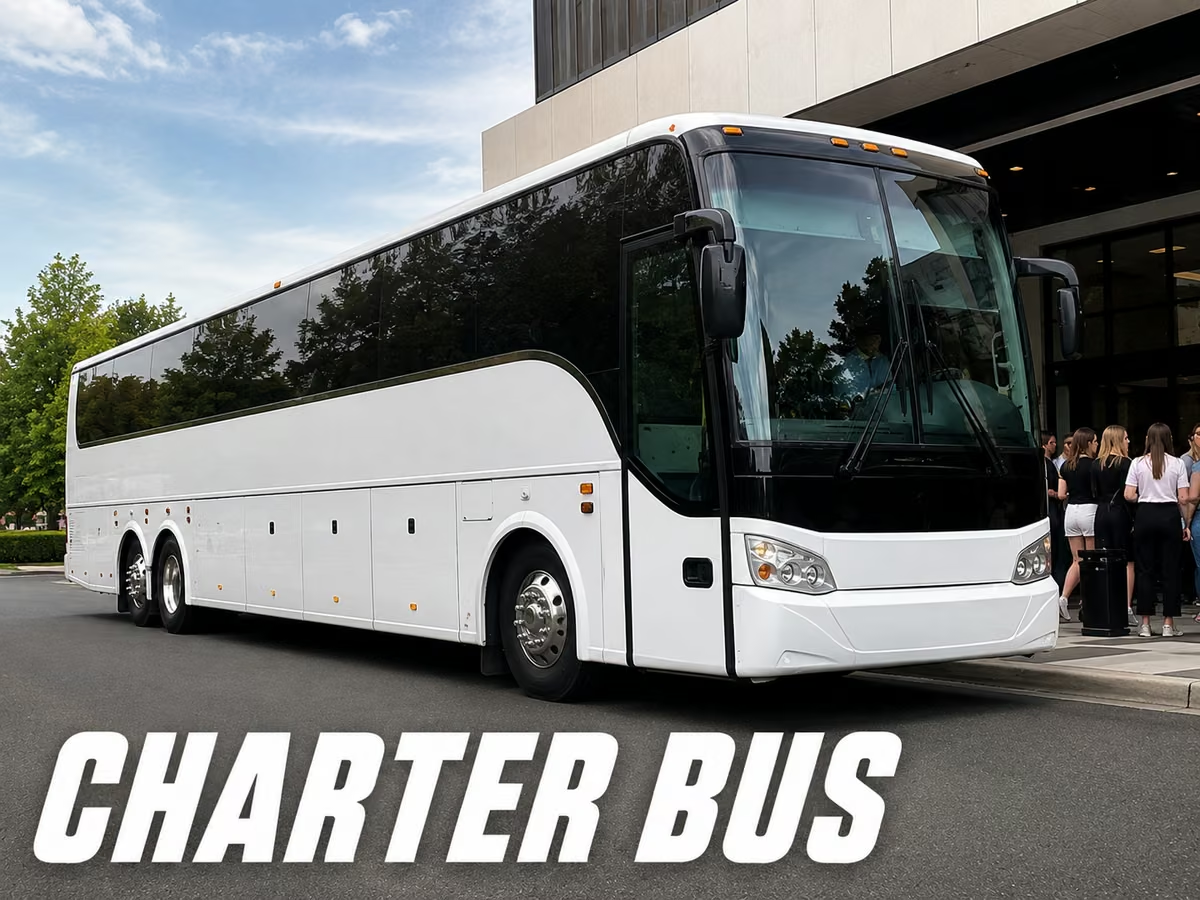
Typical capacity: 45–57. Nominal length: 40–45 ft. Enclosed luggage: Yes.
A "tour bus" is the same thing with a multi-stop itinerary attached. This is the most common vehicle booked for fan travel to games, school trips, and corporate offsites. Not to be confused with an entertainer's sleeper coach, which shares the shell but replaces the seats with bunks.
Start with the plain-English breakdown of what a charter bus is if the term is new to you.
School bus
A school bus is a purpose-built body on a purpose-built pattern, sold to districts and contractors for student routes and school activity trips.
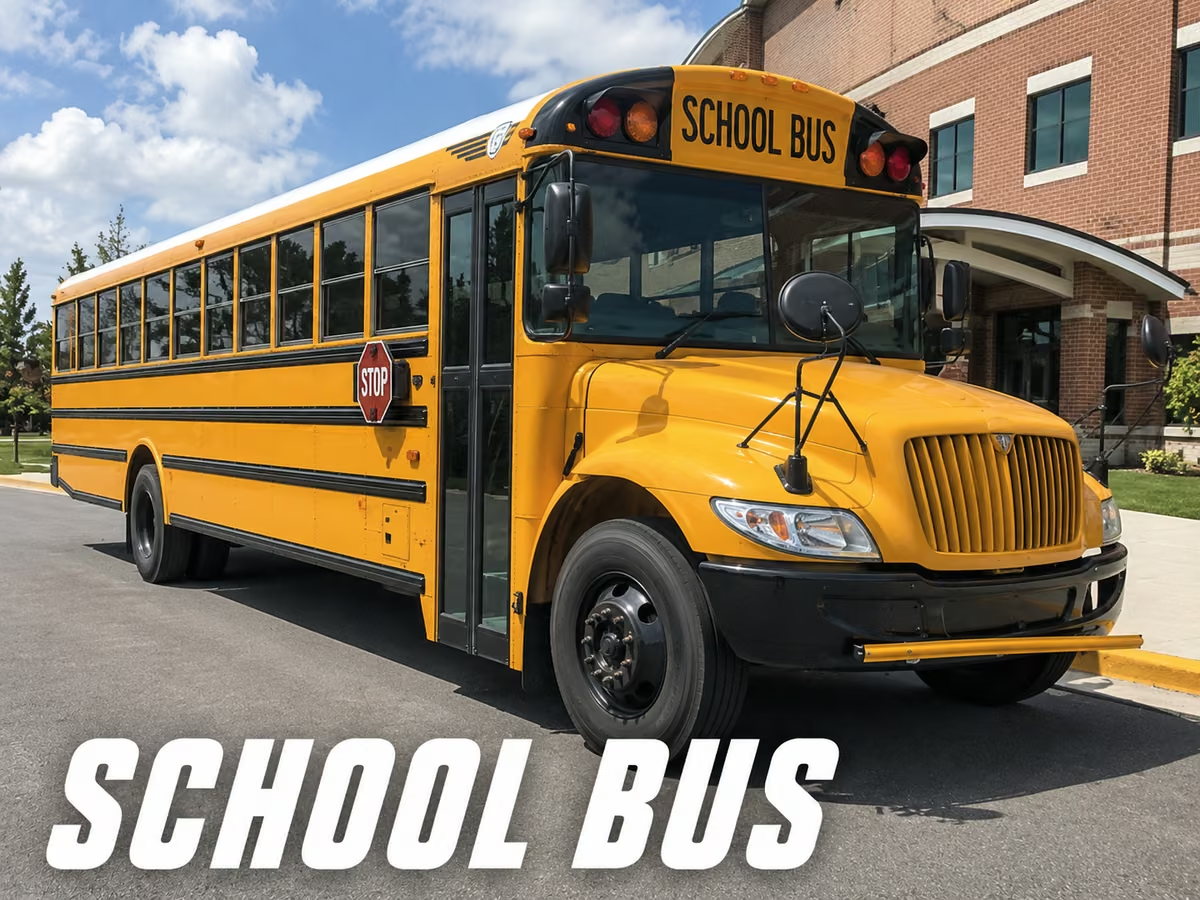
Typical capacity: 10–90 depending on type. Nominal length: 20–40 ft. Enclosed luggage: None — bags ride on laps or under seats.
That purpose brings the stop arm, the eight-lamp warning system, the national school bus yellow, and the close-spaced padded bench seating — and it's why other traffic stops for one. Not to be confused with a multifunction school activity bus, same body pattern minus the stop arm and warning lamps. The comfort trade-offs for field trips are laid out on the school event bus rental page — no recline, no luggage space, and road noise that makes a two-hour ride feel longer.
Shuttle bus
A shuttle bus is defined by its route, not its build: a small-to-mid vehicle running a short loop between two or three fixed points, over and over.
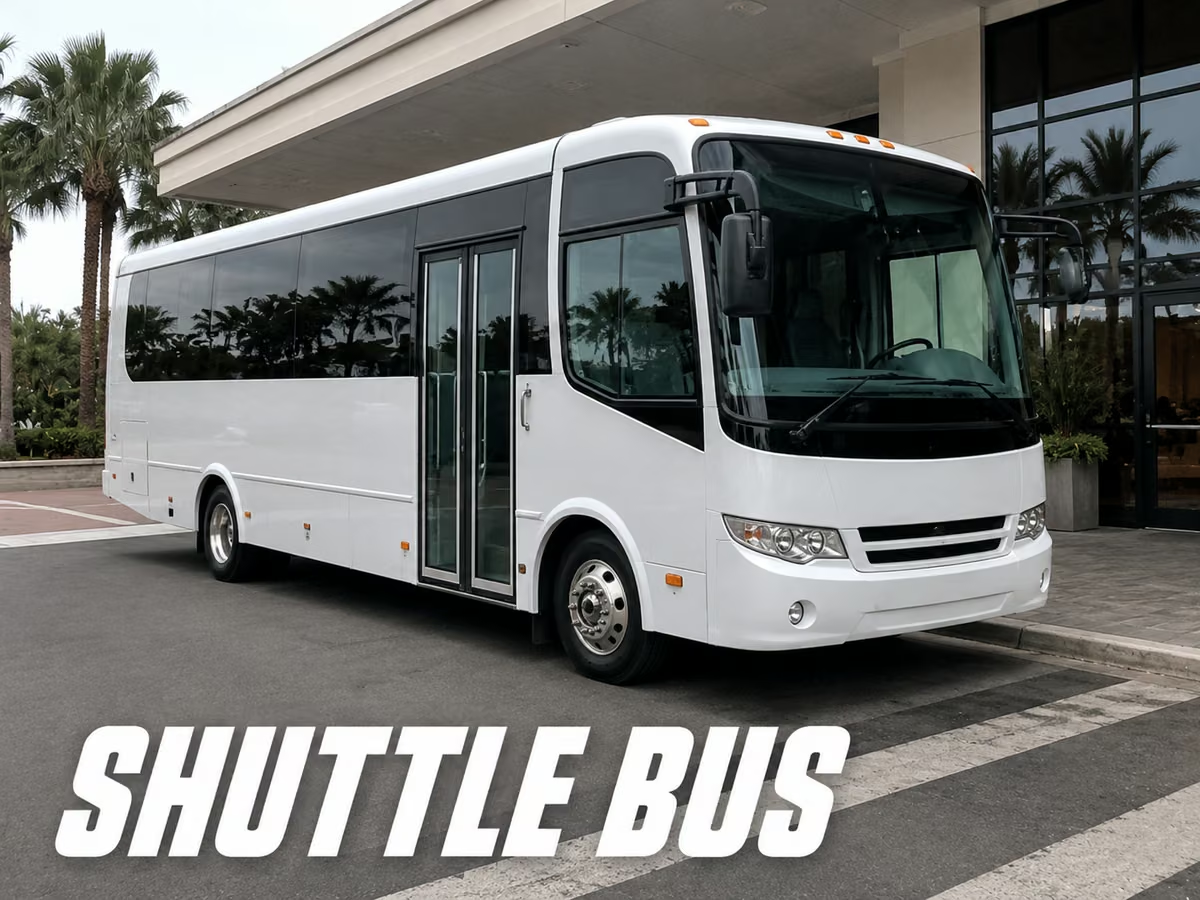
Typical capacity: 12–35. Nominal length: 20–35 ft. Enclosed luggage: Rarely — usually a rear compartment or a luggage rack instead.
Hotel-to-terminal runs, remote-lot circulators, wedding hotel blocks, and campus loops all use shuttles because a small vehicle running four cycles beats one big vehicle running once. Not to be confused with a minibus — "minibus" is the vehicle, "shuttle" is the job. The airport transportation page covers how terminal pickup works.
Bus rapid transit (BRT) vehicle
A BRT vehicle is a transit bus built for dedicated lanes and level, all-door boarding — often with doors on both sides so it can serve center-median platforms.
Typical capacity: ~40–65 seated, well over 100 total. Nominal length: 40–60 ft, frequently articulated. Enclosed luggage: None.
You'll recognize one by the platform-height floor and the rail-style styling. Not to be confused with a standard articulated transit bus: many BRT vehicles are articulated, but the defining features are the dedicated running way, off-board fare collection, and level boarding.
Paratransit vehicle
A paratransit vehicle is a small accessible bus running door-to-door, book-ahead trips — the service transit agencies operate alongside their fixed routes.
Typical capacity: 8–16 ambulatory seats plus two to four wheelchair securement positions. Nominal length: 20–28 ft. Enclosed luggage: None.
Almost all are cutaway bodies with a lift or ramp at the side or rear, and the seat count drops every time a wheelchair position is deployed — which is the planning detail people miss. Not to be confused with an accessible charter bus, which carries a lift as an add-on rather than as its entire reason for existing.
Party bus (limo bus)
A party bus is a bus or limousine chassis rebuilt so the interior is the destination — perimeter wraparound seating instead of forward rows, an open floor down the middle, LED lighting, a sound system, and flat-panel screens.
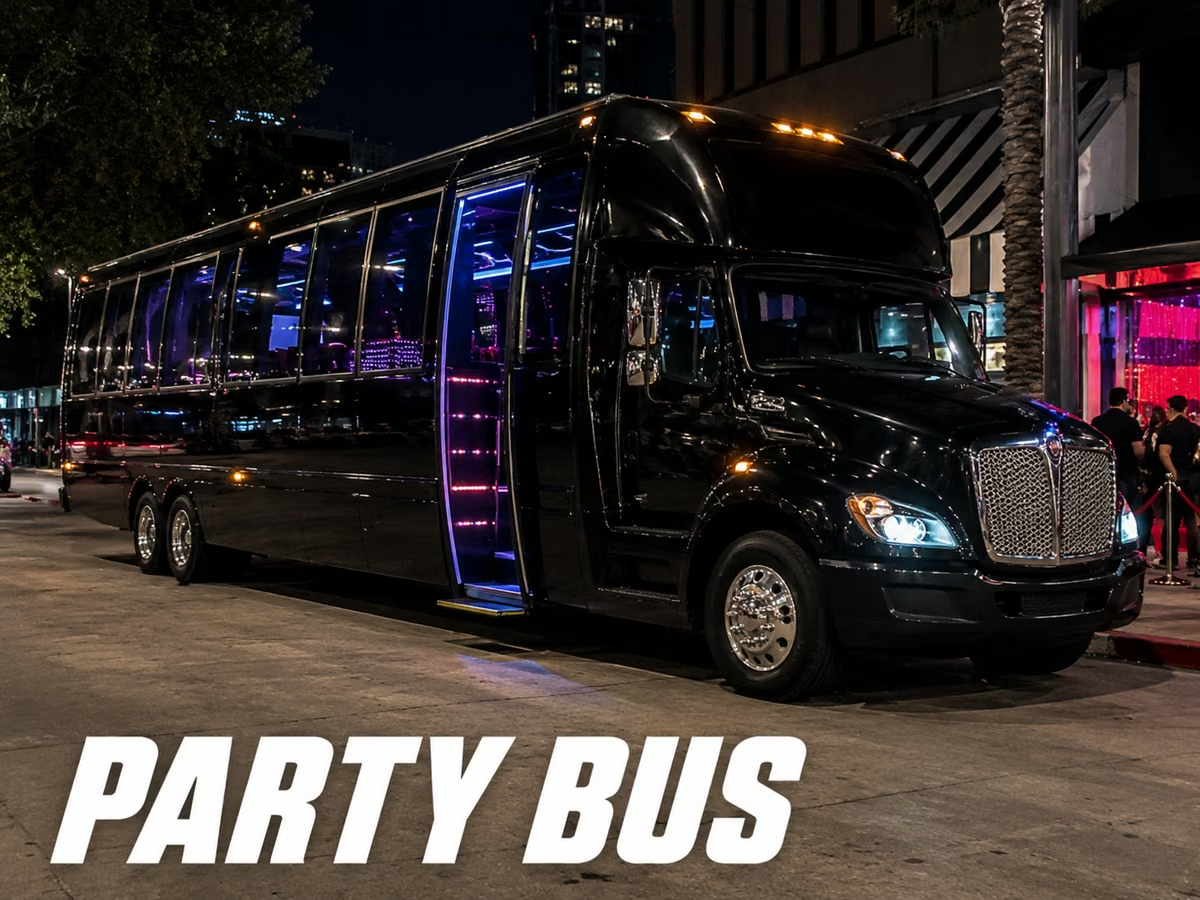
Typical capacity: 15–50. Nominal length: 25–45 ft. Enclosed luggage: None — this matters more than people expect.
Because the seats face inward, everybody can see everybody, which is the entire point for a prom night, a birthday, or a night out. Sizes step in real increments, and an 18-passenger party bus and a 25-passenger party bus feel like different rooms. Not to be confused with a minibus with a stereo — the tell is the seating orientation.
Details in the party bus explainer, the party bus amenities list, the party bus capacity guide, and the party bus manufacturer rundown.
Perimeter seating is also counted differently than rows: a rated 20-passenger party bus is 20 people shoulder to shoulder, not 20 with elbow room. Plan on comfortable use at roughly 75 to 80 percent of the rating.
Sleeper coach
A sleeper coach — the entertainer coach — is a 45-foot motorcoach shell converted to bunks, a front lounge, a rear lounge, and a galley, so the group travels overnight while asleep.
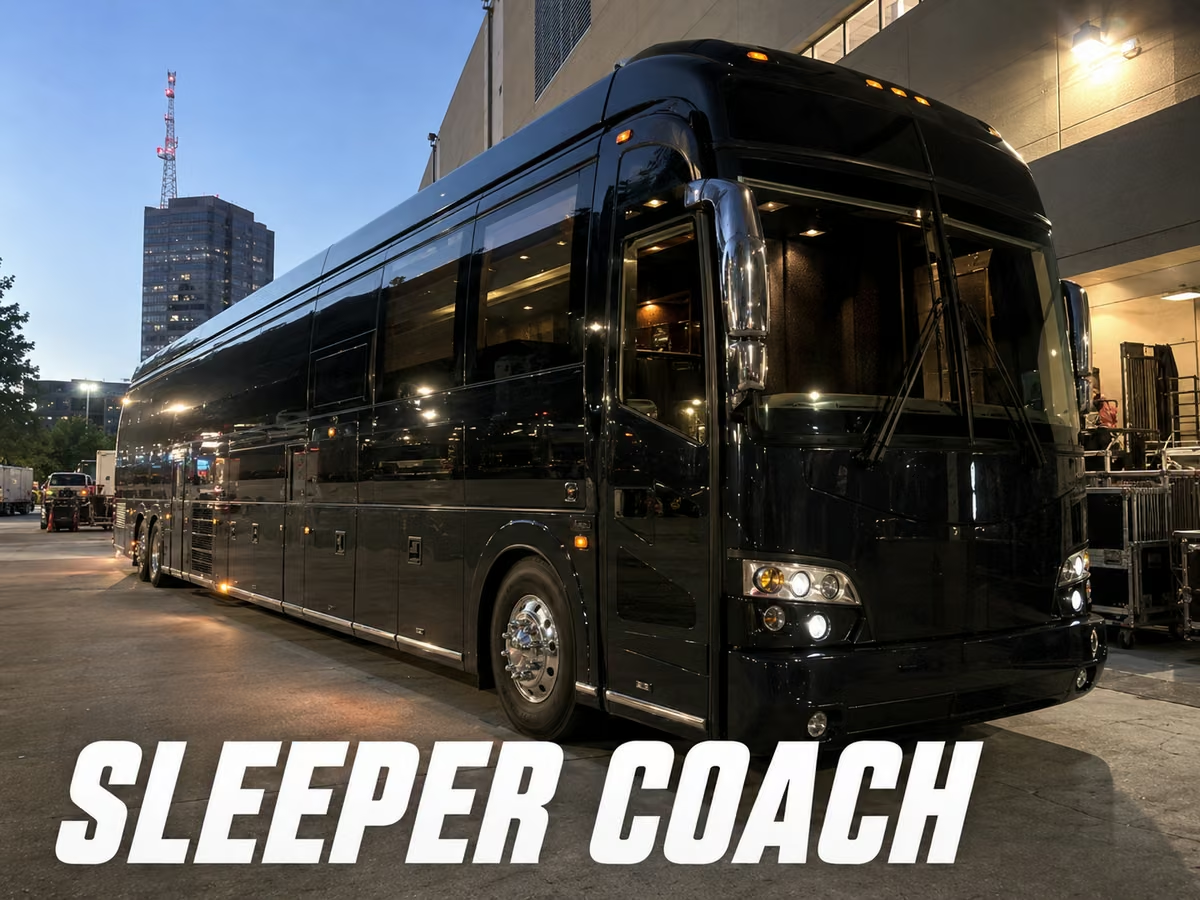
Typical capacity: 8–16 bunks. Nominal length: 45 ft. Enclosed luggage: Yes, plus dedicated gear bays on some builds.
Touring bands, race teams, and film groups use them because an overnight leg replaces a hotel night and a morning drive. Not to be confused with an RV: a sleeper coach is built on a commercial bus chassis and comes through a bus company with someone at the wheel, while an RV is a consumer vehicle you take out yourself. Groups following a tour rather than riding in it usually want a concert bus rental instead.
Open-top sightseeing bus
An open-top sightseeing bus is a double-decker or single-decker with the upper roof removed for unobstructed views, running a narrated loop with hop-on, hop-off stops.
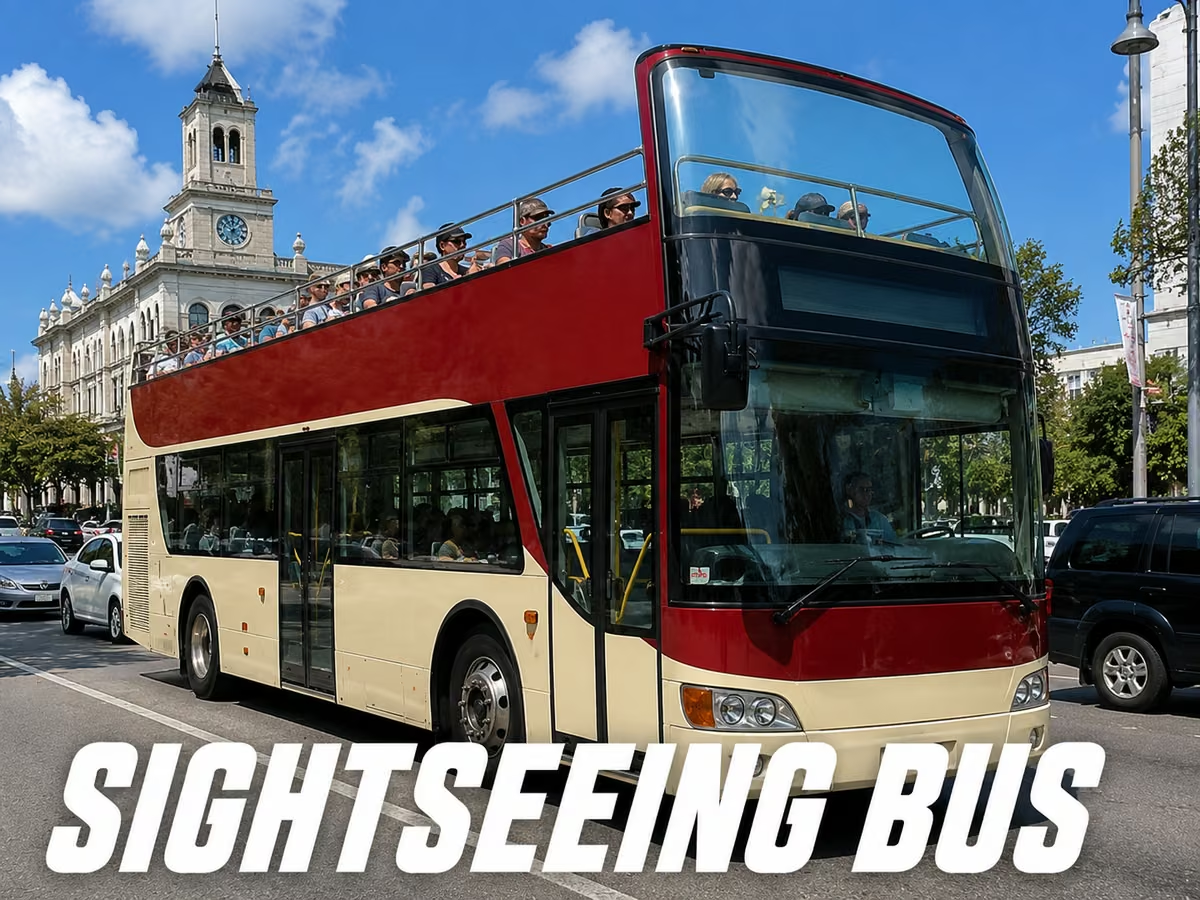
Typical capacity: ~50–80. Nominal length: 40–45 ft. Enclosed luggage: None.
Height is the operational catch — low bridges, tree canopy, and covered entrances that a normal bus clears without thinking. Not to be confused with a standard double-decker — the missing roof is not a cosmetic difference. For a route-based tasting or brewery day, a closed vehicle from the winery tour and pub crawl category is the more common pick.
Group and employee shuttle
A group shuttle is a contracted bus running a repeating schedule for one organization's staff — plant shifts, hospital campuses, airline groups, remote parking lots.
Typical capacity: 15–56 depending on headcount per cycle. Nominal length: 25–45 ft. Enclosed luggage: Depends on the vehicle chosen.
The distinguishing feature is that the service is ongoing rather than one-off, so the vehicle is usually chosen around the tightest turn in the loop rather than the largest group. Not to be confused with a public shuttle route — access is restricted to the contracting organization. Recurring runs are typically quoted through corporate event transportation.
Buses by size and body shape
Sprinter van and Sprinter limo
A Sprinter is a tall, van-bodied vehicle seating roughly 12 to 15, sitting right on the van-versus-bus line — which is why the same model turns up in both halves of a rental catalog.
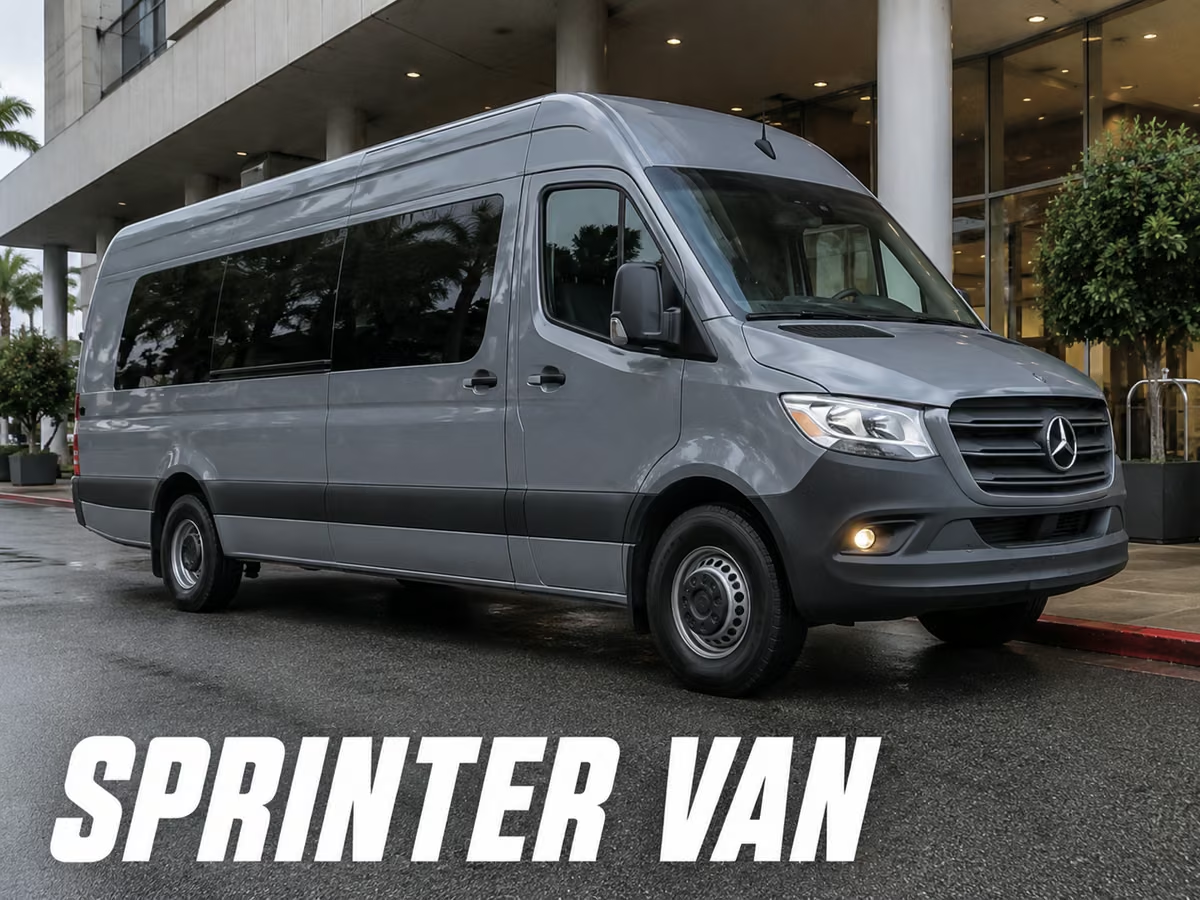
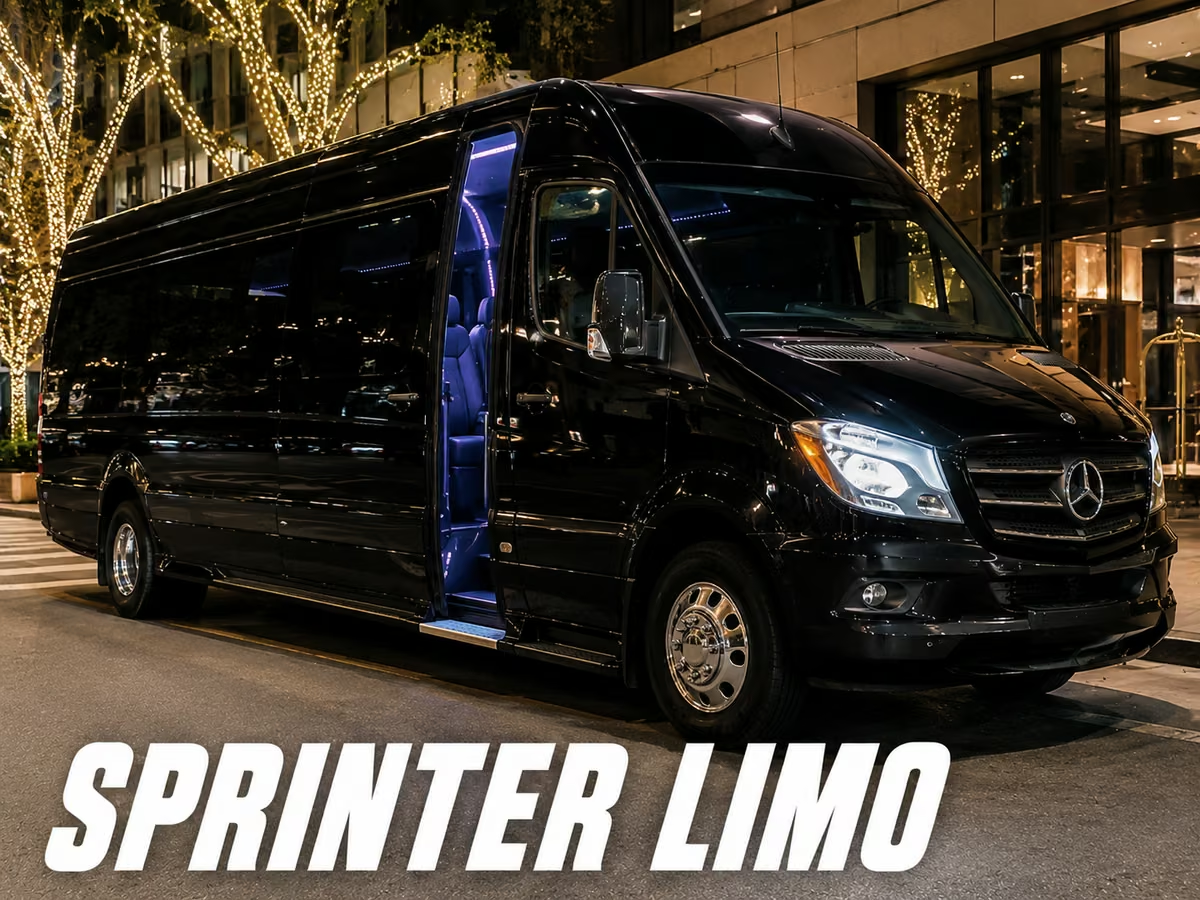
Typical capacity: 12–15 (van), 12–14 (limo conversion). Nominal length: ~19–24 ft. Enclosed luggage: None — a rear cargo area behind the last row, and that's it.
The Sprinter's advantage is that it fits where a bus doesn't: hotel porte-cocheres, residential streets, standard parking structures. The 14-passenger Sprinter limo swaps the rows for leather seating and lighting; the Sprinter van rental page covers the practical layout. Not to be confused with a cutaway — a Sprinter uses the factory van body, while a cutaway gets a separate body bolted to a bare chassis.
More in the Sprinter van explainer.
Cutaway bus
A cutaway bus is a purpose-built passenger body mounted on a truck or van chassis that arrives from the factory with a cab and a bare frame behind it — a Ford E-450 or Chevrolet Express 4500 cutaway under a bus body.
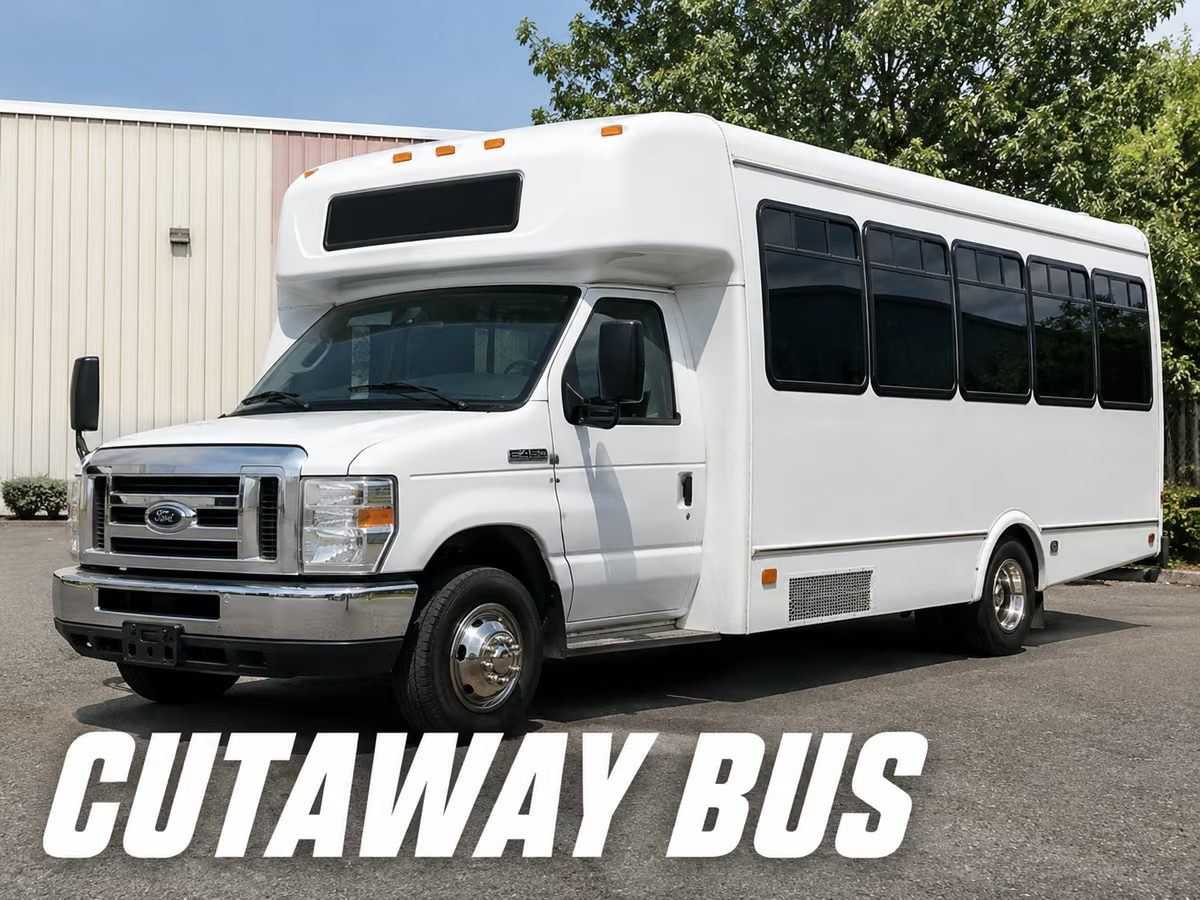
Typical capacity: 14–30. Nominal length: 20–30 ft. Enclosed luggage: None; some builds carry a rear luggage compartment.
This is the workhorse behind most hotel shuttles, paratransit fleets, and airport parking circulators, because it's cheap to run and easy to fit with a lift. Not to be confused with a minibus — many minibuses are cutaways, but "cutaway" describes how it was manufactured, not how many people it holds.
Minibus
A minibus is a mid-size bus seating roughly 15 to 35, built on a truck or cutaway chassis with forward-facing rows and a single entry door.
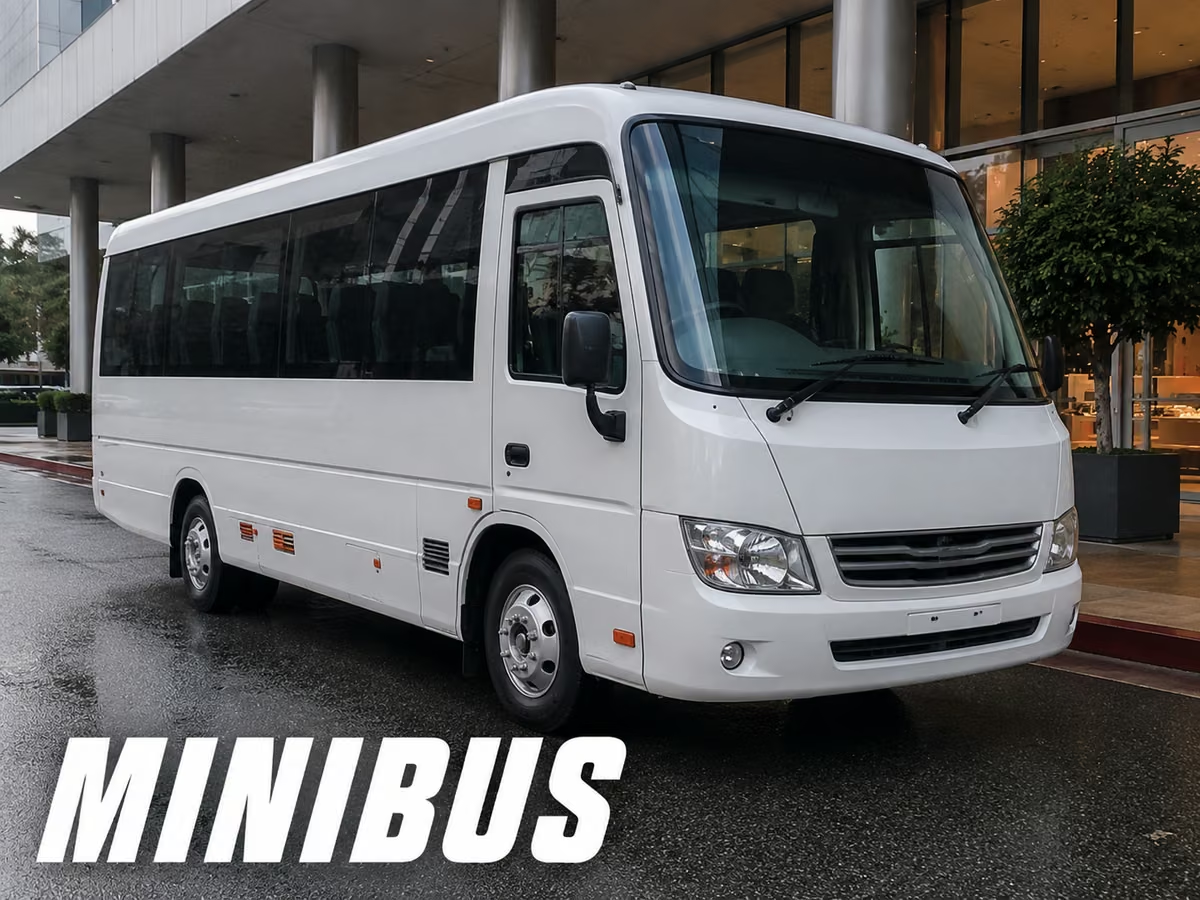
Typical capacity: 15–35. Nominal length: 25–35 ft. Enclosed luggage: Sometimes — many have a rear or side bay, but not the full underfloor bays of a motorcoach.
The reason to pick a 15 to 35-passenger minibus over a full-size bus is maneuverability: tighter turning radius, lower height, and access to streets and entrances a 45-footer can't touch. Not to be confused with a minicoach, which is the same size class with real underfloor luggage. See the minibus explainer.
Minicoach
A minicoach is a minibus built to coach specification — sealed underfloor luggage bays, reclining seats, sometimes a lavatory, on a shorter frame.
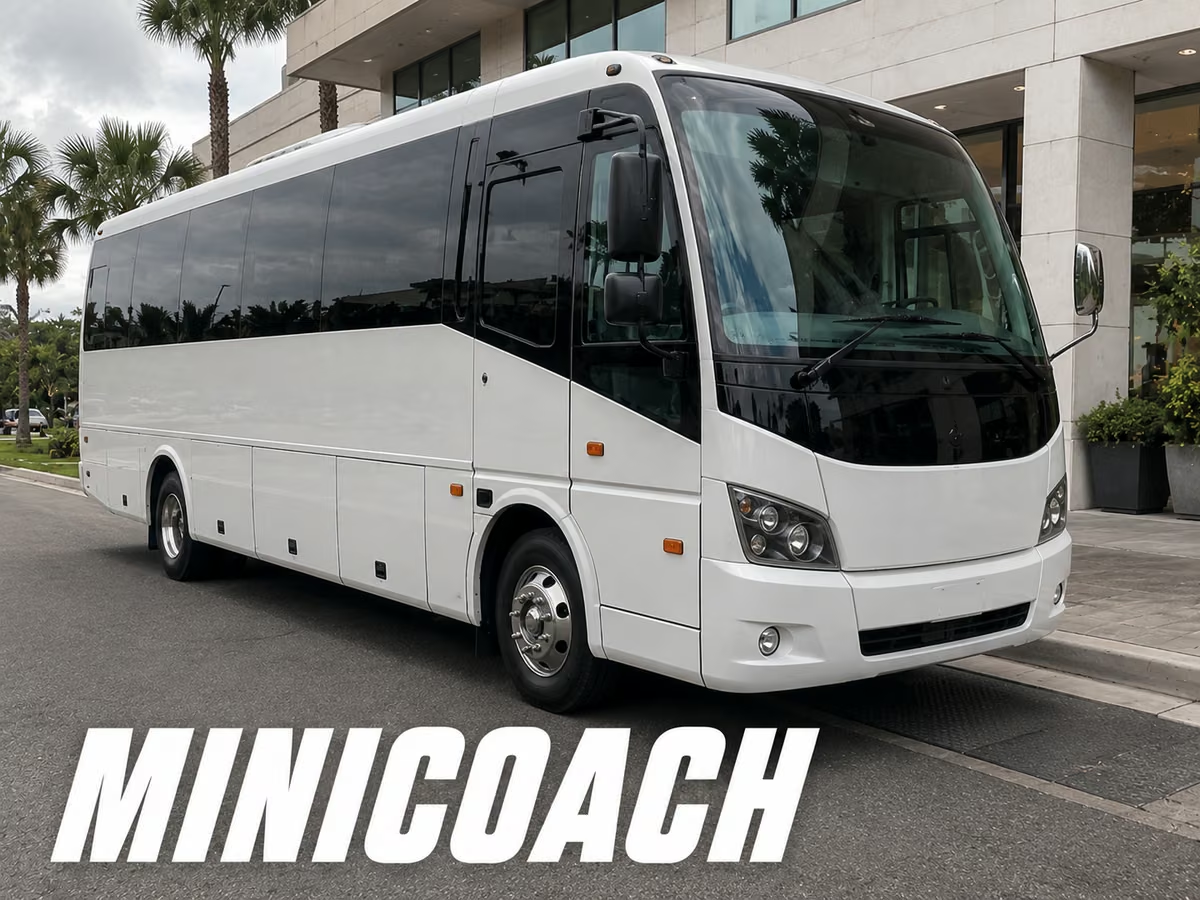
Typical capacity: 24–35. Nominal length: 30–38 ft. Enclosed luggage: Yes.
This is the answer for a 30-person group with real suitcases going a real distance — a full motorcoach would waste 25 seats, and a standard minibus would put the bags in the aisle. It's also the quiet favorite for wedding guest shuttles where the hotel entrance won't take a 45-foot vehicle. Not to be confused with a midibus, which is a transit vehicle with no luggage capacity at all.
Midibus
A midibus is a transit bus shortened to roughly 30 to 35 feet for routes that don't justify a full 40-footer.
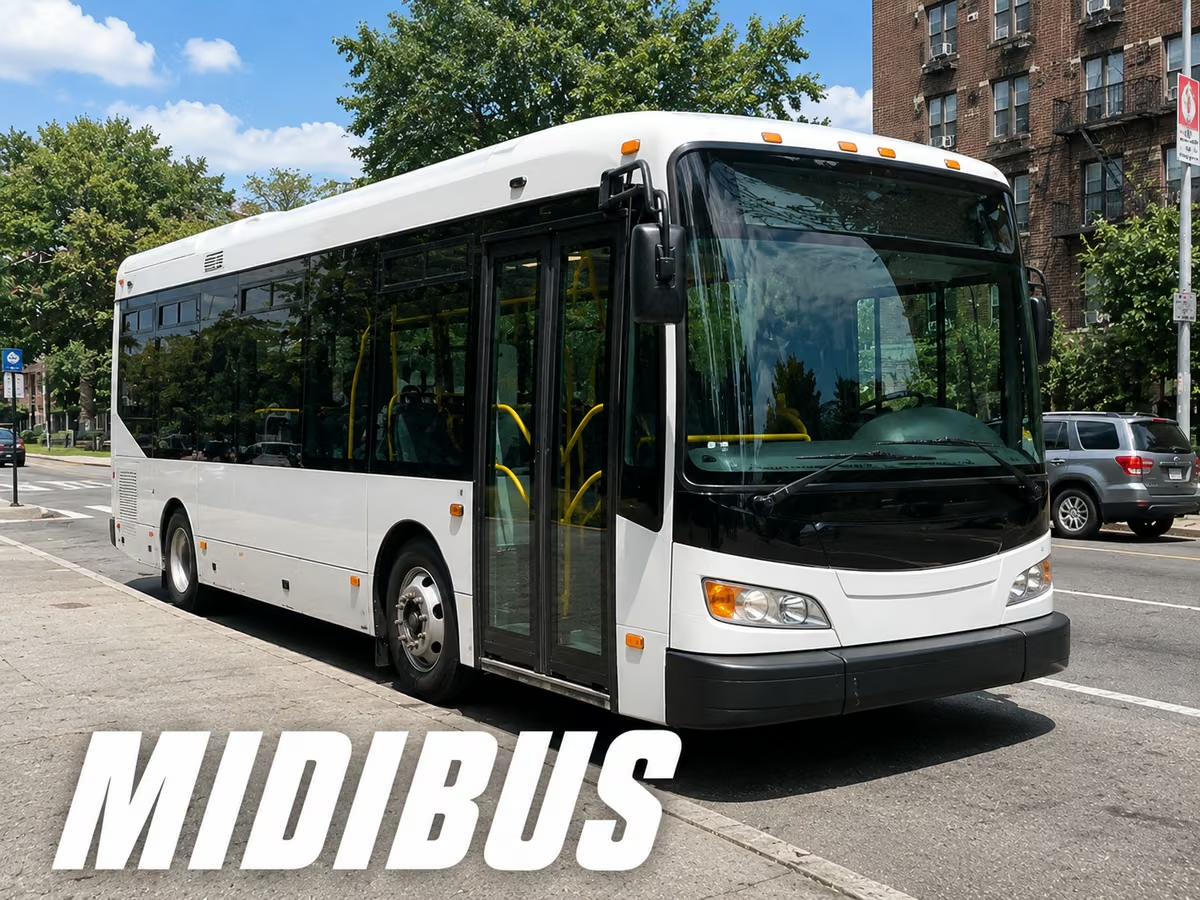
Typical capacity: ~25–35 seated. Nominal length: ~30–35 ft. Enclosed luggage: None.
Agencies run them on low-ridership routes, hilly neighborhoods, and streets where a 40-foot bus can't make the corner. Not to be confused with a minicoach: both land in the same length bracket, but the midibus has transit seating, a low floor, standing room, and nowhere to put a bag.
Single-decker bus
A single-decker is any bus with one passenger deck, which covers nearly every bus on American roads — so the word tells you almost nothing on its own.
Typical capacity: 25–57 seated. Nominal length: 25–45 ft. Enclosed luggage: Whatever the underlying type has.
If a fleet list says "single-decker," it's distinguishing the vehicle from a double-decker the same company also runs. Read it as "the normal one," then go find the actual type: motorcoach, minibus, transit. Not to be confused with a low-floor bus: single versus double counts decks, low versus high describes the step up to the one you've got.
Double-decker bus
A double-decker stacks two full passenger decks with an internal staircase, delivering big capacity inside a normal parking footprint.
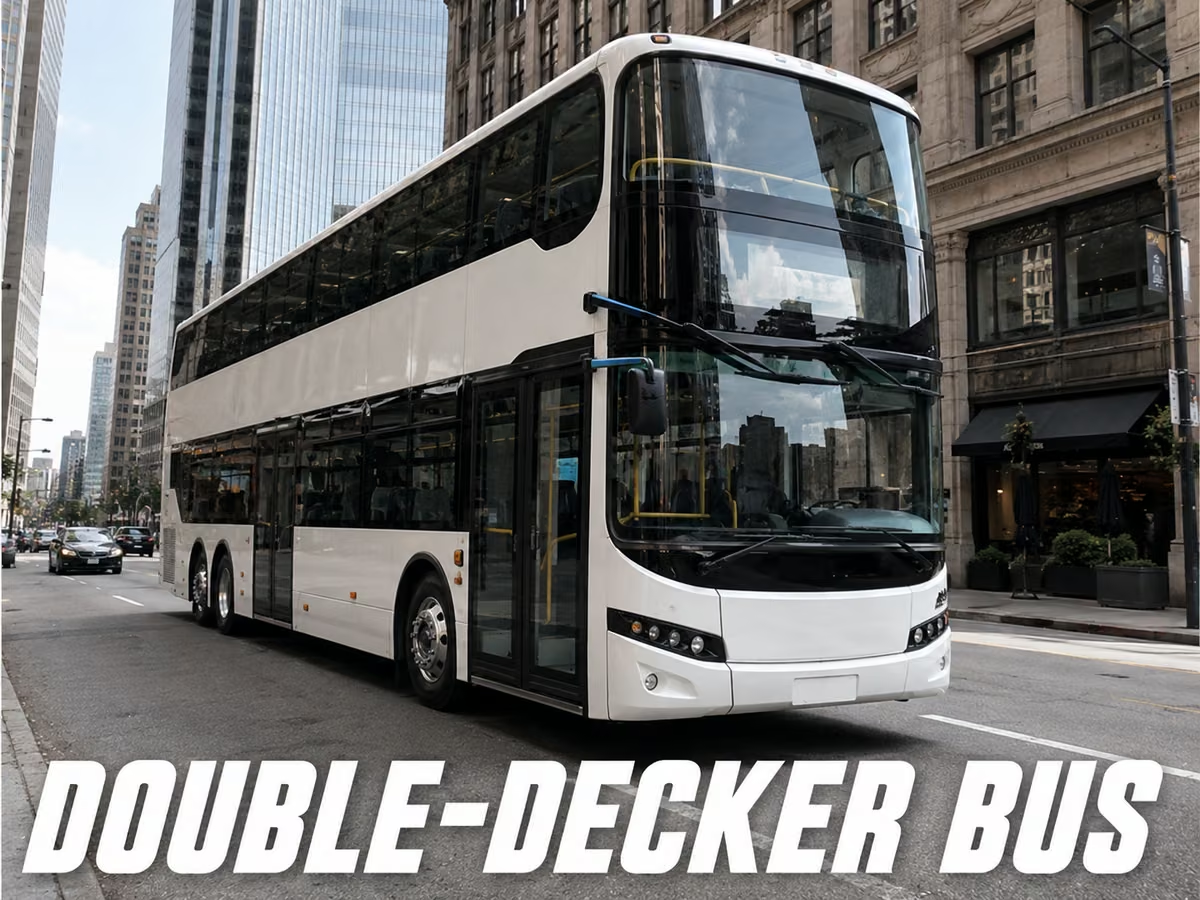
Typical capacity: ~70–85 seated. Nominal length: 42–45 ft. Overall height: roughly 13–14 ft.
Enclosed luggage: On coach-configured versions, yes.
That height number is the whole story operationally — overpasses, drive-through canopies, parking garages, and tree limbs all become route-planning constraints that don't exist for a single-deck vehicle. Not to be confused with an articulated bus: both carry more people than a standard bus, but one goes up and the other goes long, and they fail in completely different places.
Articulated bus
An articulated bus is two rigid sections joined by a pivoting turntable and a flexible accordion bellows, so a 60-foot vehicle can still turn a city corner.
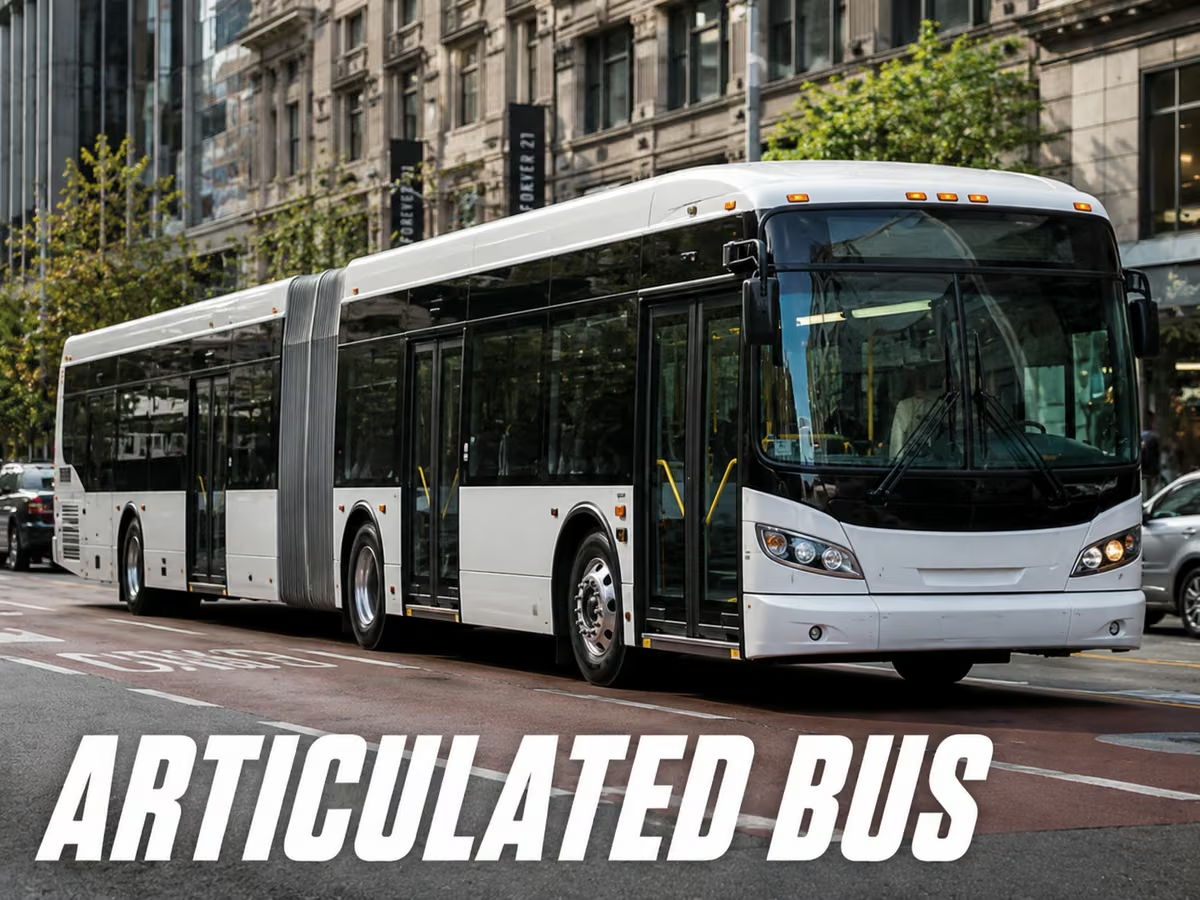
Typical capacity: ~55–65 seated, roughly 95–120 total with standees. Nominal length: 60 ft. Enclosed luggage: None.
You'll find these on the busiest urban corridors, almost never in charter service. Not to be confused with a 45-foot motorcoach — despite being 15 feet longer, an articulated bus carries no bags at all, and the extra length buys standing room rather than reclining seats.
Bi-articulated bus
A bi-articulated bus adds a third section and a second pivot joint, pushing total length past 75 feet.
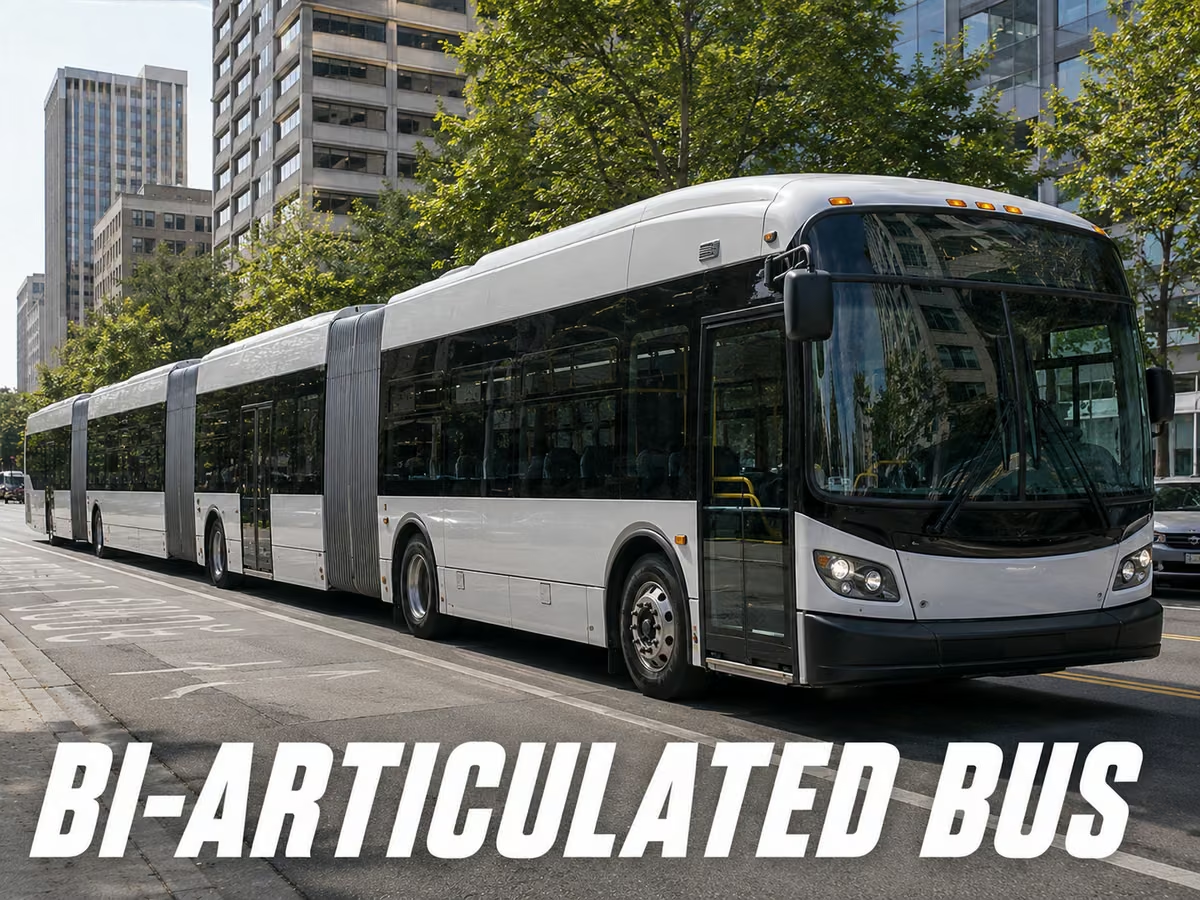
Typical capacity: ~70–80 seated, well over 100 total. Nominal length: 75–82 ft. Enclosed luggage: None.
Common on heavy BRT systems abroad, genuinely rare in the United States, where street geometry and block lengths work against them. Not to be confused with a standard articulated bus — count the bellows: one joint is articulated, two is bi-articulated.
How wide, long, tall and heavy each bus is
A full-size bus is 102 inches wide — 8.5 feet, 40 to 45 feet long, and 11 to 12 feet tall, with a weight rating between 33,000 and 54,000 pounds. Width is the figure that barely moves between classes. Length, height and weight are what actually separate them, and weight spreads widest: a factory Sprinter is rated near 11,000 pounds, a 45-foot motorcoach at 54,000.
| Class | Width | Length | Height | Weight rating (GVWR) |
|---|---|---|---|---|
| Full-size motorcoach (MCI J4500) | 102 in (8.5 ft) | 45 ft 7 in | 141.75 in (11 ft 10 in) | 54,000 lb |
| Transit bus, 40 ft (New Flyer XN40) | 102 in (8.5 ft) | 41 ft | 133.5 in (11 ft 1.5 in) | 42,540 lb |
| School bus, Type C (Blue Bird Vision) | 96 in (8 ft) | ~35–40 ft | 122–128 in (10 ft 2 in – 10 ft 8 in) | Up to 33,000 lb |
| School bus, Type D (Blue Bird All American) | 96 in (8 ft) | ~40 ft | 122–128 in (10 ft 2 in – 10 ft 8 in) | Up to 36,200 lb |
| Minibus / shuttle, medium-duty (Ford F-550) | 96 in (8 ft) | 28–32 ft | 123 in (10 ft 3 in) | 19,500 lb |
| Minibus / shuttle, mid-size cutaway (Chevrolet) | 96 in (8 ft) | 20–25 ft | 115–116 in (about 9 ft 7 in) | 12,300–14,200 lb |
| Minibus / shuttle, narrow body (Ford Transit) | 84 in (7 ft) | 22–24 ft | 110 in (9 ft 2 in) | 10,360 lb |
| Sprinter passenger van | ~6.5–7 ft | 234 in (19 ft 6 in) short body; 274 in (22 ft 10 in) long body | 103 in standard roof; 114 in high roof; 118 in AWD high roof | 11,030 lb on the 3500 extended chassis |
| Party bus, largest builds | ~8–8.5 ft | 40 ft and up | ~10.5–12 ft | 29,500–33,000 lb on a Freightliner chassis |
Figures as the builders publish them: MCI's J-Series specifications, Blue Bird's Vision and All American model pages, the federal bus-testing report on a New Flyer XN40 — a CNG build, whose roof tanks put it at the top of the transit height range — the Glaval Commute, Titan II and Entourage specification tables, Mercedes-Benz Sprinter passenger van figures with Grech's published 3500 chassis rating, and the LGE Coachworks and Executive Coach Builders chassis ratings. Entries marked with a tilde are class ranges rather than one model's published figure.
Weight is the number nobody asks about and the one that rules some addresses out. Bridge postings, pier decks, wooden trestles, soft shoulders and plenty of private lanes are rated in tons, and a 45-foot coach is roughly five times the rating of a 15-seat Sprinter. If the pickup is down a farm drive, a beach access road, or a lane with a posted weight limit on the bridge in, that number decides the vehicle before the turning space does.
Shuttle bus sizes
Shuttle buses come in five size bands: 12 to 15 passengers on a Sprinter van, about 14 on a narrow-body cutaway, 20 to 25 on a mid-size cutaway, 28 to 33 on a medium-duty build, and 36 to 45 on the largest bodies, which have crossed into midibus territory. Length tracks the bands closely — 22 to 24 feet for a narrow body, 20 to 25 for a mid-size cutaway, 28 to 32 for a medium-duty build, and 32 to 40 feet at the top.
Pick the band by the tightest turn on the loop rather than by the size of the group, because a shuttle runs cycles: two runs of a 25-seat vehicle move 50 people. And a rear luggage compartment costs about four to five seats in every band — Glaval's Titan II drops from 25 seats to 21 with one fitted, and its Entourage from 32 to 28.
The bus models behind these numbers
A short list of models covers most of what you'll be quoted. Full-size coaches: MCI J4500 and D4520, Prevost H3-45 and X3-45, VDL Van Hool CX45 and the double-deck TDX, Temsa TS45, TS35 and TS30, and the Mercedes-Benz Tourrider. Minibuses and shuttles: Glaval Commute on a Ford Transit, Glaval Titan II on a Chevrolet cutaway, Glaval Entourage on a Ford F-550, Grech GM33 on a Ford F600, and Champion Defender S2C on a Freightliner.
Party buses: LGE Coachworks builds on Sprinter, E-450, F-550 and F-600 chassis; Executive Coach Builders on the Ecoach 28, 34, 40 and 45 and the Supercoach 45. Vans: the Mercedes-Benz Sprinter 2500 and 3500 passenger vans, plus Grech's Executive Sprinter and Limo Sprinter conversions. School buses: Blue Bird Vision for Type C, Blue Bird All American for Type D. Transit: New Flyer's Xcelsior family and the Gillig Low Floor.
Ask which model your quote is written on. The badge on the front tells you very little by itself; the published length, height and seat count that come with it tell you whether the trip works.
The dimensions that decide whether a bus fits
Height and turning space strand more vehicles than length does. Not the length everyone quotes. Height at a canopy or a garage.
Turning space on a residential street or a venue driveway.
A 45-foot coach that can't clear your hotel entrance is a 45-foot coach parked on the main road while everyone walks their bags out.
| Vehicle | Approx. height | Approx. width | Turning space (rule of thumb) | The constraint it hits first |
|---|---|---|---|---|
| Sprinter van / limo | ~9–10 ft | ~6.5–7 ft | Car-like | Low garage decks; most street parking works |
| Cutaway / small minibus | ~9.5–11 ft | ~7.5–8 ft | Moderate | Canopy clearance; tight loading zones |
| Minibus / minicoach | ~10–11.5 ft | ~8–8.5 ft | About its own length | Residential turns; drive-through canopies |
| Party bus (mid-size) | ~10.5–12 ft | ~8–8.5 ft | About its own length | Canopy height; venue driveway geometry |
| Motorcoach (45 ft) | ~11–12 ft | ~8.5 ft | Its own length or more | Almost every covered entrance; garages entirely |
| Double-decker | ~13–14 ft | ~8.5 ft | Similar to a 45-ft coach | Overpasses, tree canopy, any covered approach |
Width is the one column that barely moves. Full-size buses are about 8.5 feet — 102 inches — wide across the board, which is why one needs a full lane rather than squeezing past a double-parked car. Height and turning figures are nominal ranges across common models and shift with manufacturer, wheelbase and axle configuration, so treat them as a planning baseline and measure the actual constraint if it's tight.
Three thresholds worth committing to memory. No bus of any kind fits a standard parking garage — clearances commonly run about 6 to 7 feet, which even a Sprinter exceeds. Hotel porte-cochere clearances vary enormously, and a posted number is the only reliable one; if a covered entrance matters to your plan, check it or call the property rather than assuming.
And the rule underneath the turning column: a full-size bus generally needs about its own length of clear space to turn around. If your pickup point is a cul-de-sac, a narrow hotel loop, or a driveway with a hard 90-degree turn, that's the thing to check before the size of your group.
How to check your own pickup and drop-off points
Ten minutes of homework settles most of this before a vehicle is ever assigned.
Read the posted height, then subtract. Covered entrances and garage ramps carry a number on the beam, and the usable figure is a few inches less. A posted 10 feet is a comfortable minibus entrance and a hard no for a 45-foot coach.
Find the flat, straight stretch of curb. A full-size vehicle wants roughly 60 feet of it, clear of a hydrant and a row of parked cars. Moving the pickup 200 feet is free; sending a smaller vehicle costs seats.
Walk the turn. Dead-end loops, gated communities with a center island, and garage entrances on a downhill ramp are what usually become "the bus will meet you at the main gate."
Then ask the venue, not the internet. Stadiums, convention centers, wineries and large hotels usually have a bus lane or a coach staging area, and one phone call gets you a gate name and a curb.
Buses by how you board
Low-floor bus
A low-floor bus puts the passenger deck roughly 14 to 16 inches above the road, so you step on at curb level with no interior steps at the door.
Typical capacity: ~25–40 seated, depending on the body. Nominal length: 30–60 ft. Enclosed luggage: None — the low deck consumes the space where bays would go.
You'll see it on nearly all modern transit buses, BRT vehicles, and many shuttles. The trade-off: fast boarding for everyone, zero luggage capacity, and a handful of seats given up to the flat floor. Not to be confused with a kneeling feature, which is a suspension function that lowers any bus a few inches at a stop and can be fitted to high-floor vehicles too.
High-floor (step-entrance) bus
A high-floor bus seats passengers above the wheel wells and the powertrain, reached by three or four steps at the door.
Typical capacity: 24–57 seated on coaches; up to ~90 on a Type D school bus. Nominal length: 30–45 ft. Enclosed luggage: Yes on coaches — the raised deck is exactly what creates the bays.
Every motorcoach, most minicoaches, and all school buses use this layout. Height buys you luggage, a smoother highway ride, and a better view. It costs you boarding speed, which is why you'll never see a high-floor vehicle on a stop-every-two-blocks route.
Not to be confused with low-entry, below.
Low-entry bus
A low-entry bus is a hybrid layout: low floor at the front doors and through the forward cabin, then a step up to a raised rear section over the powertrain.
Typical capacity: ~25–40 seated. Nominal length: 30–40 ft. Enclosed luggage: None.
Transit and shuttle companies use it to get step-free front boarding without a full low-floor redesign, and it keeps mechanical packaging simple. Not to be confused with a true low-floor bus, which is step-free from front door to back row — on a low-entry bus, the rear seats are still up a step.
Wheelchair-accessible configurations
Accessibility comes in two mechanical forms, and which one a vehicle uses changes your boarding time and your seat count.
Ramp: standard on low-floor vehicles, fast, few moving parts. Lift: a powered platform fitted to high-floor coaches and cutaways, slower to cycle, mounted at a side or rear door. Capacity effect: every securement position removes seats, usually two to four per position on a fold-away bench.
Enclosed luggage: unchanged — a lift-equipped coach keeps its bays.
Two planning numbers that rarely make it into a quote. A 56-passenger coach with two positions deployed is not a 56-passenger coach that day. And lift boarding takes real minutes per passenger, so a group with several securement positions should build extra time into the pickup window rather than discovering it at the curb.
Ask for a wheelchair position when you request pricing — ideally 48 hours or more ahead, since fewer vehicles are configured for it. Name how many positions you need and whether a mobility device travels folded or occupied; those answers decide which vehicles can take the job at all.
School bus types A, B, C and D
The A-through-D system sorts school buses by how the body meets the chassis — not by size, not by seat count. That's the thing that makes published charts look contradictory when you skim them.
Type A school bus
A Type A school bus is a school bus body mounted on a van-type cutaway front-section chassis, retaining the original left-side cab door, with the entry door behind the front wheels.
Typical capacity: ~10–30. Nominal length: 20–25 ft. Enclosed luggage: None.
Small routes, rural pickups, and special-needs transportation live here. Type A is often split into A-1 and A-2 by gross vehicle weight rating, a split the published sources don't agree on. Not to be confused with Type B — on a Type A, you can still see the donor van's nose and cab door.
Type B school bus
A Type B school bus is a body built onto a stripped chassis where part of the engine sits beneath or behind the windshield, alongside the operating position, with the entry door behind the front wheels.
Typical capacity: ~15–30. Nominal length: 20–30 ft. Enclosed luggage: None.
Type B is the hardest of the four to spot in service today. Not to be confused with Type A: the difference is the chassis it started life as — cutaway front-section for A, stripped chassis for B.
Type C school bus (the conventional yellow bus)
A Type C school bus is the classic one: a hood out front, a flat-back cowl body behind it, and the entry door behind the front wheels.
Typical capacity: up to ~77. Nominal length: ~35–40 ft. Typical GVWR: chassis-specific, and published figures conflict — see the spec-sheet section below.
Enclosed luggage: None.
This is the single most common school bus in the country and the shape the phrase "school bus" summons. Not to be confused with Type D — if it has a visible hood, it's a Type C.
Type D school bus (transit-style)
A Type D school bus has a flat front with the entry door ahead of the front wheels, and the engine mounted in front of, behind, or midship of the front axle.
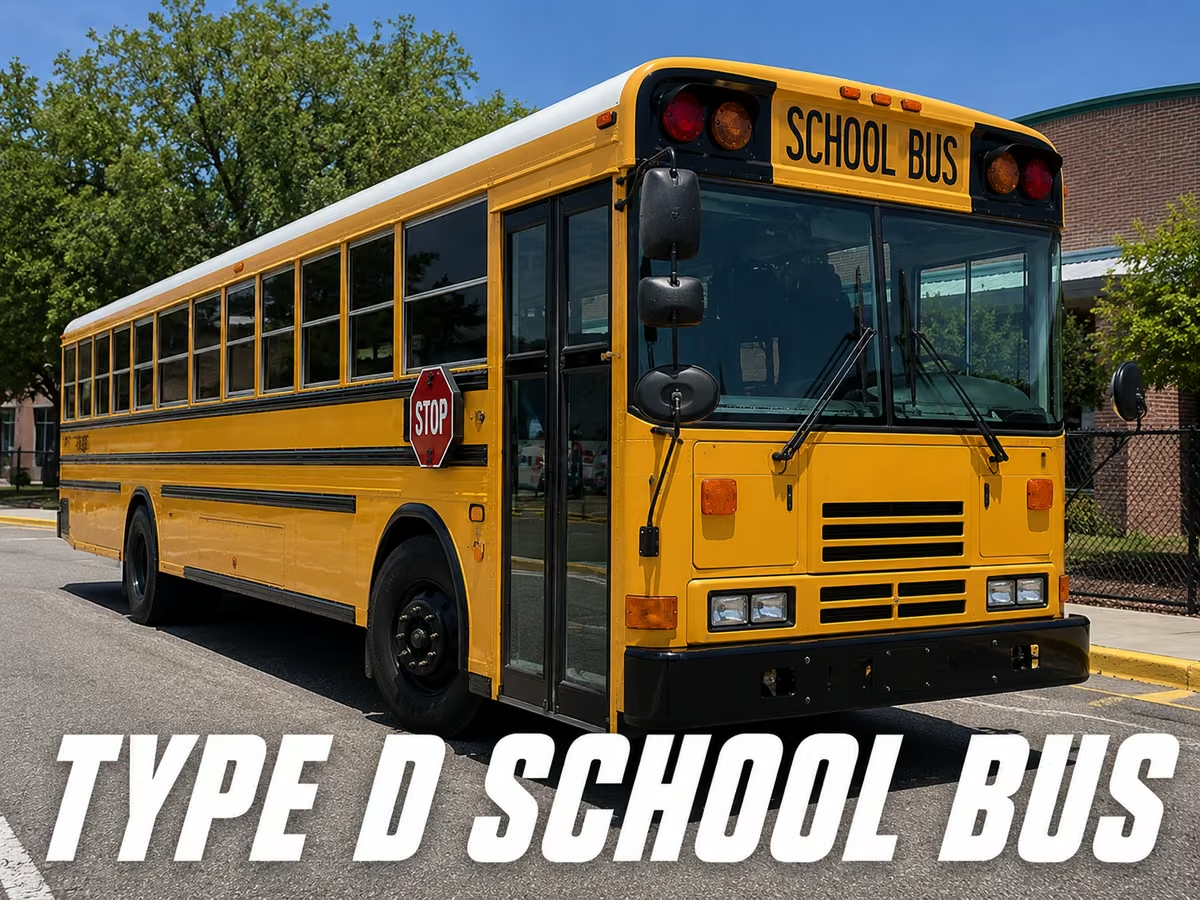
Typical capacity: up to ~90. Nominal length: ~40 ft. Enclosed luggage: None.
The flat nose puts more usable length inside the same footprint, which is why the highest-capacity school buses are Type D. Not to be confused with a transit bus — the styling is similar, but a Type D is built on the school bus body pattern, complete with the warning lamps and stop arm.
Multifunction school activity bus (MFSAB)
An MFSAB is a school bus body built for uses other than home-to-school routes — and it deliberately omits the stop arm and the warning lamps.
Typical capacity: varies with the body it's built on. Nominal length: 20–40 ft. Enclosed luggage: None.
No stop arm, no flashing eight-lamp system, no expectation that traffic halts for it. It also often isn't painted school bus yellow. Activity trips, athletics, and club travel are the use case.
Not to be confused with a standard school bus: they can look nearly identical from thirty feet, and the missing stop arm is the tell.
Type III vehicles
"Type III" comes from state school-transportation paperwork rather than the A-through-D construction system. Where the term is used, it covers non-bus vehicles used for student transportation — cars, SUVs, and vans carrying 10 or fewer people.
Typical capacity: 10 or fewer. Nominal length: car or van length. Enclosed luggage: Vehicle-dependent.
Ten or fewer sits well under the count where anyone would call a vehicle a bus, which is why a separate label exists at all. Not to be confused with Type A, which is a school bus. The terms sound like a series.
They're from two different systems.
How to read a school bus spec sheet
Two fields do the work on any school bus listing, and only one of them is reliable.
Construction is reliable. Hood or no hood. Door ahead of or behind the front wheels.
Cutaway chassis or stripped chassis. Those markers define the A/B/C/D letters and they hold everywhere. If you can see the vehicle or a photo of it, you can classify it correctly without reading anything.
GVWR is not. Gross vehicle weight rating — the maximum loaded weight including passengers, fuel and cargo — is what the A-1 / A-2 subdivision hangs on, and published sources genuinely conflict on where the line sits. Most dealer and industry documents put A-1 at 10,000 lb or less and A-2 above it.
At least one widely circulated chart reverses the two, making A-1 the heavier class. A third uses 14,501 lb as the divider instead of 10,000. All are real published documents, and a reader who checks two of them at random can come away with opposite ideas of what an A-1 is.
So: classify by construction, treat any weight figure as document-specific until you've read the one in front of you, and if a listing says "Type A-1," ask which threshold they mean rather than assuming. Add Type III — which appears in some states and not others — and the tidy four-letter system stops being tidy.
And the questions that matter for a trip. Seats counted as adults rather than benches — a "72-passenger" bus counts three children per bench and your group will fit two. And how long the ride is, because bench seating with no recline is fine for 30 minutes and rough at two hours.
Buses by what powers them
What the powertrain changes is range, refueling, and where you'll find one. Capacity, length and luggage follow the body underneath.
Diesel
Diesel is still the default powertrain for motorcoaches and the large majority of school buses, because of torque, range, and a refueling network that already exists everywhere.
Where you'll see it: nearly every charter bus you'll be quoted. Range: long enough that a multi-state trip is a routing question, not a fuel question. Refueling: minutes, anywhere.
Not to be confused with older two-stroke diesel coaches — modern units run aftertreatment systems that make them dramatically quieter and cleaner than the buses people remember.
Diesel-electric hybrid
A hybrid pairs a downsized diesel engine with an electric motor and battery, recovering braking energy and shutting the engine off at stops.
Where you'll see it: transit fleets, especially on dense stop-and-go routes where the fuel savings are largest. Range: same as diesel. Refueling: diesel, no charging infrastructure needed.
Not to be confused with a battery-electric bus — a hybrid never plugs in, and its electric range is measured in feet, not miles.
Battery-electric
A battery-electric bus runs entirely on stored electricity, charged by plug or by overhead pantograph.
Where you'll see it: transit fleets and a growing number of school districts. Range: route-dependent, and the practical constraint is usually charger availability at the depot rather than the battery itself. Refueling: hours on a depot charger.
Not to be confused with a trolleybus: an electric bus carries its energy, a trolleybus draws it live from wires and stops working the moment it leaves them.
Hydrogen fuel-cell
A fuel-cell bus generates electricity onboard from compressed hydrogen, feeding the same electric powertrain a battery bus uses.
Where you'll see it: a small number of transit agencies, mostly where long single-shift range matters. Range: long, comparable to diesel on a full tank. Refueling: minutes rather than hours, at a hydrogen station — and there aren't many.
Not to be confused with a hydrogen combustion engine, which burns the fuel in a conventional engine. A fuel cell doesn't burn anything.
CNG and LNG
Compressed natural gas buses store fuel in high-pressure cylinders, usually in a roof fairing that gives them a distinctive raised profile. Liquefied natural gas stores it cryogenically instead and is far less common.
Where you'll see it: large transit and airport shuttle fleets with their own fueling stations. Range: shorter than diesel for the same tank volume, which is why the tanks are so visible. Refueling: at a dedicated CNG station.
Not to be confused with propane autogas, a separate fuel used mainly in school bus fleets.
Trolleybus
A trolleybus is a rubber-tired electric bus drawing power continuously from a pair of overhead wires through roof-mounted poles.
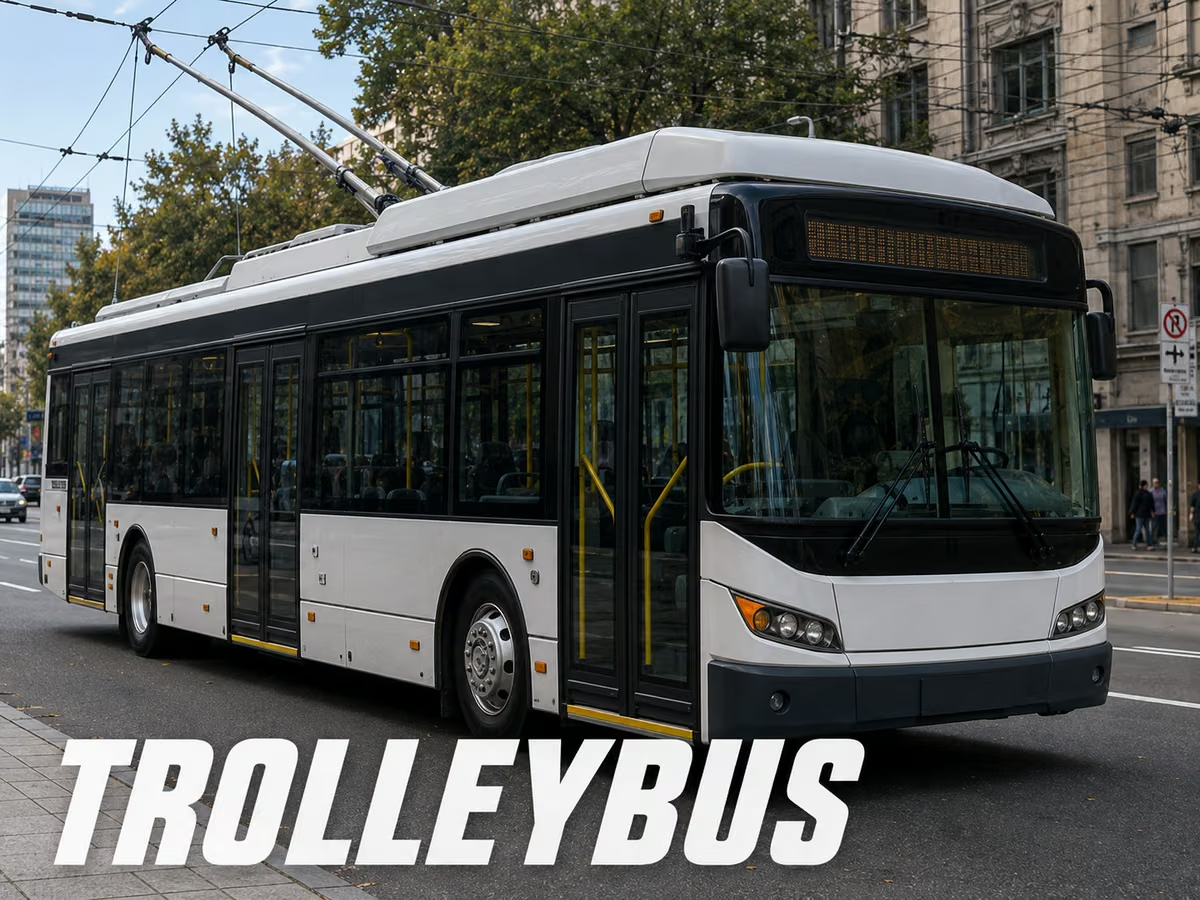
Where you'll see it: four U.S. systems — San Francisco, Seattle, Philadelphia, and Dayton, Ohio. Boston's Harvard-based routes 71 and 73 ended March 12, 2022, and the count fell to four when the Silver Line's dual-mode operation ended in 2023. Typical capacity: ~35–60 seated.
Nominal length: 40–60 ft. Range: the wire — though many modern units carry a small battery for off-wire detours.
Not to be confused with a streetcar, which runs on rails, or with the rubber-tired "trolley-replica" buses that carry tourists and have nothing electric about them.
Gyrobus
A gyrobus stored energy in a massive spinning flywheel, spun up at charging posts along the route, then coasted on that stored rotation between stops. Systems operated in Switzerland, Belgium, and the Belgian Congo from the 1950s until 1960, and the concept was retired.
It still turns up on published bus-type indexes without being marked extinct. Not to be confused with flywheel energy recovery on modern hybrids, which supplements a working engine rather than replacing it. The history of buses covers the rest of the dead ends.
Specialist and non-passenger buses
Police bus
A police bus is a bus body fitted out for law enforcement work — either secure detainee transport with barred windows and internal cages, or a mobile command post with communications and workspace.
Typical capacity: not standardized — detainee builds keep bench seating, command builds strip most of it for consoles. Nominal length: 30–45 ft, following the donor shell. Enclosed luggage: None — bay space is usually converted to equipment storage.
Not to be confused with a prisoner transport van, which is a van-sized vehicle with no bus body at all.
Training bus
A training bus is a retired revenue vehicle kept in service to teach vehicle handling, usually with dual controls and heavy exterior markings.
Typical capacity: most seats removed; a handful retained for observers. Nominal length: donor vehicle length, commonly 35–40 ft. Enclosed luggage: None in practice.
Not to be confused with a fleet spare, which stays in normal service and can be pulled onto a route at any time.
Off-road bus
An off-road bus is a passenger body on a high-clearance four-wheel or six-wheel-drive chassis, built for mine sites, remote camps, forestry roads, and terrain with no pavement.
Typical capacity: 20–50 depending on the build. Nominal length: 25–45 ft. Enclosed luggage: Sometimes — often a raised or protected bay that survives the clearance requirement.
Not to be confused with a highway coach on all-season tires — the differences are structural: ground clearance, approach angles, protected underbody.
Neighborhood bus
A neighborhood bus is a deliberately small vehicle running short community circulator routes on streets a standard transit bus physically can't use.
Typical capacity: 10–25. Nominal length: 20–28 ft. Enclosed luggage: None.
Not to be confused with a shuttle: a neighborhood bus runs an open public route with multiple stops, while a shuttle runs a closed loop between fixed points.
Guided bus
A guided bus runs on a dedicated concrete track, steered mechanically by small horizontal guide wheels riding against raised curbs — then leaves the track and travels normal streets like any other bus.
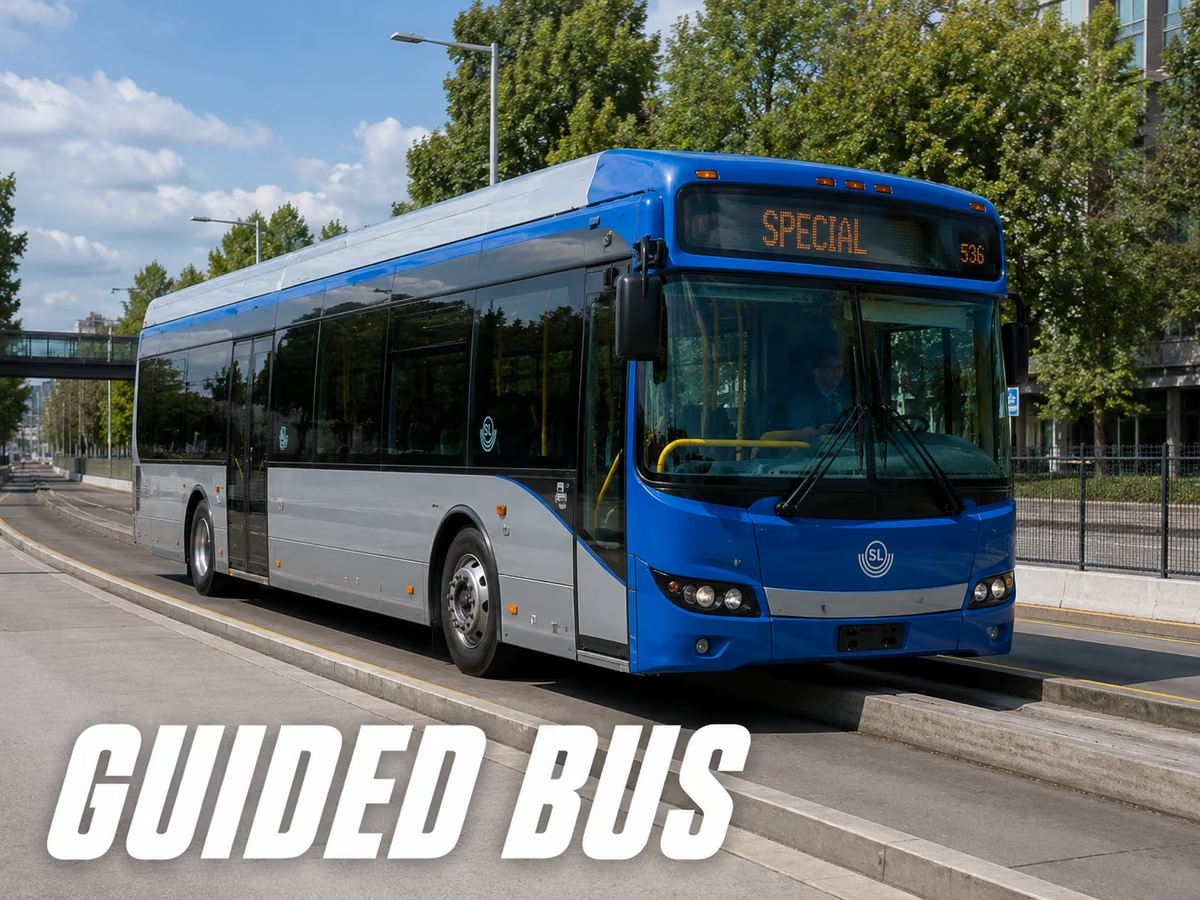
Typical capacity: ~40–60 seated. Nominal length: 40–60 ft, single or articulated. Enclosed luggage: None.
Adelaide's O-Bahn and Cambridgeshire's busway are the best-known systems; there is effectively no U.S. equivalent. Not to be confused with BRT: a BRT vehicle uses a dedicated lane, but it's steered the ordinary way.
Bookmobiles, mobile clinics and command vehicles
These are bus chassis carrying something other than seated passengers — library shelving, exam rooms, blood donation stations, disaster command centers, mobile classrooms.
Typical capacity: not passenger-rated; measured in workstations or beds. Nominal length: 30–45 ft. Enclosed luggage: None — bay space becomes generators, water tanks, and equipment.
Not to be confused with a passenger bus with a wrap on it — these are structural conversions, and the interior no longer works as a bus. Exterior graphics are a different subject entirely, covered in the bus wrapping guide.
Words on a quote that aren't bus types
Several of the terms you'll be quoted don't describe a vehicle class at all.
| The word | What it actually describes | The underlying vehicle |
|---|---|---|
| "Charter bus" | A contract — one group hires the whole vehicle on its own schedule | Usually a motorcoach; sometimes a minibus |
| "Party bus" | An interior — perimeter seating, lighting, sound | A converted bus or limousine chassis, 15–50 seats |
| "56-passenger bus" | A seat count | Almost always a 45-ft motorcoach |
| "Coach bus" | A comfort standard — reclining seats, luggage bays, highway-rated | A motorcoach |
| "Shuttle" | A route pattern — a repeating loop | Anything from a Sprinter to a full-size bus |
| "Limo bus" | An interior, same as party bus | A converted bus chassis |
Which is why two quotes for "a charter bus" can arrive with a 33-passenger minibus on one and a 56-passenger motorcoach on the other. Compare seat count, length, and luggage — not the noun.
What the capacity number leaves out
Capacity is the first number on every listing. Four things it doesn't tell you.
A lavatory costs you seats
Full-size motorcoaches typically have an onboard restroom, and it occupies the space where several seats would otherwise sit — which is why coach capacities cluster at 47, 49, 55, and 56 rather than one fixed figure, and why two "56-passenger" coaches can seat different numbers. Minibuses, party buses, Sprinters, and school buses generally have no restroom at all. If your route has no natural rest stop, that fact should pick your vehicle before seat count does.
Full capacity is not comfortable capacity
A 56-passenger coach seats 56 people the way a five-seat sedan seats five — technically, for a while. Add winter coats, bags that wouldn't fit underneath, and a four-hour ride, and the last rows get unpleasant.
So for long trips, groups with gear, or anyone who'll be working or sleeping on board, book the size up from your headcount. Forty-two people on a 50-passenger vehicle is a much better day than 42 people on a 40-passenger one plus two folding seats. No spec sheet says so.
Standing isn't an overflow option
On a transit bus, standing is normal and designed for — the grab poles and straps are right there. On a motorcoach or party bus in motion, it isn't. Coaches are built for seated passengers, with no standee provision at all.
So if you're 58 people looking at a 56-seat coach, the answer is a second vehicle or a bigger configuration, not two people standing in the aisle. People used to city buses assume an overflow option exists. It doesn't.
Check whether the count includes whoever is at the wheel
This matters most right at the 12-to-15-passenger line, where fleets switch from calling a vehicle a van to calling it a bus. "15-passenger van" sometimes means 15 seats total including the operating position — leaving 14 for your group — and sometimes means 15 for your group. On a 56-seat coach a one-seat discrepancy is noise.
On a Sprinter with 14 people booked, it's the difference between everyone fitting and someone taking a separate car. When your headcount lands within one or two of a vehicle's rated capacity, ask the question explicitly.
What to put in a quote request
A request that leaves things out still gets answered — with the vehicle a company most wants to send rather than the one that fits, in numbers you can't line up against each other. Nine lines fix it, and they take two minutes to write.
| Line to include | Why it changes the quote | Example |
|---|---|---|
| Seated passengers, exact | Sets the size class and rules out half the fleet | "34 adults" |
| Luggage, counted | Decides coach or minicoach versus everything else | "34 checked bags plus 6 golf bags" |
| Date and day of week | Saturday evenings and prom weekends sit at the top of the range | "Saturday, May 16" |
| Start time and end time | Hours move the total more than the rate does | "6 p.m. pickup, 1 a.m. return" |
| Every address, in order | Mileage, positioning time and route feasibility | "Hotel, church, reception, hotel" |
| Any covered entrance or tight turn | Height and turning space rule vehicles in or out | "Posted 9 ft 6 at the hotel canopy" |
| Wheelchair positions needed | Far fewer vehicles are configured for it | "One position, passenger stays seated" |
| What the trip is | Interior layout follows the occasion | "Wedding guest shuttle" or "night out" |
| Whether you want one total or itemized | Makes two quotes comparable | "Please state it as one total" |
Two habits go with that list. Ask for the vehicle's year, seat count and overall length, not just its category — "2019, 34 seats, 35 feet" is a vehicle, "a minibus" is a hope. And send the nine lines out unchanged — enter the trip once and every company serving your area reads the identical description.
For anything unusual — a multi-vehicle wedding morning, a private event with staggered arrivals — write the itinerary as a timeline with clock times, which surfaces the impossible leg before anyone has taken a deposit.
Which bus type should you book?
The honest objection first: most groups never need any of this. A group of 20 going out for a night and coming back has one obvious answer, and the other forty names are trivia. A smaller vehicle is cheaper and easier to park, and for a group under 14 a van or an SUV is usually the better call outright.
The taxonomy earns its keep in two situations. Luggage, and a place the vehicle might not fit.
Four questions settle it, in this order.
1. How many people, seated? Not "about 40."
The actual number, because a 40-passenger vehicle with 43 people is a second vehicle. Sizes step in real increments — a 20-passenger party bus and a 30-passenger party bus are a genuine jump apart in both room and price — and that's where the quote moves.
2. Is there luggage? This is the question that eliminates half the list instantly.
Airport runs, multi-day trips, sports gear, trade show materials: you need sealed underfloor bays, which means a motorcoach or a minicoach. Nothing else has them. A party bus does not, a minibus usually does not, and no amount of asking changes the vehicle's architecture.
3. Where does it have to physically fit? Hotel entrance canopies, residential streets, venue driveways, downtown loading zones, historic districts.
Check the height and the turning space, not just the length. A 45-foot, 12-foot-tall vehicle needs a plan for all of them; a 15-passenger party bus or a Sprinter usually doesn't.
4. Is the ride part of the event, or just how you get there? If people are talking to each other for the whole trip, perimeter seating is the point — a 28-passenger party bus is a room, not a row of seats, which is why it's the default for a bachelor or bachelorette night.
If people want to sleep, read, or work, forward-facing reclining seats are the point. Those are opposite interiors, and no single vehicle does both.
Answer those four and the type picks itself. Then fill out the quick form or call 833-458-7001, and you can be comparing vehicles and example rates from a large network of bus companies in about a minute — no account required, no obligation.
Bus types FAQ
What are the main types of buses?
The main types are transit buses, motorcoaches, school buses, minibuses, shuttle buses, and party buses — plus specialized categories like paratransit vehicles, double-deckers, and articulated buses. For group rentals the list narrows fast: motorcoach, minicoach, minibus, party bus, and Sprinter.
What's the difference between a coach bus and a charter bus?
"Coach bus" describes the vehicle — high floor, reclining seats, underfloor luggage bays, highway-rated. "Charter bus" describes the arrangement — one group hires the entire vehicle on its own schedule. Most charter buses are coach buses, which is why the terms get used interchangeably, but you can charter a minibus and you can ride a coach bus on scheduled intercity service.
One is a thing, the other is a deal.
Is a motorcoach the same as a coach bus?
Yes. Motorcoach, coach bus, and coach all refer to the same vehicle — typically 45 feet, three axles, 45 to 57 seats, sealed underfloor luggage bays. "Motorcoach" is the industry term, "coach bus" is what most customers type into a search bar.
How many seats are on a full-size bus?
A full-size motorcoach seats 45 to 57, with configurations in the low-to-mid 50s most common in charter service — the exact figure depends on seat pitch and whether the vehicle carries a lavatory. A 40-foot transit bus seats roughly 30 to 42 with standing room for many more. A Type D school bus reaches about 90 because school bus benches are narrower and closer together.
Same general length, three very different numbers — the charter bus seating capacity guide breaks down why.
How many rows of seats are on a school bus?
A full-size Type C or Type D school bus has 12 to 13 rows of bench seats, one bank down each side of a centre aisle. At three younger children to a bench that is the roughly 72 to 90 capacity those buses are rated for; at two adults to a bench, which is what actually fits, the same bus carries closer to 48 to 52. The row count is fixed by the body length, so a 72-passenger and a 90-passenger bus can have the same number of rows and differ only in how the rating counts each bench.
Shorter Type A and Type B buses run 4 to 8 rows depending on wheelbase.
How much does it cost to rent each type?
Roughly: Sprinter vans $203–$273/hour, Sprinter limos $204–$318, party buses $204–$441 depending on size, minibuses $207–$246, and full-size charter buses $206–$327/hour or $1,331–$2,841 per day. Those are example figures to help you plan, not quotes — your date, hours and mileage move the number. The counterintuitive part: a charter bus is often the cheapest vehicle per seat, because the hourly rate barely rises while capacity nearly quadruples.
Use the form and you could have pricing for your trip in about a minute.
How tall is a charter bus, and will it fit under a hotel canopy?
A full-size motorcoach runs roughly 11 to 12 feet tall and about 8.5 feet wide; a double-decker reaches 13 to 14 feet. No bus of any size fits a standard parking garage, where clearances commonly run about 6 to 7 feet. Hotel porte-cochere clearances vary enormously and a posted height is the only reliable one — if a covered entrance is part of your plan, check the posted number or call the property, and pick a minibus or Sprinter if it won't clear.
Can you stand up and walk around on a charter bus?
You can stand and move about at a stop, but coaches and party buses are built for seated passengers in motion and have no standee provision — unlike a transit bus, where standing is designed in. Practically, that means the seat count is a hard ceiling: 58 people and a 56-seat coach means a second vehicle, not two people in the aisle.
Do all buses have bathrooms?
No. Full-size motorcoaches typically do, and the lavatory occupies space that would otherwise hold several seats — one reason coach capacities vary. Minibuses, party buses, Sprinter vans, and school buses generally don't. On any route without a natural rest stop, that single fact should pick your vehicle before the seat count does.
Does a 15-passenger van really seat 15 passengers?
Sometimes the advertised number includes the operating position, leaving 14 seats for your group. On a 56-seat coach that discrepancy is noise; at the 12-to-15 line it's the difference between everyone fitting and someone taking a separate car. Whenever your headcount is within one or two of a vehicle's rated capacity, ask explicitly how the count is being taken.
What's the difference between a minibus and a shuttle bus?
A minibus is a vehicle type — roughly 15 to 35 seats on a truck or cutaway chassis. A shuttle bus is a job: a short repeating loop between fixed points. Most shuttle buses are minibuses or cutaways, but a 56-passenger motorcoach running hotel-to-venue circuits all evening is also a shuttle.
The vehicle answers "how many fit," the label answers "what's it doing."
What is a cutaway bus?
A cutaway bus is a passenger body mounted on a van or truck chassis that arrives from the factory as a cab plus a bare frame — the body builder supplies everything behind the operating position. It's the construction method behind most hotel shuttles, paratransit vehicles, and smaller minibuses, and it's why two 25-passenger buses from different builders can share a Ford or Chevrolet nose and look nothing alike from the door back.
What are the four types of school buses?
Types A, B, C, and D, sorted by how the body meets the chassis. Type A is a body on a van-type cutaway front-section chassis. Type B is a body on a stripped chassis with part of the engine beneath or behind the windshield.
Type C is the conventional hooded yellow bus with the door behind the front wheels. Type D is the flat-front transit-style bus with the door ahead of the front wheels, and it carries the most students — up to about 90. There's also the multifunction school activity bus, built on the same body pattern but without the stop arm and warning lamps.
What's the biggest bus you can rent?
For group travel in the U.S., the practical ceiling is the 56-passenger motorcoach — 45 feet, three axles, full underfloor luggage. Double-deckers and articulated buses hold more people but are transit and sightseeing equipment rather than charter equipment in most markets. Above 56 people, the answer is a second bus, not a bigger one, and running two 40-footers is often easier to park than one oversized vehicle anyway.
How much luggage fits under a motorcoach?
A 45-foot motorcoach's undercarriage bays hold roughly one standard suitcase per passenger, which is the practical planning rule. Golf bags, ski equipment, band cases, and trade-show crates eat that allowance fast — a group of 50 with 50 suitcases is fine, a group of 50 with 50 suitcases and 50 golf bags is a conversation to have before you book. Everything below coach size loses this capacity entirely or nearly so.
Transit bus vs motorcoach — what's the actual difference?
A transit bus is built for constant boarding on short trips: low floor, wide doors, grab poles, standing room, no luggage space, seats designed for a 15-minute ride. A motorcoach is built for distance: high floor over luggage bays, reclining seats, overhead racks, often a lavatory and outlets. They're both about 40 feet long and they solve opposite problems.
If you're on a bus for more than an hour, you want the motorcoach.
How these specifications were verified
| Figure category | Source basis | Confidence |
|---|---|---|
| Van-versus-bus split at roughly 14–15 seats | How rental fleets and body builders group their own published inventory | Market practice |
| Type names, body descriptions and construction markers | Body builder and dealer model pages and specification sheets | Manufacturer published |
| Ramp, lift and securement layouts | Builder option lists and fleet configuration sheets | Manufacturer published |
| Width, length, height and GVWR by class | Builder pages and specification sheets: MCI J-Series, Blue Bird Vision and All American, Glaval Commute / Titan II / Entourage, LGE Coachworks and Executive Coach Builders chassis ratings, Mercedes-Benz Sprinter passenger van data; plus the federal bus-testing report on a New Flyer XN40 for the 40-ft transit figures | Manufacturer published |
| 8.5-foot (102-inch) full-size bus width | Published exterior dimensions across current full-size coach and transit models | Verified across models |
| School bus A-1 / A-2 weight thresholds | Dealer listings and industry charts that contradict each other, as described above | Disputed — shown, not resolved |
| Transit bus seated capacity | Current 40-ft Gillig and New Flyer configurations, the federal transit bus test reports on New Flyer 40-ft models, plus published low-floor versus standard-floor seating comparisons | Verified against in-service vehicles |
| U.S. trolleybus systems in operation | System records for San Francisco, Seattle, Philadelphia and Dayton; Boston routes 71 and 73 closed March 2022, with the Silver Line's dual-mode wire operation ending in 2023 | Verified |
| Luggage allowance of about one suitcase per passenger | Coach builder bay volume figures and common fleet loading practice | Planning baseline |
| Capacities, lengths, heights and clearances | Nominal standard configurations as built and marketed; vary by manufacturer, model year, wheelbase and axle setup | Planning baseline — confirm per vehicle |
| Rental price ranges | Typical market ranges across vehicle classes | Example pricing — request a quote for your date |
Two limits on everything above. Every capacity, length and dimension figure here is nominal and standard-configuration, and any seat count changes the moment a lavatory, a wheelchair position or a rear lounge is specified. And the school bus weight thresholds are shown as a contradiction on purpose, because published sources genuinely disagree on both the number and the direction of the A-1 / A-2 split.
None of this confusion is anyone's fault. Five naming systems ran at the same time and nobody retired the losers, so one 45-foot vehicle still answers to motorcoach, coach bus, charter bus and 56-passenger bus. Four people describe it four ways, and all four are right.
The vehicle doesn't care what you call it. It cares whether it can get down your street.
Find the Right Bus Type for Your Trip
Knowing the type is the hard part. Getting the number is not. Partybus-rental.net compares quotes and connects groups with the bus companies and transportation providers serving each area — it doesn't own vehicles, employ anyone at the wheel, or operate trips, which is the useful part, because you're never limited to one fleet.
Fill out one quick form and you're comparing party buses, charter buses, minibuses, Sprinter vans, and Sprinter limos from a large network of companies in about a minute, with no account required and no obligation. Displayed amounts are example pricing.
Instead of calling company after company, describing the same trip over and over, and waiting on callbacks with quotes that never quite line up, you enter your details once and see options side by side. New to the process? Walk through how to rent a bus first, check what's covered near you on the service area page, or browse group transportation services by trip type.
Big-market pages like New York, Los Angeles, Houston and Atlanta show what a local vehicle mix tends to look like. More answers live on the FAQ page, and there's background on the site itself on the about us page.
Call 833-458-7001 any time, any day, or use the online tool for example pricing on your own trip. With the four questions answered and the nine quote-request lines ready, the right vehicle is a short conversation.
Specifications on this page are drawn from the manufacturers' own published model pages and specification sheets, and from the federal transit bus test reports, with each figure's source named in the sourcing table above. Figures last checked July 2026; builders revise configurations between model years, so confirm the exact specification for the vehicle on your quote. Partybus-rental.net is a comparison and quote-request website — it does not own vehicles and does not provide the transportation itself. Corrections: contact page.