This page names the companies that actually build party buses in the United States, what each one publishes about its models, and how to read the two names that turn up on a quote.
The reasonable assumption is that a party bus is made the way a car is made: one company, one factory, one badge on the back — the way every other vehicle you've ever bought or booked was made.
But no company builds a party bus end to end. Ford builds a cab and a frame and stops there. A coachbuilder cuts, extends and skins the body.
Sometimes a third shop does the interior.
Party buses are built by coachbuilders. The main ones working in the United States are Executive Coach Builders, Grech Motors, LGE Coachworks, Global Motor Coach, Cabot Coach Builders (Royale), First Class Customs, Midwest Automotive Designs, Tiffany Coach Builders, Turtle Top and Krystal. Each one takes a chassis from Ford, Freightliner, Mercedes-Benz, International or Chevrolet and builds the passenger body and interior onto it.
That's why a quote carries two names, like Ford F-550, Executive Coach Builders. The first is the chassis. The second is the company that made it a party bus.
Partybus-rental.net is a website for comparing party bus, minibus and charter bus rentals. It does not build, own or sell vehicles, so every figure below is pulled from the manufacturers' own published model pages.
Party Bus Manufacturers: The Full List
| Manufacturer | Based | What they build | Typical chassis | Worth knowing |
|---|---|---|---|---|
| Executive Coach Builders (ECB) | Springfield, MO | Stretch limos, limo buses, shuttles | Ford E-450, F-550, Chevrolet 6500, Freightliner | Founded 1976. Publishes the densest party hardware detail of the builders on this list, and the broadest size range, up to 57 passengers |
| Grech Motors | Riverside, CA | Shuttle buses, limo buses, Sprinters | Ford E-450 and F-600, Freightliner S2 and M2 | The most standardized model-level disclosure of the builders here. Founded by Ed Grech, who also founded Krystal in 1983 |
| LGE Coachworks | Pennsylvania | Limo buses and party buses | Sprinter, Ford E-450, F-550, F-600 | Publishes a full length ladder and BTU rating for every chassis family it builds on |
| Global Motor Coach | — | Sprinter limos, party buses, shuttles | Mercedes-Benz Sprinter 3500XD, Ford Transit | One of the only builders that publishes starting MSRPs and full exterior dimensions |
| Cabot Coach Builders (Royale division) | Haverhill, MA | Sprinter and Transit limo coaches | Mercedes-Benz Sprinter, Ford Transit | Publishes individual model codes rather than one generic van page. Over 40 years building; also built Lincoln's Continental Coach Door edition |
| First Class Customs | — | Sprinter limos, VIP shuttles | Mercedes-Benz Sprinter 2500 and 3500XD | Publishes actual inventory asking prices rather than brochure copy |
| Midwest Automotive Designs | — | Sprinter limos and executive shuttles | Mercedes-Benz Sprinter | A Mercedes-approved Sprinter upfitter. Publishes interior height and electrical capacity, which almost nobody else does |
| Tiffany Coach Builders | Riverside, CA | Limos, Sprinters, buses | Sprinter, Ford E-450, F-550 | Moved from stretch limos toward vans and buses as demand shifted |
| Turtle Top | — | Shuttles and mini-coaches, party-configurable | Ford F-550/F-600, Freightliner S2C, Transit, Chevrolet | Publishes floor plans, door widths and interior heights. Restroom packages available on the Odyssey XL |
| Krystal (Krystal Koach / Krystal Coach) | Brea, CA | Limos and limo buses | Ford, International, Freightliner | One of the badges you'll see most in pre-owned fleets. Ownership history covered further down this page |
| Quality Coachworks | — | Limos and party buses | Ford | Appears on both new and pre-owned quotes |
| Creative Coach Builders | — | Limos, party buses, funeral vehicles | Ford, plus full-size bus conversions | One of the few that publishes its build sequence step by step |
| DaBryan Coachbuilders | — | Limos and limo buses | Ford | Turns up constantly in pre-owned fleets |
| Global Customs | California | Interiors and conversion kits | Any existing shell | Publishes complete build specs, and sells self-install kits |
| Custom Mobile Conversions | — | Party bus and van conversions | Existing shells, Transit, Sprinter | Competes openly on cost against the standardized builders |
Names that show up mainly on older vehicles: Moonlight, LA Custom Coach, ELC Limo Design, Imperial Coachworks and Specialty Conversions.
The body builders underneath
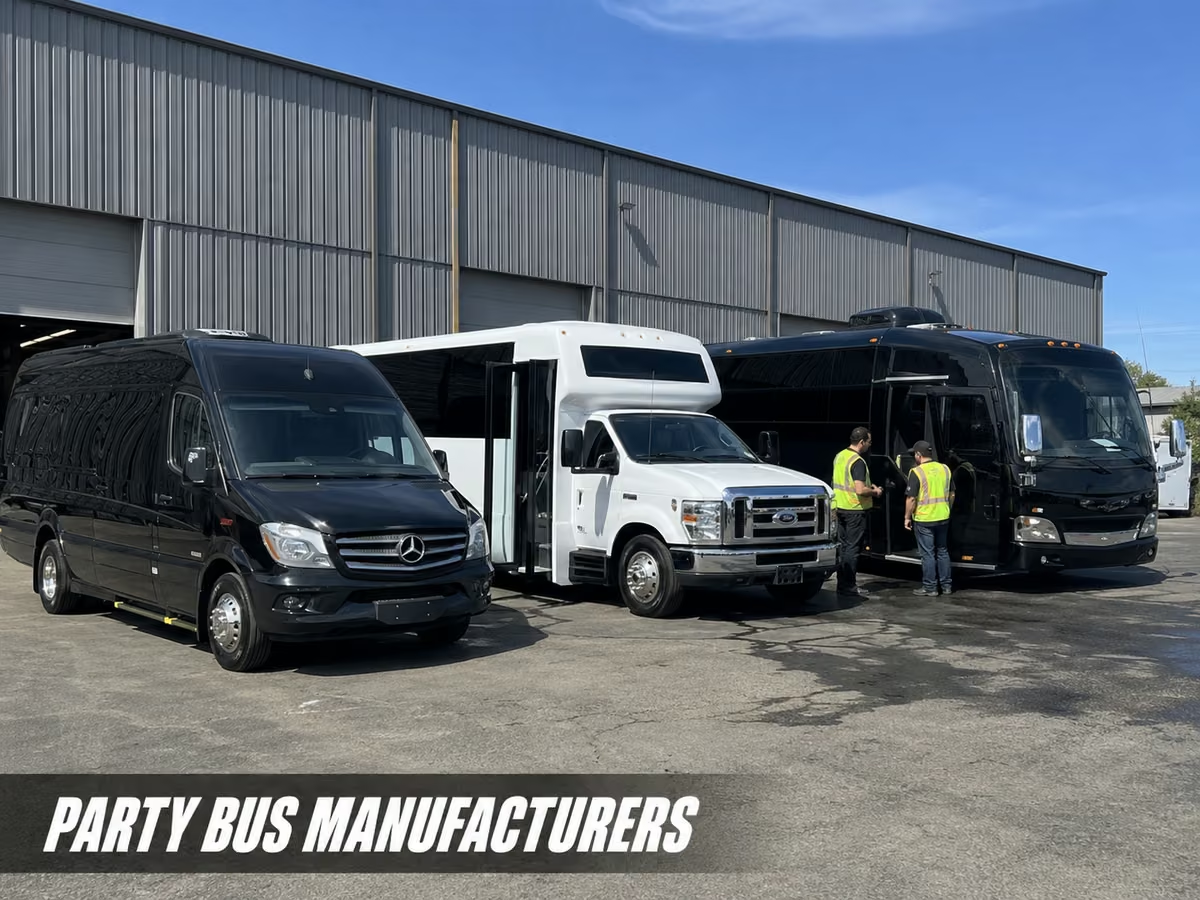
A second group of manufacturers builds the bus body itself, and their shells sit under a great many mid-size party bus builds: Champion Bus, ElDorado, Glaval Bus, Starcraft Bus, StarTrans, Elkhart Coach, Berkshire Coach, L.A. West and Goshen Coach. They're shuttle bus companies by trade, and on a minibus quote theirs is often the only name you'll see. The minibus guide covers where that vehicle sits in the lineup.
Sometimes all three layers show up at once. One 26-passenger party bus listed for resale reads: Ford F-550 chassis, Glaval body, interior by LGE Coachworks. Three companies, one bus.
At the top of the size range, 40- to 50-passenger party buses are often converted from retired highway motorcoaches, so the manufacturer named will be Prevost, MCI or Van Hool. Those are covered in the guide to charter bus manufacturers.
Sprinter-Class Models: 10 to 16 Passengers
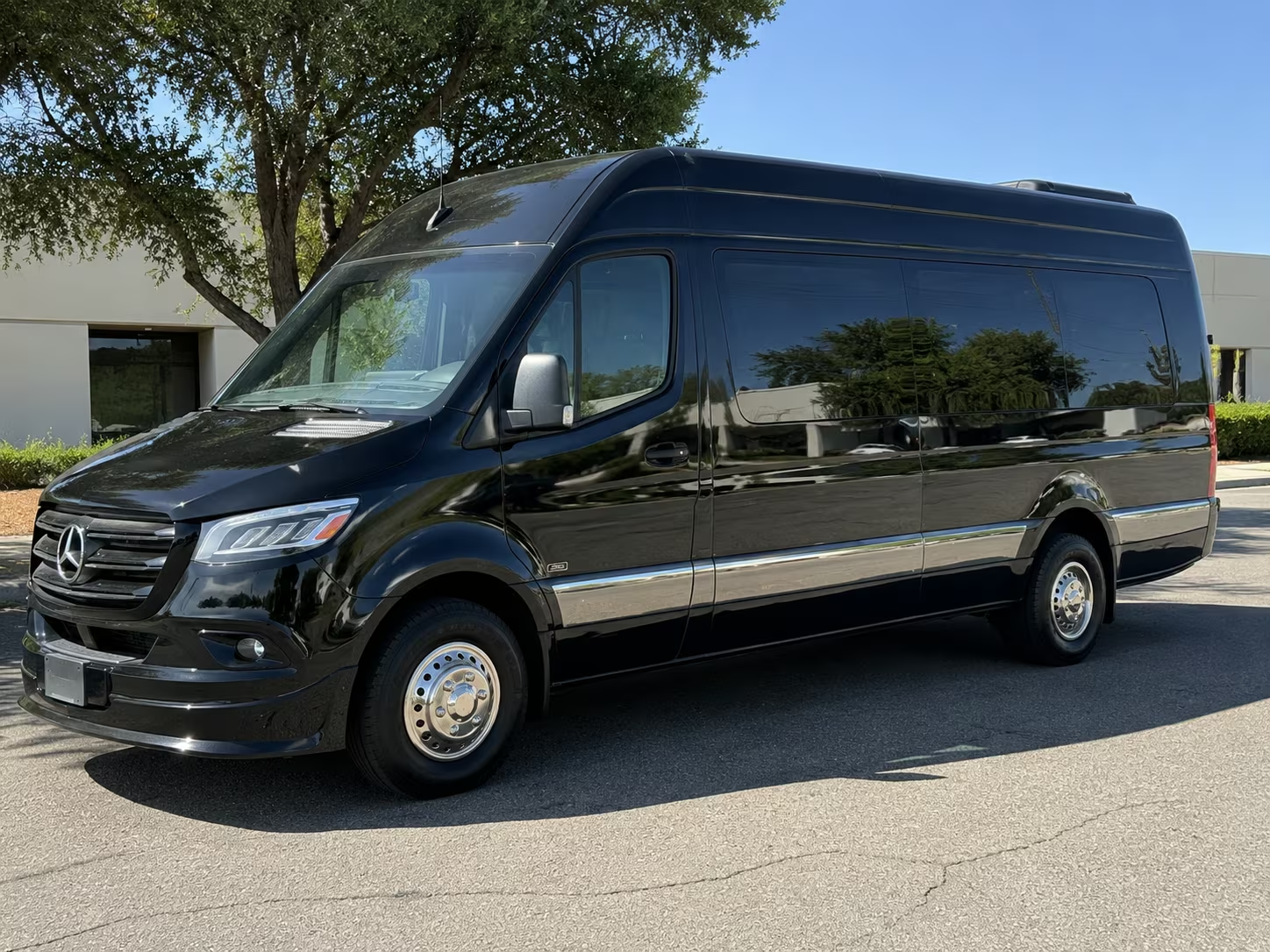
This is the band where the builder's name matters least. Mercedes publishes the Sprinter 3500XD at 273 inches long on a 170-inch wheelbase with a maximum GVWR of 11,030 lb, and nearly every model below starts from that same vehicle.
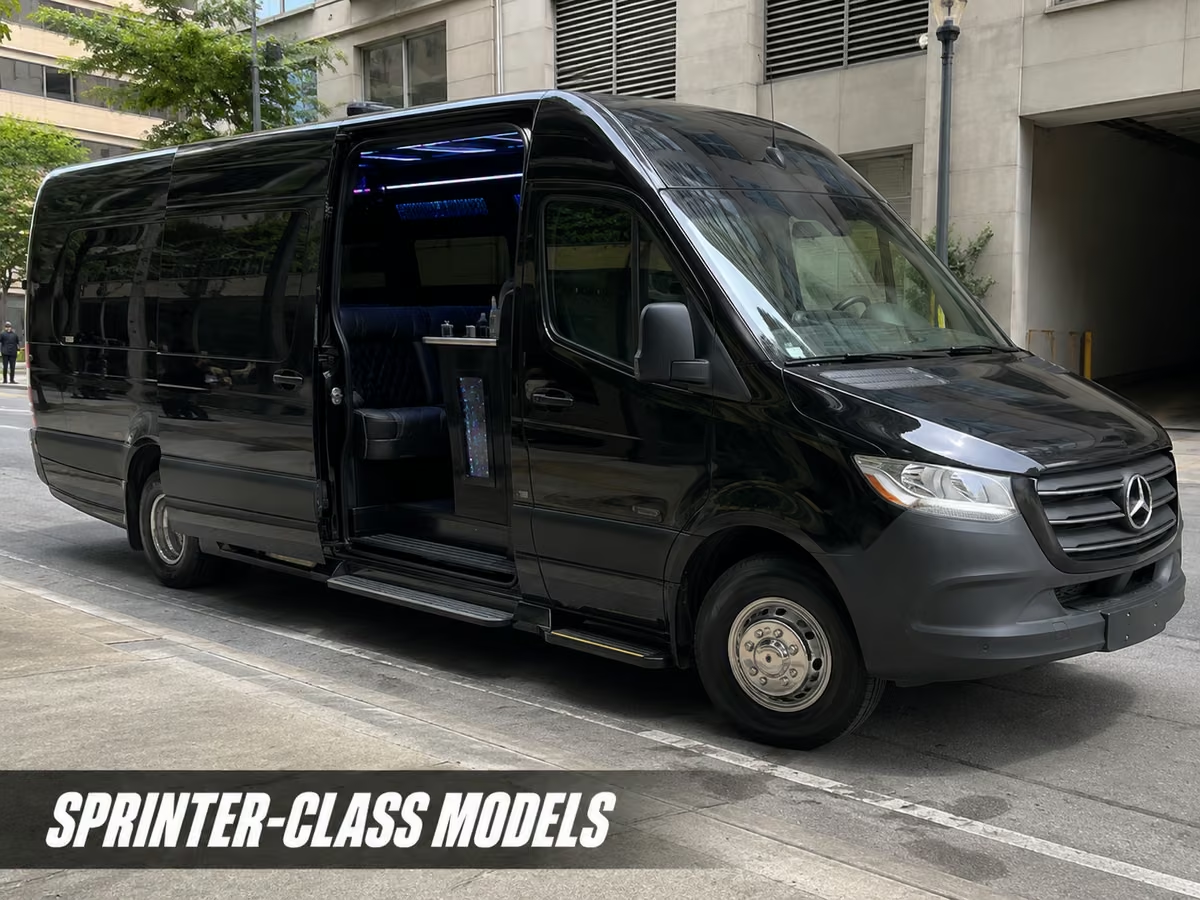
| Model | Capacity | A/C | Published details |
|---|---|---|---|
| Global Motor Coach Double J Limousine | 13 rear, plus front seats | 60,000 BTU | Sprinter 3500XD, 170" WB, 274.3" L x 80" W x 110.9" H. Double-J seating, illuminated partition, celestial canopy ceiling, refreshment lounge, acrylic stargazer walls, 32" front and 43" rear TVs |
| Global Motor Coach 4 Seat Limousine Party Bus | 14 rear | 60,000 BTU | Altro bamboo-look flooring, refreshment lounge with self-draining coolers, Maybach RGB ceiling, window RGB lighting, 32" and 43" TVs. Starting MSRP published at $164,900 |
| Global Motor Coach Corporate Shuttle | 13 rear | 60,000 BTU | 13 bucket seats with rear stadium seating, 3-point belts, Corian table, Gerflor flooring, 110V and USB charging, optional Wi-Fi hotspot. Starting MSRP published at $129,800 |
| First Class Customs VIP Limousine | 14, J seating | — | Diamond-stitched J seating, Altro flooring, custom bars, programmable LED disco ceiling, two smart TVs, laser and strobe lighting, touchscreen rear controls, 110V and HDMI |
| First Class Customs VIP Shuttle | 13 rear | 60,000 BTU | 13 European-style seats with trays and armrests, Maybach ceiling, suede headliner, custom bar, Alpine audio, RGB lighting, 110V/USB/HDMI, privacy divider |
| First Class Customs Executive Class | 7 rear | 62,000 BTU | Conference-table layout, wave ceiling, two 43" smart TVs, Alpine speakers and subwoofer, Dometic drawer refrigerator, bar consoles, separate floor heat |
| Midwest Automotive Designs Sprinter limo | Multiple floor plans | — | 24' 2" long, 96" wide, 74" interior height. 2,000W inverter/charger, dual 43" HDTVs, HDMI switching, slide-drawer refrigerator, rear bar with glassware storage, USB at each rear seat |
| Grech Limo Sprinter | Up to 14 rear | 55,000 BTU | Mercedes 3500 170" ext. high roof, GVWR 11,030 lb. Double-J limo seating, under-seat floor lighting, MBUX navigation, 110V and USB at every row with inverter |
| LGE Sprinter Limo Bus | Up to 15 | 65,000 BTU | Three published layouts, Smart TV, full-color ceiling and accent lighting, beverage and ice access, rear luggage area |
| Royale LC079 Day Cruiser | 11 | — | Two large HD TVs, bar console with glassware and ice compartment, privacy shades, and a rear bathroom with toilet and vanity sink. Rare at this size |
| Royale LC080 18p | Up to 16 rear | — | Two 42" HD TVs, phone-mirroring media center, bar area with glassware and ice compartment, phone chargers |
| Royale LC055 12p | 12 | — | Two reclining captain's chairs with available heating and massage, two HD TVs, long bar console with built-in chiller |
| Royale Transit Limo Coach | 10 plus front seats | — | Ford Transit rather than Sprinter. Three-seat J plan, 32" and 42" screens, translucent light panels, beverage console, USB, 12V and 110V outlets |
Luggage is the catch in this band: a full J-seat plan leaves little more than the space behind the rear bench. The Sprinter van guide covers that difference.
Cutaway and Mini-Coach Models: 19 to 57 Passengers
These are cataloged models, so the published data gets better as the vehicles get bigger. Lengths appear only where the manufacturer publishes one, with one exception: ECB does not publish an overall length for any model, so the ECB figures below are read off the model name rather than quoted as a dimension.
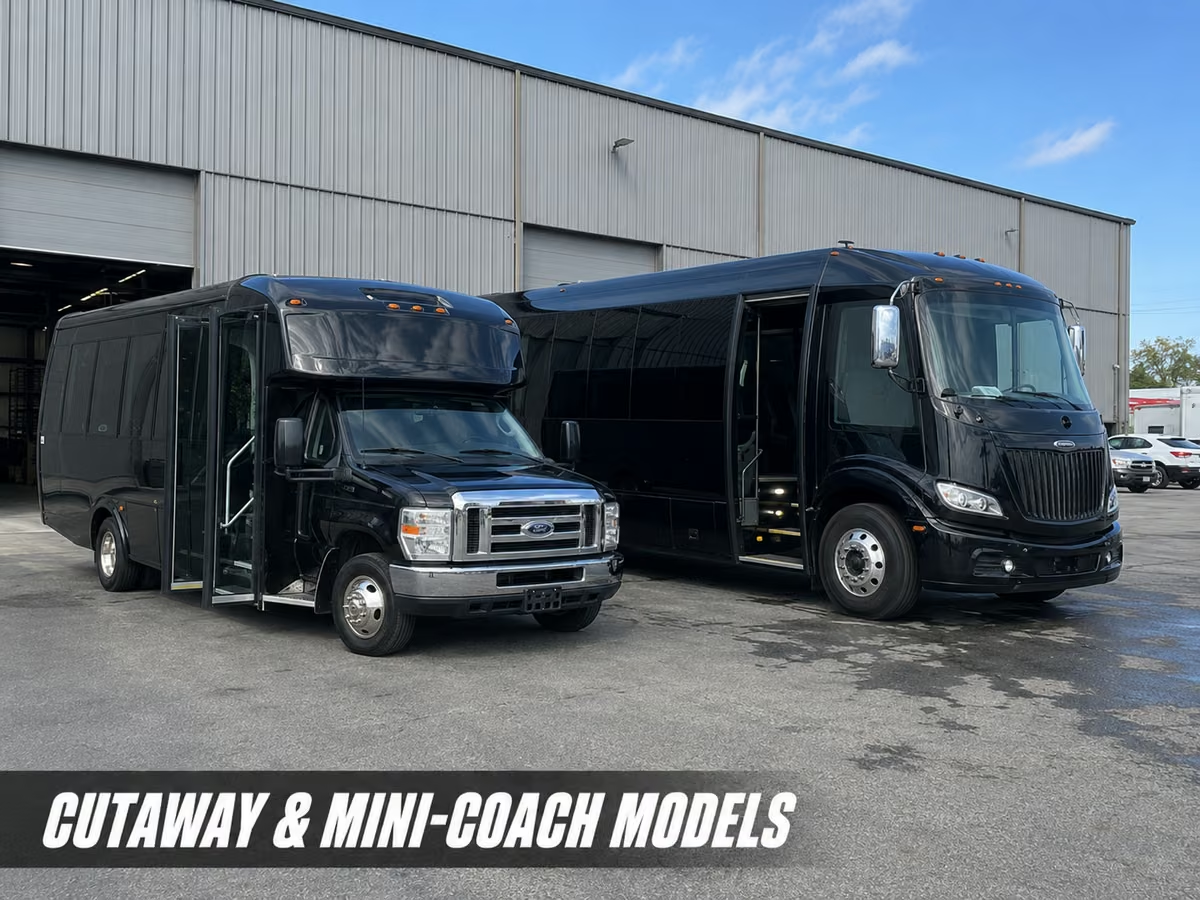
| Model | Chassis | Length | Capacity | A/C | Published details |
|---|---|---|---|---|---|
| ECB ECoach 28 | Ford E-450, GVWR 14,500 lb | — | 19–23 | — | 6.8L Triton gas, European-style seating with 3-point belts, easy-entry steps, optional wheelchair lift |
| LGE E-450 Limo Bus | Ford E-450, GVWR 14,500 lb | 25', 27' or 29' | Up to 25 | 97,000 BTU | Smart TV, accent lighting, bar access, rear luggage area; restroom and galley possible on the coach-style layout |
| ECB ECoach 34 | Ford F-550, GVWR 19,500 lb | 34', 102" wide body | 27 with rear luggage, 31 without | 125,000 BTU | 6.8L Triton gas or 6.7L Power Stroke diesel, panoramic front window, welded cage, resin-infused composite body and floor |
| LGE F-550 Limo Bus | Ford F-550, GVWR 19,500 lb | 31', 33' or 35' | Up to 31 | 127,000 BTU | Three-bench, coach-style and executive shuttle layouts; captain's chairs, club and dinette tables, beverage center, rear luggage |
| Grech GM33 | Ford F-600, GVWR 22,000 lb | — | 28 with rear luggage, 32 without | 110,000 BTU | 6.7L Power Stroke, panoramic front window, frameless coach windows, electric plug door, Kelderman air suspension, Altro flooring |
| LGE F-600 Limo Bus | Ford F-600, GVWR 22,000 lb | 33', 35', 38' or 40' | Up to 40 | 176,000 BTU | Lounge, coach-style and shuttle layouts; optional restroom or galley; rear luggage area |
| ECB ECoach 38 | Chevrolet 6500 | — | 30–35 | 180,000 BTU | Two 55" Smart TVs, 10 USB ports, stainless ceiling with RGB light show, strobe lighting, 12" subwoofer with 6 speakers, full bar with ice bin |
| Grech GM40 | Freightliner S2, GVWR 33,000 lb | — | Up to 40 with rear luggage | 190,000 BTU | Six TV monitors, panoramic front window, frameless coach windows, electric plug door, 6.7L Cummins with Allison 2500, 100-gallon tank |
| ECB ECoach 40 | Freightliner, GVWR 29,500 lb | 40' | 37 with luggage, 41 without | 205,000 BTU | 6.7L Cummins 300 hp with Allison, 300-amp alternator, 100-gallon tank, panoramic front window with power shades, optional moveable luggage wall |
| ECB Freightliner Party Limobus 40/45 | Freightliner | 40' or 45' | 37–47 | 205,000 BTU | Two 60" Smart TVs, stainless ceiling with full RGB light show, laser lighting, amplified subwoofer with 6 speakers, wraparound lounge seating, full bar with ice bin |
| ECB ECoach 45 | Freightliner, GVWR 33,000 lb | 45' | 43 / 47 / 51 depending on luggage wall | — | Moveable luggage wall, optional underbelly storage, panoramic front window with power shades |
| ECB Supercoach 45 | Freightliner, GVWR 33,000 lb | 45' | 47–51 | 205,000 BTU | Over 450 cu ft luggage storage, panoramic front and rear windows with power shades, resin-infused composite body and full composite floor |
| ECB Supercoach XL | Not published | 40' or 45' floor plans | Up to 57 | — | The largest published party-configurable build in this catalog. Underbelly luggage area and a bathroom option |
| Turtle Top Odyssey XL | Ford F-550/F-600 or Freightliner S2C | — | Up to 41 occupants | — | 19" seating with optional 3-point belts, drop-floor rear luggage, restroom packages available, scenic vista front window, bi-fold or plug door, 5-sided steel roll cage |
Why "How Many Does It Hold" Has Three Different Answers
Every listing leads with a number: 15-passenger, 34, LC080 18p. It reads like a promise about how many of your group fit in the back.
A published passenger count moves for three separate reasons, and only one of them has anything to do with the size of the bus. Where the luggage wall sits. Which seats get counted.
What the number in the model name was ever meant to mean.
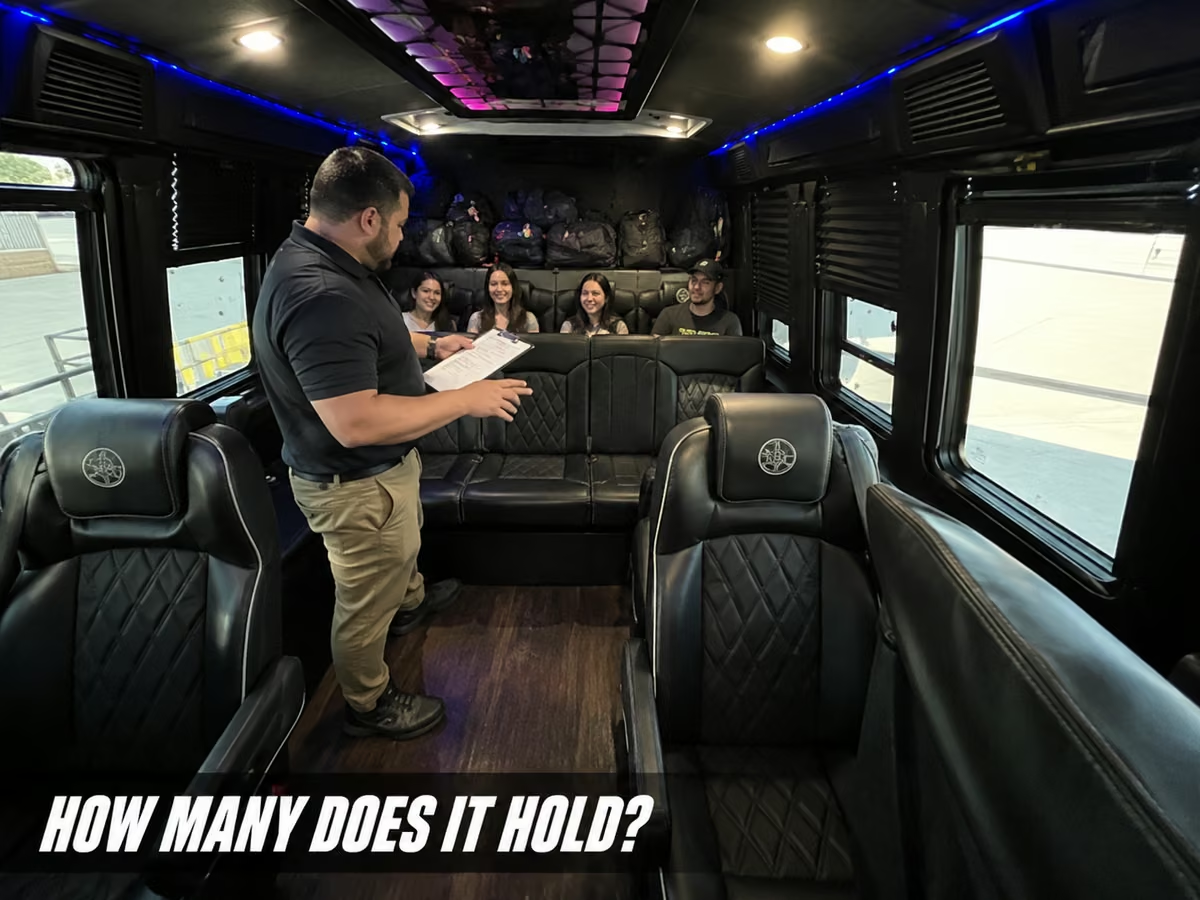
1. The luggage wall trades seats for bags
ECB's ECoach 34 is 27 passengers with rear luggage and 31 without. The ECoach 40 is 37 with luggage and 41 without. Grech's GM33 is 28 with rear luggage and 32 without.
The ECoach 45 publishes three separate figures, because its luggage wall physically moves: 43 passengers with a 65-inch luggage area, 47 with a 40-inch area, and 51 with none at all.
2. Builders count the front seats differently
Some manufacturers quote rear passengers only. Some quote rear passengers plus the two front seats. Global Motor Coach's Double J page states it plainly: the interior seats 13 plus front seats.
Grech's Limo Sprinter is published as up to 14 rear passengers. LGE quotes up to 15 and states that the count includes both front seats. Those are nearly the same vehicle described three ways.
3. The model name is not the capacity
Royale's Sprinter line uses codes like LC080 18p and LC083 15p, but the LC080 page describes up to 16 rear occupants. ECB's ECoach 34 is a 34-foot bus seating 27 to 31. On bus-class models the number is usually the length in feet, and on van-class models it's often a plan code rather than a headcount.
Put those together and a "15-passenger" Sprinter might seat 13 in the back, while a "34" might carry 31. Nobody is being dishonest — they're different counting conventions sitting side by side in the same search results. Before you finalize a headcount, ask for the seated capacity in the back, with your luggage aboard.
Skipping that question is how a group ends up one seat short on the night.
Air conditioning is the spec that scales hardest
Nothing on a party bus spec sheet climbs as steeply. Grech goes 55,000 BTU on the Limo Sprinter, 110,000 on the GM33 and 190,000 on the GM40. LGE goes 65,000 on its Sprinter, 97,000 on the E-450, 127,000 on the F-550 and 176,000 on the F-600.
Global Motor Coach publishes 60,000 BTU across its Sprinter range. ECB tops out at 205,000 BTU on its Freightliner builds.
That's close to a fourfold spread. Air conditioning is the one number a big bus can't fake, and the builders who publish BTU are telling you something the photos can't.
What Party Buses Are Built On: Chassis by Passenger Count
| Chassis | Typical capacity | Typical lengths | What it means for your group |
|---|---|---|---|
| Mercedes-Benz Sprinter 3500XD | 10–16 | 273" factory chassis (about 23'); finished builds up to 24' 2" | Takes a residential street and a hotel canopy, which nothing else on this list does. At about 9 feet tall a raised-roof limo build still sits above most posted garage clearances. See the 14-passenger Sprinter limo |
| Ford Transit | 10–12 | — | The alternative small platform, used by Royale and Global Motor Coach |
| Ford E-450 cutaway | ~19–25 | 25', 27', 29' | The workhorse. A 20-passenger party bus is very likely built on this |
| Ford F-550 | ~27–31 | 31', 33', 34', 35' | Where the vehicle stops fitting places a van fits. Check your pickup address |
| Ford F-600 | ~28–40 | 33', 35', 38', 40' | Newer platform, often quoted against the F-550 at similar capacity but stretches further |
| Chevrolet 6500 | ~30–35 | — | Widebody builds gain aisle width, not just length |
| Freightliner S2 / M2 | ~37–51 | 40', 45' | Mini-coach territory. Stadium lots and highway runs, not tight downtown blocks |
| International 3200 | ~35–40 | — | Common under older large limo buses still in service |
| Retired highway motorcoach | 40–50 | 40'–45' | The largest 40-passenger party buses going, and the ones with real underbelly luggage bays |
Two dimensions decide whether a bus can reach you, and neither is in the model name. Full-size builds run about 8.5 feet wide, and even a Sprinter stands 8.5 to 9.5 feet tall against the 7 to 8 feet most parking structures post. Flag a cul-de-sac or a gated drive in the quote request.
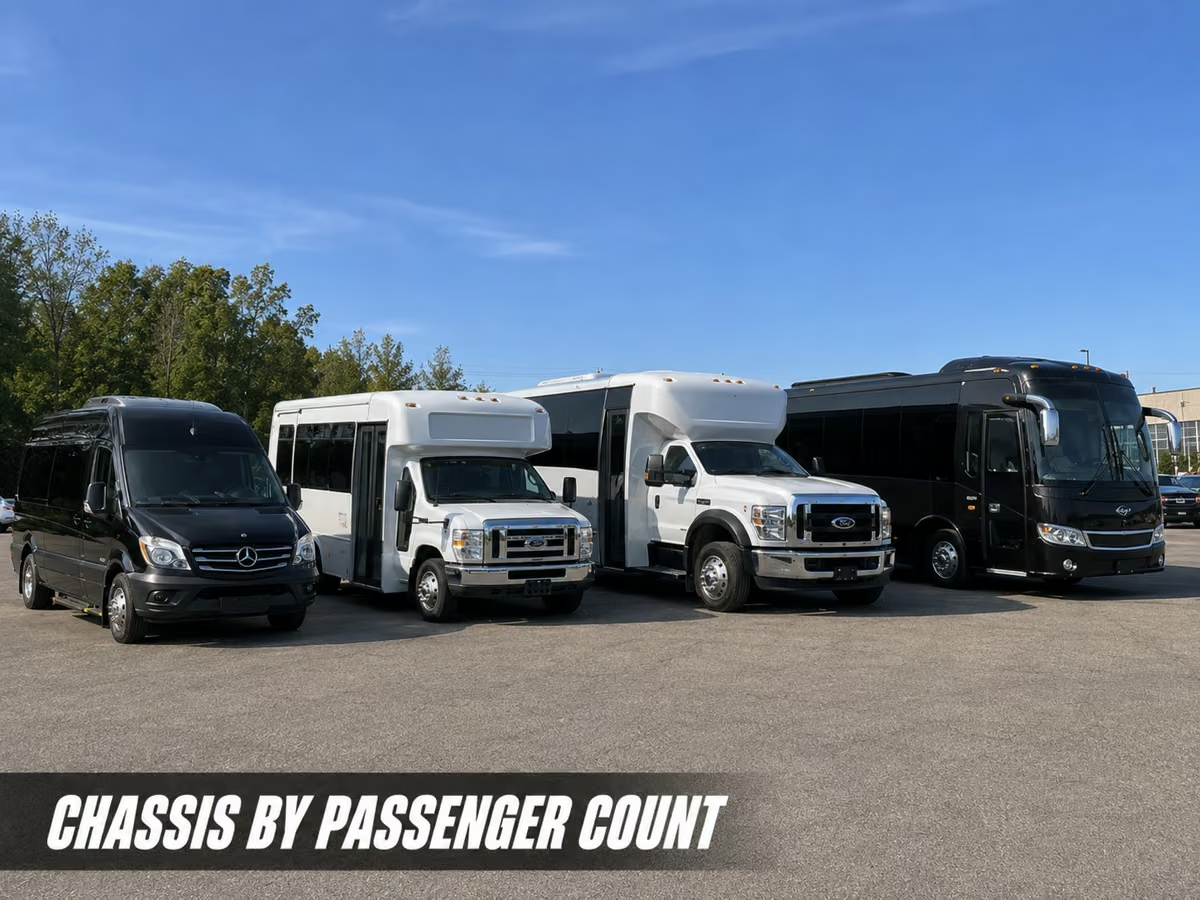
Working backward from a headcount instead? The party bus capacity guide handles that end, the bus types guide sorts out the categories, and you can browse every vehicle type by size.
Which Build Fits Which Trip
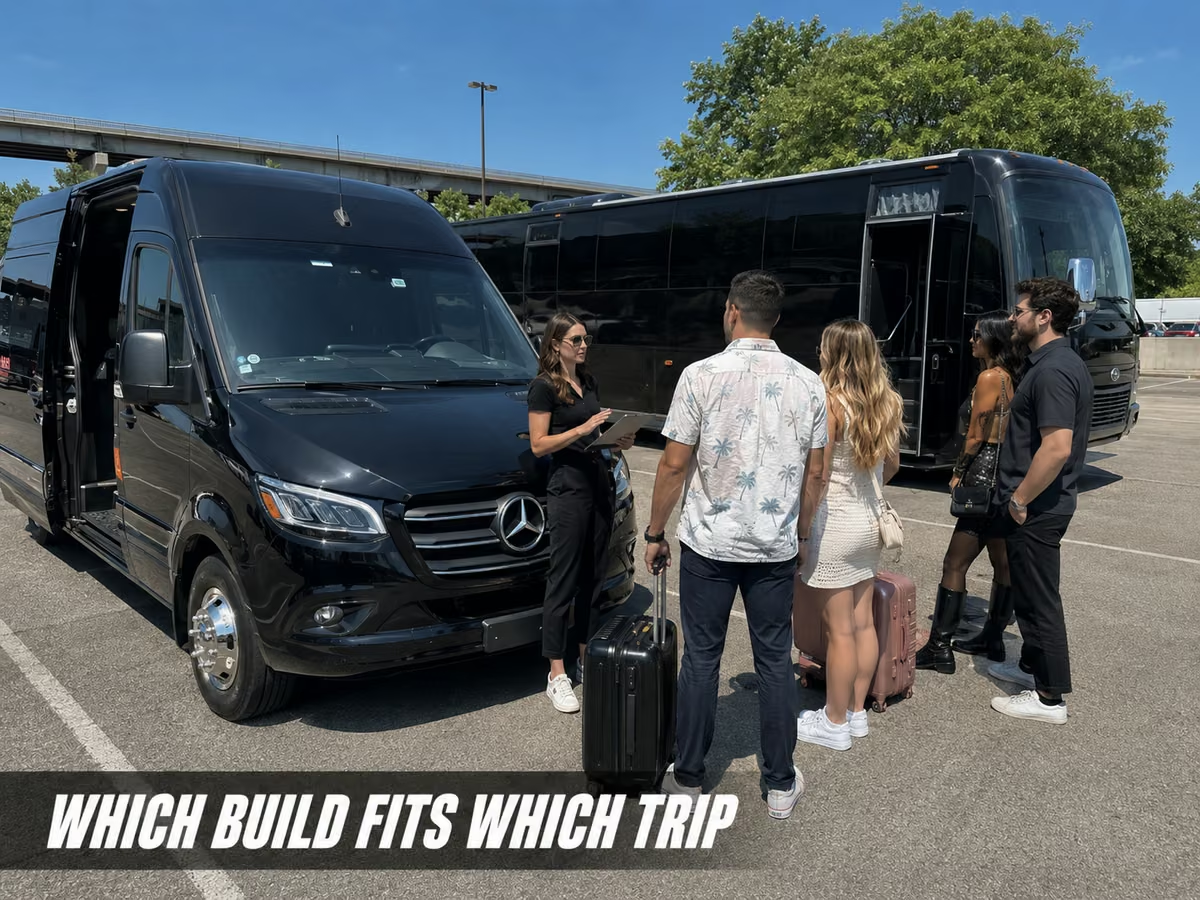
| Your trip | Ask for | Why | What you give up |
|---|---|---|---|
| Under 15 people, city streets, no bags | A Sprinter build on the 3500XD | The only platform that fits a hotel canopy and a residential street, though at about 9 feet tall it is still above most posted garage clearances | No restroom on almost any of them, minimal luggage, and the counting convention that turns 13 rear seats into a "15-passenger" listing |
| 18 to 25 people, night out, short hops | A Ford E-450 build | The most common platform in the country, so availability and pricing usually run better than anything either side of it | 97,000 BTU is the modest end of the climate range, and rear luggage eats seats fast at this size |
| 26 to 32 people, standard party bus night | A Ford F-550 or F-600 build | Full perimeter benches, a real bar, 110,000 to 176,000 BTU. This is what most people picture when they say party bus | A 34- to 40-footer will not reach narrow residential streets or low garages. Confirm your pickup address before booking |
| 33 to 45 people, long runs or a full day | A Freightliner S2 or M2 mini-coach | 190,000 to 205,000 BTU, air ride on some builds, panoramic glazing, and the luggage volume for a real itinerary | Needs staging room and a wide approach. Overkill and awkward to park for a downtown bar crawl |
| Anything with luggage, airport runs, or a restroom | A coach-style build, and say so up front | Underbelly and drop-floor luggage keeps bags out of the cabin, and restroom packages exist only on these platforms | Restrooms are an optional package even here, so it has to be confirmed rather than assumed |
| 45 to 57 people | ECB Supercoach XL, or a converted motorcoach | The only builds published above 51 passengers | Rare, and the interior will read closer to a charter bus than a nightclub |
The constraint that decides your booking is the pickup address, not the interior. A 40-foot bus that can't turn into your street is worth less than a 29-foot one that can. Book the platform that can reach you, not the ceiling shot.
For what is inside, the party bus amenities guide sorts standard features from upgrade packages.
What a Party Bus Costs to Build
These are prices for buying a vehicle from a manufacturer, not for renting one, and they explain the rental market.
The working benchmark is roughly $130,000 to $230,000 for a new Sprinter-class party bus, and meaningfully more for the big ones.
Most builders keep pricing behind a quote request, but two publish openly. Global Motor Coach lists starting MSRPs of $129,800 for its Corporate Shuttle and $164,900 for the 4 Seat Limousine Party Bus. First Class Customs posts actual inventory asks, running roughly $179,900 to $229,900 for new Sprinter builds, with used units on its own lot starting at $84,900.
Larger Freightliner and cutaway buses are almost always quote-only, though ECB claims its ECoach 40 undercuts competing builds by up to $30,000.
Two builders is a thin sample, and a starting MSRP is a brochure number rather than what a fleet pays for six of them. Read the range as an order of magnitude.
Spread across the seats, that is why a 14-passenger van and a 40-passenger bus can rent for numbers closer together than you'd expect.
And what renting one costs
Rates track the class and size of the vehicle far more than the badge on it.
| Vehicle | Example hourly | Example full day | Typical build behind it |
|---|---|---|---|
| Sprinter van (12–15) | $150–$300 | — | Sprinter 3500XD with shuttle seating and a small rear luggage area |
| Sprinter limo (14) | $175–$350 | — | The same 3500XD with J seating, a bar console and a lit ceiling |
| Party bus (15–20) | $200–$375 | — | Almost always a Ford E-450 cutaway build |
| Party bus (20–30) | $250–$425 | — | E-450 at the low end, F-550 above roughly 25 seats |
| Party bus / minibus (35–50) | $300–$500 | — | Long F-600 or a Freightliner S2/M2 mini-coach |
| Minibus (15–35) | $150–$300 | $1,000–$1,800 | A Champion, Glaval, Starcraft or Turtle Top shuttle body, forward-facing rather than perimeter seating. See the 15 to 35 passenger minibus |
| Charter bus (40–56) | $150–$300 | $1,200–$2,500 | A highway motorcoach from MCI, Prevost or Van Hool |
Those are example figures to help you plan, not quotes — the quote moves with your date, hours, mileage and how busy that weekend is.
Partybus-rental.net compares quotes and connects groups with the bus companies and transportation providers serving each area. It does not own vehicles, employ anyone who drives, or operate trips, and every amount shown here is example pricing. Ranges by vehicle sit on the party bus prices page, city and trip-length breakdowns are in the party bus cost guide, and pricing for your own date takes about a minute online or on 833-458-7001.
How a Party Bus Gets Built, Stage by Stage
The sequence below follows the steps published by Creative Coach Builders and matches how other manufacturers describe their own work.
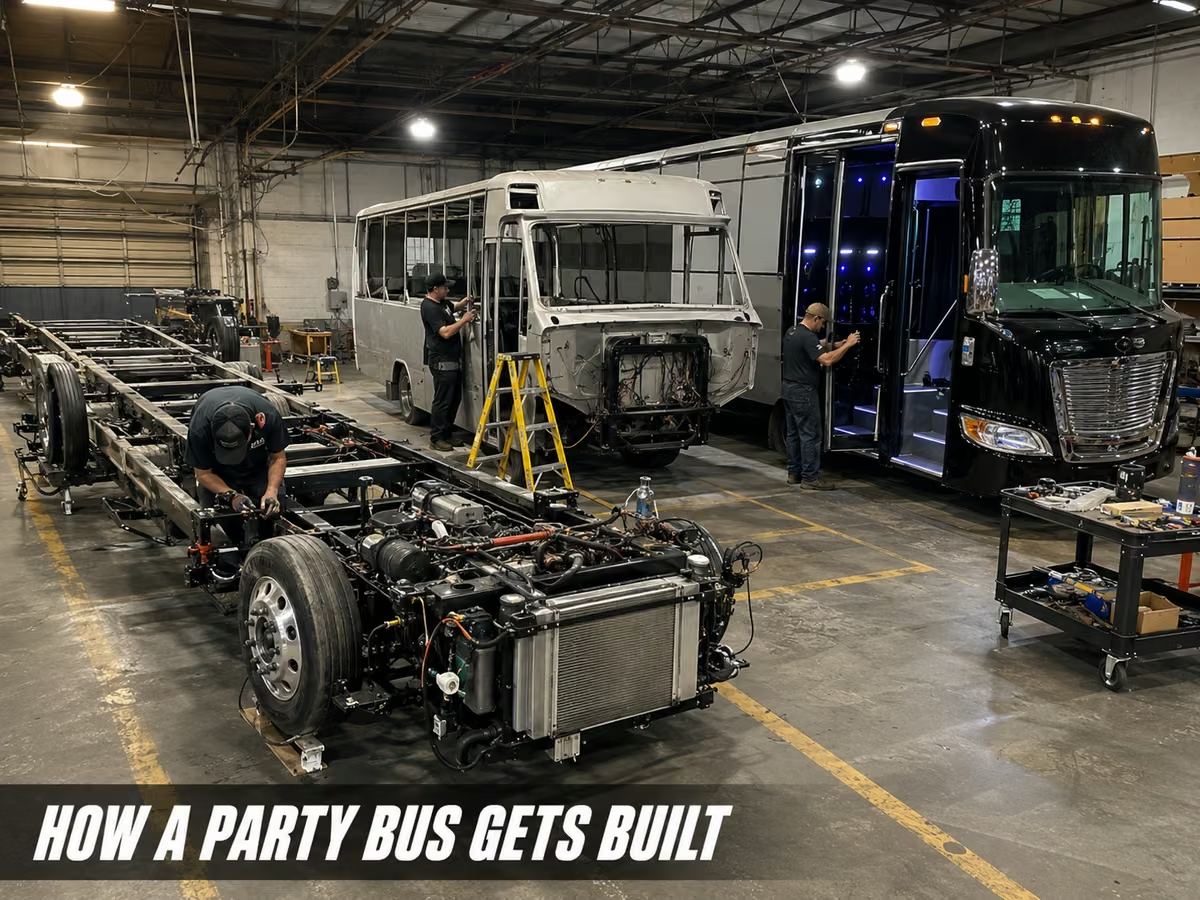
- Donor selection. The build starts from either a bare cutaway chassis or an existing bus. That single choice sets the passenger ceiling, the ride height and how the finished vehicle handles a hotel entrance later on.
- Strip-out. The interior and every removable body part comes off and goes into storage. From here it's a shell.
- Cutting to specification. The body is cut to the length on the order sheet.
- Structural work. Rocker and side panels get seam-welded, the body is extended, and the flooring is reinforced so it can be laid flat. That flat floor is why a party bus feels different from a limo, and why people can stand up and move around in one.
- Body and glass. Panel work and window design. Full-length side windows are a signature of party bus builds and the quickest way to tell one from a plain shuttle in a photo.
- Interior build. Entertainment centers, bar cabinetry, beverage holders and seating go in last.
How Party Bus Construction Differs From a Stretch Limo
Both are coachbuilt, often by the same companies, but the work involved is not remotely the same.
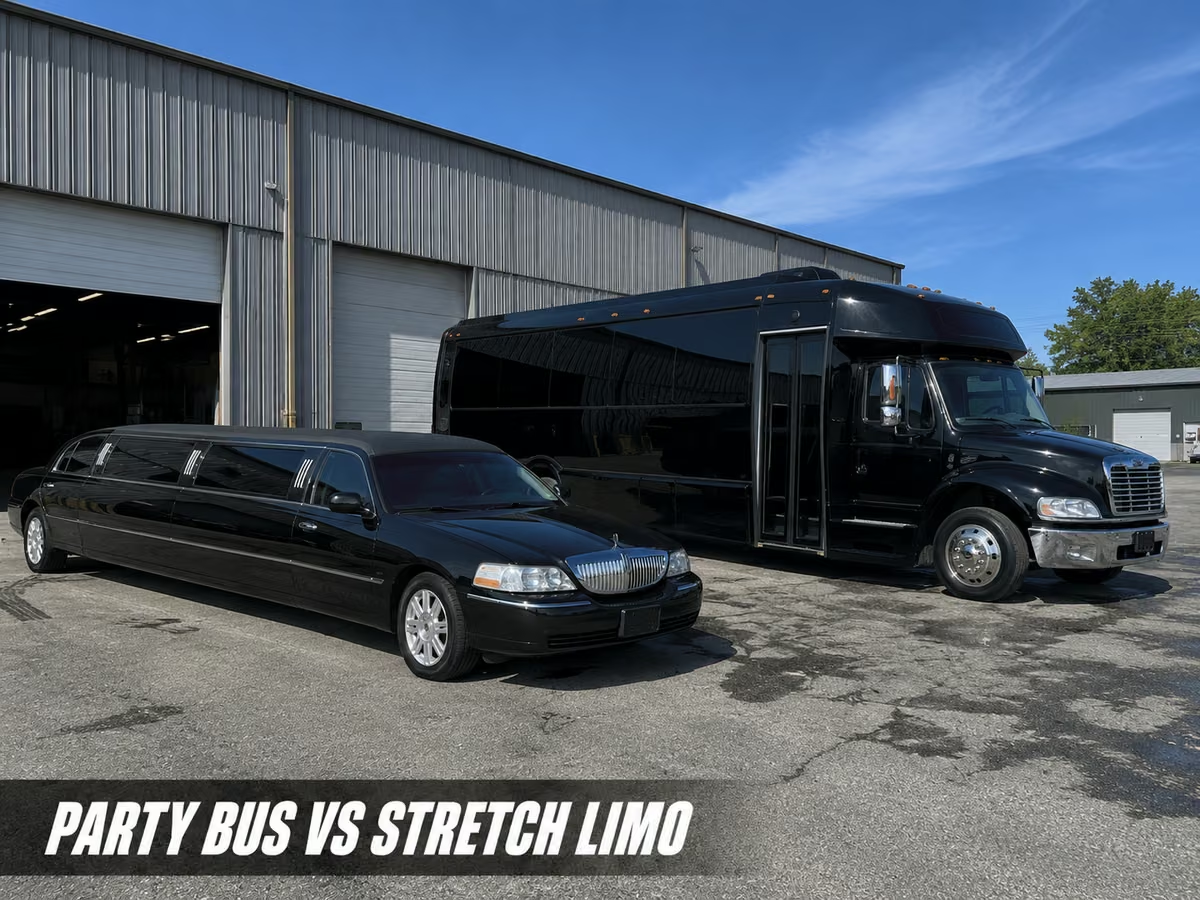
Building a stretch limousine means taking a finished car apart. As SlashGear's explainer on limousine construction describes, the interior, driveshaft and fuel tank come out, and the car is then cut completely in half, roof to floor. New steel frame rails are fabricated and welded between the halves, the driveshaft is extended, and support pillars, roof rails, steel flooring and a roof panel go in.
Only then does upholstery start.
A party bus skips all of that. The shell already exists and was engineered from the start to carry thirty or forty people. Nothing gets cut in half and no new frame section gets fabricated, so the build is body work plus interior.
That difference shows up on your quote. A stretch limo absorbs heavy fabrication cost and then spreads it across roughly fourteen to twenty seats. A party bus puts the money into the interior and spreads it across thirty, forty or fifty.
It's a large part of why the per-person figure on a party bus usually looks better than the one on a stretch.
How to Tell a Purpose-Built Bus From an Aftermarket Build
Two different kinds of vehicle get rented as party buses, and photos won't tell them apart at a glance. A few exterior details do.
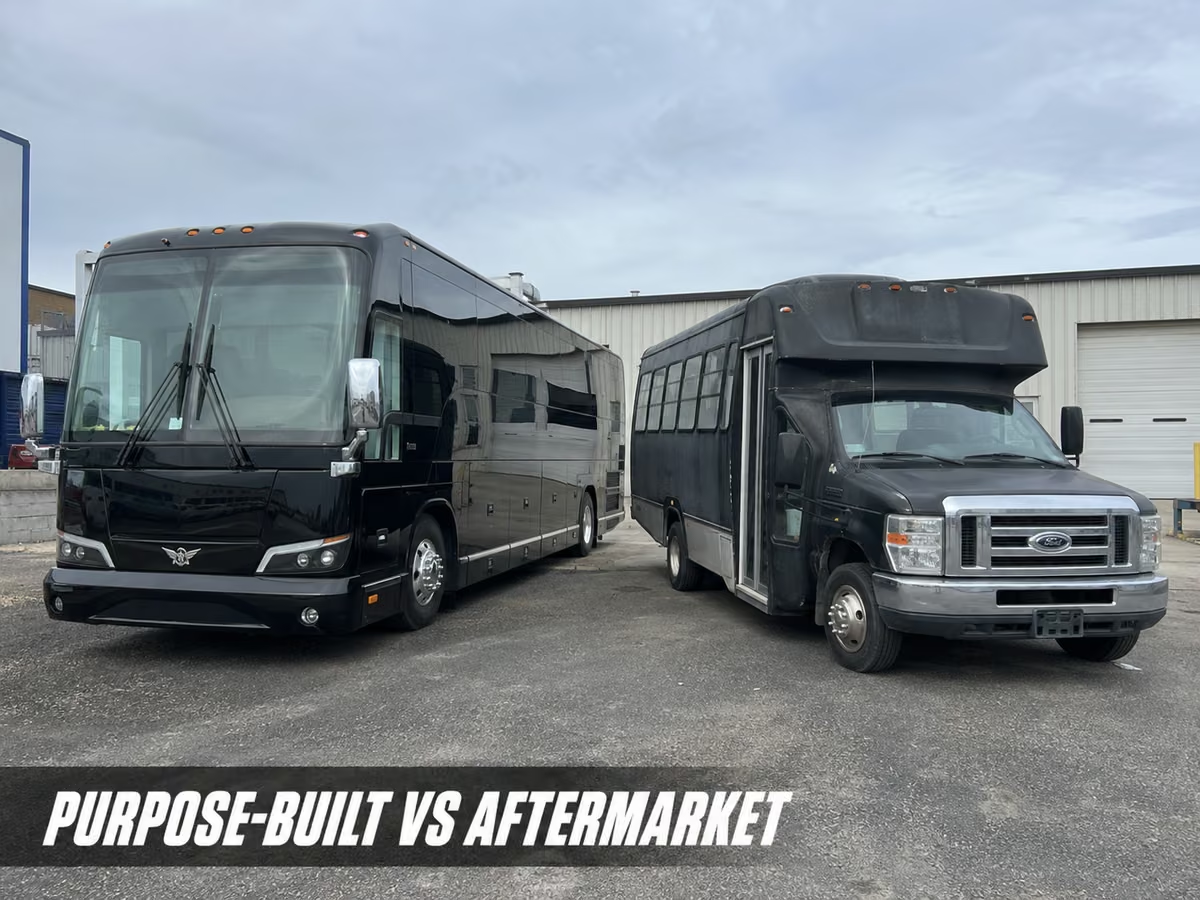
Purpose-built conversions come with numbers. Because the manufacturer builds the same model repeatedly, it publishes GVWR, BTU, length and capacity-with-luggage. If a listing can tell you the chassis, the builder and the air conditioning rating, you are looking at a cataloged model.
Aftermarket builds usually can't. They start from a vehicle that already had a different job, such as a cargo van, a used shuttle or a retired school bus, and rebuild the inside. Shops in this segment offer services like door removal and body re-skinning, and they compete openly on cost.
There is a real DIY market too: one interior specialist lists lit ceiling panels starting around $2,750 against full conversions it describes as often starting at $50,000.
The ceiling is the other tell. A square-cut backlit grid is a catalog interior; a curved or hand-shaped ceiling is nearly always a one-off.
Plenty of aftermarket builds are beautifully done, and a one-off interior can be better than a catalog one. They're simply different products at different price points — often the explanation when two quotes for a 30-passenger bus come back far apart. Ask which one you're being offered.
How to Read a Party Bus Spec Sheet
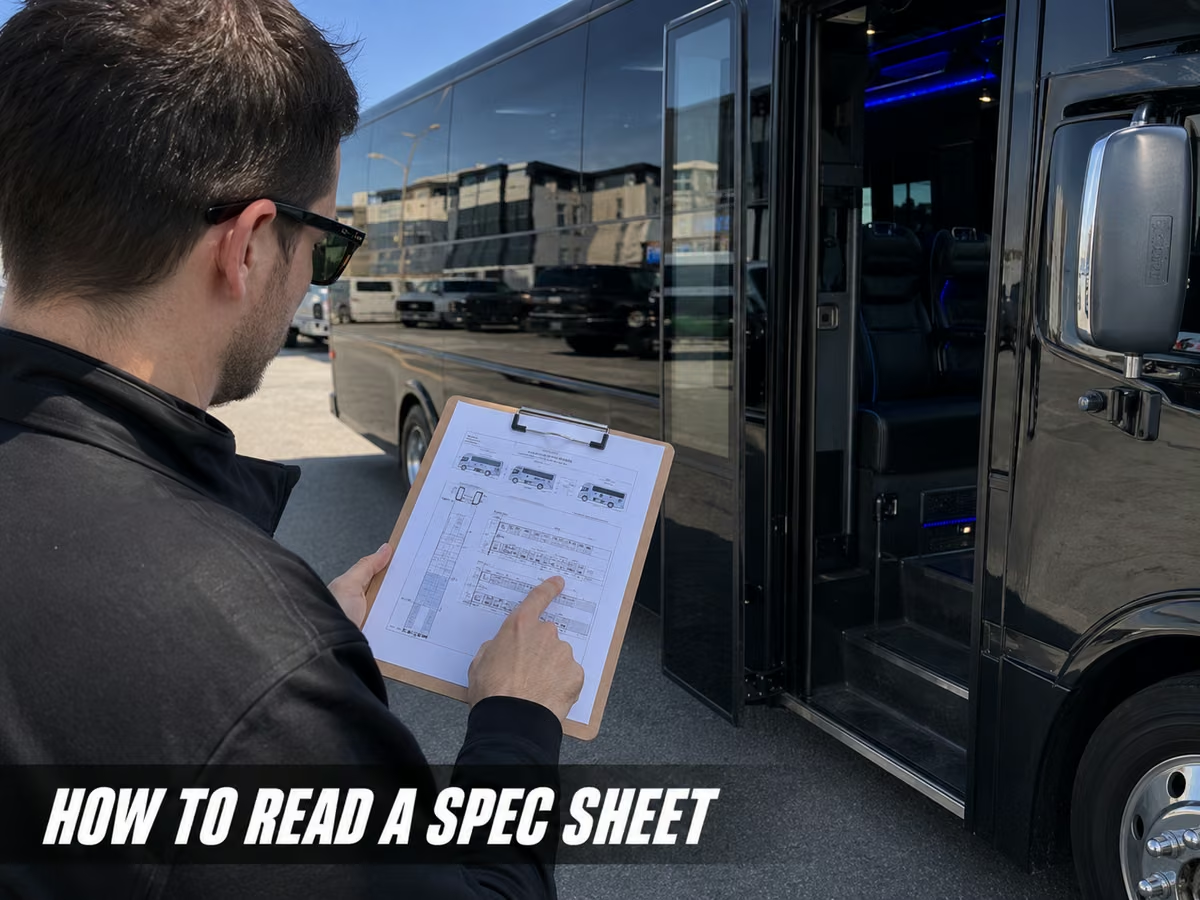
| Term | What it means |
|---|---|
| The number in the model name | On bus-class models, usually the length in feet. ECB's ECoach 34 is a 34-footer seating 27 to 31. On van-class models it is often a plan code instead |
| Two names on one line | Chassis manufacturer first, coachbuilder second, as in "Ford F-550, Executive Coach Builders." If a listing gives you only the Ford part, ask who built the body |
| BTU | Air conditioning capacity, from about 55,000 on a Sprinter to 205,000 on a 40- to 45-foot build. The number that decides whether a full bus is comfortable in August |
| GVWR | Gross vehicle weight rating, from 11,030 lb on a Sprinter to 33,000 lb on a Freightliner build. A quick proxy for how substantial the platform is |
| 3500XD, 170" WB, 170 extended | Sprinter chassis shorthand. The 3500XD on a 170-inch wheelbase is the standard party bus Sprinter, about 273 inches long overall |
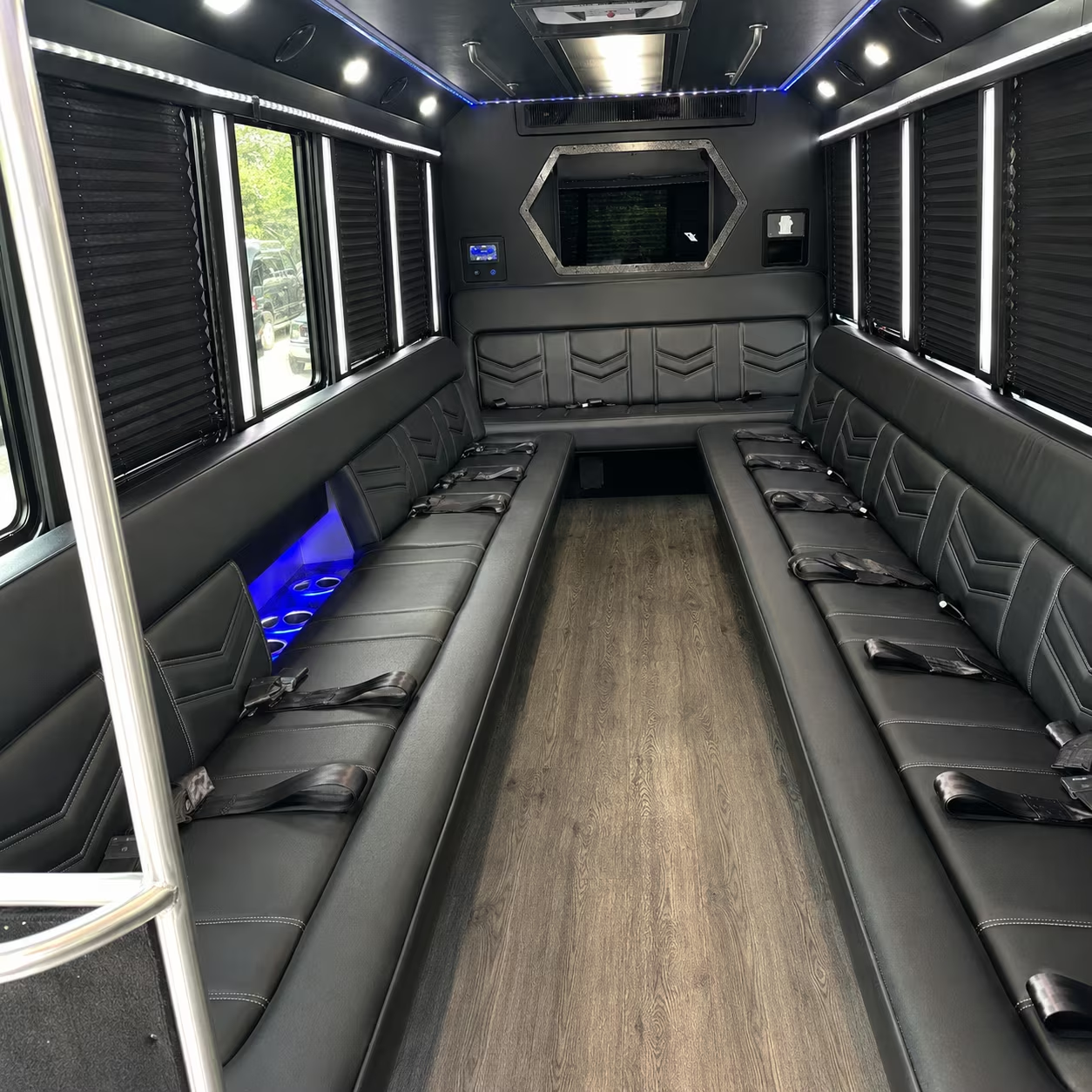
| Perimeter, lounge or limo-style seating | Benches along the walls facing inward with an open center. The party bus layout, as opposed to forward-facing shuttle rows or captain's chairs |
| Double-J or J seating | Two long facing benches joined at the rear, so the whole group sits as one circle. The most common party bus plan in the Sprinter class |
| Widebody | A wider body shell on the same chassis, bought for aisle and shoulder room. ECB publishes a 102-inch wide body on the ECoach 34 |
| Wet bar / dry bar | A wet bar is plumbed with a sink, a dry bar is cabinetry and ice bins only. A fittings distinction |
| Pocket bars | Recessed bar sections built into the seat backs to save floor space in shorter builds |
| Plug door vs bi-fold | An electric plug door seals outward and is quieter; a bi-fold folds inward. Turtle Top offers both, Grech publishes electric plug doors as standard |
| Frameless coach windows | Glass bonded without visible frames, giving the flush exterior look of a full-size charter bus |
| Panoramic or scenic vista front window | An oversized forward window, often with power shades. A mini-coach signature |
| Drop-floor or underbelly luggage | Luggage carried below the passenger floor rather than in the cabin, so it does not cost you seats |
| E-Z move or moveable wall | A repositionable luggage bulkhead. It is what lets one bus publish two or three different passenger counts |
| Welded steel tube cage / composite floor | Body construction methods. Grech publishes a welded steel tube cage with riveted aluminum body and 3/4" composite subfloor; ECB publishes resin-infused composite body and floor; Turtle Top publishes a 5-sided steel roll cage |
| Altro or Gerflor flooring | Two commercial vinyl flooring brands, usually in a wood-look finish, that turn up on most current spec sheets |
| Maybach ceiling / plexi-lit acrylic panels | A square-cut ceiling grid with backlit acrylic panels. The look everyone photographs |
| Stargazer or celestial canopy | Fiber-optic pinpoint lighting set into a dark ceiling or wall panel |
| Ford QVM | Qualified Vehicle Modifier, a long-running Ford program covering engineering, manufacturing process and quality control for companies modifying Ford chassis. A provenance note, described in Ford's announcements of QVM launches |
Restrooms are an option, not a standard feature
An onboard restroom is a package, and across builder catalogs it appears as a deliberate upgrade rather than a default. LGE publishes an optional restroom or galley on its coach-style layouts for the E-450, F-550 and F-600. Turtle Top offers restroom packages on the Odyssey XL.
ECB's Supercoach XL carries a bathroom option. The clearest outlier is Royale's LC079 Day Cruiser, which fits a rear bathroom with a toilet and vanity sink into an 11-passenger van.
Most party buses in the 18 to 30 passenger range have none at all. If your itinerary involves a long run between stops, treat the restroom as a spec line to confirm rather than something to assume from the size of the bus. A restroom also costs the rear corner of the cabin, usually two or three seats.
Accessibility is a configuration, not a default
Treat a wheelchair position the same way. A lift and securement area take the floor of roughly two to four seats, and few vehicles in any fleet are configured that way, so ask when you request pricing, ideally 48 hours or more ahead. ECB lists an optional wheelchair lift on the ECoach 28, and Turtle Top publishes door widths and floor plans that make the fit obvious.
How the Big Names Changed Hands
Party bus manufacturing has consolidated hard over the past fifteen years, which matters if you are looking at a pre-owned vehicle.
Ed Grech started Krystal in 1983 in a Southern California body shop and grew it into one of the largest limousine builders in the country. In 2010 the company filed for Chapter 11 protection and the pieces scattered. The bus operation was sold on and eventually built at ElDorado National's plant in Salina, Kansas.
In 2020 REV Group sold its entire shuttle bus business to Forest River, Krystal Coach included. Grech himself went on to build under his own name in Riverside.
Today Forest River, a Berkshire Hathaway company, stands behind Starcraft, StarTrans, Glaval, ElDorado, Champion, L.A. West, Collins and Trans Tech. Eight badges, one owner. Krystal Coach, Federal Coach and Goshen Coach came over in the 2020 REV deal but are no longer among the brands Forest River lists.
Its L.A. West brand has since moved further upmarket with a 23-passenger build carrying Starlink connectivity, USB-C at every seat, heated seating and a plug entry door.
The practical takeaway: a 2008 Krystal, a 2016 Krystal and a 2024 Krystal were built by three different organizations in three different states. On a pre-owned vehicle, the model year tells you as much as the name does.
What to Ask Before You Book
The strongest objection to everything above is that you don't get to pick the builder. You give a headcount and a date, the company sends what's free that night, and the badge on the body is whatever it is. Nobody spec-shops a rental fleet the way they'd spec a truck they're buying.
And if your group is under fourteen, a Sprinter build is cheaper, easier to park and simpler to fill than anything above it. For most groups that's the better call regardless of what the bigger listing promises.
What you can still control is five details listings leave out.
- Builder and chassis. Not just "Ford," but who built the body.
- Seated capacity in the rear, with luggage aboard. The number moves with both the luggage wall and the counting convention.
- Screen count and inputs. Bluetooth, HDMI, AUX and streaming are not the same thing, and older builds skew toward DVD.
- Bar type and cooling. Wet or dry, and whether cooling is an ice bin, a cooler or a refrigerator.
- Restroom, and accessibility if you need it. Both are packages, not defaults. Flag either one early.
Six lines to paste into a quote request: headcount, and whether it includes the front seats; the pickup address, flagged if it is a narrow street or gated drive; how many bags; the hours and stops; whether you need a restroom or a wheelchair position; and both names, chassis and builder, for whatever comes back.
If a builder hasn't published a figure, that doesn't mean the feature is absent. A bus with no published BTU rating isn't a bus without air conditioning — it means nobody has told you yet. If it matters to your trip, ask rather than assume.
None of this is confusing because anyone is hiding it. It's confusing because a party bus is sold on the inside and built on the outside. The listing photographs the interior because that's what people book on, and one badge fits an advertisement better than three do, so the chassis maker, the body builder and the interior shop collapse into a single name and a single number.
Both turn out to be approximations.
If this is your first time arranging group transportation, how to rent a bus covers the order things happen in.
Frequently Asked Questions About Party Bus Manufacturers
Who makes party buses?
The best-known party bus manufacturers in the United States are Executive Coach Builders, Grech Motors, LGE Coachworks, Global Motor Coach, Cabot Coach Builders' Royale division, First Class Customs, Midwest Automotive Designs, Tiffany Coach Builders, Turtle Top and Krystal, along with body builders such as Champion, ElDorado, Glaval and Starcraft. Each builds the passenger body and interior onto a chassis supplied by Ford, Freightliner, Mercedes-Benz, International or Chevrolet.
Does Ford make party buses?
Ford makes the cutaway chassis under a large share of them, particularly the E-450, F-550 and F-600, and sells it as an incomplete vehicle. A coachbuilder takes it from there and builds everything from the seat back rearward.
What is a cutaway chassis?
A chassis with a factory cab and front section and nothing behind it: no walls, no roof, no floor. It's manufactured specifically so a body builder can attach a body to it, and it's the starting point for most minibuses, shuttle buses and mid-size party buses.
How many passengers fit on a party bus?
Roughly 10 to 16 on a Sprinter build, 19 to 25 on a Ford E-450, 27 to 31 on an F-550, up to 40 on an F-600, and 37 to 51 on a Freightliner. Read those figures carefully, because builders count differently. Some quote rear passengers only and some include the front seats, and the luggage wall moves the number again.
ECB's ECoach 45 is published at 43, 47 or 51 depending on how much luggage space is walled off.
What is the biggest party bus?
Among published builder models, ECB's Supercoach XL tops the list at up to 57 passengers. Above roughly 50, most large party buses are converted highway motorcoaches rather than purpose-built models.
Do party buses have bathrooms?
Some do, as an optional package rather than a standard feature. It shows up mostly on larger coach-style builds: LGE offers a restroom or galley on its coach-style layouts, Turtle Top offers restroom packages on the Odyssey XL, and ECB's Supercoach XL has a bathroom option. Royale's LC079 Day Cruiser is the unusual case of a restroom in an 11-passenger van.
Most mid-size party buses don't have one, so confirm rather than assume.
How much does a party bus cost to buy?
Published builder pricing points to roughly $130,000 to $230,000 for a new Sprinter-class party bus, with used units on builder lots from about $85,000. Larger Freightliner and cutaway buses are usually quote-only. Renting one is an entirely different question, and pricing for your trip takes about a minute through the quote form or by phone.
What chassis is a 40-passenger party bus built on?
Usually a Freightliner S2 or M2, or a long Ford F-600 build. LGE publishes up to 40 passengers on a 40-foot F-600, and Grech publishes up to 40 with rear luggage on the Freightliner-based GM40.
Is Krystal still in business?
The name is. The original Krystal, founded in 1983, filed for Chapter 11 protection in 2010, and its bus operation changed hands more than once afterward. Forest River acquired the Krystal Coach brand in 2020 and no longer lists it among its bus brands.
The founder later started Grech Motors, which is a separate company.
What is the difference between a party bus and a limo bus?
Mostly vocabulary. Manufacturers tend to say limo bus, rental listings tend to say party bus, and both usually describe the same vehicle: a converted bus with perimeter seating, a bar and an entertainment system. The party bus guide covers the layout differences in detail.
Are party buses built new or converted from used buses?
Both. Purpose-built conversions start from a new cutaway chassis and get a dedicated body. Aftermarket builds start from an existing vehicle, such as a van, a used shuttle or a retired motorcoach, and rebuild the interior.
They can end up carrying identical passenger counts.
Does Partybus-rental.net build or sell party buses?
No. Partybus-rental.net is a website that helps you compare party buses, minibuses, charter buses, Sprinter vans and Sprinter limos for rent. It does not manufacture, own or sell vehicles. You fill in one form or make one call and compare options from a large network of bus companies, instead of ringing company after company and waiting on callbacks.
Broader questions about how the process works are answered on the FAQ page.
Can I find out who built a bus before I book it?
Usually, yes. Builder and chassis are standard details on a listing, and you can ask for both when you request a quote. Ask about the luggage configuration at the same time, since it changes the seat count.
Compare Party Buses and Get Pricing in About a Minute
Knowing your 32-passenger bus is an F-600 build with 110,000 BTU and no rear luggage wall is the difference between a group that fits and a group that doesn't. Partybus-rental.net puts the vehicles side by side so you can see sizes, layouts and example rates in one place, with a free quote online in about a minute, no account required, no obligation.
Call 833-458-7001 any time, any day, or use the online quote form.
Specifications on this page come from the manufacturers' own published model pages and specification sheets, cited where they appear. Figures last checked July 2026; builders revise configurations between model years, so confirm the exact specification for the vehicle on your quote. Partybus-rental.net is a comparison and quote-request website — it does not own vehicles and does not provide the transportation itself. Corrections: contact page.