Five companies build almost every full-size charter bus on North American roads: MCI, Prevost, VDL Van Hool, Temsa, and Mercedes-Benz. Here's who they are, where they build, and what you'll see in a quote.
| Builder | Owned by | Built in | Models you'll see | Sold in North America through |
|---|---|---|---|---|
| MCI (Motor Coach Industries) | NFI Group | Winnipeg, Manitoba & Pembina, North Dakota | J4500, J3500, D4520, D45 CRT, D45 CRT LE | MCI directly |
| Prevost | Volvo Buses | Sainte-Claire, Quebec | H3-45, X3-45, X3-45 Commuter, Volvo 9700 | Prevost directly |
| VDL Van Hool | VDL Groep (since 2024) | Belgium & North Macedonia | CX45, CX35, TDX, CX45E, TDX25E | ABC Companies |
| Temsa | Temsa (Turkey) | Adana, Turkey | TS45, TS35, TS30, TS45E | Temsa North America |
| Mercedes-Benz | Daimler Buses | Hoşdere, Turkey | Tourrider Business, Tourrider Premium | Daimler Coaches North America |
Two names you may still run into are gone from the new-vehicle market. Setra, the German brand sold here since the 1980s, was discontinued in North America and replaced by the Mercedes-Benz Tourrider — plenty of Setras are still working, they're just not being built for this market anymore. And Van Hool went through a genuine upheaval in 2024.
But the name on the front is the least useful thing in that table. Dimensions and capacity decide whether a coach fits your trip.
How the numbers on this page were gathered. Every dimension, seat count and luggage volume below comes from the manufacturer's own published specification sheet, linked in each section. Where a figure comes from a distributor instead, it says so.
Where a builder doesn't publish a comparable figure, the table says "not published" rather than estimating one. Where two builders measure the same thing differently, the text flags it.
Why Asking for a Brand Costs You Options
The received wisdom is that Prevost is the plush one and MCI is the workhorse, so the way to get a good bus is to ask for a good badge.
It's a reasonable instinct. You're booking a vehicle you won't see until it pulls up, and the badge is the one thing you can recognize from a photo.
Most companies don't have a fleet deep enough to honor the request. The American Bus Association Foundation's 2025 Motorcoach Census counted 1,891 companies operating 50,968 motorcoaches across the United States and Canada, with 1,769 of those companies and 49,543 of those vehicles based in the U.S. 87.3% of those companies run fewer than 25 vehicles.
A fleet of eighteen buses doesn't carry one of everything. Not one of each builder. Not one of each model year.
Whatever it bought, in the years it could afford to buy it.
So asking for "a Prevost" is ordering by hood ornament. The MCI parked next to it may be newer, hold more luggage, and cost less for the same day.
The preference isn't worthless. If you rode a model you liked, name the model — that's something a dispatcher can match. It's just the third question, not the first.
The three specs that actually change a trip: overall height (does it clear your hotel canopy and garage?), turning radius (can it physically make your venue's loop?), and underfloor luggage volume (do the bags ride under the floor or on your guests' laps?).
MCI: The One You've Almost Certainly Ridden
If you've ever taken a school trip, a casino run, or a corporate shuttle in this country, the odds are it was an MCI. Motor Coach Industries has been building buses since 1933 and is now part of NFI Group, with assembly in Winnipeg and Pembina, North Dakota. The J4500 is its flagship and the best-selling touring bus in North America.
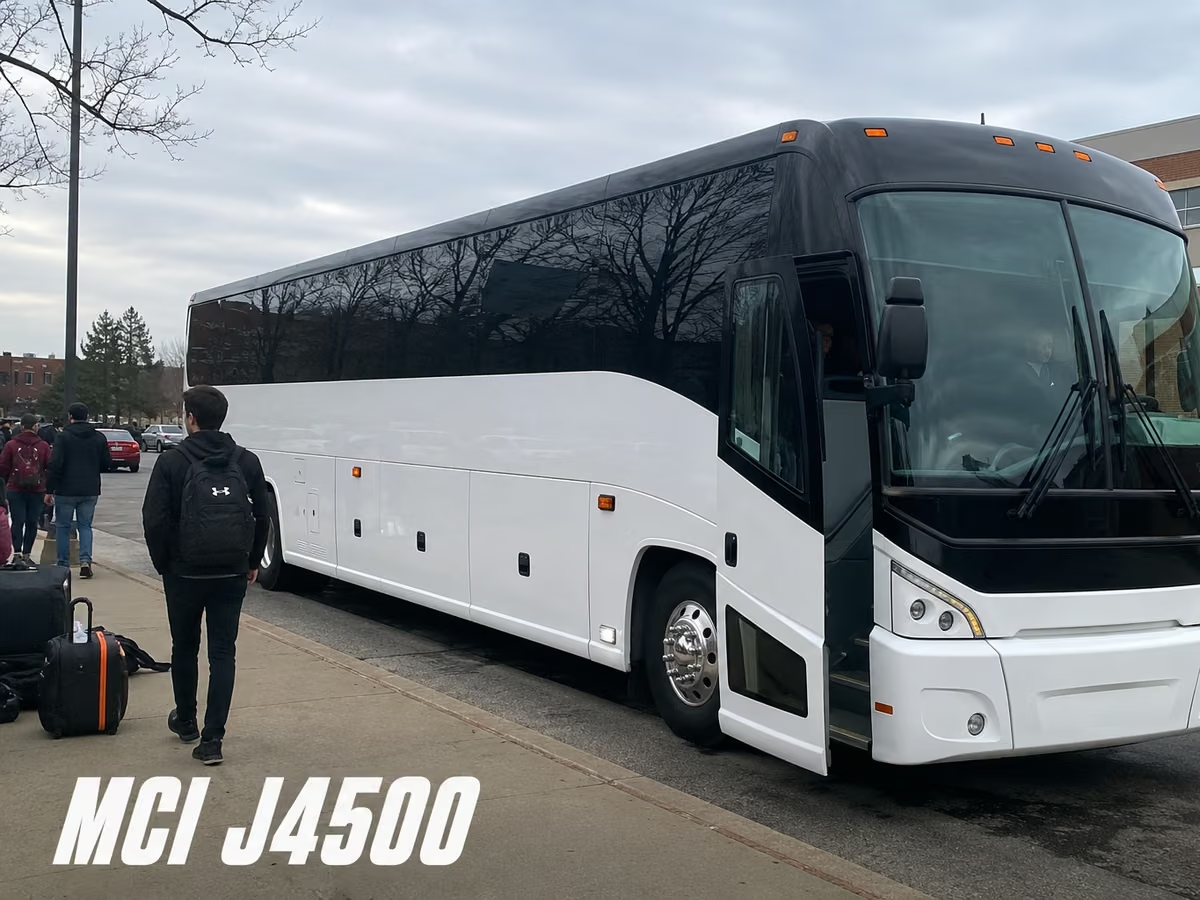
From MCI's published J-Series specifications, the J4500 runs 45 feet 7 inches long, seats 56 as standard and up to 60, and carries 445 cubic feet of below-floor baggage plus 131.2 cubic feet in the overhead parcel racks. Fuel tank holds 200 gallons, which is why a J4500 can do a long haul without a fuel stop eating into your schedule.
The interesting sibling is the J3500, the 35-foot version. Same styling, same family of parts, 40 seats standard and up to 44 — but the number that matters is the turning radius. MCI publishes the J3500 at 32 feet 10 inches against the J4500's 40 feet 11 inches.
That eight-foot difference is the whole ballgame at a lodge with a hairpin entrance, a historic downtown block, or a school lot laid out in 1962. Under 40 people and a tight approach, the shorter bus wins on the only spec that matters that day.
The D-Series and the Low-Entry Luggage Trade
MCI's D-Series covers the D4520 (45'10", 56 standard seats, 445 cubic feet of luggage) and two commuter models. One of those carries a trade-off worth watching for.
The D45 CRT LE is the low-entry model with a patented vestibule and an automated ramp — genuinely excellent for a group with mobility needs, because passengers roll on rather than riding a lift. The cost shows up underneath. MCI's spec table puts below-floor baggage at 134 cubic feet, because the ramp vestibule occupies the bay.
That's 2.5 cubic feet per passenger, against 7.9 on a J4500.
The trade worth flagging: a low-entry bus offers the easiest boarding you can get — and the smallest luggage hold of any full-size bus on this page. If your group needs step-free boarding and is flying in with suitcases, put both requirements in your quote request so you get a lift-equipped bus with full bays instead of a ramp bus with almost none.
Prevost: The Tall One and the Short One
Prevost has built vehicles in Sainte-Claire, Quebec since 1924 and has been owned by Volvo Buses since 2004. It builds two full-size passenger models, and the difference between them is a foot of height. Which sounds trivial and absolutely is not.
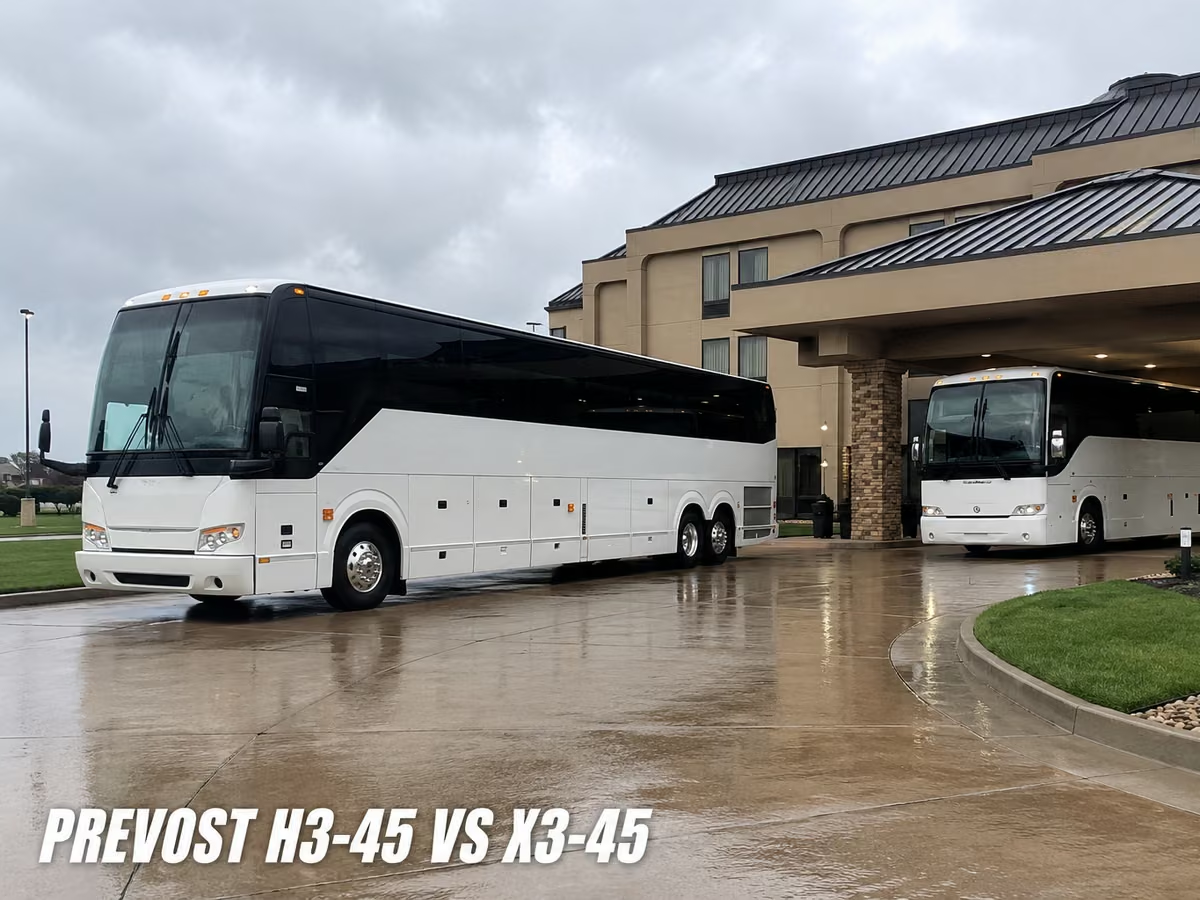
The H3-45 is the high-deck flagship. Per Prevost's H3-45 specification sheet: 45 feet long, 56 standard seats, 460 cubic feet of underfloor luggage — tied with the Temsa TS45 for the most in this guide — plus 117 cubic feet overhead, and a 222-gallon fuel tank. Overall height is 146.25 inches — 12 feet 2 inches.
The X3-45, from Prevost's X3-45 specification sheet, is 45 feet long, seats 55, carries 380 cubic feet underfloor — and stands 133.875 inches, or 11 feet 2 inches.
That foot is the difference between rolling under a hotel porte-cochère and stopping fifty yards short in the rain, and between a parking structure entrance you can use and one you can't. Meanwhile the H3-45 gives you 80 more cubic feet of bags.
Neither is the better bus. One is the airport-and-ski-trip bus, one is the tight-urban-canopy bus.
Prevost also sells the Volvo 9700 in North America. And the H3-45 spec sheet lists one option worth asking about: independent front suspension tightens its turning radius from 45.4 feet to 41.6 feet. Ask for it if your route has a genuinely nasty turn in it.
VDL Van Hool: The Bankruptcy, the Rescue, and the 81-Seat Double Decker
Van Hool, the Belgian builder whose buses have run American highways for decades, was declared bankrupt by the Commercial Court of Mechelen on April 8, 2024. Its bus and coach business was acquired by the Dutch VDL Groep, while a Schmitz Cargobull partner took the industrial-vehicle side. The brand did not disappear — it now trades as VDL Van Hool, and ABC Companies remains the exclusive North American distributor, showing a 2026 CX45 at UMA EXPO in Birmingham in February 2026.
So a Van Hool in your quote isn't an orphan. Parts and service run through an established U.S. network.
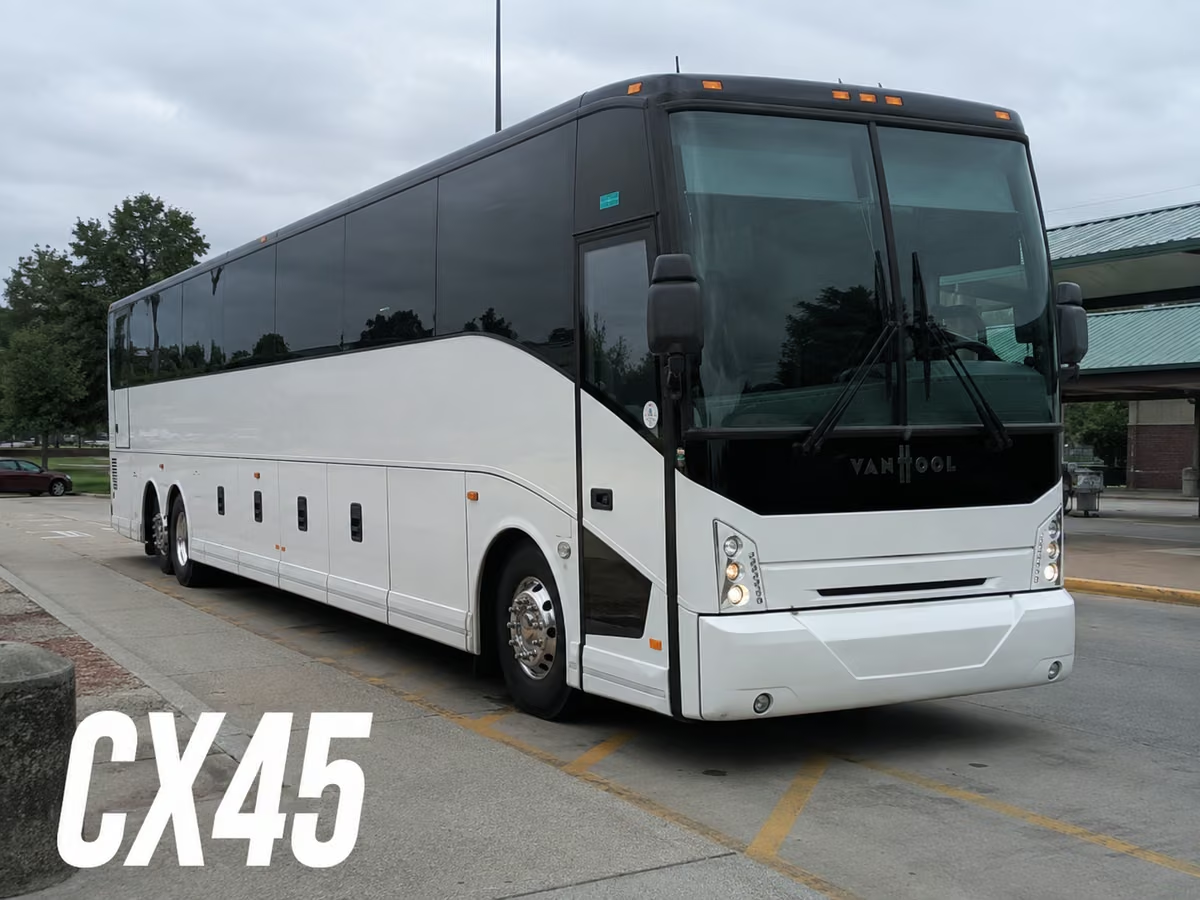
The workhorse is the CX45. From VDL Van Hool's published CX45 figures: 13,895 mm long (about 45'7"), 3,505 mm tall (about 11'6"), 56 seats, and a maximum luggage hold of 11.99 m³ — roughly 423 cubic feet. Cummins X12 engine, Allison B500R transmission.
Middle of the pack on every number. Nothing about it rules out a typical itinerary, which is why it turns up in so many quotes.
The TDX Double Decker: 81 Seats, and a Catch
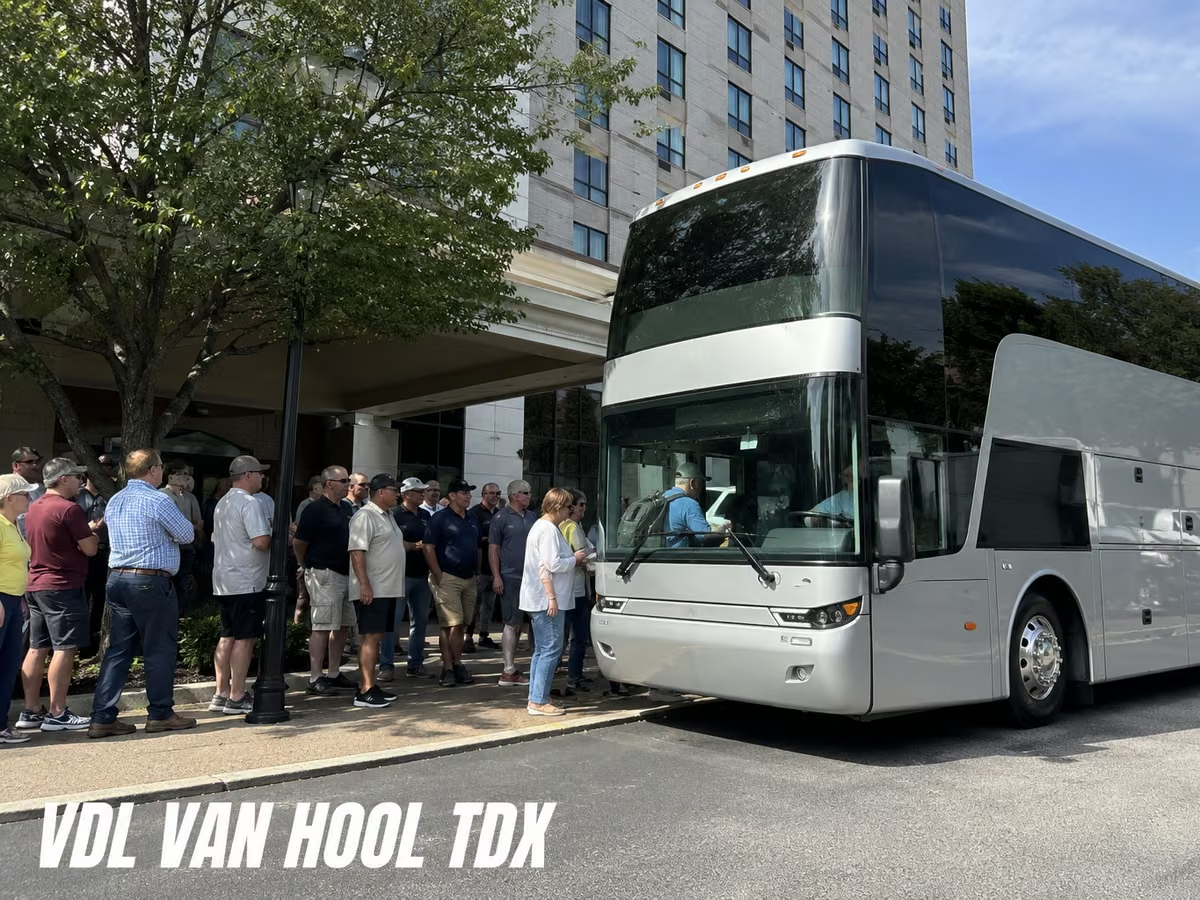
The TDX is Van Hool's double-decker. Per ABC Companies' TDX specifications, it seats 81 passengers — 59 on the upper deck, 22 below — with a restroom on the lower level, dual doors, and a turning radius of 39'4", tighter than a standard 45-footer. (ABC's own page lists the length two ways, as 43'4" in the feature summary and 44'4" in the specification block.
The figures below use the specification block.)
One vehicle instead of two. For a wedding block of 75 guests or a full corporate department, that's a genuinely different cost structure — you're splitting one rate instead of two.
The trade-off is luggage. The TDX carries 279 cubic feet of underfloor storage for 81 people, about 3.4 cubic feet per passenger — less than half what a 56-seat J4500 gives you. It also stands 13 feet 1 inch tall, the tallest thing here by nearly a foot, and upper-deck headroom is 67 inches, so anyone over 5'7" ducks on the way to their seat.
Superb for a hotel-to-venue shuttle where everyone is carrying a clutch and a phone. Wrong vehicle for an airport pickup where 81 people have checked bags. Ask about clearance on the route before you commit to one.
Temsa: The Small-Footprint Specialist
Temsa arrived in the U.S. in 2008 and made its name on something few builders bothered with — real integral buses in short lengths. The lineup runs TS45 (56+1 seats), TS35 (40+1), and TS30 (34+1), with the electric TS45E alongside.
Temsa is the least familiar name here. The numbers aren't. From Temsa's own TS45 specification sheet, the full-size TS45 runs 45 feet long, stands 11'6", seats 56, and carries 460 cubic feet of underfloor luggage — matching the Prevost H3-45 for the biggest hold here.
Its turning radius was published as 40 feet 4 inches on Temsa's earlier 2021 specification sheet, which makes it the most maneuverable 45-footer here, tighter even than the MCI J4500. Temsa has since withdrawn that sheet and its current product page publishes no turning figure at all, so treat this one as the number to confirm.
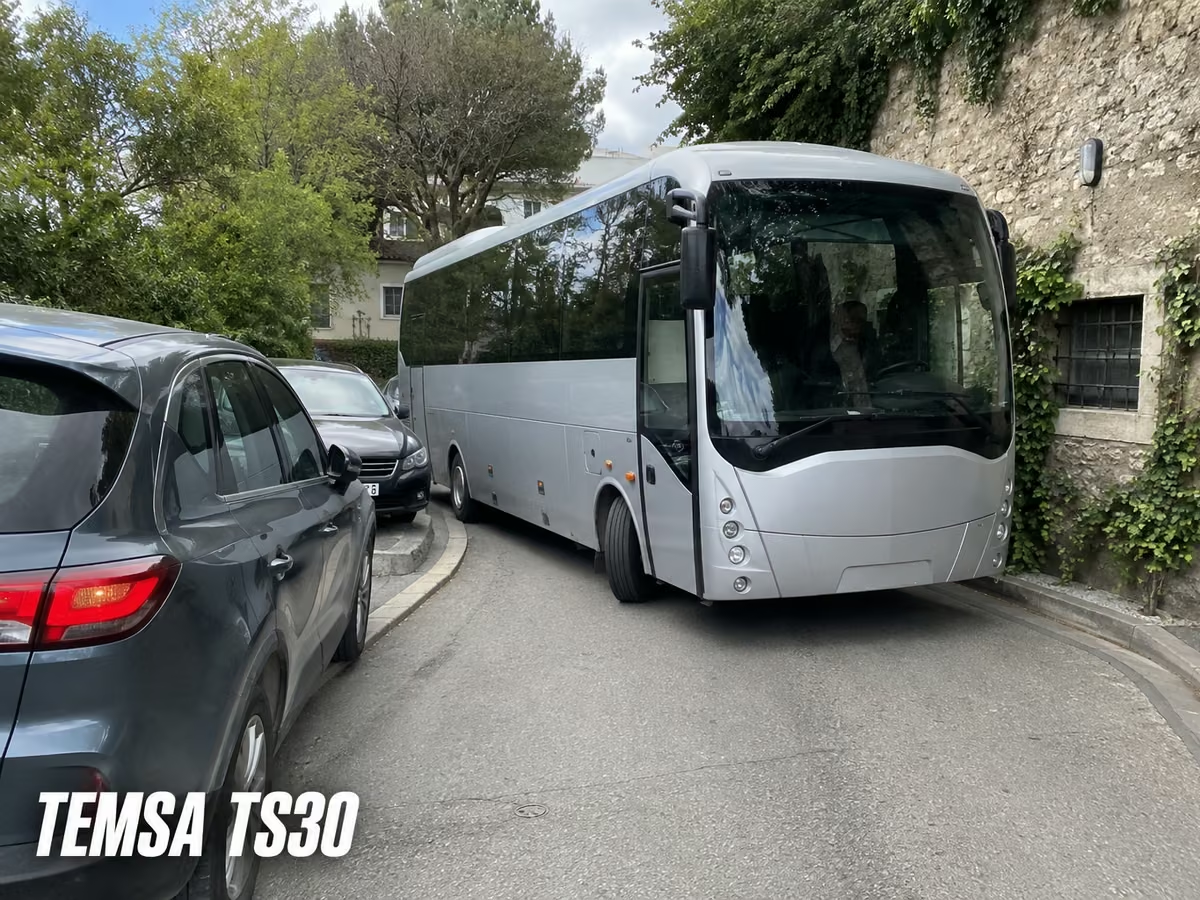
The TS30 specification sheet covers a smaller coach: a 31-foot 1-inch vehicle with a monocoque integral structure, 190 cubic feet of genuine underfloor luggage and 34 reclining seats. And it's 96.5 inches wide against the 102 inches every other bus here measures. On a lane with parked cars on both sides, that width is the spec that matters.
One caution on the TS30's turning figure, which is widely misreported. Temsa's own spec sheet labels 27'5" as turning diameter, while its TS45 sheet labels 40'4" as turning radius. Those are different measurements, and distributor pages routinely reprint the TS30 number as a radius.
A 31-foot bus cannot physically turn inside a 27-foot circle, so the label looks like an error on Temsa's sheet — but until Temsa corrects it, don't compare that number directly against the radius figures in the table below. If the turn is the reason you're booking the bus, get the measurement confirmed for the specific vehicle.
Where a short, narrow bus pays off: winery roads, older residential neighborhoods, marina and lakefront venues with a single access lane, campus quads, and any pickup point where a 45-footer would need a three-point turn with someone standing in the road stopping traffic.
Mercedes-Benz Tourrider: The Bus That Replaced Setra
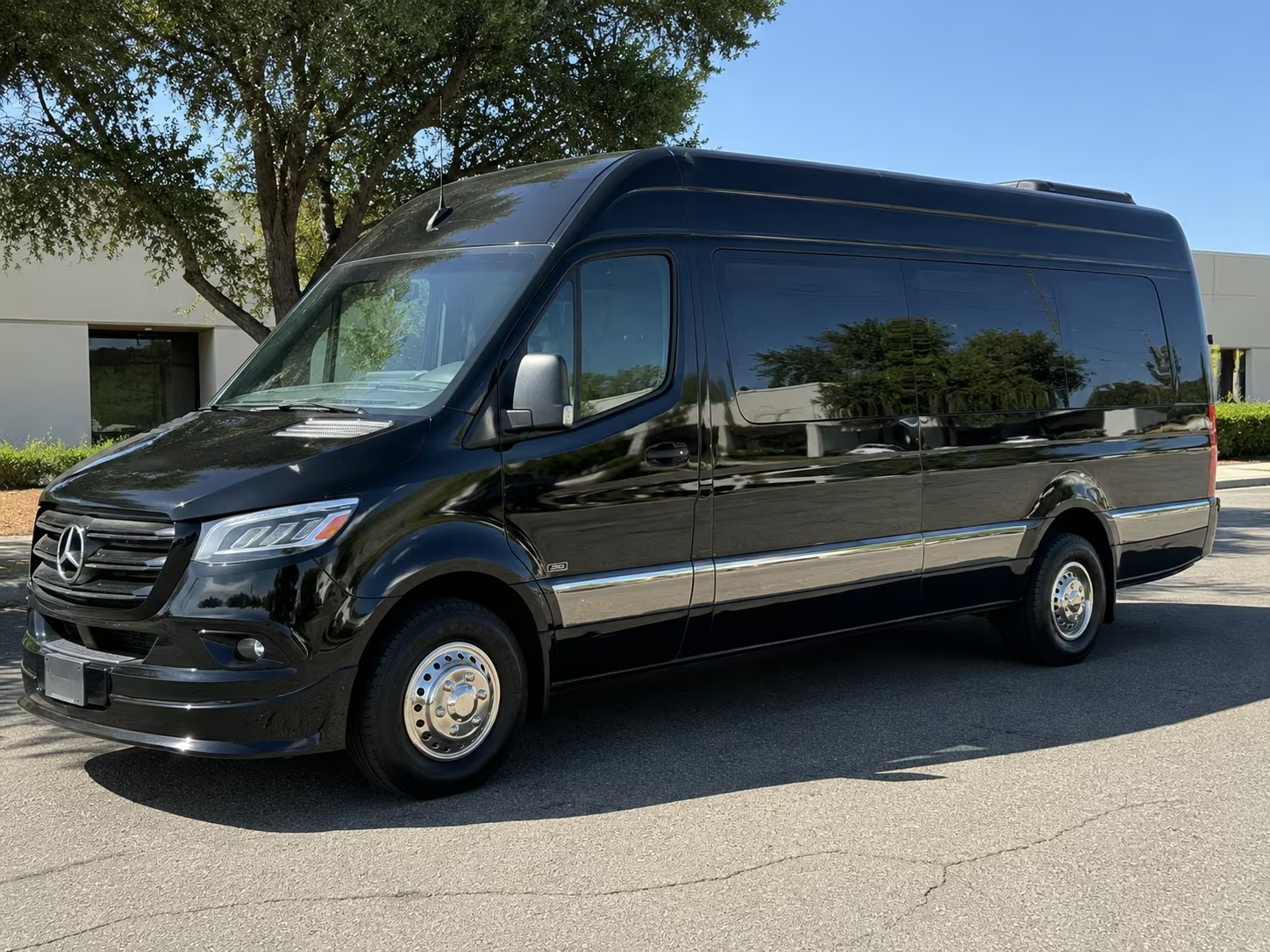
Daimler retired the Setra name in North America and replaced it across the 2022–2023 model changeover with the Mercedes-Benz Tourrider, built in Turkey and sold and serviced through Daimler Coaches North America. It comes in Business and Premium trims, both 45'8" long and 102" wide, standing 12'1" tall in Business trim and 12'3" in Premium, seating up to 60, with a stainless steel frame and the Detroit DD13-family OM 471 engine underneath.
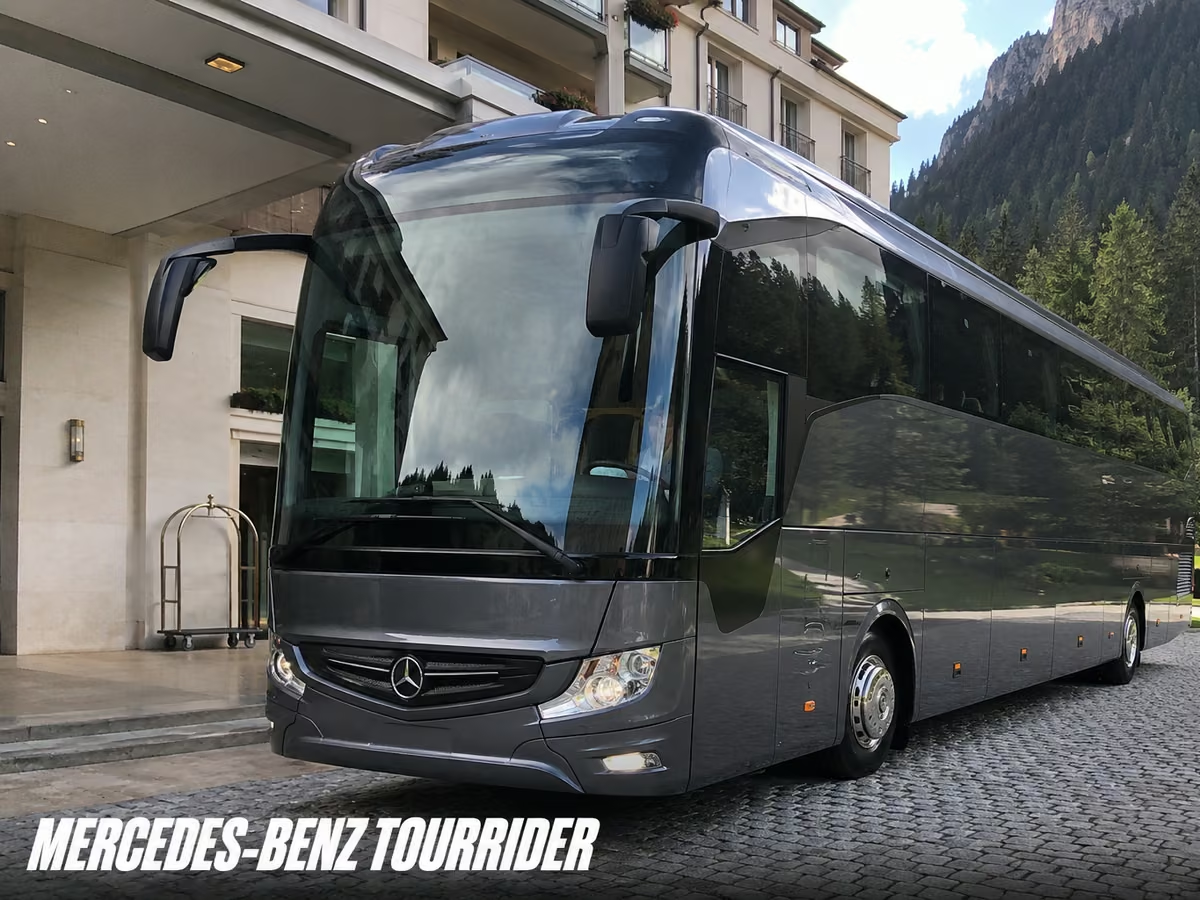
One detail matters for planners. The Tourrider's wheelchair lift is a remotely operated system stowed above the drive axle, so adding a mobility position doesn't gut the luggage compartment. On most other full-size buses, fitting a lift costs you roughly 15 to 30 cubic feet of bay.
On the Tourrider it's designed around.
The Premium trim also offers a Top Sky Panorama glass roof running 31'6" down the cabin — the kind of thing that turns a two-hour transfer into part of the day out.
Full-Size Charter Bus Specs, Side by Side
Turning radius appears in decimal feet where the builder publishes it that way, to avoid conversion error.
| Model | Length | Height | Standard seats | Underfloor luggage | Luggage per seat | Turning radius |
|---|---|---|---|---|---|---|
| Prevost H3-45 | 45'0" | 12'2" | 56 | 460 cu ft | 8.2 cu ft | 45.4 ft (41.6 ft w/ IFS) |
| MCI J4500 | 45'7" | 11'10" | 56 (up to 60) | 445 cu ft | 7.9 cu ft | 40'11" |
| MCI D4520 | 45'10" | 11'7" | 56 (up to 60) | 445 cu ft | 7.9 cu ft | 41'9" |
| VDL Van Hool CX45 | ~45'7" | ~11'6" | 56 | ~423 cu ft | 7.6 cu ft | not published |
| MCI J3500 | 35'10" | 11'10" | 40 (up to 44) | 285 cu ft | 7.1 cu ft | 32'10" |
| Prevost X3-45 | 45'0" | 11'2" | 55 | 380 cu ft | 6.9 cu ft | 47.6 ft |
| Van Hool TDX (double deck) | 44'4" | 13'1" | 81 | 279 cu ft | 3.4 cu ft | 39'4" |
| MCI D45 CRT LE (low-entry) | 45'10" | 11'7" | 54 | 134 cu ft | 2.5 cu ft | 41'9" |
| Temsa TS45 | 45'0" | 11'6" | 56 | 460 cu ft | 8.2 cu ft | 40'4" |
| Temsa TS30 | 31'1" | 11'0" | 34 | 190 cu ft | 5.6 cu ft | 27'5" (labeled diameter) |
| MB Tourrider | 45'8" | 12'1" (Business) / 12'3" (Premium) | up to 60 | not published | — | not published |
Temsa dimensions, seat counts and luggage volumes come from its current published product pages. The two Temsa turning figures are the exception: they come from Temsa's 2021-dated specification sheets, which Temsa has since taken offline without publishing a replacement turning figure, so confirm those two against the vehicle you are quoted. Mercedes-Benz does not publish a luggage volume or turning figure for the Tourrider on its North American pages. The TS30's turning number is labeled "diameter" by Temsa and is not directly comparable to the radius figures in this column.
Read the luggage-per-seat column, not the raw volume. A standard 45-foot bus gives every passenger about a large suitcase plus a carry-on under the floor. A double decker gives them a carry-on.
A low-entry bus gives them a duffel.
The charter bus seating capacity guide covers how seating counts break down across every size, and the charter bus amenities breakdown covers what's inside.
How to Compare Two Buses of the Same Size
The choice usually comes down to two similar options — both 45 feet long, both seating 56, both about the same money for your date. Four numbers separate them, and all four sit on the specification sheets above.
Height, the Number That Can Stop the Trip
Two 45-footers that look identical from across a parking lot can differ by a full foot: the X3-45 stands 11'2", the H3-45 12'2", the double-deck TDX 13'1".
So write down every overhead obstacle on your route — the hotel porte-cochère, the parking structure entrance, the portico at the country club, the low rail bridge on the one road in. Where a clearance is posted, give the posted number. Where it isn't, a rough measurement beats a guess.
You can read some of this off a photo, too. A high-deck bus has bay doors that come up near an adult's shoulder and a windshield set high above the bumper; a lower-deck bus shows shallower bays and a flatter nose.
Turning Radius, Which Decides Whether the Bus Reaches the Door
The spread across otherwise similar vehicles is large: the J3500 turns inside 32'10", the TS45 needs 40'4", the TDX 39'4", the J4500 40'11", and the H3-45 wants 45.4 feet without independent front suspension.
Find the tightest point on the route before you request pricing. Pull up a satellite view of the pickup and drop-off and look for the three shapes that cause trouble: a circular drive with a small center island, a residential cul-de-sac, and a lot whose only exit runs between two rows of parked cars.
What a tight route costs you is seats. Trading a 45-footer for a J3500 buys back eight feet of radius and gives up 16 seats and 160 cubic feet of luggage.
Luggage Volume Per Seat, Because the Raw Number Lies
Bay volume means little until you divide it by the people riding. A J4500 is 445 cubic feet over 56 seats — 7.9 each. The TDX is 279 over 81 — 3.4.
Translated into things you can picture:
- 7 to 8 cubic feet per seat — a large checked bag plus a carry-on each, with room left for a cooler or a cake box.
- 5 to 6 — one checked bag each; tight for a ski group or a band with equipment.
- 3 to 4 — a carry-on or a duffel each. Double-decker territory, fine for a shuttle where people carry a clutch and a phone.
- Under 3 — personal items only, which is why step-free boarding and checked luggage have to be requested together.
Model Year, as a Proxy for Interior Age
Model year is not a score. It's a proxy for the age of the parts you actually touch: seat foam and upholstery, outlets and USB ports at every seat or one strip at the front, screen placement, the restroom.
A 2013 coach may have none of that. Or it may have been refurbished last winter and present better than a 2021 one. So ask it as two questions — what model year is the vehicle, and has the interior been refurbished and when.
Then ask for photos of the actual vehicle, and look at the unglamorous parts: seat backs, aisle carpet, headrest seams. For a wedding party in formalwear, interior age is worth paying for. For a 5 a.m. airport run it matters far less than whether the bags fit under the floor.
Minibus Builders Are a Completely Different Industry
The companies that build 15 to 35 passenger minibuses have nothing to do with the five names above. Different factories, different engineering, different everything.
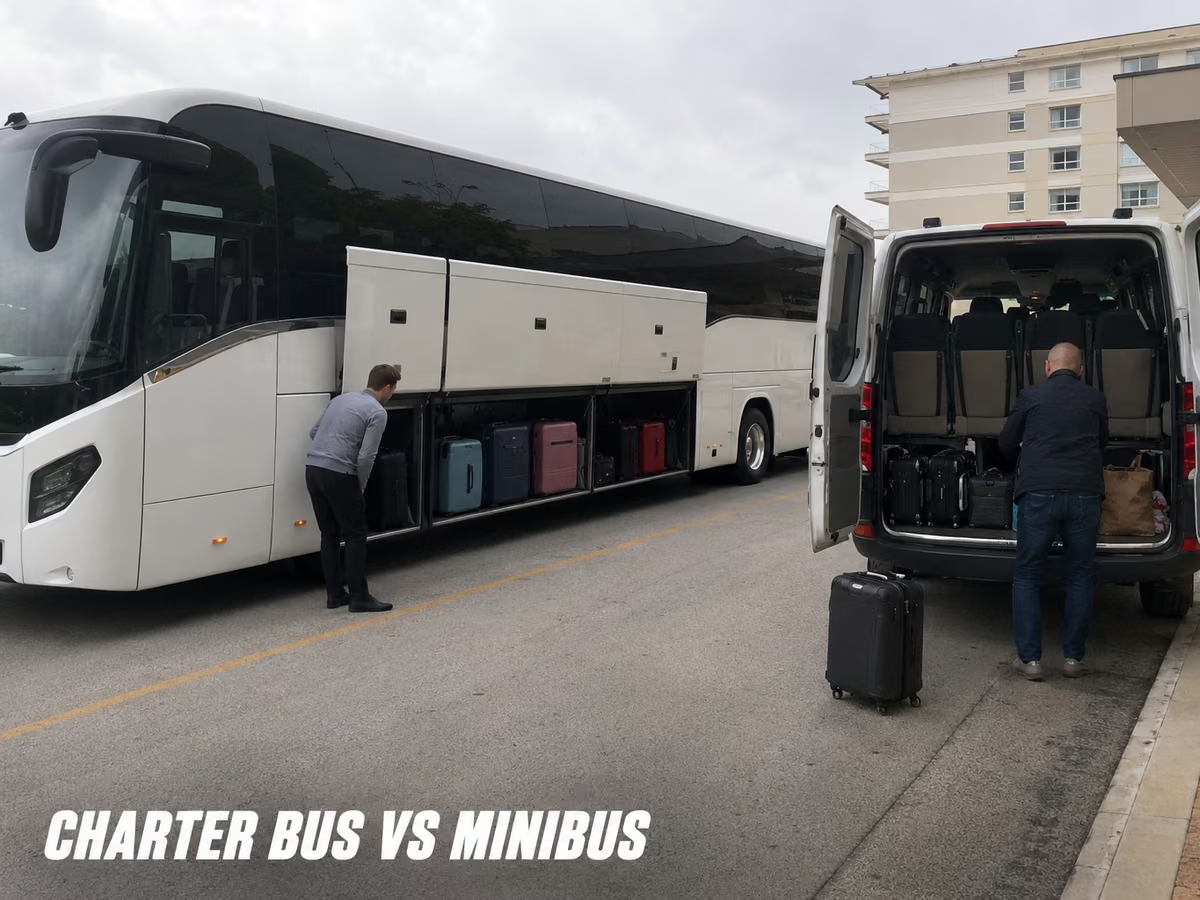
A full-size charter bus is integral: the body and frame are one welded stainless steel structure, engineered from scratch as a bus, with the passenger deck raised over a cargo hold. A minibus is a cutaway: a truck or van chassis from Ford, Chevrolet, Freightliner or Mercedes-Benz rolls off one assembly line, and a separate body company builds a passenger box onto the back of it.
The main body builders you'll encounter:
- Forest River Bus & Van — a Berkshire Hathaway company and the largest shuttle bus manufacturer in North America, which owns Glaval, Starcraft, StarTrans, ElDorado, Champion, Collins, Trans Tech and more. If you ride a hotel or church shuttle in this country, it's probably one of these under a different badge.
- Grech Motors — the high-end end of the market. The GM28 on a Ford E-450, the GM33 on a Ford F600, and the flagship GM40 on a Freightliner S2 chassis.
- Turtle Top and LGE Coachworks — smaller builders working across Sprinter, E-450, F-550 and F600 chassis.
On a Minibus, Seats and Suitcases Compete for the Same Space
There's no raised deck, so there's usually no under-floor bay. Luggage goes in a rear compartment that eats the back row.
Look at how the builders themselves publish it. Grech lists the GM40 as seating 40 passengers with rear luggage, or up to 44 without it, and the GM33 as 27 with rear luggage, up to 31 without. Dealer listings for the Glaval Entourage on a Ford F-550 describe a common "33/29RS" configuration — 33 passengers, or 29 when the rear fold-up seats are folded down for storage.
Four seats or your suitcases. Pick one. On a 56-seat charter bus the question never comes up, because the bags ride under your feet in a separate compartment.
| Full-size charter bus | Cutaway minibus | |
|---|---|---|
| Construction | Integral welded structure, built as a bus | Truck/van chassis + body from a separate builder |
| Luggage | Separate under-floor bays, 280–460 cu ft | Rear compartment that costs you seats |
| Restroom | Standard on most | Rare |
| Maneuvering | 32'10"–47.6 ft turning radius | Far tighter; handles normal streets and lots |
| Best for | Airports, long hauls, big groups with bags | Short hops, shuttle loops, tight urban routes |
Neither is better. A minibus doing eight loops between a hotel block and a reception venue is the smarter, cheaper, more nimble vehicle — and it's the wrong call for twenty-eight people flying in with checked bags. For an introduction to the categories, start with the guide to bus types, or read up on what a minibus actually is and what makes a charter bus different.
Party Buses Aren't Manufactured — They're Converted
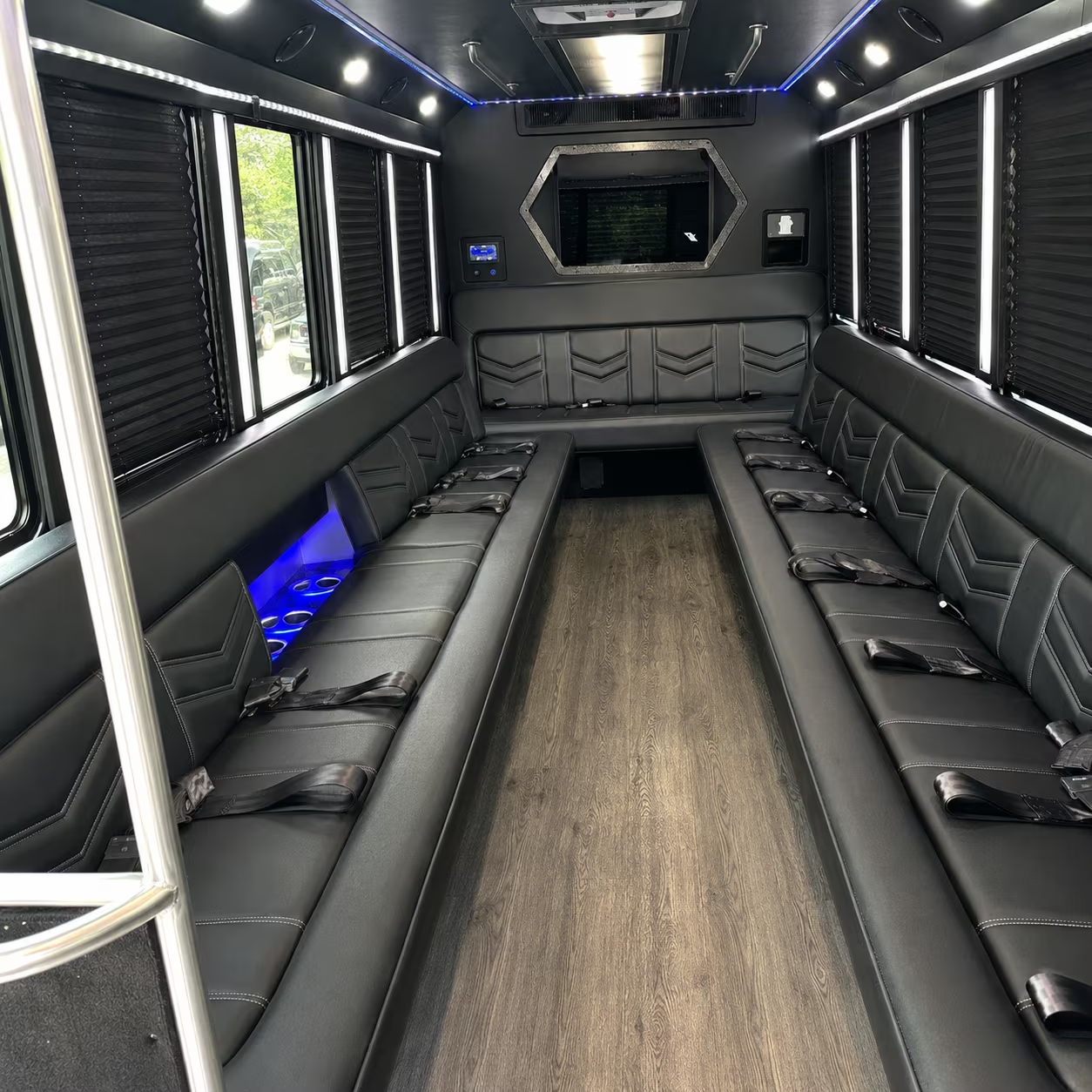
The word "manufacturer" is misleading for party buses. Almost no party bus is built as a party bus from raw materials. A converter buys a commercial chassis — typically a Ford E-450, F-550 or F-650, sometimes a Freightliner, sometimes a Mercedes-Benz Sprinter — and builds the interior: perimeter seating, bar, LED lighting, sound system, flat panels, dance floor.
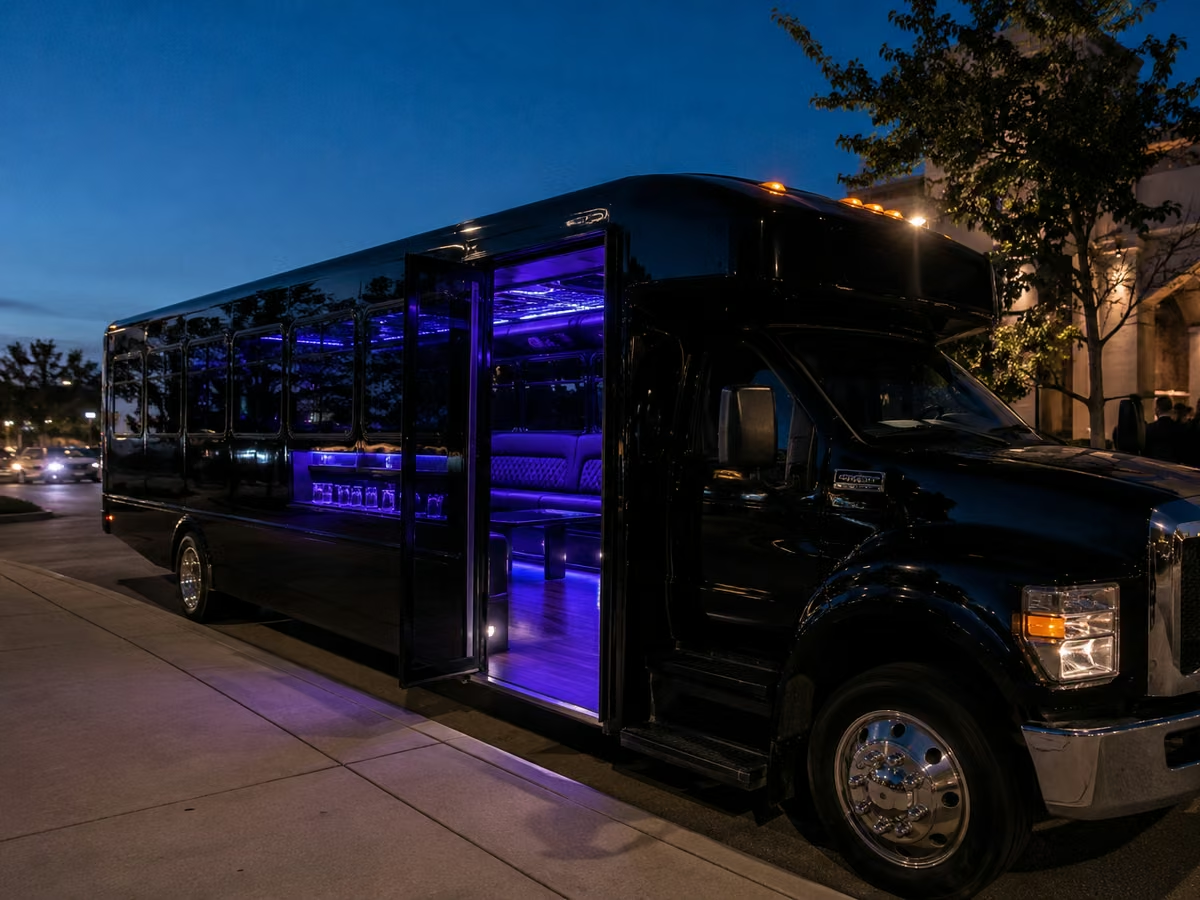
Names in that world include Executive Coach Builders, whose Ford F-550 builds are listed at 27 to 31 passengers, plus LGE Coachworks, Quality Coachworks, and a long tail of custom shops.
So the model name here tells you the chassis and not much else. Two buses on the same F-550 from the same converter in the same year can have completely different interiors, because the interior is the product. Specify what you actually care about: passenger count, whether you want a bar and dance area, sound system, lighting, and how much floor space you want per person.
The party bus manufacturers guide goes deeper on the converters, party bus amenities covers what to ask for inside, and party bus capacity helps you avoid booking a 20-passenger bus for 20 people in formalwear. For smaller groups, 14-passenger Sprinter limos and Sprinter vans come out of that same conversion world — see Sprinter van guide for the feature list.
Mobility Access: What Every Builder Offers and How to Plan for It
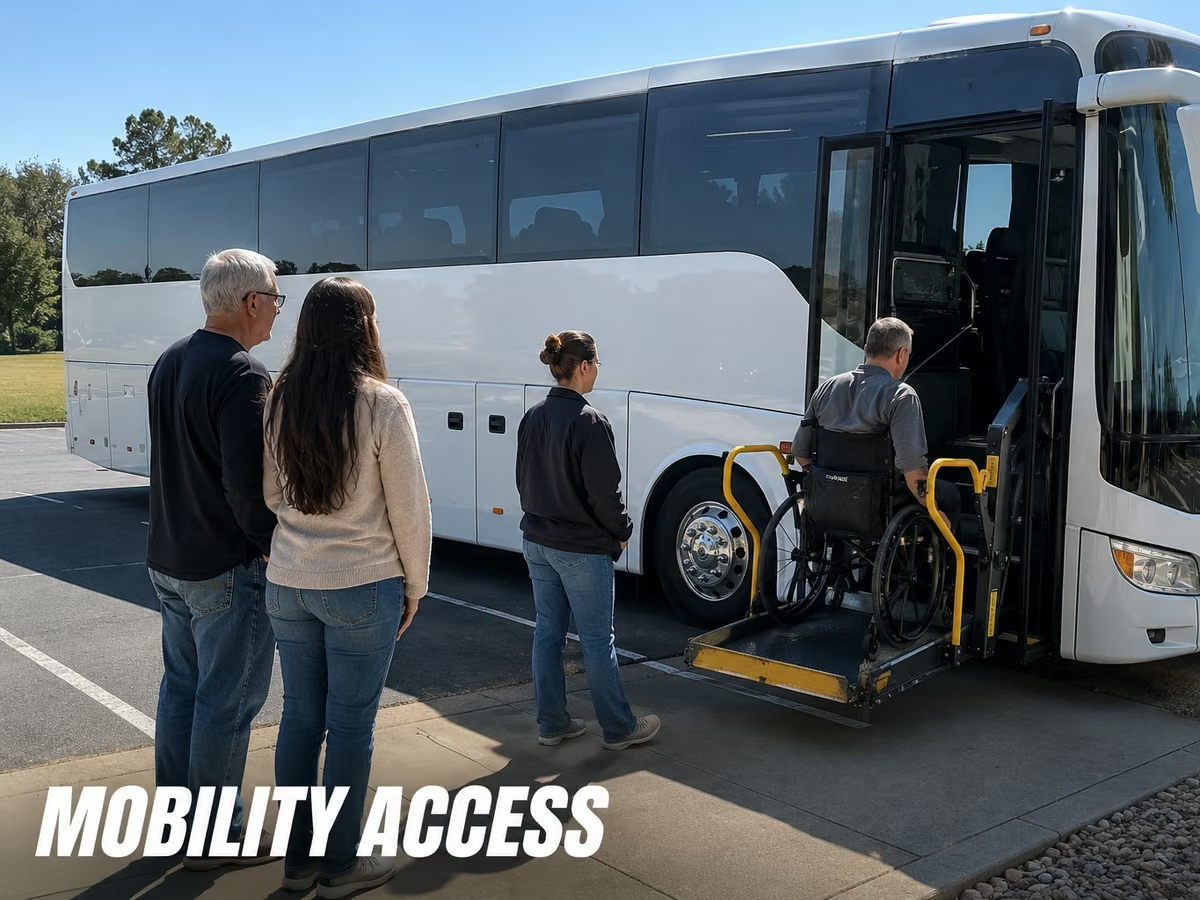
Every full-size builder on this page offers a wheelchair-accessible configuration. Not every bus in a fleet is built that way, though, which makes this a scheduling question as much as an equipment question. Put a wheelchair position in your very first quote request, ideally 48 or more hours ahead.
The approaches differ in ways that affect your luggage:
- Lift on a standard bus. A Prevost H3-45 drops from 460 to 430 cubic feet with a lift fitted; an MCI J4500 goes from 445 to 430. A modest, manageable loss.
- Lift stowed above the drive axle. The Mercedes-Benz Tourrider positions its BraunAbility lift so the luggage compartment isn't compromised.
- Low-entry ramp. The MCI D45 CRT LE gives you the easiest boarding of any full-size bus and 134 cubic feet of luggage. Best experience, smallest hold.
- Double decker. The Van Hool TDX offers an accessible position on the lower deck, with dual doors for faster loading.
Describe the mobility device itself, because that's what determines the match: type of chair or scooter, approximate footprint, weight with the person seated in it, and whether it folds.
Lift platforms on full-size buses are typically built around a footprint in the neighborhood of 30 by 48 inches and a working load around 600 pounds, so a large power chair is a different conversation than a folding manual chair. Then ask two follow-ups: lift or ramp, and how much luggage space is left once it's fitted.
Electric Charter Buses: Real, Available, and Range-Limited
Every major builder now offers a battery-electric model, and they're on American roads today — just in small numbers.
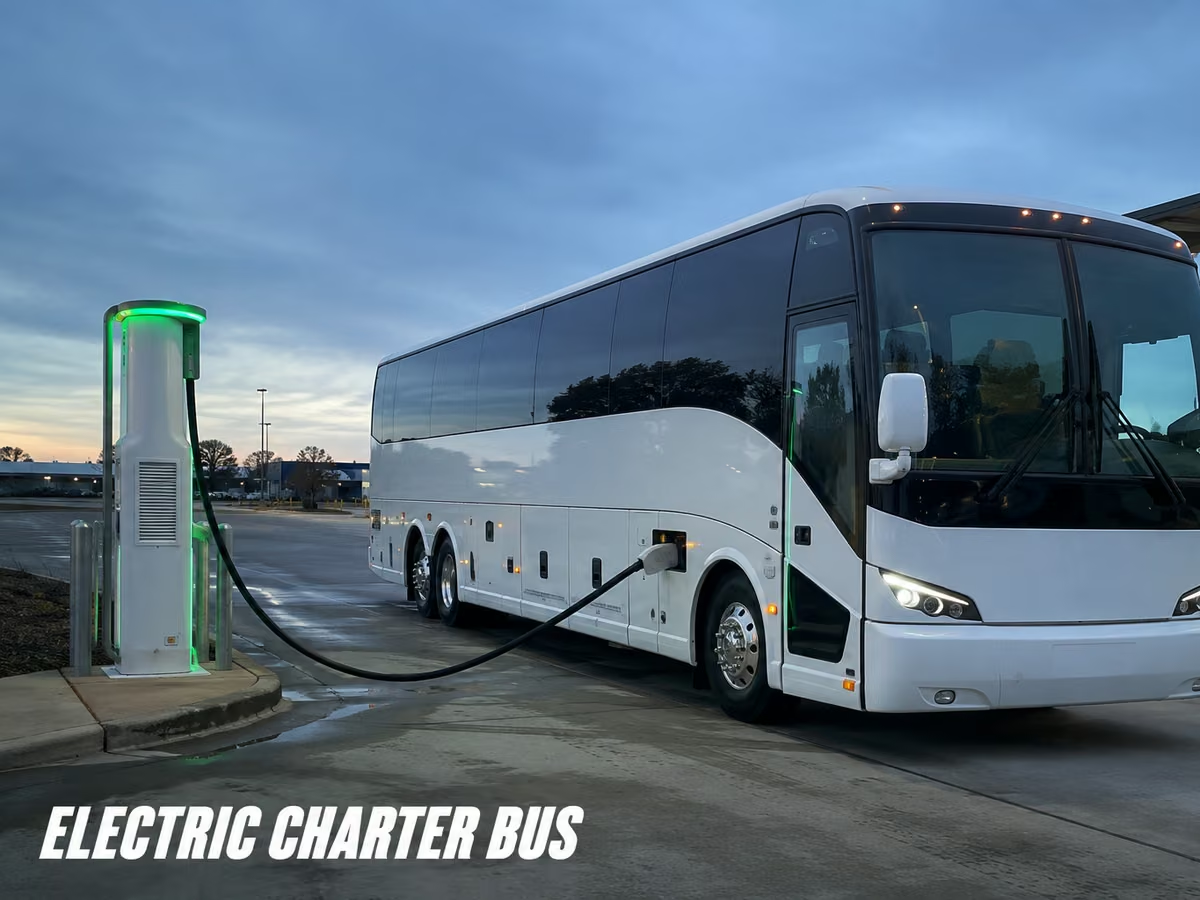
- MCI J4500 CHARGE — a 45-foot, 56-passenger battery-electric version of the best-selling bus in the country. MCI has published a range of over 230 miles on a 544 kWh pack, with the first units delivered to a California Bay Area operator in December 2022.
- Van Hool CX45E — the electric CX platform, launched in the U.S. through ABC Companies.
- Van Hool TDX25E — the world's first all-electric double decker, carrying up to 75 passengers (69 seats — 51 upper deck, 18 lower) on a 676 kWh pack with a stated range of up to 260 miles.
- Temsa TS45E — the electric TS45, published at 56 seats on a 560 kWh pack. At its UMA EXPO launch Temsa put it at 250 miles on a four-hour charge. The pack does cost you luggage, though: Temsa lists 265 cubic feet of hold against 460 on the diesel TS45, so the batteries take roughly 195 cubic feet with them.
An electric bus is excellent for a defined-radius day — hotel shuttles, airport runs, campus loops, conference circuits, city tours. It's a harder fit for a 400-mile one-way haul, because charging has to fit into the schedule somewhere.
If sustainability matters to your organization, say so in the quote request and ask what electric options exist on your date and route. If your itinerary is long-distance, a clean-diesel bus is still the practical answer.
What to Actually Put in Your Quote Request
One honest limit on everything above. A spec sheet describes a vehicle as the factory builds it, and the bus that pulls up is a used one — possibly re-seated, refurbished, or fitted with a lift that took part of the bay. The two Temsa turning figures here come from 2021-dated sheets the builder has since taken offline.
So treat the numbers as the shape of the choice, then confirm the one or two that would strand you.
Forget the brand. Give these seven things and you'll get options that fit instead of options you have to sort through:

- Headcount, and whether it's growing. Fifty-four people is a different bus than fifty-eight. Build in a little room.
- Luggage. "Twelve people with checked bags" or "forty people with a purse each" changes the vehicle entirely. Skip it and you get quoted a bus that fits the people but not the bags.
- Model year, and whether the interior has been refreshed. Worth stating if seat condition or outlets at every seat matter for the occasion. Ask for photos of the actual vehicle.
- Height and access constraints. A hotel canopy, a parking structure, a low railroad bridge on the only road in. Say it up front — an X3-45 clears things an H3-45 doesn't.
- The tightest turn on the route. If your venue has a narrow loop or a residential approach, that pushes you toward a 35-footer or a Temsa TS30.
- Mobility access needs — as early as you can, ideally 48 or more hours ahead, with the device described.
- Restroom, WiFi, power outlets, onboard entertainment. Standard on most full-size buses, rare on minibuses, so ask rather than assume.
One thing you don't need to specify is the badge — rates are driven by vehicle size, total hours, date and demand, and mileage, not by whether the nameplate says MCI or Prevost. For what those rates look like, see the party bus prices page and the charter bus cost breakdown. As a planning anchor, a 40 to 56 passenger charter bus commonly runs about $206 to $327 per hour on a weekday or $1,331 to $2,841 for a full day.
Those are example figures to help you plan, not quotes — the quote moves with your date, hours, mileage and how busy that weekend is.
The badge fixation makes sense once you see where it comes from. A charter bus is one of the few things people book sight-unseen for a day that can't be redone. When you can't inspect the thing, you reach for the name you recognize — a sound instinct, pointed at the only item on the quote that can't tell you whether the bus fits.
Answer those seven and Partybus-rental.net can show you instant online pricing across a large network of bus companies in about a minute — no account required, no obligation. Or call 833-458-7001 and give the same seven answers out loud.
Frequently Asked Questions About Charter Bus Manufacturers
Who are the main charter bus manufacturers in the United States?
Five companies build the full-size charter buses you'll ride in North America: MCI (Motor Coach Industries), owned by NFI Group and built in Winnipeg and Pembina, North Dakota; Prevost, owned by Volvo Buses and built in Sainte-Claire, Quebec; VDL Van Hool, built in Belgium and North Macedonia and distributed here by ABC Companies; Temsa, built in Adana, Turkey; and Mercedes-Benz, whose Tourrider is built in Turkey by Daimler Buses. Minibuses and party buses come from an entirely separate set of body builders and converters.
How do I choose between two buses that are the same size?
Compare four numbers instead of the badges. Height, because it can stop the trip — full-size 45-footers range from 11'2" to 12'2". Turning radius, because it decides whether the bus reaches the entrance or parks on the main road; the spread runs from about 33 feet on a 35-foot model to over 45 feet on some 45-footers.
Luggage volume divided by seats: 7 to 8 cubic feet per seat means a checked bag plus a carry-on each, 3 to 4 means a duffel each. And model year, as a proxy for seat condition, outlets and screens.
What is the difference between a charter bus and a minibus, structurally?
A charter bus is integral — the body and frame are one welded structure engineered as a bus, with the passenger deck raised over dedicated cargo bays. A minibus is a cutaway — a Ford, Chevrolet, Freightliner or Mercedes-Benz chassis with a passenger body built onto it by a separate company like Glaval, Champion, StarTrans or Grech Motors. The practical difference is luggage: a charter bus stores bags under the floor, while a minibus stores them in a rear compartment that costs you seats.
Grech publishes its GM40 as 40 passengers with rear luggage or up to 44 without.
Is Van Hool still in business?
Yes, under new ownership. Van Hool was declared bankrupt on April 8, 2024 by the Commercial Court of Mechelen, and its bus and coach operations were acquired by the Dutch VDL Groep. The company now trades as VDL Van Hool, ABC Companies remains its exclusive North American distributor, and a 2026 CX45 was the centerpiece of ABC's booth at UMA EXPO in February 2026.
Parts and service run through an established U.S. network, so a Van Hool in your quote isn't an orphan vehicle.
What happened to Setra buses?
Setra, the German brand sold in North America since the 1980s, is no longer offered new here. Daimler replaced it with the Mercedes-Benz Tourrider across the 2022–2023 model changeover, and it is sold and serviced through Daimler Coaches North America. (Published accounts differ on the exact production start: Daimler's launch coverage dates serial build to 2022, while other references date the Hoşdere line to 2023.)
Existing Setras are still in service across the country, so you may well ride one — they're simply not being built for this market anymore.
How tall is a charter bus, and will it clear a parking garage?
It varies by more than you'd expect. The Prevost X3-45 is the lowest full-size model at 11 feet 2 inches; the Prevost H3-45 stands 12 feet 2 inches; the double-deck Van Hool TDX reaches 13 feet 1 inch. Most parking structures and hotel canopies won't take any of them, so plan for curbside loading — but if you have a specific clearance to clear, say the number and the right bus can be matched to it.
How much luggage space does a charter bus have per person?
Divide the published bay volume by the seat count. A 56-seat MCI J4500 with 445 cubic feet works out to 7.9 cubic feet per passenger — a large checked bag plus a carry-on each. The double-deck Van Hool TDX drops to 3.4, and a low-entry MCI D45 CRT LE sits at 2.5 because the boarding vestibule takes the bay.
Overhead parcel racks add room for soft bags on most full-size models.
Can I request a specific manufacturer when I book?
You can state a preference, and it's worth mentioning if you have one. Just know that 87.3% of bus companies operate fewer than 25 vehicles, so insisting on one brand narrows your options sharply — often without improving the actual bus. Specifying the model year, luggage requirement, height clearance and access constraints gets you a better outcome than specifying the badge.
Are electric charter buses available to rent?
Yes, in limited numbers. The MCI J4500 CHARGE carries 56 passengers with a published range of over 230 miles, the Van Hool CX45E and Temsa TS45E offer electric 45-footers, and the Van Hool TDX25E is the world's first all-electric double decker at up to 75 passengers and 260 miles of range. They're an excellent fit for shuttle loops, airport runs and city tours within a defined radius.
For long one-way hauls, charging has to be built into the schedule, so clean diesel is usually still the practical pick.
Compare Buses From Every Major Builder in One Place
Partybus-rental.net is a comparison and quote-request website. It isn't a bus company, it doesn't own vehicles, it doesn't employ anyone who takes the wheel, and it doesn't operate trips — and that's the best part, because you're never limited to a single fleet. Instead of calling company after company and waiting on callbacks with quotes that never quite line up, you fill out one quick form and compare vehicle types and online rates from the bus companies and transportation providers serving your area.
Every amount you see is example pricing. Browse the full selection of bus types, look over 40 to 56 passenger charter buses, or read how the rental process works start to finish.
Free quote, no account required, no obligation, any time of day, any day of the year. Call 833-458-7001 or use the online tool and have pricing for your trip in about a minute. Let's get your group on the road.
Specifications on this page come from the manufacturers' own published model pages and specification sheets, cited where they appear. Figures last checked July 2026; builders revise configurations between model years, so confirm the exact specification for the vehicle on your quote. Partybus-rental.net is a comparison and quote-request website — it does not own vehicles and does not provide the transportation itself. Corrections: contact page.