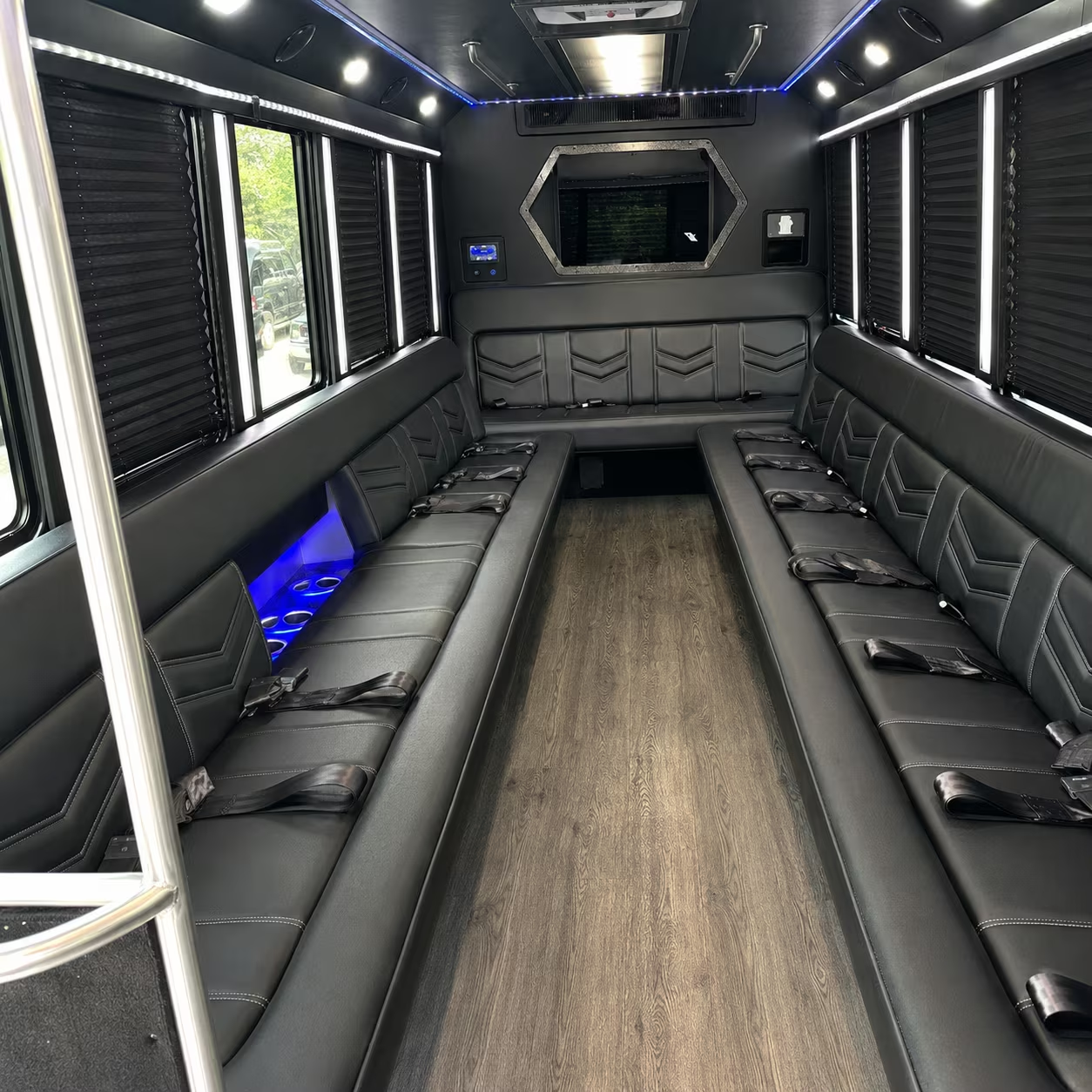
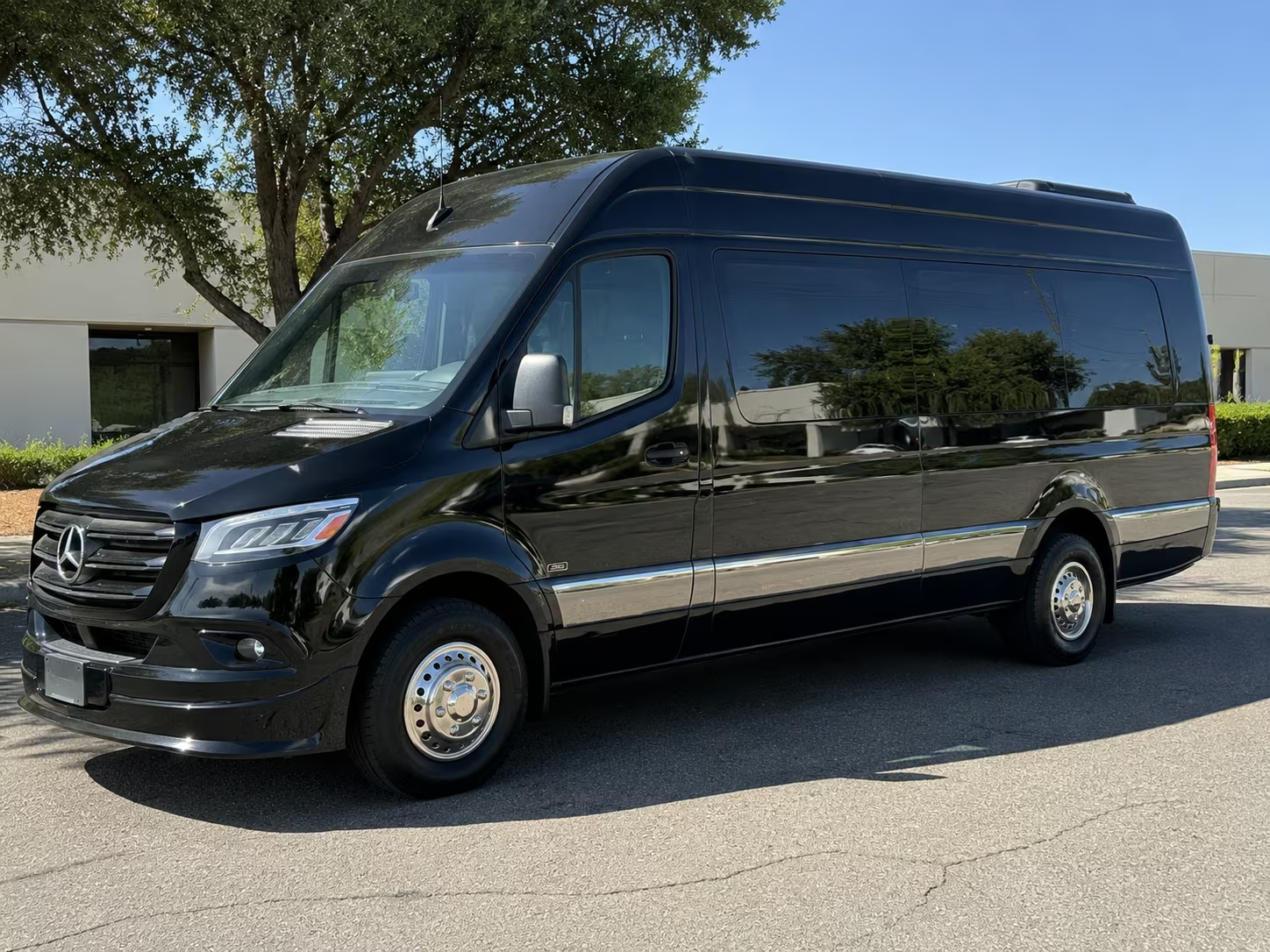
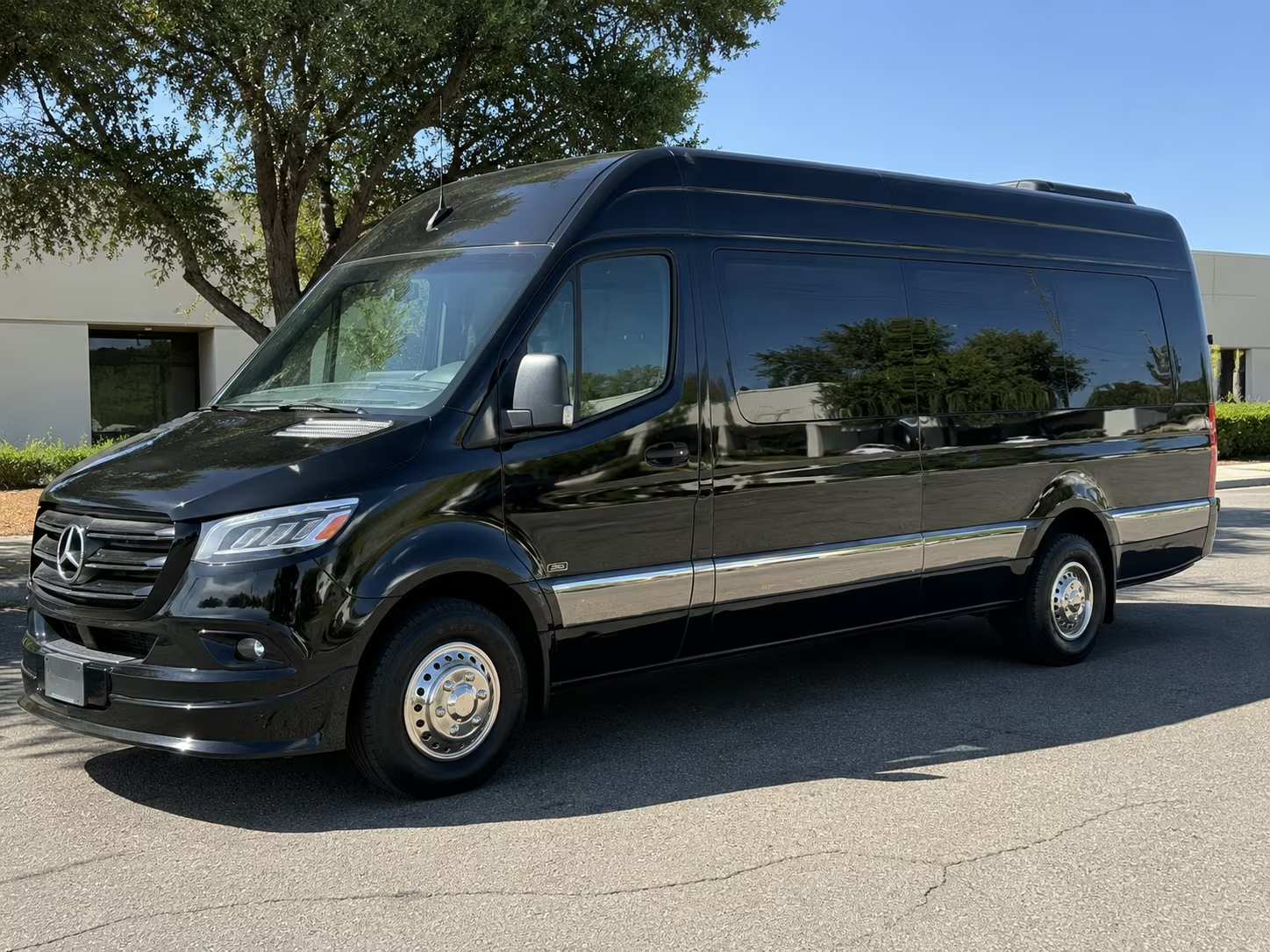
This guide takes a group trip from headcount to booked bus: what size you need, what it costs, where a 45-foot vehicle can actually stop, and how early your date has to be locked.
Most first-time organizers start with the vehicle and the rate. That's reasonable — those are the parts with numbers attached, and they're what every rental site leads with. But group trips almost never go wrong on the rate.
They go wrong in the luggage bay, at the curb, and on the calendar.
Pricing is the quick part. One form or one call to 833-458-7001 puts vehicle options and example rates in front of you in about a minute. The rest of this is what to have settled before you ask.
The Six Decisions, in Order
Everything else is detail.

- Headcount and cargo. How many people, and how much are they carrying?
- Vehicle type. Party bus, charter bus, minibus, or Sprinter.
- Hours. Not stops, hours. From first pickup to last drop.
- The curb. Where the bus loads, where it waits, where it can't go.
- Price. What the number is, and what moves it.
- The date. How early your specific date needs to be locked.
Get those six right and the bus becomes the easiest line item on your whole event. Get the fourth one wrong and your group walks six blocks in the rain.
Step 1: Count Heads, Then Count Cubic Feet
Start with the number of people who said yes, then add the ones who said maybe, because group headcounts almost never shrink. A seat count is a hard ceiling, not a target: a 56-passenger bus seats 56 with every single seat filled, middle-of-the-row included, and nobody wants row 12 for a four-hour ride out to a resort. For a comfortable ride, build in a few empty seats.
For a 20-minute hotel shuttle loop, fill it to the rated number and don't think twice.
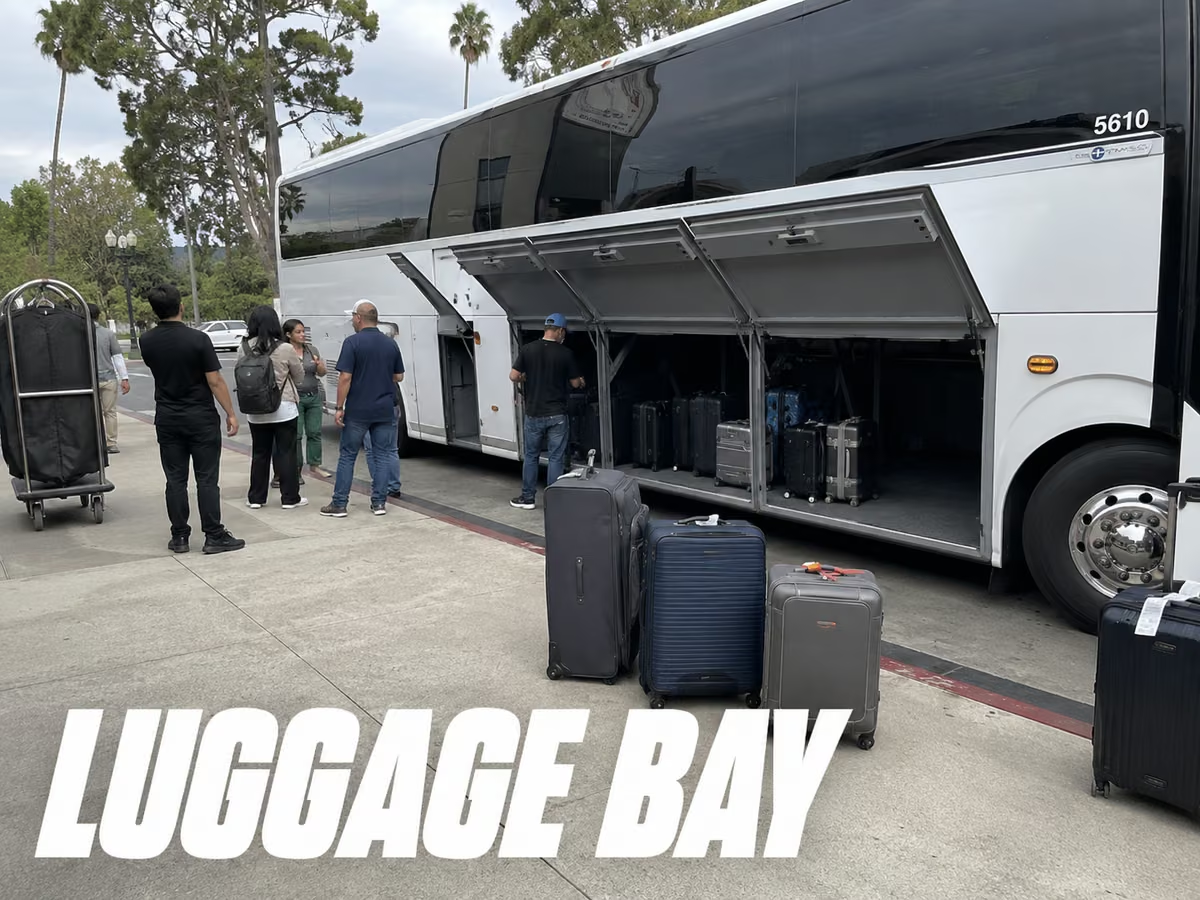
Luggage decides the vehicle more often than headcount does.
Not the seat count. Not the price. Not the amenity list.
And the numbers aren't close. A full-size 45-foot coach carries roughly 430 to 460 cubic feet in the undercarriage bays, depending on model and whether a wheelchair lift is fitted, plus another 117 to 131 cubic feet in the enclosed overhead parcel racks. Step down to a 35-foot coach and underfloor space drops to about 285 cubic feet.
A party bus has no meaningful underfloor bay at all, because that volume goes to the interior instead.
The suitcase math nobody does until it's too late. A standard 27-inch checked bag takes up roughly 4 to 5 cubic feet. Forty people flying in with one checked bag each is about 160 to 200 cubic feet of luggage.
That disappears into a full-size charter bus rental and does not fit on a party bus in any arrangement. If your group is coming off a plane, the bay is the whole decision.
Same logic for anything else the group hauls: instrument cases, uniform bins, trade show pop-ups, banners, team gear, wedding decor. Count it before you count seats. Not sure how the capacities line up?
The charter bus seating capacity breakdown and the guide to party bus capacity lay out every size side by side.
Write it down in units, not adjectives: "38 checked bags plus two garment racks" produces the right vehicle on the first pass, while "some luggage" means nothing to a dispatcher.
Step 2: Pick the Bus Type That Matches the Trip
Four families of vehicle cover nearly every group trip in the country, and they're genuinely different tools. Pick on price alone and you find out at the curb.

| Vehicle | Typical seats | Cargo space | Best fit | Inside |
|---|---|---|---|---|
| Sprinter van and 14-passenger Sprinter limo | Up to about 14 | Modest rear space, a few bags | Executive transfers, small bridal parties, VIP runs, tight city streets | Premium leather, USB charging at the seats, tinted privacy glass |
| Party bus, 15 to 50 passengers | 15 to 50 | Onboard only, keep it light | Nights out, bachelorette runs, prom, birthdays, brewery and winery loops | Wraparound perimeter seating, color-changing LED lighting, Bluetooth sound, flat-panel TVs, dance floor space, bar area |
| Minibus, 15 to 35 passengers | 15 to 35 | Overhead plus some rear or underfloor | Hotel-to-venue shuttle loops, campus and downtown hops, mid-size corporate groups | Powerful A/C, plush reclining seats, easier maneuvering on narrow streets |
| Charter bus, 40 to 56 passengers | Up to 56 | Excellent, deep undercarriage bays plus overhead racks | Airport arrivals, long hauls, conventions, school groups, large fan travel | Reclining seats, climate control, WiFi, power outlets, onboard restroom, overhead storage |
Two things to keep in your pocket. A party bus and a charter bus of the same passenger count aren't interchangeable: one is built around the ride, the other around the destination. And going bigger beats going twice — two 28-passenger vehicles cost more than one 56-seat charter bus in almost every case, and they double your coordination problem at every stop.
If you're still deciding, the full bus types guide compares every category, and what a party bus actually is and what a charter bus actually is cover the two most commonly confused ones. There are matching explainers for a minibus and a Sprinter van.
Ask for an exact size rather than a range, because a group of 22 on a vehicle rated for 20 is a long night. The pages for the 15-passenger party bus, 18-passenger, 20-passenger, 25-passenger, 28-passenger, 30-passenger, 40-passenger, and 50-passenger versions show what a longer floor buys: more perimeter seating, a bigger bar area, another TV, and a wheelbase that needs more room at the curb.
Amenities vary by vehicle, so name the ones that matter to you when you request pricing. Restroom onboard, WiFi, power at every seat, a PA system for a group leader, a wheelchair lift: all of it is available, none of it is on every bus. Detail pages for charter bus amenities, party bus amenities spell out what's typical for each.
Browse the full lineup of bus types to see them all in one place.
Step 3: Build the Itinerary in Hours, Not Stops
You reserve the vehicle from first pickup to last drop-off. The hours in the middle are yours whether the bus is rolling or staged around the corner waiting for the ceremony to end.
A planning figure for your own itinerary. Minimums, and whether the clock starts at your pickup or when the vehicle leaves its base, vary by company — ask which applies.
So the schedule you write is the quote you get. Write it with real times, not intentions:
- First pickup. Exact street address and time. "The hotel" is not an address when there are three of them downtown.
- Every stop in between. Where, and how long the group is inside.
- Final drop-off. Same address as pickup, or somewhere else entirely?
- Dead time. The three hours the vehicle sits during the game, the wedding, the tour, the meeting.
- Trip shape. One-way, round-trip, a continuous shuttle loop, or multiple days.
That last one matters more than people expect. A one-way run to a cruise port prices differently from a round-trip, and a hotel-to-venue shuttle running a loop every 20 minutes for five hours is a different animal from a single point-to-point transfer. A pickup two hours outside a metro area also prices differently from one downtown, simply because of where the vehicle starts and ends its day.
Two padding rules. Add 15 minutes to every load and unload, because 40 people with bags don't board in five, and add a cushion to the longest leg. A schedule that only works when nothing goes wrong doesn't work.
Decide accessibility early. A lift is a specific piece of equipment, not a switch flipped at the curb, and fewer vehicles are configured for one. Ask for a wheelchair position when you request pricing, 48 hours or more ahead and earlier on peak dates.
A lift also costs a row or two of seats.
Step 4: Solve the Curb Problem Before You Book
Where a bus can physically stop is the detail most first-time renters overlook. A full-size charter bus is roughly 45 feet long, about 8.5 feet wide, and about 12 feet tall per the published specs from builders like MCI's J-Series lineup and the Prevost H3-45. Those three numbers decide where your group gets on and off, and they rule out places most planners assume are fine.

Parking Garages Are Out
Garage clearances commonly run about 6 to 7 feet, and the tallest bar you'll find on a city deck is usually posted between 7 and 8 feet. Nothing in that range clears 12. Not the hotel garage.
Not the arena deck. Not the office tower under your conference.
So the bus loads at street level: a marked bus loading zone, a surface lot with an open entrance, a designated bus area at the venue, or a stretch of curb the venue points you to. That spot has to be identified in advance, which means one phone call to the venue's parking office before your date, asking exactly two questions: where does an oversized vehicle unload, and where does it wait? Write the answers into your itinerary, including which side of the building the bus entrance is on.
Better to learn that on a Tuesday than at 6:15 on Saturday with 44 people in formalwear behind you.
Venues Often Sell a Separate Bus Parking Pass
Stadiums, arenas, theme parks, and convention centers frequently sell oversized-vehicle parking separately from car parking, in advance, through the event ticket office rather than at the gate. Plan on somewhere in the $100 to $350 per vehicle range depending on the event, and bus spaces can sell out before game day. Check the venue's official parking page as soon as your date is set.
It's an easy line item to miss, and one webpage rules it out.
Airports Run on Holding Lots, Not Curbs
Commercial buses at large airports don't idle at arrivals. They stage in a holding lot and get summoned when your group is physically ready. Denver International runs it like this: the group coordinator calls the airport's ground transportation number once the group is ready for pickup, or asks an agent at the Ground Transportation Information Counter to call the bus in from the holding lot, and the bus meets the group on Jeppesen Terminal Level 5.
Most large airports work the same way, so get the pickup point and call-in number for yours into the itinerary.
Gather first, call second. Don't call for the bus when the plane lands. Call when the last bag is off the belt and the last person is standing with the group at the agreed door.
Airport traffic officers move vehicles along, and a bus that arrives early gets sent around the loop. Name one person as the caller, and pick a real landmark rather than "by the escalators." Planning airport runs specifically?
The airport transportation page covers arrivals, departures, and multi-flight groups.
Tight Streets, Low Bridges, and Why the Phone Route Is Wrong
A 45-foot vehicle needs room to turn, and a 35-foot coach gets into corners its bigger sibling can't. That's why residential pickups in cul-de-sacs, alleys, and narrow historic districts are worth rethinking: name a nearby wide lot as the meeting point instead, a school, a church, a shopping center with the manager's okay, and everyone walks 90 seconds instead of watching a 45-foot coach try a three-point turn.
Oversized vehicles are kept off some roads entirely, low overpasses force detours, and plenty of downtowns funnel anything bus-sized onto a handful of truck-friendly streets. The route a bus takes isn't the route your phone would give a car, so build a cushion into your departure time rather than trusting the drive time you looked up on a Tuesday afternoon. Two things matter more than distance: whether a stop sits behind a gate or a height bar, and whether there are street closures that day.
Dense downtowns have their own quirks here, covered on the city pages for New York, Boston, and San Francisco.
Step 5: What a Bus Actually Costs
Hourly rates cluster tighter than most people expect. Nationally, nearly everything lands between $200 and $490 an hour, and a 56-seat coach often bills less per hour than a 25-passenger party bus.

| Vehicle | Example hourly range | Example full-day range |
|---|---|---|
| Sprinter van, 12 to 15 passengers | $203 to $273 | Varies by itinerary |
| Sprinter limo, 14 passengers | $204 to $318 | Varies by itinerary |
| Party bus, 15 to 20 passengers | $204 to $338 | Varies by itinerary |
| Party bus, 25 to 30 passengers | $248 to $374 | Varies by itinerary |
| Party bus, 40 to 50 passengers | $294 to $441 | Varies by itinerary |
| Minibus, 15 to 35 passengers | $207 to $246 | $1,098 to $2,105 |
| Charter bus, 40 to 56 passengers | $206 to $327 | $1,331 to $2,841 |
Those are example figures to help you plan, not quotes — the quote moves with your date, hours, mileage and how busy that weekend is. The good news is you don't have to guess: the quote tool on this website returns pricing and vehicle options in about a minute, with no account required, or you can call 833-458-7001 any day of the year and get a number for your exact trip.
Five inputs, four of them yours to set:
- Vehicle size. A 56-seat charter bus and a 20-passenger party bus are different rates for reasons that have nothing to do with headcount.
- Total hours. Including the hours the vehicle spends staged and waiting.
- Mileage and route. Across town, across the state, or a multi-day run.
- Date and season. A Saturday in October and a Tuesday in February are not the same market.
- Lead time. Covered in the next section, and it's the one that swings hardest.
Two mechanics matter before you set numbers side by side. Most companies price against a minimum block rather than the exact hour, commonly three hours on a party bus and around four on shuttle work. And quotes arrive in different shapes: some stated as one total, others breaking out mileage or fuel.
Ask for the number that includes everything.
Run the per-person number before you decide it's expensive. A 50-guest wedding shuttle on a 5-hour block at $1,500 works out to $30 a head, round trip, with everyone arriving at the same moment and nobody hunting for a parking spot in formalwear. Thirteen cars doing the same job means thirteen parking spaces, thirteen tanks of gas, and thirteen people who can't relax at their friend's wedding.
One vehicle, one number, one arrival.
The per-person math cuts the other way too, and it's worth saying plainly: below about 14 people, a bus is usually the wrong buy. Two cars beat a Sprinter on a short one-way, and nobody needs a bar area for a 20-minute run to a restaurant. The number only turns in a bus's favor when the group is big enough, the hours are long enough, or the parking at the other end is bad enough to be its own event.
For deeper cost breakdowns by vehicle, the party bus prices page has current ranges, and the charter bus cost guide and party bus cost guide go line by line.
Step 6: Book Early, Because the Fleet Is Smaller Than It Looks
"Book early" usually means nothing. Here it has a supply number behind it. The American Bus Association Foundation's 2025 Motorcoach Census counts about 50,968 motorcoaches operating across the U.S. and Canada, up 4.7% year over year, and reports that 87.3% of companies operate fewer than 25 vehicles.
On a peak Saturday, a company with 12 coaches is fully committed by early spring, and the vehicles left are the ones that don't quite match your group.

Now layer the calendar on top. The Knot Worldwide's 2026 Real Weddings Study found about 2 million U.S. couples married in 2025 with an average guest count of 117, and The Knot's wedding season data puts October in a tie with June as the most popular month, at 16% of weddings each. Do the transportation math on the average wedding alone: 117 guests is more than two full 56-passenger coaches, or three mid-size vehicles, on a Saturday in October, in the same metro as every other October wedding.
An October Saturday is the hardest date on the calendar to put a large vehicle on. Worth an asterisk: those figures report what couples spent and when they married, not vehicle availability, so treat October as the crowd, not a booking rule.
| Trip type | Book this far ahead | What's competing with you |
|---|---|---|
| Wedding shuttle, peak months | 6 to 12 months | May, June, September, and October Saturdays draw the heaviest wedding volume of the year |
| Prom | By December | Whole metro areas hold prom inside the same 6-week April to May window |
| Graduation and end-of-year school trips | 4 to 6 months | May and June compete with weddings and field trips at once |
| Conventions and citywide corporate events | 3 to 6 months | One convention can absorb dozens of vehicles in a single market |
| Football and playoff travel | 2 to 3 months | Fall Saturdays and Sundays, plus every rival fan group on the same route |
| Holiday party season | 2 to 3 months | December Fridays and Saturdays book out faster than any other winter dates |
| Airport transfers, off-peak weekdays | 2 to 4 weeks | Usually the easiest ask on the calendar |
On a peak prom or wedding weekend, the same vehicle booked four months out and booked two weeks out can differ by hundreds of dollars. On the tightest dates the question stops being price and becomes what's still open at all. If your date is set, get pricing now — it takes about a minute and costs nothing to know.
How to Get Bus Rental Pricing in About a Minute
Getting pricing is the easy part. Partybus-rental.net is a comparison and quote-request website, not a bus company. It doesn't own vehicles, it doesn't employ anyone who operates them, and it doesn't run trips.
What it does is put options in front of you fast. You fill out one short form or make one call, then compare vehicles and example rates from a large network of bus companies and transportation providers serving your area — instead of phoning company after company, describing your trip six times, and waiting on callbacks with numbers that never line up. No account, no waiting for business hours.

Have these six things ready and the whole thing takes about a minute:
- Date and, if you have it, the backup date.
- Headcount, including the maybes.
- Pickup address and time.
- Drop-off address, plus any stops in between.
- Total hours you'll need the vehicle, waiting time included.
- Anything special: luggage volume, a restroom onboard, WiFi, a lift, a specific vehicle color for a wedding or quinceañera.
That's it. Compare what comes back, pick what fits, and check transportation off the list. If you'd rather talk it through, the phone line is answered every day of the year, and a support team can walk you through sizes, options, and packages, including one-ways, round-trips, and multi-day itineraries.
More on how it all works on the FAQ page and the about page.
Types of Trips Groups Rent Buses For
The basics are the same no matter who's on board. The wrinkles aren't:
- Weddings. The shuttle isn't for the couple, it's for the 117 guests who don't know the area. Hotel block to ceremony to reception to hotel block, with the return loop timed to the end of the reception rather than an optimistic guess.
- Corporate events and employee shuttles. Convention centers and hotel blocks run on loops, not single trips. One vehicle circulating on a fixed 20-minute cycle beats a dozen rideshares arriving out of order.
- School trips and field trips. Overhead bins for backpacks and lunches, underfloor bays for equipment, and a PA system so a group leader can talk to 50 students at once.
- Sporting events. Where the venue's oversized-vehicle pass matters most, and where a bus turns the worst part of the day, the post-game exit, into somebody else's problem.
- Concerts and festivals. Street closures start hours before doors at large venues, so the approach route and the pickup point get agreed before the group ever splits up.
- Bachelor and bachelorette parties. Multiple stops, late hours, and nobody has to skip the party to get everyone home.
- Prom and homecoming. The most compressed booking season on this list, and the one where December is not too early.
- Birthdays, Sweet 16s, and quinceañeras. Vehicle color and photo-worthy arrivals matter here in a way they don't anywhere else, so ask.
- Winery tours and brewery crawls. Rural tasting rooms often have gravel lots and tight entrances, so confirm oversized access at each stop while you're building the itinerary.
- Family reunions and private events. Multiple pickup points in one metro, one arrival time, zero caravans.
Running several of these at once, or moving a group across multiple days? The group transportation services page covers multi-vehicle and multi-stop planning, and the service area page shows where you can get pricing.
Six Mistakes That Cost Groups Money
- Booking seats for the RSVP list instead of the actual list. Headcounts grow. A vehicle one size up costs less than a second vehicle.
- Forgetting the luggage. The classic. A party bus is the wrong call for an airport arrival no matter how good the night before was.
- Quoting stops instead of hours. If the vehicle waits three hours at the ceremony, those hours are part of the trip whether or not you wrote them down.
- Assuming the hotel or venue has bus parking. Two questions to their parking office solves this permanently: where does it unload, and where does it wait?
- Calling for the airport pickup too early. Gather the group and the bags first. Then call.
- Waiting on a peak date. October Saturdays, prom season, and December Fridays don't get cheaper or easier as they approach.
All six come from the same place. People plan a bus like it's a bigger car — park it in the garage, take the route the phone gives, book it the week of, add a seat if someone else says yes. None of that transfers, and the six mistakes are just that one assumption showing up in six costumes.
Send This to Everyone Riding
Six lines to put in the group text, filled in with your own details:
- Bus leaves: the exact time, sharp, from the exact street address. Not "the hotel" when there are three of them downtown.
- Where to stand: the loading zone, lot, or door the venue gave you, and a reminder to look for the bus at street level, since it can't come into the garage.
- Bags: whether checked bags go under the bus, or whether it's lap-only.
- Return pickup: the time, and whether it's the same spot or a different one.
- If you get separated: one name and one phone number.
- Do not: plan on running back to the bus mid-event unless the itinerary says the vehicle stays on site.
Send it twice: when you book, and the morning of.
Frequently Asked Questions About Renting a Bus
How much does it cost to rent a bus?
Bus rental prices depend on vehicle size, total hours, mileage, and your date. As a planning range: Sprinter vans $203 to $273 per hour, 14-passenger Sprinter limos $204 to $318, 15 to 20 passenger party buses $204 to $338, 25 to 30 passenger party buses $248 to $374, 40 to 50 passenger party buses $294 to $441, 15 to 35 passenger minibuses $207 to $246 per hour or $1,098 to $2,105 per day, and 40 to 56 passenger charter buses $206 to $327 per hour or $1,331 to $2,841 per day. Those are example figures to help you plan, not quotes — the quote moves with your date, hours, mileage and how busy that weekend is.
How far in advance should I rent a bus?
For peak-season weddings, six to twelve months. For prom, by December. For graduations and big school trips, four to six months.
For fall football weekends and December holiday parties, two to three months. For an ordinary weekday airport transfer, two to four weeks is usually workable. The reason is supply: the U.S. and Canadian motorcoach fleet numbers around 51,000 vehicles and most companies run fewer than 25, so peak Saturdays fill from the top down.
What size bus do I need for my group?
Start with your real headcount, add the maybes, then check cargo. Up to 14 people with light bags fits a Sprinter van or Sprinter limo. Fifteen to 35 is minibus territory and works well for shuttle loops.
Fifteen to 50 for a night out points to a party bus. Forty to 56 people, or any group with checked luggage or equipment, means a full-size charter bus rental with undercarriage bays.
How much luggage fits under a charter bus?
A 45-foot coach carries roughly 430 to 460 cubic feet in the undercarriage bays plus another 117 to 131 cubic feet in the overhead parcel racks, depending on the model and whether a wheelchair lift is fitted. A 35-foot coach drops to around 285 cubic feet underfloor. A standard checked suitcase is about 4 to 5 cubic feet, so a full-size bus holds a 50-person group's checked bags without trouble.
Can a party bus carry luggage?
Not much. Party buses trade the underfloor bays for interior space, so plan on what fits at people's feet and in their laps. For an airport run, a wedding weekend with suitcases, or a team trip with gear, book a charter bus or minibus instead and use the party bus for the night out.
Where does the bus park while we're at the event?
Never in a parking garage. A full-size bus stands about 12 feet tall while garage clearances commonly run about 6 to 7 feet, so it loads and waits at street level: a marked bus loading zone, a surface lot, or a designated oversized-vehicle area at the venue. Many stadiums, arenas, and convention centers sell a separate bus parking pass in advance, often $100 to $350 depending on the event, so check the venue's official parking page as soon as your date is set.
Can the bus wait for us during the event?
Yes. The vehicle is reserved as a block of hours, so it can drop your group, hold luggage and gear, stage nearby, and be at the door for an agreed pickup time. Just make sure those waiting hours are written into the itinerary you submit, because they're part of the trip.
How does a bus pick up my group at the airport?
Commercial buses wait in an airport holding lot rather than idling at arrivals. Once your whole group has cleared baggage claim and is standing together at the agreed door, the group coordinator makes the call and the bus comes to the designated commercial pickup area. At Denver International, for example, that pickup happens at Jeppesen Terminal Level 5 after someone calls the bus in from the holding lot.
Gather first, call second.
Can I rent a bus for a one-way trip?
Yes. One-ways, round-trips, continuous shuttle loops, and multi-day itineraries are all standard requests. They price differently from one another, so say which one you need in your quote request rather than adding it later.
Are wheelchair-accessible buses available?
Yes, accessible vehicles with lifts can be requested. Ask for a wheelchair position in your quote request 48 hours or more before departure, and further ahead on peak dates, since fewer vehicles are configured for it and a lift usually costs a row or two of seats.
Do I need to plan the route myself?
No, and you shouldn't. Oversized vehicles are kept off some roads entirely, and low overpasses and truck-route patterns shape the approach in cities nationwide. Your job is the addresses and the times.
Just build a cushion into the schedule, because the route a bus takes is rarely the one your phone would give a car.
Is it cheaper to rent one big bus or two small ones?
One big one, nearly. Two 28-passenger vehicles typically cost more than a single 56-passenger charter bus, and they double the coordination at every pickup, every stop, and every departure. Size up before you multiply.
Does Partybus-rental.net own the buses?
No, and that's the best part. This is a comparison and quote-request website that lets you compare vehicles and example rates from a large network of bus companies serving your area, which means you're never limited to a single fleet. One form or one call, then options, pictures, and pricing in one place.
What information do I need to get a quote?
Date, headcount, pickup address and time, drop-off address, total hours, and anything special like luggage volume, an onboard restroom, WiFi, or a lift. That's enough for pricing in about a minute. No account required, no obligation.
Get Your Bus Rental Pricing Today
Renting a bus is six decisions and about a minute of typing. Headcount, vehicle, hours, curb, price, date, and you're done, with one arrival instead of fourteen and one number instead of a spreadsheet of gas money. Fill out the quick quote form to compare party buses, charter buses, minibuses, Sprinter vans, and Sprinter limos for your date, or call 833-458-7001 any time, any day, for a free price quote with no account required and no obligation.
Questions first? Get them answered before you commit to anything.
Specifications on this page come from the manufacturers' own published model pages and specification sheets, cited where they appear. Figures last checked July 2026; builders revise configurations between model years, so confirm the exact specification for the vehicle on your quote. Partybus-rental.net is a comparison and quote-request website — it does not own vehicles and does not provide the transportation itself. Displayed amounts are example pricing. Corrections: contact page.