Every party bus listing advertises the same five features: LED lights, sound system, bar, TVs, tinted windows. All five are real. But the spec that decides how a packed cabin feels in hour four is the one that almost never appears: the air conditioning rating.
Builders publish it anyway. A Sprinter build seating 13 riders carries a 65,000 BTU system; a 40-passenger Freightliner build carries 190,000 BTU. Divide either number by the headcount and you know more about August than the whole feature list tells you.
This guide takes the amenities one at a time, each documented on the coachbuilders' own spec sheets: what it is, which chassis carries it, what it costs you in seats or floor space, and the question that confirms it in a quote request. Partybus-rental.net makes it easy to compare party buses, minibuses, charter buses, Sprinter vans, and Sprinter limos side by side, with rates online in about a minute and no account required. Call 833-458-7001 any time, any day.
The Same Label Sits on Four Very Different Buses
"Party bus" isn't a vehicle class. It's a label applied to four different engineering foundations, and the foundation underneath drives every amenity you care about.
| Base chassis | Typical capacity | Typical length | What it's good at | What it gives up |
|---|---|---|---|---|
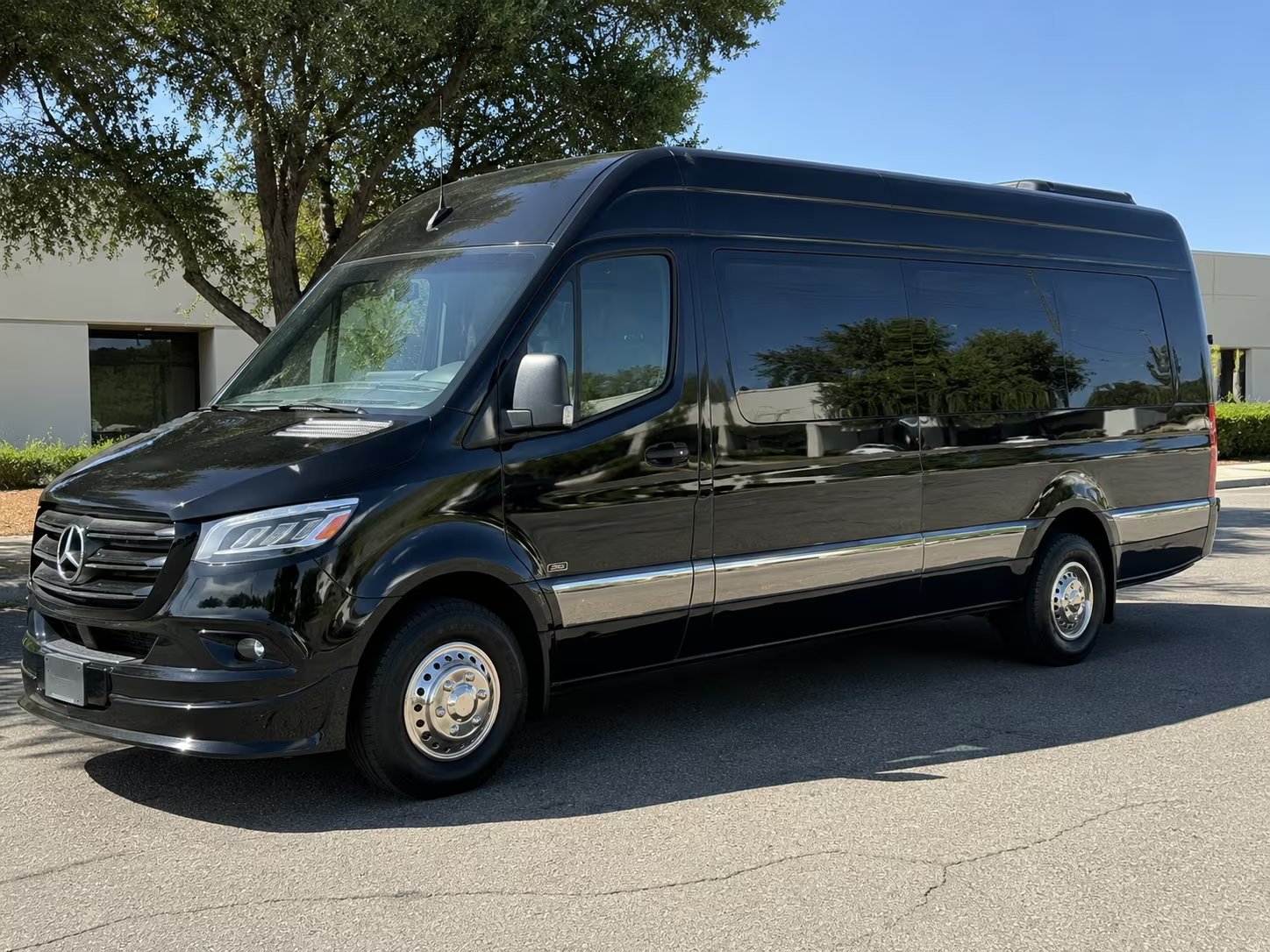
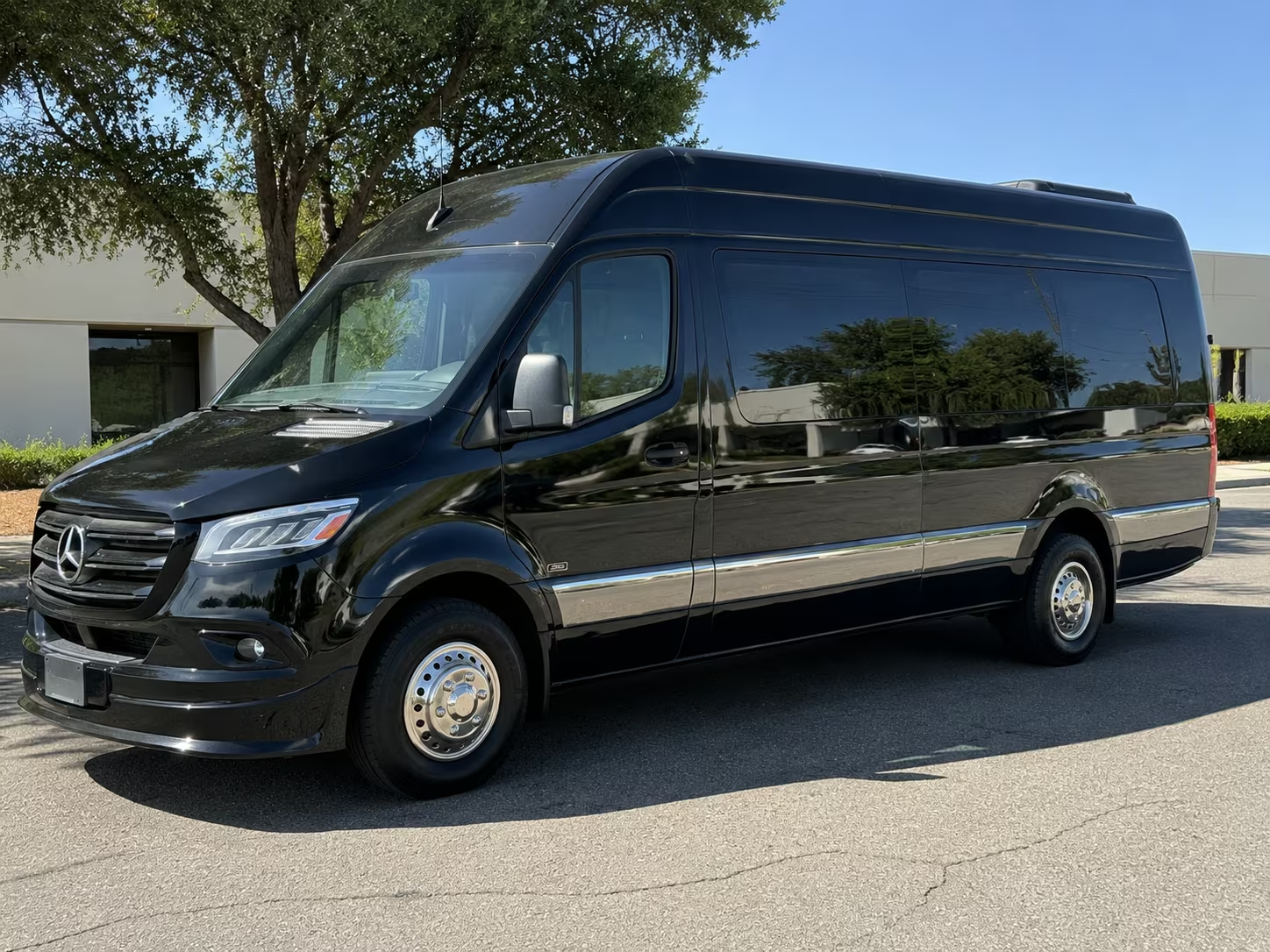
| Mercedes-Benz Sprinter | Up to 14–16 | 170" extended, high roof | Tight streets, hotel porte-cocheres, small-group lounge feel | Standing room, big screens, luggage bays, restroom |
| Ford F550 cutaway | 27–31 | 31 to 37 feet | The volume sweet spot for mid-size groups | Coach-class ride and storage |
| Ford F600 cutaway | 28–40 | 33 to 40 feet | Bigger cabin, heavier HVAC, optional restroom packages | Maneuverability in dense downtowns |
| Freightliner S2 / M2 | 37–50 | Coach-scale | Largest bars, most screens, air-ride, heaviest cooling | Access to narrow venue approaches |
Two buses both listed as "30-passenger party buses" can be a 33-foot F550 and a 38-foot F600 with roughly a 50,000 BTU difference in cooling capacity between them. So the first question in your quote request isn't "do you have a party bus." It's "what's the chassis and passenger count on the specific vehicle."
Not the class. Not the photo. The unit.
The party bus manufacturers overview covers who builds on what.
Every Amenity Is Comfort, Entertainment, or Utility
Knowing which bucket you're shopping in keeps you from paying for the wrong thing.
- Comfort. Seating layout, climate capacity, ride quality, entry step. This is what your group feels in hours two through six, and it's the bucket people underweight most.
- Entertainment. Lighting, sound, screens, dance space. This is what people book for and what shows up in the photos.
- Utility. Power outlets, connectivity, luggage, restroom, wheelchair access. Boring on a listing page, decisive on a long run.
A bachelorette night through downtown weights entertainment. A five-hour run to an out-of-state game weights utility. A wedding shuttle looping hotel to venue weights comfort and nothing else.
Party Bus Amenities at a Glance
| Amenity | Sprinter limo / van (up to ~16) | Party bus (15–50) | Minibus (15–35) | Charter bus (40–56) |
|---|---|---|---|---|
| Wraparound perimeter seating | Partial | Standard | No, forward-facing rows | No, forward-facing rows |
| RGB / color-changing lighting | Common | Standard | Accent only | Accent only |
| Fiber-optic star ceiling | Common | Common | Rare | No |
| Subwoofer and multi-speaker audio | Common | Standard | Basic system | PA system plus basic audio |
| Flat-panel screens | 1–2 | 2 large or up to 6 distributed | 1–2 | Multiple ceiling-mounted monitors |
| Bar counter fixture | Console | Full-length | Rare | No |
| Open dance area and grab rails | No | Yes | No | No |
| Reclining seats | Yes | No | Yes | Yes |
| Onboard restroom | No | Optional package, larger builds only | Optional on some models | Standard |
| 110V outlets | Available at every row on some builds | Varies widely, count them | Sometimes | Common |
| WiFi or satellite connectivity | Sometimes | Sometimes | Sometimes | Common |
| Rear luggage area | Small | Costs you seats when fitted | Limited | Large underfloor bays |
| Air-ride suspension | No | On larger Freightliner and F600 builds | Varies | Yes |
Party buses trade storage and seat comfort for open space and entertainment; charter buses do the exact opposite. Pick the wrong side of that trade and no amenity on the list fixes it. Browse the full lineup of bus types to see how each is laid out.
Climate Control: The BTU Number Nobody Asks For
Forty bodies is a heat load, and it's the one most groups forget to plan for. Load them at 8 PM in July and the cabin that felt fine at the curb — doors open, A/C running — turns the back third into a greenhouse with a subwoofer about twenty minutes later.
Builders publish the number on their public model pages.
| Build | Chassis | Capacity | Published A/C rating | Roughly per seat |
|---|---|---|---|---|
| Grech Limo Sprinter | Mercedes-Benz 3500 170" ext. | Up to 14 rear passengers | 55,000 BTU, dual compressor, roof-mounted rear | ~3,900 |
| LGE Sprinter builds | Mercedes-Benz Sprinter | Up to 13 riders | 65,000 BTU | ~5,000 |
| Executive Coach Builders F550 | Ford F550, 34 or 37 ft | 27–31 | 125,000 BTU | ~4,000–4,600 |
| LGE Ford F550 | Ford F550, 31/33/35 ft | Up to 29 riders | 127,000 BTU | ~4,400 |
| Grech GM33 | Ford F600 | 28 with rear luggage, 32 without | 110,000 BTU, roof-mounted | ~3,400–3,900 |
| LGE Ford F600 | Ford F600, 33 to 40 ft | Up to 38 riders | 176,000 BTU | ~4,600 |
| Grech GM40 | Freightliner S2 | Up to 40 with rear luggage | 190,000 BTU, roof-mounted | ~4,750 |
| Executive Coach Builders 40/45 | Freightliner | 37–47 | 205,000 BTU | ~4,400–5,500 |
One note on the arithmetic: LGE publishes those three headcounts inclusive of the two front seats, so the rider counts above are two lower than the numbers printed on its model pages, and the per-seat column is figured on riders.
Published cooling per seat runs from roughly 3,400 BTU to 5,500 BTU depending on the build — about a 60 percent spread between the thinnest and the heaviest, on buses a listing page describes identically.
Ask for the A/C rating and divide it by your actual headcount. Then ask whether the unit is roof-mounted and rear-serving or a single front system, because a front-only setup can't push cold air forty feet back through a full cabin. LGE Coachworks' Ford F600 limo bus page shows the kind of disclosure to expect, listing length options and cooling capacity side by side.
Wraparound Seating: The Layout Decides Your Night
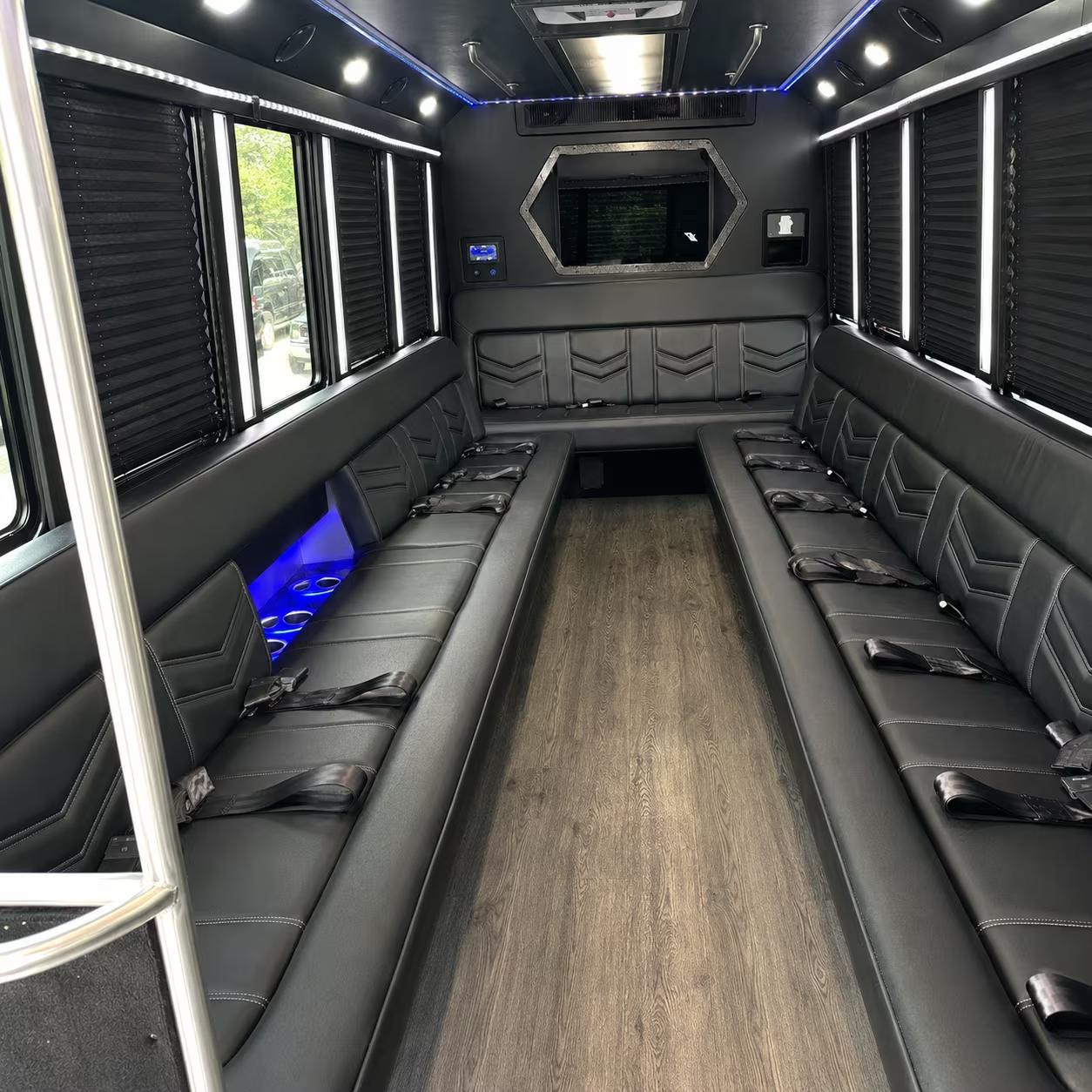
The defining feature of a party bus is the seating, not the lights. Perimeter benches run along the walls facing inward, leaving the center floor open. That's the whole difference between a party bus and a bus with a stereo.
Three layout families recur on the builder spec sheets, and naming the one you want gets you a better match:
- Classic limo. Two long perimeter benches down the sides plus a rear-facing bench. Maximum open floor, maximum face-to-face. This is the nightlife layout.
- Coach-style. Captain's chairs mixed with quilted benches, a rear bench, and sometimes integrated tables or workstations. Better for conversation and long runs; less open floor.
- Executive shuttle. High-back seats with armrests, rear luggage area, often overhead storage. Almost no open floor. This is the wedding-guest and corporate layout.
Larger builds add refinements: full wraparound lounge seating with storage under the benches, and a cup holder set in behind each J-seat so nobody balances a drink on a moving floor. Executive Coach Builders' party limo bus pages are unusually specific about this kind of interior hardware.
The trap: a seat count is not a comfort count. A bus listed at 30 fits 30 people on the benches, shoulder to shoulder, in coats, with bags on laps. Fine for a 20-minute hop.
Not fine for a two-hour highway run in formalwear. Book to headcount for short hops; size up a tier past an hour. A group of 22 heading two hours out is happier on a 30-passenger party bus than crammed onto a 25.
The party bus capacity breakdown covers how seat counts translate to real groups.
You can read the layout off a listing photo. An unbroken bench that turns the rear corner and runs forward along both walls is the classic limo layout, and the open floor is real. Individual high-back seats facing the windshield mean a shuttle build wearing a party bus caption, and the open floor is just the aisle.
A Rear Luggage Area Costs You Four Seats
The trade-off no listing page explains is printed on the builder's own spec sheet. Grech's GM33 on the Ford F600 chassis carries up to 28 passengers with a rear luggage area, or 32 without one. Same bus.
Same chassis. Same length.
So if your group is 30 people flying in with 30 rolling bags, you're not looking at a 32-passenger party bus — the version with somewhere to put the bags seats 28. You're looking at a larger build, a coach, or two vehicles.
Party buses have no underfloor baggage compartment at all. Storage is whatever fits under the benches, plus a rear area if the build has one. Some coachbuilders offer a drop-floor rear luggage compartment on larger shuttle-style models.
Full-size charter buses solve it outright, with sealed underfloor bays measuring in the hundreds of cubic feet and enclosed overhead racks that take crates and coolers without anyone rearranging a bench.
Gear decides the vehicle. An airport transfer with 30 people and 30 bags is a coach trip. A ski group, a marching band, a team traveling with equipment, same answer.
A five-hour night out where everyone carries a clutch is a party bus trip. Forcing the first category onto the second is the mistake that gets discovered at the curb, when nothing can be done about it.
The habit that prevents it: count bags before people. Put the real inventory in the quote request — "22 passengers, 22 carry-ons, 4 checked bags, 2 coolers" — and let the reply tell you what fits.
RGB Ceilings, Fiber-Optic Stars, and Laser Effects
Lighting is what the photos are of, and it comes in layers. Perimeter LED strips run along the floor edge, ceiling line, and under the bench toe-kicks. Fiber-optic star ceilings set pinpoint lights into the headliner.
Full RGB ceiling systems, often on a stainless panel running the length of the cabin, are the step up: a programmable light show rather than a color wash. Effect lighting means lasers and strobes, and it appears on entertainment-oriented builds and not on shuttle-configured ones.
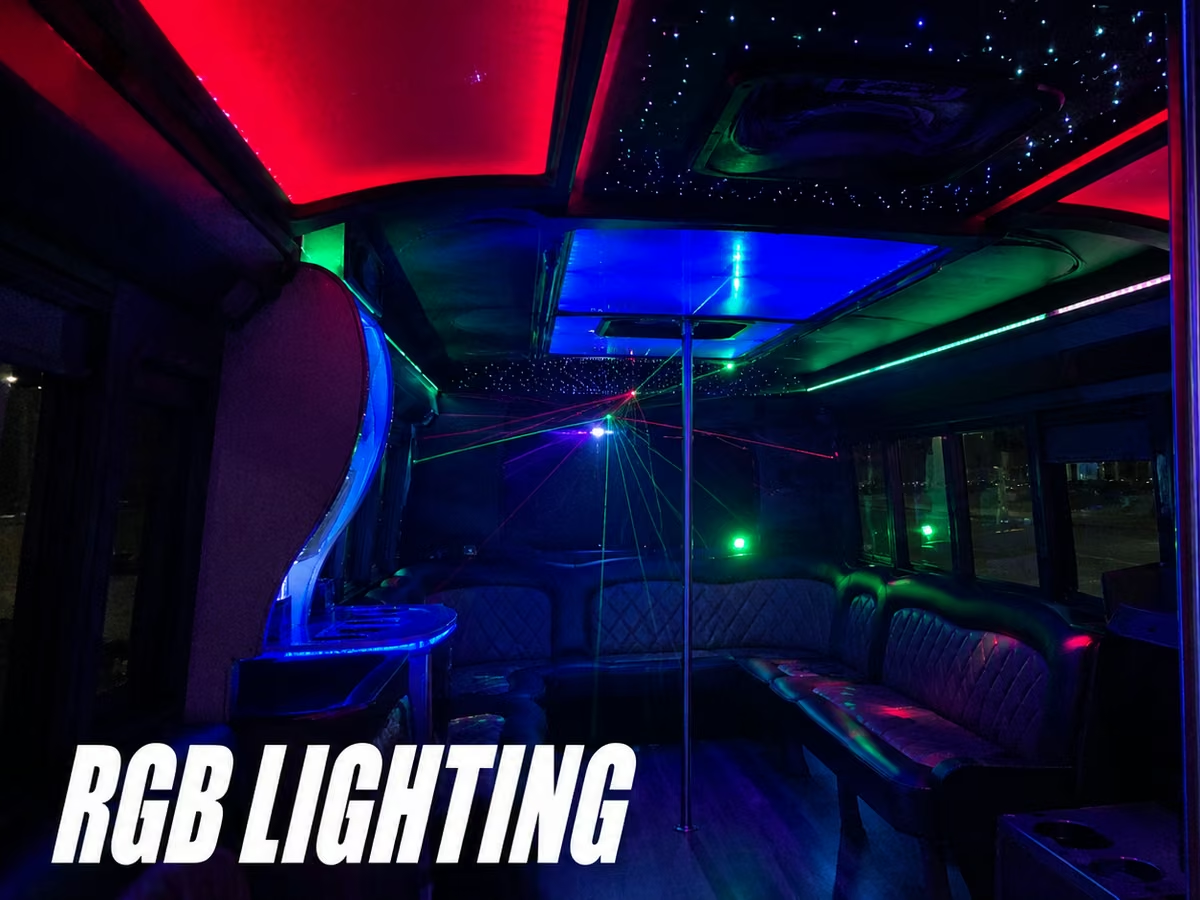
Stepwell lighting activates with the door, which matters when you're loading 30 people in heels at a dark curb at 11 PM.
The question to ask: can passengers control the color, or is it set from the front? If you're matching a wedding palette, a quinceanera theme, or team colors, that distinction decides whether you get the photos you're picturing. For a milestone birthday or sweet 16, ask for the controllable version and lock the color in advance.
Photos mislead in one specific way. A frame lit entirely in violet tells you nothing about whether that color is selectable, since plenty of installs run one fixed wash plus a strobe mode. Same interior shown in three colors, the system is programmable.
Every photo the same hue, ask outright.
Sound Systems: Count the Speakers, Confirm the Input
Party bus audio is a component system, not a factory stereo. Published specs on entertainment builds run to an amplified subwoofer with six speakers, and on some models a 12-inch subwoofer plus six speakers, with the subs enclosed under the bench frames. That's why a party bus sounds different from a van with the volume up.
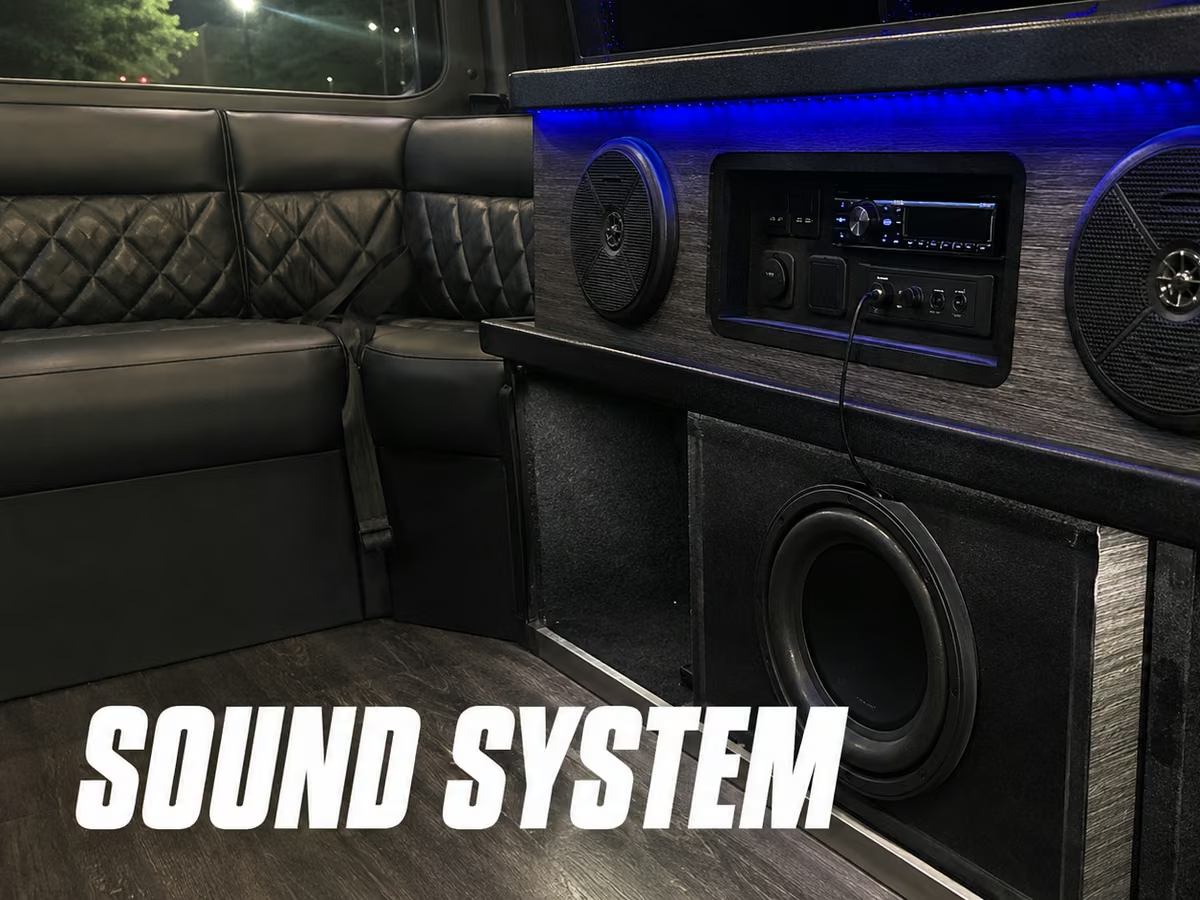
Three things to nail down before your date:
- Bluetooth or AUX? Newer builds pair by Bluetooth. Plenty of older ones are AUX-only, and a lot of phones no longer have a headphone jack. If the answer is AUX, someone needs to bring the right adapter. It's a common night-of failure and it costs a dollar to prevent.
- One source or multiple? Most systems pair one device at a time. Decide who has the queue before you board. Smaller argument at 8 PM than at midnight.
- Speaker wattage is almost never published. Speaker count and subwoofer size usually are. Treat an unpublished spec as unknown.
Charter buses handle audio completely differently: a PA system with a handheld microphone instead of a dance-floor rig. That's a real amenity for the right trip. It's how a chaperone counts heads on a school field trip and how a tour lead narrates a route without shouting down an aisle.
Screens: Two Big Ones or Six Small Ones
Two philosophies, and two very different rides.
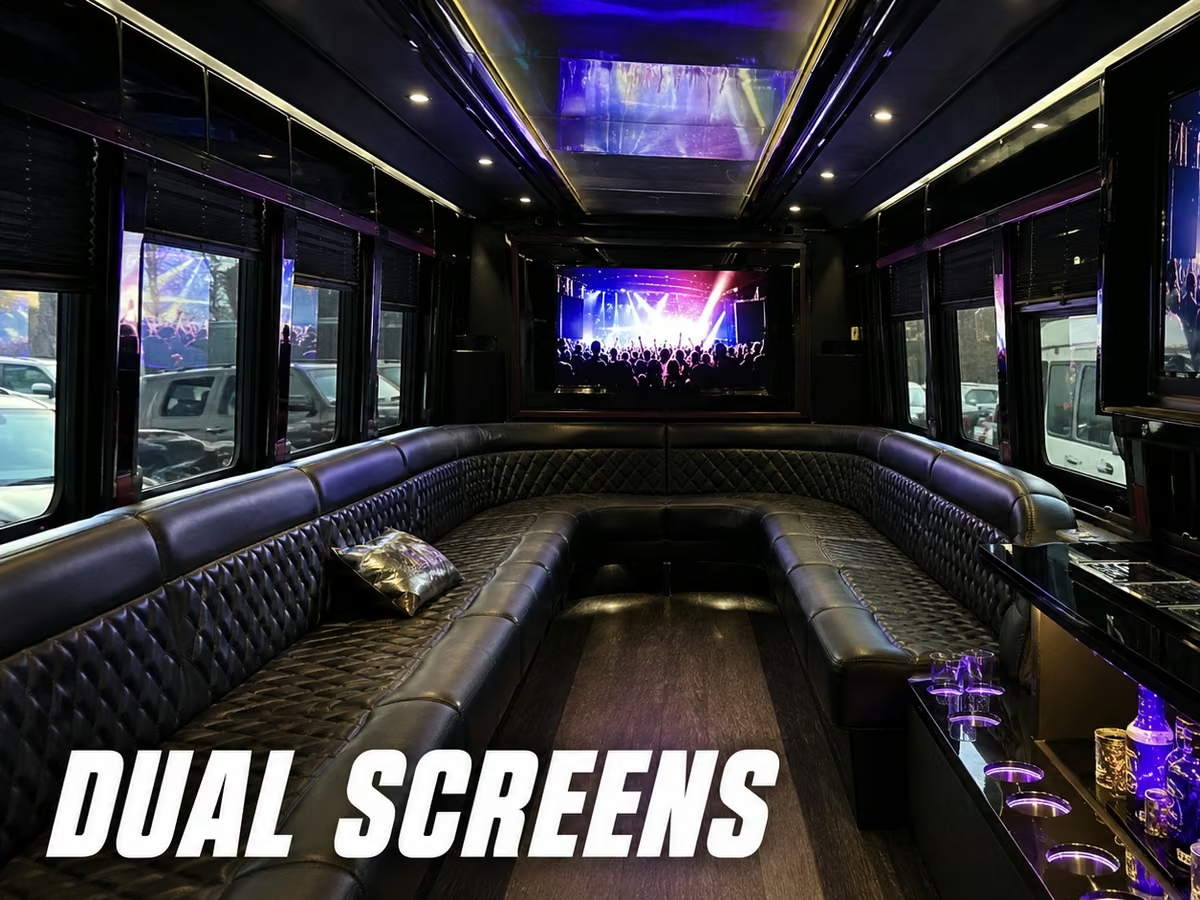
Focal-point screens. Entertainment builds commonly run two 60-inch Smart TVs on the larger Freightliner models or two 55-inch screens on mid-size builds, mounted at the front bulkhead and rear wall so both ends of the cabin see one. Good for a highlight reel, a slideshow, or a game everyone watches together.
Distributed monitors. Coach-style builds run up to six HD monitors spaced down the aisle so row 12 sees the same thing as row 2. Better for background video on a long run, worse as a shared focal point.
Ask which one the vehicle has, then ask about inputs. DVD players are still common on party bus builds; HDMI is the input that matters now, because it's how you run a laptop or a phone. Karaoke exists on some builds — a wired mic tied into the sound system, lyrics on the screens — but it's standard nowhere.
Name it in the quote request if you want it, which groups booking bachelorette and bachelor parties routinely forget to do.
The Bar: Wet, Dry, and What It Costs in Floor Space
The bar on a party bus is built-in cabinetry. A typical full-length installation runs a counter surface, recessed ice bins or built-in coolers, glass racks or cup holders set into the top, and lit shelving behind. Finishes range from wood-look laminate to solid-surface countertops.
Smaller Sprinter builds carry a compact console version instead.
Wet bar or dry bar? A wet bar is plumbed, with a sink and a water supply. A dry bar is counter and storage only.
Public listings rarely make the distinction, and the two aren't interchangeable if you're planning around one. Ask which, and ask whether cold storage means an ice bin, a cooler, or a powered refrigeration unit — three different things sold under the same word.
A full-length bar eats floor space. On a 20-passenger build, that counter occupies real estate that would otherwise be bench or dance floor. If your group's priority is dancing, a smaller bar and a longer open aisle is the better spec.
If people are mostly sitting and talking, the counter earns its footprint.
A rough rule for the floor math: a full-length counter on a 33-foot build takes the footprint of four to six bench positions, so a bus quoted at 28 with a big bar has less standing room than one quoted at 28 with a console. Nobody offers that distinction unprompted, because on paper both hold the same number.
Dance Floors, Poles, and Grab Rails
The dance floor on most party buses is the open center aisle the perimeter seating creates. Some builds add a lit floor section, mirrored ceiling panels, or a sound-reactive strip underfoot. Overhead grab rails are what make that standing space usable on the move.
Dance poles show up on some entertainment builds and are absent from shuttle-configured ones. Groups booking for a prom or homecoming night, a school event, or a corporate outing frequently want a vehicle without one, and that's a normal request as long as you make it up front. Discovering the answer when the bus pulls up is how a chaperone's evening goes sideways.
Power and Connectivity: Count the Ports
One popular 30 to 35 passenger build lists 10 USB ports. That's one port for every three people, on a bus where the whole point is that everyone is using their phone for six hours.
The better-equipped end of the market publishes 110V and USB at every row with an inverter, and one recent luxury-shuttle launch lists USB-C charging at every seat alongside Starlink satellite connectivity onboard, which is a meaningful step past cellular WiFi on rural interstate stretches. You can see that spec set on Forest River Bus's L.A. West launch announcement.
So don't ask "does it have USB." Ask how many ports, and where they are. Ask whether there are 110V outlets and whether they're at the seat or clustered at the bar.
For a corporate group working between meetings or a group flying in and living on their phones for tickets and boarding passes, port count is a real amenity.
Onboard WiFi is usually a cellular hotspot shared across everyone aboard. It works in metro areas and thins out on rural stretches. Download the movie before you board.
Do Party Buses Have Bathrooms? Onboard Restrooms Are an Upgrade Package, Not a Standard Feature
Most party buses do not have a bathroom. An onboard restroom is an upgrade package rather than standard equipment, and it is the amenity most likely to change an itinerary.
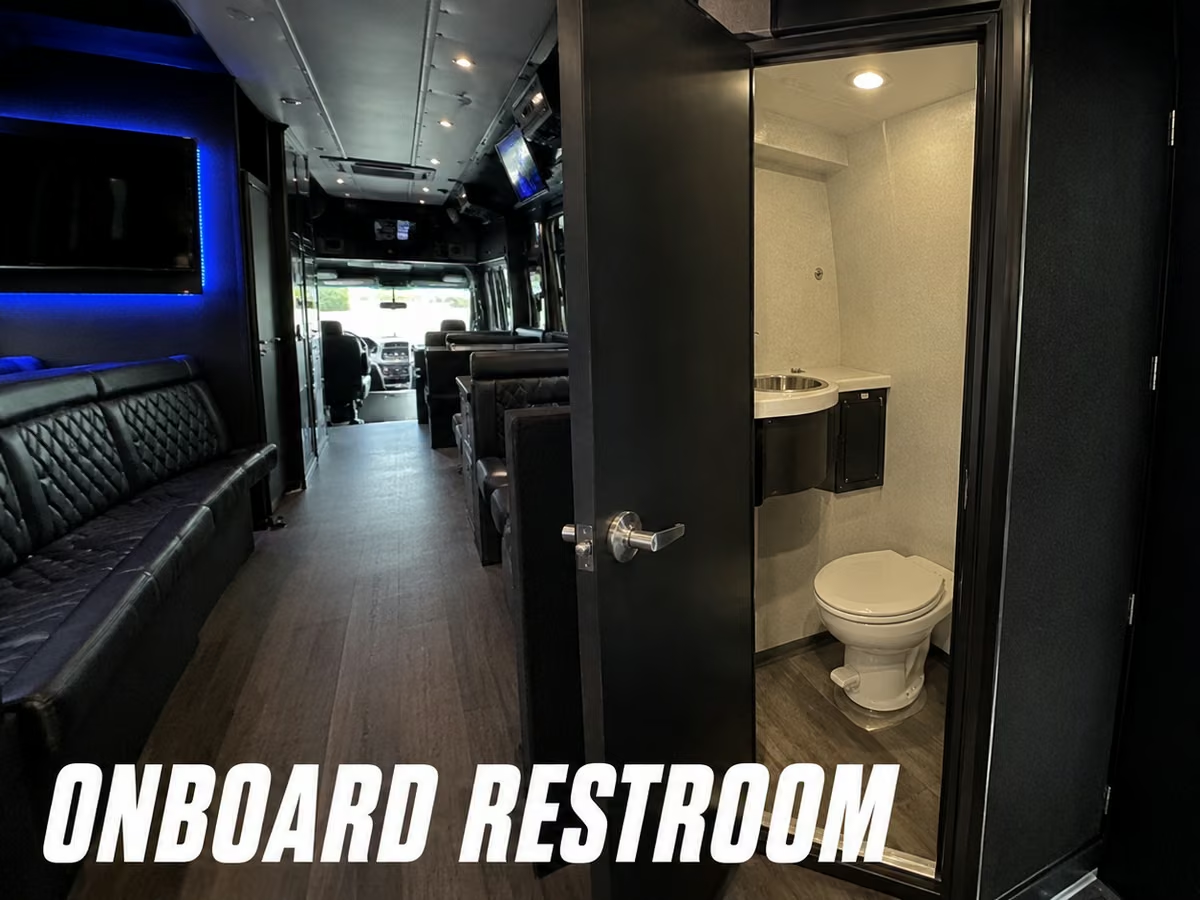
A rear lavatory is standard equipment on a full-size 40 to 56 passenger charter bus. On party buses it is an optional package on larger coach-style builds and simply not offered on most nightlife-oriented ones. Several coachbuilders list restroom or galley packages as options on their bigger F600 and shuttle platforms; Turtle Top's Odyssey XL page is one of the clearer examples, listing restroom packages alongside drop-floor rear luggage on a vehicle carrying up to 41 occupants.
Plenty of rental listings state plainly that their mini party buses have no restroom at all.
The pattern to remember: restroom availability tracks with coach-style builds, not club-style interiors. The prettier the RGB photo set, the less likely there's a lavatory in the back.
A 40-person group on a three-hour run without an onboard restroom is a two-stop trip minimum, and you should budget 15 to 20 minutes a stop once you've unloaded and reloaded 40 people at a rest stop. That's most of an hour added to a schedule built around a kickoff or a ceremony start. For any leg over roughly 90 minutes, the restroom stops being a comfort feature and becomes a scheduling tool.
A 40 to 56 passenger charter bus is usually the answer, and the charter bus explainer covers how the layout differs.
Ride Quality, Doors, and Floors: The Amenities Nobody Photographs
Three specs that never make a listing headline and consistently decide how a trip feels.
Suspension. Larger builds publish air-ride suspension, and on the spec sheets it shows up on the bigger F600 and Freightliner platforms rather than the small ones. On a cutaway chassis, that's the difference between a smooth two-hour highway leg and one where the back bench feels every expansion joint.
If your group includes older passengers, or anyone in formalwear for a long run, ask whether the build has air-ride.
Entry door and step. Builders publish electric plug doors, bi-fold doors, electric sliding passenger doors, and power passenger entry steps. That last one matters more than it sounds.
Loading 30 wedding guests, some of them in heels and some of them in their eighties, through a high fixed step at a dark curb is slow and awkward. A power step can turn a four-minute load into a two-minute one. Worth naming in a wedding shuttle request.
Flooring. Coach-style builds commonly list wood-look commercial vinyl over a 3/4-inch composite subfloor rather than carpet. Wipe-clean matters on a long day out, and it's a quiet reason these builds hold up better on winery tours and brewery crawls where people are in and out at every stop.
Panoramic front-view windows and frameless coach glass appear on several F600 and Freightliner models. For a sightseeing route or a scenic run, the view forward from the cabin is an amenity, and it's one of the few that only exists on the bigger platforms.
Wheelchair Lifts and Securement Positions
Lift-equipped vehicles with floor-anchored securement stations are available, and some shuttle platforms publish wheelchair-accessible floor plans as a build option. Others state plainly that a given vehicle has no lift — exactly the kind of specific answer you want before you book, not after.
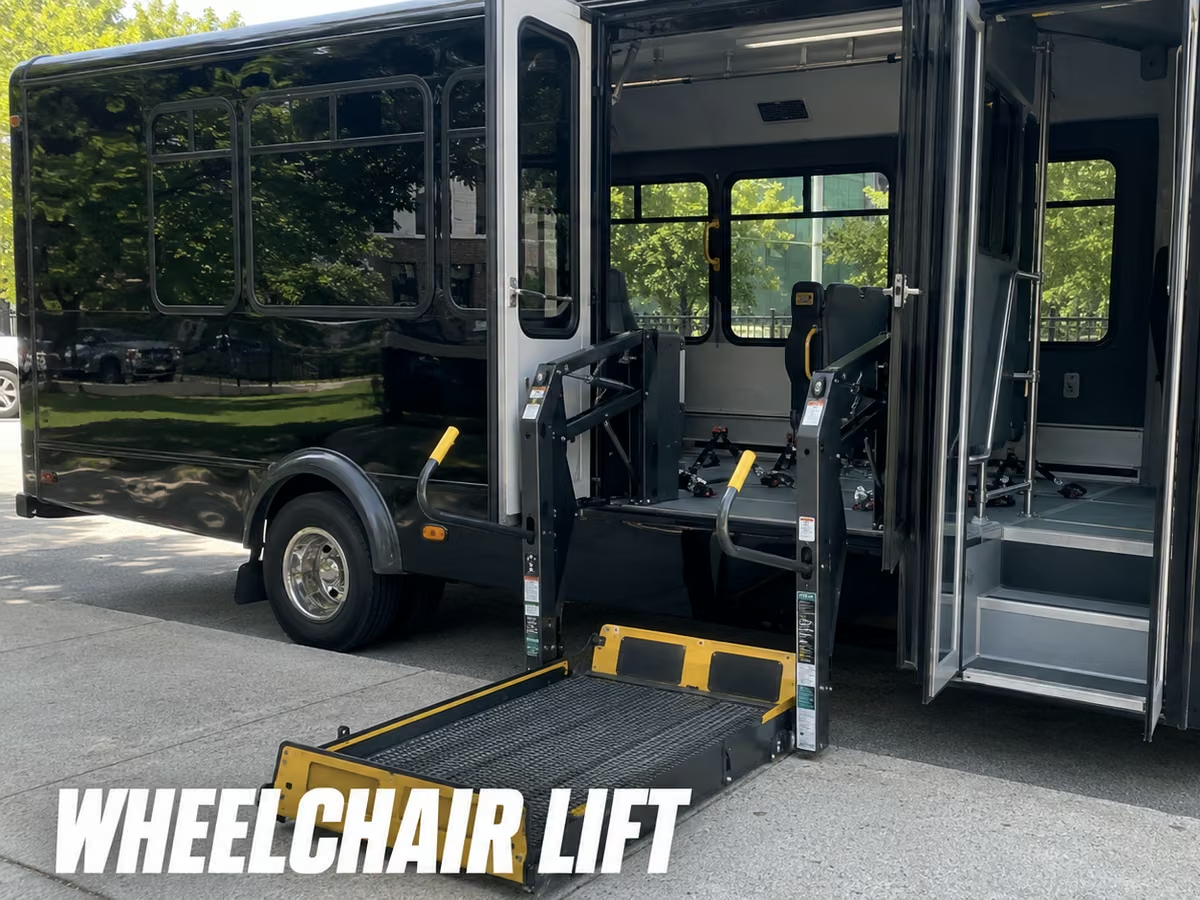
This belongs in the booking conversation, never the night-of one. Flag it in your quote request the moment you know, and give 48 hours or more if you can, because far fewer vehicles are configured for it. On peak weekends — prom season, graduation, wedding Saturdays — lift-equipped inventory is the first category to run out.
Two details belong in the request. First, how many securement positions you need, since a lift-equipped vehicle has a finite number of anchor stations, usually one or two. Second, whether the lift is at the front or rear door, since that changes where the vehicle has to sit at the curb.
It also costs seats. A securement station typically occupies the floor of two to four seated positions, so a 28-passenger build with one may come back at 24 or 25 usable seats. Ask for the seated count in the configuration you need, not the number on the listing page.
Amenities by Vehicle Type
Sprinter Limos and Sprinter Vans
Built on the Mercedes-Benz Sprinter for up to about 14 to 16 people. Expect leather perimeter or double-J lounge seating, under-seat floor lighting and LED accents, tinted rear glass, a compact bar console, and on better builds 110V and USB at every row plus roof-mounted rear climate. No standing room, no dance space, no luggage bays.
The appeal is a small group arriving together in a vehicle that fits down a residential street and under a hotel canopy where a 45-foot coach can't go. Compare the 14-passenger Sprinter limo against the standard Sprinter van rental page, or read the Sprinter van guide. Grech Motors' Limo Sprinter page publishes a full spec list for the class.
Party Buses, 15 to 50 Passengers
The entertainment specialist, built on F550, F600, or Freightliner platforms depending on size. Wraparound lounge seating with under-bench storage, RGB ceiling and fiber-optic lighting, subwoofer audio, two large screens or up to six distributed monitors, a full bar counter, and grab rails around the open floor. No underfloor bays, no reclining seats, restroom only as an option on the largest coach-style builds.
This is the right vehicle when the ride itself is the event. Start with a 20-passenger party bus for a tight group, a 40-passenger party bus for a big night, or the 50-passenger party bus for the largest builds. The party bus explainer covers how they're built.
Minibuses, 15 to 35 Passengers
Forward-facing rows, reclining high-back seats with armrests, strong A/C, overhead racks, rear luggage area, and enough length to move through city traffic and into venue loading zones that reject full-size coaches. Light on entertainment, heavy on practicality. The workhorse for wedding guest shuttles, hotel loops, and corporate transfers.
See the 15 to 35 passenger minibus or the minibus overview.
Charter Buses, 40 to 56 Passengers
Reclining seats with individual reading lights and air vents, full-coach climate, overhead racks, deep underfloor bays, onboard restroom, PA system with ceiling monitors, and commonly WiFi and power at the seat. No dance floor, no bar, no standing room. The long-distance and large-group answer.
The charter bus seating capacity guide breaks down how the rows lay out, and the charter bus amenities rundown covers the full spec list.
Which Amenities Actually Matter, by Occasion
| Trip type | Amenities that earn their keep | Amenities you can skip |
|---|---|---|
| Wedding guest shuttle | Power entry step, reclining seats, high BTU per seat, air-ride | Dance floor, subwoofers, laser lighting |
| Bachelorette or bachelor night | Controllable RGB, Bluetooth audio, open floor, bar counter | Luggage area, PA system, reclining seats |
| Prom and homecoming | Sound system, screens, belted seating if the build has it, pole-free layout on request | Onboard restroom, connectivity |
| Corporate transfer | 110V and USB port count, connectivity, workstation tables, overhead storage | RGB lighting, dance floor, bar |
| Game day and tailgate | Underfloor bays for grills and coolers, restroom, screens | Star ceiling, dance floor |
| Winery tour or brewery crawl | Wipe-clean flooring, panoramic front window, easy step-in at every stop | Lasers, karaoke, luggage bays |
| Airport group transfer | Underfloor bays, overhead racks, power at seat | Every entertainment amenity on this page |
| School field trip | PA system, screens, overhead bins, belted seating if the build has it, restroom on longer runs | Bar counter, RGB, dance floor |
| Concert or festival | Sound system, RGB, open floor, quick curbside loading | Reclining seats, WiFi |
Everything in the middle column belongs in your quote request by name. Everything in the right column is something you shouldn't be paying a top-tier rate to get. Planning a concert run or a large private event?
The list changes completely between them, and so should the vehicle.
The honest objection to all of this: most trips don't need it. A 45-minute hop to dinner and back is a seat-count problem, not a spec problem, and a group of twelve is cheaper and happier in a Sprinter than in anything on this page with a full bar in it. Interrogating a spec sheet also narrows your field, because some companies won't have the numbers in front of them, and the cheapest quote in your inbox is often from one of them.
So ask when the trip is long, hot, or loaded with gear. Skip it when it's short.
How to Verify You're Getting the Bus You Think You're Getting
Public vehicle listings are frequently vague, occasionally inconsistent, and almost never complete. Fleet pages sometimes name two different builders for the same vehicle in a single listing. Many pages list capacity, seating, and entertainment but never publish speaker wattage, wheelbase, or what the cold storage in the bar actually is.
Large listing sites routinely note that amenity availability depends on the specific vehicle, the date, and the location.
None of that means anything's wrong. It means an unlisted spec is unknown, not present.
Five things to get in writing before you commit:
- Builder, base chassis, and model year of the specific unit. Not the class, the unit. This one question resolves half the others.
- Actual seated capacity with luggage and coolers aboard. Remember the 28-versus-32 math. Ask for the number with your gear on the bus.
- Screen count and size, plus inputs. DVD, HDMI, Bluetooth, AUX, or streaming. Get the specific list.
- Wet bar or dry bar, and what the cold storage actually is. Ice bin, cooler, or refrigeration.
- Restroom, wheelchair lift, port count, and A/C rating. The four utility specs that change an itinerary.
And ask for photos of the actual vehicle, not a stock shot of the model, with interior frames that show the whole floor plan end to end. Send those five questions once through the online quote form and you can compare answers across a large network of bus companies instead of describing the same trip over and over and waiting on callbacks that never line up. New to the process?
The guide to renting a bus walks through it start to finish.
What to Actually Put in the Quote Request
Most quote forms give you a free-text box, and most people write two sentences into it. Six lines gets you comparable answers instead of a round of callbacks:
Date and hours, pickup and drop points, and then: 28 passengers plus 28 carry-ons and 2 coolers. Please confirm the builder, chassis and model year of the specific unit; the published A/C rating and whether the rear is roof-served; the seated capacity in the configuration that fits our bags; wet bar or dry bar and what the cold storage is; the USB and 110V count and where they are; restroom yes or no; pole-free layout; and interior photos of the actual vehicle showing the full floor plan.
It filters for the companies that have the spec sheet in front of them, and it makes two replies comparable. A vague answer is information too.
How Amenities Affect What You Pay
Amenity tier is one of four things that move a quote, alongside vehicle size, total hours, and the date. The general picture by vehicle:
| Vehicle | Example hourly (weekday) | Example full day |
|---|---|---|
| Sprinter van (12–15) | $203–$273 | — |
| Sprinter limo (14) | $204–$318 | — |
| Party bus (15–20) | $204–$338 | — |
| Party bus (21–30) | $248–$374 | — |
| Party bus (31–50) | $294–$441 | — |
| Minibus (15–35) | $207–$246 | $1,098–$2,105 |
| Charter bus (40–56) | $206–$327 | $1,331–$2,841 |
Those are example figures to help you plan, not quotes — the quote moves with your date, hours, mileage and how busy that weekend is. A loaded spec sheet sits toward the top of its band and a plain shuttle build toward the bottom, which is the argument for naming only the amenities you need. You don't have to guess: fill out the quick form or call 833-458-7001 and you could have pricing for your own trip in about a minute, free, with no account and no obligation.
Dig further into the numbers on the party bus prices page or the party bus cost breakdown.
A 40-passenger party bus at the bottom of that band — say $2,352 for eight hours — works out to about $59 a head. The same night split across ten cars means ten fuel tanks, ten parking spots, and ten people who spend the evening navigating instead of enjoying it. On the bus, nobody has to skip the party to drive.
Worth stating plainly: Partybus-rental.net compares quotes and connects groups with the bus companies and transportation providers serving each area. It does not own vehicles or run the trips itself, and every amount shown here is example pricing. Amenities, availability and the final number are set by the company operating your vehicle.
Six Amenity Mistakes That Cost Groups Their Night
- Booking seat count as headcount. Thirty seats fits thirty people. It does not fit thirty people comfortably for two hours in coats with bags.
- Ignoring the A/C rating. A 60 percent spread in cooling per seat exists between builds described identically. Ask for the BTU number in summer.
- Assuming luggage space is free. On some builds a rear luggage area costs four seats. On most party buses it doesn't exist.
- Assuming Bluetooth. Plenty of solid buses are AUX-only. Confirm, and pack the adapter either way.
- Assuming a restroom. Standard on full-size charter buses. An optional package at best on party buses.
- Booking off a stock photo. The image on a listing may be the model, not the vehicle. Ask for shots of the one you'd be riding.
None of those mistakes is carelessness. The listing page is the only document most people ever see, and it exists to make four different vehicles sound like one product — the same five features, the same phrase for a 55,000 BTU Sprinter and a 205,000 BTU Freightliner. The numbers that separate them are published.
They just live on a spec sheet nobody thought to ask for.
Frequently Asked Questions About Party Bus Amenities
What amenities come standard on a party bus?
Across builder and rental listings alike, the consistent bundle is perimeter or wraparound lounge seating in leather or leather-like upholstery, RGB or fiber-optic mood lighting, a bar or beverage station with ice storage, a Bluetooth or AUX-capable sound system with a subwoofer, one or more flat screens, tinted windows, and climate control. Everything else, including restrooms, luggage areas, port counts, screen sizes, and effect lighting, varies by build. The real differentiator between two buses with the same feature list is how good the hardware is and what platform it's built on.
Do party buses have bathrooms?
Usually not. A rear lavatory is standard on a full-size charter bus because that vehicle is built for distance. On party buses, restrooms show up as optional packages on larger coach-style builds and are absent from most nightclub-style interiors.
Some rental listings state outright that a given mini party bus has no restroom. If any leg of your trip runs longer than about 90 minutes, choose the vehicle around this rather than hoping.
How cold does a party bus actually get in summer?
It depends on a number almost nobody asks for. Published A/C ratings on party bus builds range from about 55,000 BTU on a 14-passenger Sprinter to 205,000 BTU on a 47-passenger Freightliner build, and across those published builds the cooling per seat works out to somewhere between roughly 3,400 and 5,500 BTU. Ask for the rating, divide by your headcount, and ask whether the unit is roof-mounted and serves the rear or is a single front system.
For a full bus in July, that answer matters more than the light show.
Do party buses have WiFi?
Some do, and it's more common on coach-style and charter builds. Onboard WiFi is typically a cellular hotspot shared across everyone aboard, so it performs well in metro areas and thins out on rural interstate stretches. A small number of newer luxury shuttle builds now list satellite connectivity, which is a real step up on long rural runs.
Treat standard WiFi as a convenience for messaging rather than a way to stream video for six hours.
How do you play your own music on a party bus?
Either by pairing over Bluetooth or by plugging into an AUX input, depending on the build. Newer conversions lean Bluetooth; older ones are frequently AUX-only, and many phones no longer have a headphone jack. Confirm which the specific bus uses when you book, and pick one source device before the group boards.
What's the difference between party bus amenities and charter bus amenities?
They're built for opposite jobs. A party bus optimizes for time spent on board: open floor, perimeter seating, lighting, and sound. A charter bus optimizes for moving a large group a long way comfortably: reclining seats, full HVAC, restroom, overhead racks, deep luggage bays, PA system, and power at the seat.
Neither is an upgrade over the other. Trip length tells you which one you need.
How many USB ports and outlets does a party bus have?
It varies enormously and it's worth counting rather than assuming. One published mid-size build lists 10 USB ports for a bus seating 30 to 35, which is one port for every three riders. At the other end, some builds list 110V and USB at every row with an inverter, and one recent shuttle model lists USB-C at every seat.
Ask for the count and the locations, especially for a corporate group or anyone running a full day on their phones.
Is the bar on a party bus a wet bar or a dry bar?
Listings rarely say, which is exactly why you should ask. A wet bar is plumbed with a sink; a dry bar is counter and storage only. Also ask what the cold storage actually is, since ice bin, built-in cooler, and powered refrigeration all get described with the same word.
Get the answer in writing for the specific vehicle rather than the vehicle class.
Can you request a bus without a dance pole?
Yes, and it's a common request. Groups booking for proms, school events, church trips, and corporate outings routinely ask for a pole-free layout, and plenty of vehicles are configured that way already. Put it in writing when you request your quote rather than raising it at the curb.
Do party buses have seat belts?
It depends entirely on how the vehicle was built. Some coach-style and shuttle-style models publish passenger retractable belts as a listed feature on their spec sheets; open perimeter lounge seating is a different interior architecture and usually isn't built that way. It's a build question rather than a category question, so ask whether the specific unit has them and how many positions are equipped.
Listing photos are a poor guide, since belts tuck into the seat back and rarely show up in a frame. School and prom groups ask about this most often, and the answer usually points toward a forward-facing shuttle or minibus build rather than a lounge interior.
Do party buses have luggage space?
Not in the way a coach does. Party buses have no underfloor baggage compartment. Storage is under-bench space plus a rear luggage area if the build includes one, and that rear area typically costs you seats.
If your group is flying in, hauling equipment, or carrying instruments, you want a charter bus with underfloor bays or a minibus with overhead racks and a rear compartment.
Can you get a party bus with a wheelchair lift?
Yes. Lift-equipped vehicles with floor-anchored securement stations can be requested, and some shuttle platforms offer wheelchair-accessible floor plans as a build option. Flag it when you request pricing — ideally 48 hours ahead or more, since fewer vehicles are configured for it and those get committed early.
Say how many securement positions you need and ask for the seated capacity in that configuration.
Are all party buses built the same?
No, and it's the distinction that decides everything else here. The same "party bus" label sits on Mercedes-Benz Sprinter, Ford F550, Ford F600, and Freightliner foundations, converted by different coachbuilders with different layouts, cooling capacities, screen packages, and storage. Two buses with identical passenger counts can differ by tens of thousands of BTU and by four seats' worth of luggage space.
Ask for the builder, chassis, and model year of the actual unit. See the bus types guide for how the categories compare, or the charter bus manufacturers overview for the coach side.
Can you request a specific bus color?
Often, yes. White, black, and silver exteriors are the most requested, and availability depends on what's in the area on your date. Ask when you request your quote, and see the bus wrapping guide for how exterior finishes work.
How far ahead should you book to get the amenities you want?
The vehicle matching your exact spec list is the one that goes first. For prom season, wedding weekends, and major event dates, three to six months out gets you a real choice of layouts instead of whatever's left. For ordinary dates, two to four weeks is workable.
Either way, the earlier the request, the more amenity options you're choosing from.
Find a Bus With the Amenities You Want
The right bus is the one whose spec sheet matches the trip you're actually taking: deep bays and port count for the airport run, RGB and open floor for the night out, 190,000 BTU and air-ride for forty people on a two-hour highway leg in August. Partybus-rental.net puts party buses, charter buses, minibuses, Sprinter vans, and Sprinter limos in one place so you can compare pictures, layouts, and rates instead of calling company after company and describing your trip from scratch.
Pricing in about a minute, no account required, no obligation, free quote online or by phone, any time and any day. Call 833-458-7001 or fill out the quick form and see what's available for your date. Still narrowing things down?
The frequently asked questions page and the group transportation services overview cover the rest.
Specifications on this page come from the manufacturers' own published model pages and specification sheets, cited where they appear. Figures last checked July 2026; builders revise configurations between model years, so confirm the exact specification for the vehicle on your quote. Partybus-rental.net is a comparison and quote-request website — it does not own vehicles and does not provide the transportation itself. Corrections: contact page.