A charter bus is ordered off a build sheet years before any group rents it. Some lines on that sheet are standard equipment; some are options the buyer pays for or skips. But nothing on the outside tells you which bus you got — two 45-foot coaches can look identical in the lot and arrive with completely different equipment inside.
The restroom is standard. WiFi is an option.
Everything below comes from what MCI, Prevost, Van Hool, Temsa and Grech Motors publish about their own vehicles, plus the exact wording to put in a quote request so the bus that shows up has what your group needs.
The short version. On a full-size 45-foot charter bus, the restroom, reclining seats, parcel racks, underfloor luggage bays, climate control and a PA system are part of the build. WiFi, 110V outlets, screens, a wheelchair lift and adjustable overhead air vents are options, checked or skipped one bus at a time.
Name the ones you need when you request pricing, and you'll see which vehicles have them.
Charter Bus Amenities That Are Standard vs Options
Most rental pages run every amenity together, as if a coach has all of it or none of it. But a restroom and a WiFi router are different kinds of equipment. One is built into the structure at the factory.
The other is a box added afterward, and plenty of buses never got one.
| Amenity | On a 45-foot charter bus | What the manufacturers publish |
|---|---|---|
| Onboard restroom | Build standard | Prevost lists the lavatory as standard on the H3-45; MCI lists a chemical lavatory as standard on every J-Series trim level |
| Underfloor luggage bays | Structural | 460 cu. ft. on the H3-45, 445 cu. ft. on the MCI J4500, 440.4 cu. ft. on the Van Hool CX45 |
| Reclining seats, armrests, footrests | Standard | Prevost CloudOne standard; Amaya A-220 standard on MCI, Kiel 1020 standard on Van Hool, with the other brand optional on each |
| Overhead parcel racks | Standard, open or enclosed | Prevost: open racks with lights standard, enclosed aircraft-type racks optional |
| Climate control | Standard | Integrated HVAC standard on every full-size model listed here |
| PA system | Standard | Prevost: PA and a tour guide microphone standard, wireless microphone optional |
| Screens | Varies by bus | Six 15" HD monitors standard on the MCI J4500; 15" monitors optional on the Prevost H3-45 |
| 110V outlets with USB | Option | Optional on both the J-Series and the H3-45; MCI bundles outlets at every seat with a 4,000-watt inverter in its upper trim packages |
| WiFi | Option | Optional on both; MCI ships a power supply in the parcel rack for a WiFi installation as standard equipment |
| Wheelchair lift | Option | Optional on every model; MCI and Van Hool specify Braun, Prevost lists a swap-and-plug removable lift — and it costs seats and luggage volume |
| Individually adjustable overhead air vents | Option on some models | Prevost lists integrated A/C to individually adjustable overhead outlets as optional |
Anything in the "standard" rows, you can plan around. Anything in the "option" rows has to be asked for by name. Put the amenities you need in the quote request and you'll see options and pricing in about a minute.
One limit worth naming. A spec sheet describes what could be ordered the year it was published, not what's parked in any particular yard. The coach that shows up for your date may have been built a decade earlier, off a different sheet.
Do Charter Buses Have Bathrooms?
Yes. On full-size 45-foot charter buses, the restroom is standard equipment, not an upgrade. Prevost lists the lavatory as standard on the published H3-45 specification, and MCI's J-Series specification brochure shows one standard on every trim of the J4500 and the shorter J3500.
It's at the rear, curb side, behind a door most first-timers walk past twice before they spot it.
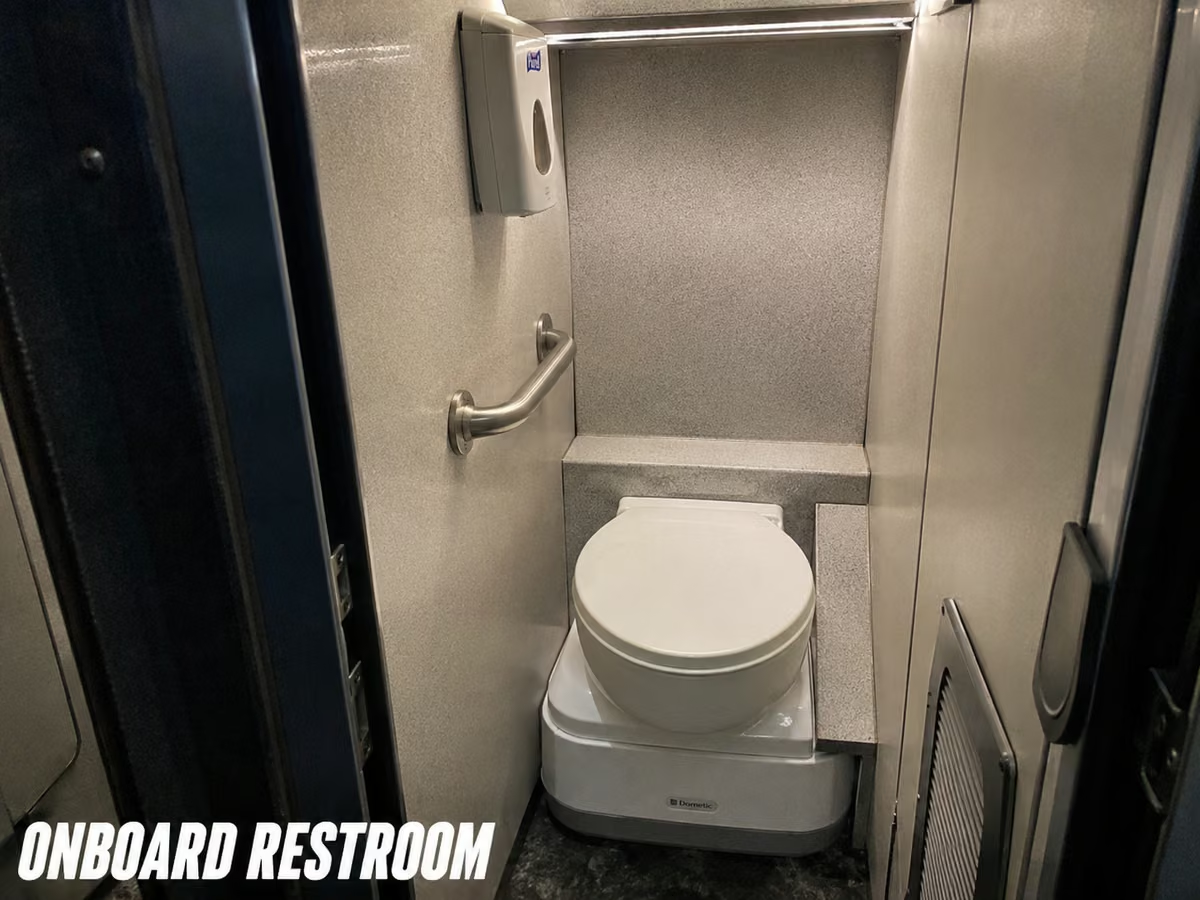
What a coach restroom actually is
MCI's own spec line reads: chemical lavatory without wash basin. No sink. Nothing to wash your hands at.
A toilet over a chemical holding tank, usually a sanitizer dispenser, and a door with a light. The CX45 specification sheet published by ABC Companies, Van Hool's North American distributor, lists the lavatory in flush and non-flush versions, so the toilet mechanism itself is an order choice — but a flush lavatory is still not a wash basin.
Two more lines matter for anything longer than a day trip. A secondary lavatory holding tank is an option on both MCI and Prevost — tank capacity is finite, and some buses were ordered with more of it than others. Prevost lists a lavatory waste tank heating system as optional too, which is worth a thought before a February ski run.
Plan the comfort stop anyway. The restroom on board is there so nobody has to hold it for two hours between exits. It isn't there to replace stops on a 10-hour run with 50 people aboard — that's what the optional second holding tank is telling you.
Build a real stop into the itinerary at the halfway point and treat the onboard restroom as the backup, not the plan.
Minibuses are the exception
Step down to a smaller vehicle and the restroom usually disappears, because there is nowhere to put it. A minibus is built on a truck chassis with a body on top, and every cubic foot inside is either a seat or luggage. Grech Motors publishes two floor plans for the GM33: 28 passengers with the rear luggage compartment, or 32 passengers without it.
Nothing in that standard build sheet is a bathroom. Lavatory-equipped minibuses get built to order, but they're the exception. The minibus guide covers what those builds carry.
Mid-size coaches sit in between and lean toward yes. Temsa's TS 35, a widely used 35-footer, seats 40 and has a restroom built in. So if your headcount is in the twenties and the ride runs over two hours, the restroom question can push you up a vehicle class on its own.
Say the trip length out loud when you request pricing. Full details on the vehicle classes are on the charter bus explainer.
Do Charter Buses Have WiFi?
Sometimes. WiFi is an option on both the MCI J-Series and the Prevost H3-45. Not a trim level.
Not a class feature. Not something the bus picks up later. It's aboard only if the buyer checked the box when the coach was ordered.
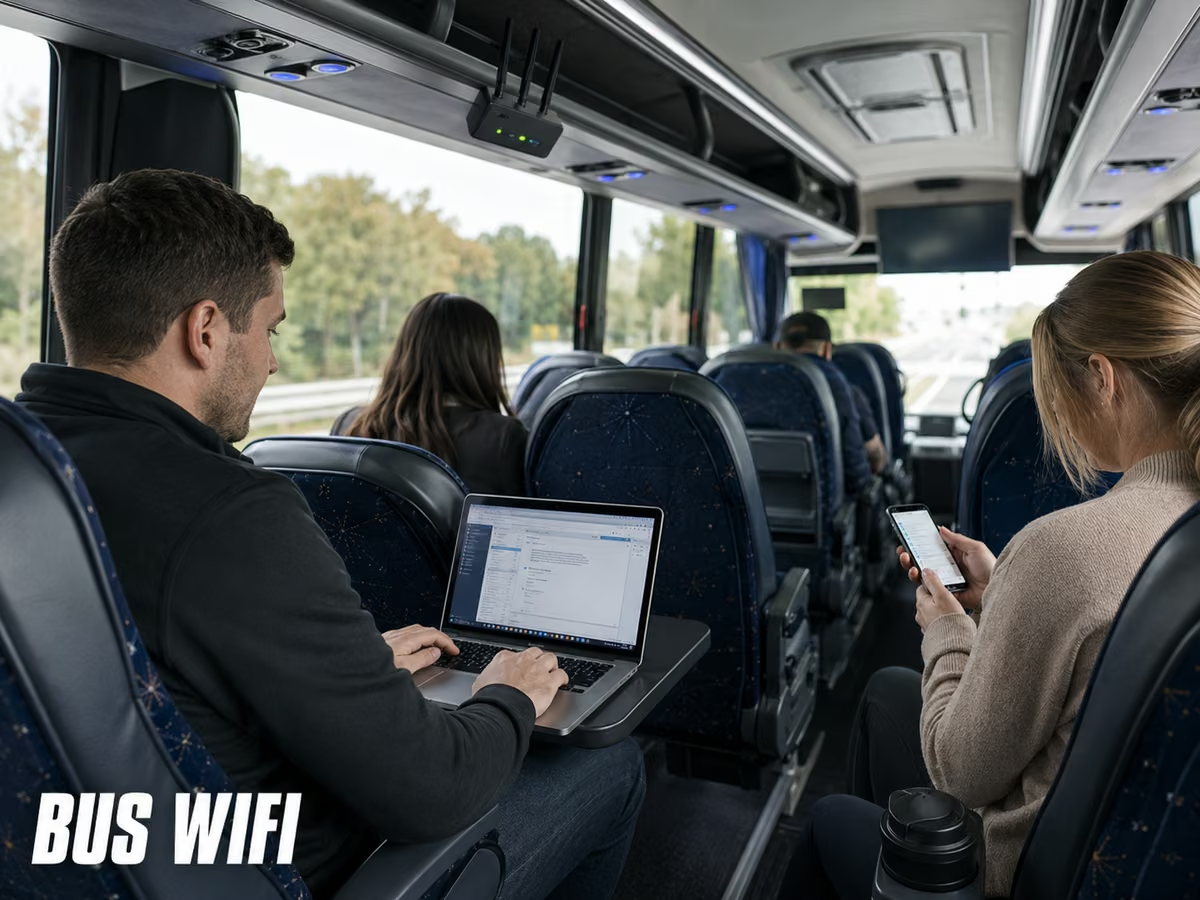
One spec line explains the whole thing. MCI lists, as standard equipment on every J-Series build, a power supply located in the parcel rack for WiFi installation. The bus leaves the factory pre-wired for a router and with no router in it.
Whether one ever got installed, and whether the data plan behind it is still being paid for, are decisions made long after the bus left Winnipeg. Two identical J4500s, same year, same paint: one has working WiFi and one has a power outlet in the parcel rack.
Even when it's there, know what it is. Coach WiFi is a cellular router bolted into the parcel rack with an antenna on the roof, pulling the same towers your phone does — so the coverage map on board is the coverage map outside. Rolling through the Alleghenies or across west Texas, it drops into dead zones.
Twenty people streaming at once, it crawls, because all twenty share one link.
Never build the trip around it. If your team has a client presentation to finish on the way to a conference, download the files before you board. If it's a school trip and the plan is streaming a movie, the screens and a downloaded file beat the router by a wide margin.
If connectivity genuinely matters for your corporate group transportation, write "WiFi required" into the quote request rather than hoping. Then add one follow-up: is the router live on that vehicle right now.
Power Outlets and USB Charging on Charter Buses
Outlets follow WiFi's pattern, with a wrinkle: here, "the bus has outlets" and "your seat has an outlet" are two different answers.
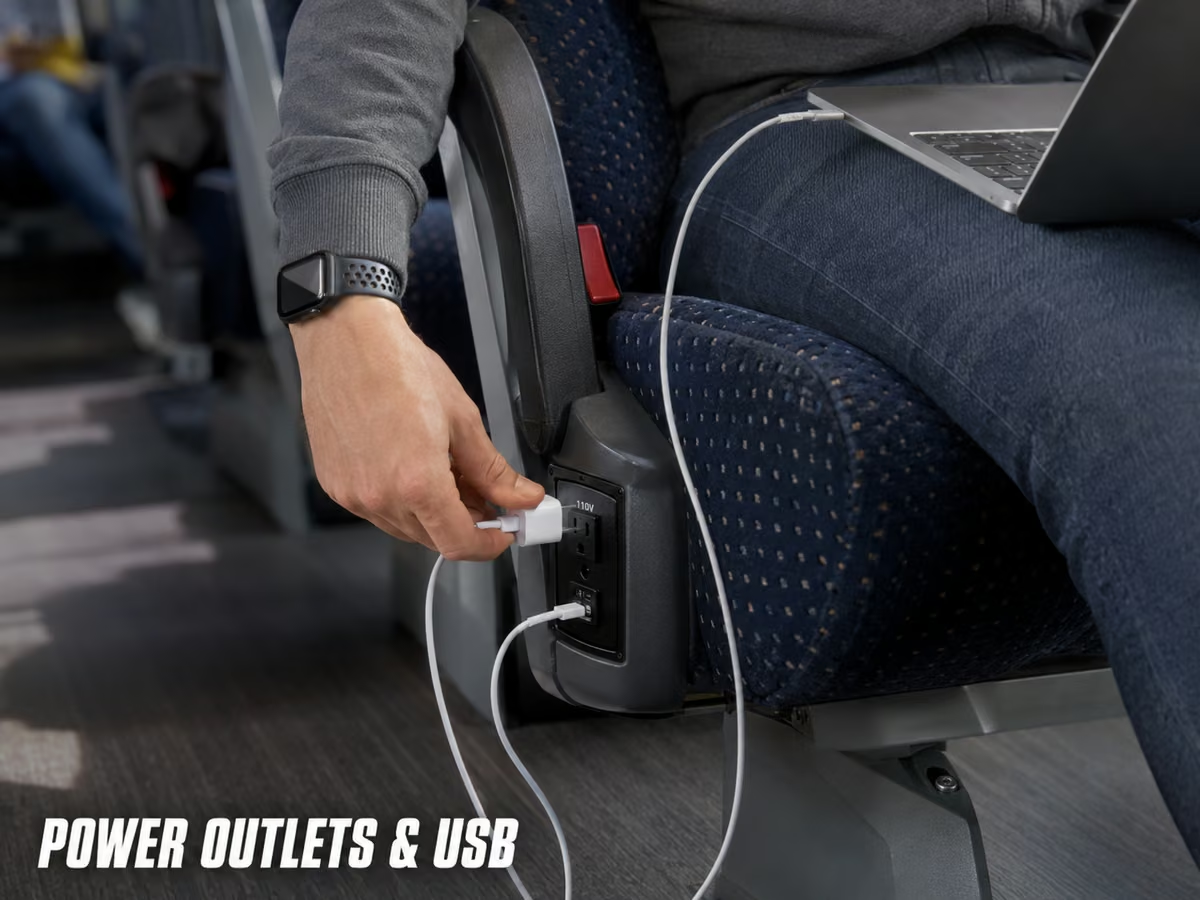
MCI lists 110V outlets with USB at every seat, including a 4,000-watt inverter and integral battery charger, as an option on a base coach that gets bundled into its Preferred and High trim packages. So on an MCI, outlets tend to be all-or-nothing: every seat or none. Prevost words it differently, and the wording matters.
Its spec sheet lists 110V outlets with USB as optional and adds a parenthetical about the number of outlets installed. Every row, every other row, one side of the aisle — all of those are a bus that "has outlets."
Temsa takes a third route, listing dual USB-A and USB-C charging as part of the seating spec on the TS 35 — USB only, no household plug. That's fine for phones and useless for a laptop that charges over a barrel connector.
On minibuses, the 110V outlets are tied to an inverter that has to be specified with them, which is why identical-looking shuttle buses differ so much on charging. Rear-row outlets are common on newer builds; wall-to-wall coverage is not.
The practical version: a 45-person group carries roughly 45 phones at 20% battery. If you're running a sports team charter to an away game and everybody's filming on the way there, ask for "110V at every seat," not just "outlets." Bring a couple of multi-port bricks anyway — outlets at every other row plus a short strip is functionally every row.
Charter Bus Luggage Space: Bays, Racks, and What Really Fits
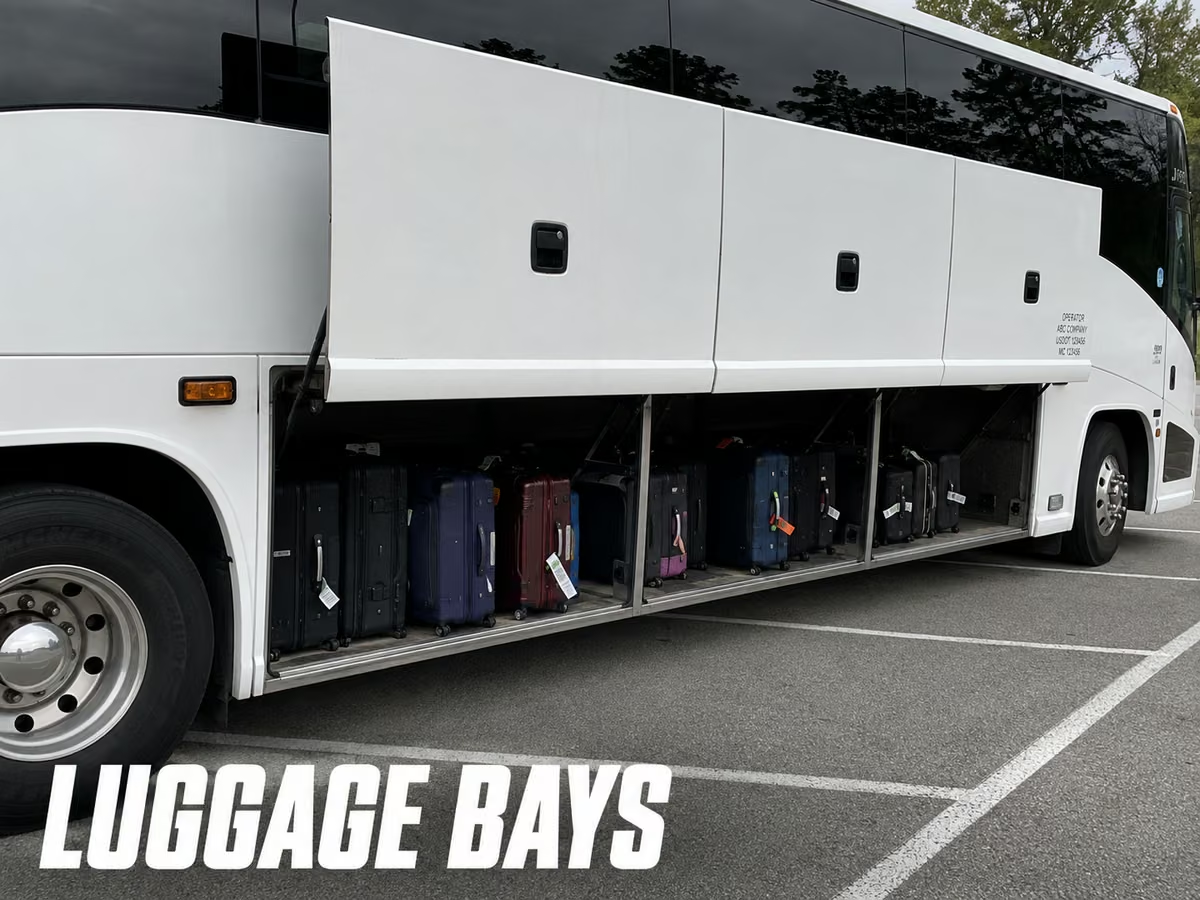
Luggage is the one amenity nobody can add later. A bay is part of the frame, so the published numbers are the numbers. The figures below come from MCI's published J-Series specifications, Prevost's H3-45 specification sheet and the ABC Companies CX45 sheet.
| Vehicle | Typical seats | Underfloor luggage | Overhead racks | Restroom |
|---|---|---|---|---|
| Prevost H3-45 (45 ft) | 56 standard | 460 cu. ft. (430 with a wheelchair lift) | 117 cu. ft. | Standard |
| Van Hool CX45 (45 ft) | 56 standard, up to 60 | 440.4 cu. ft. | 87.5 cu. ft. | Standard; flush and non-flush versions on the spec sheet |
| MCI J4500 (45 ft) | 56 standard, up to 60 | 445 cu. ft. | 131.2 cu. ft., enclosed racks available | Standard chemical lavatory |
| Temsa TS 35 (35 ft) | 40 (Temsa publishes 40+1) | 215 cu. ft. | Parcel racks | Yes |
| Grech GM33 (minibus) | 28 with rear luggage, 32 without | Rear compartment only | Interior racks | Not on the standard build |
460 cubic feet across 56 seats is about 8 cubic feet a passenger. A 28-inch checked suitcase runs roughly 3.5 to 4 cubic feet, so on paper that's two big bags each. Bays don't pack perfectly, though — hard-sided cases, band instruments in flight cases and awkward hockey bags waste the space between them.
Plan on one large bag plus a carry-on per person.
Overhead is tighter than people expect. Published racks run from 87.5 cubic feet on the CX45 to 117 on the H3-45 and 131.2 on the J4500. The H3-45's 117 cubic feet of parcel rack across 56 seats works out to roughly 2 cubic feet a head, which is about one carry-on-sized bag.
And whether that rack is open or enclosed is an option: Prevost lists open racks with carpeting and lights as standard and the enclosed aircraft-type racks as an upgrade. On an open rack, anything round rolls when the bus takes a ramp.
Two more things worth knowing before you pick a size. A wheelchair lift costs 30 cubic feet of bay space on the H3-45, per Prevost's own numbers. And on a minibus the trade is even more direct: the GM33's rear luggage compartment is the difference between a 32-seat bus and a 28-seat bus.
Four seats spent on luggage, which is how a group of 30 ends up not fitting on a 32-passenger bus. If you're moving a group arriving on the same flight with a checked bag each, count the bags before you count the people. More on how capacity works in the charter bus seating guide.
Oversized items are their own conversation
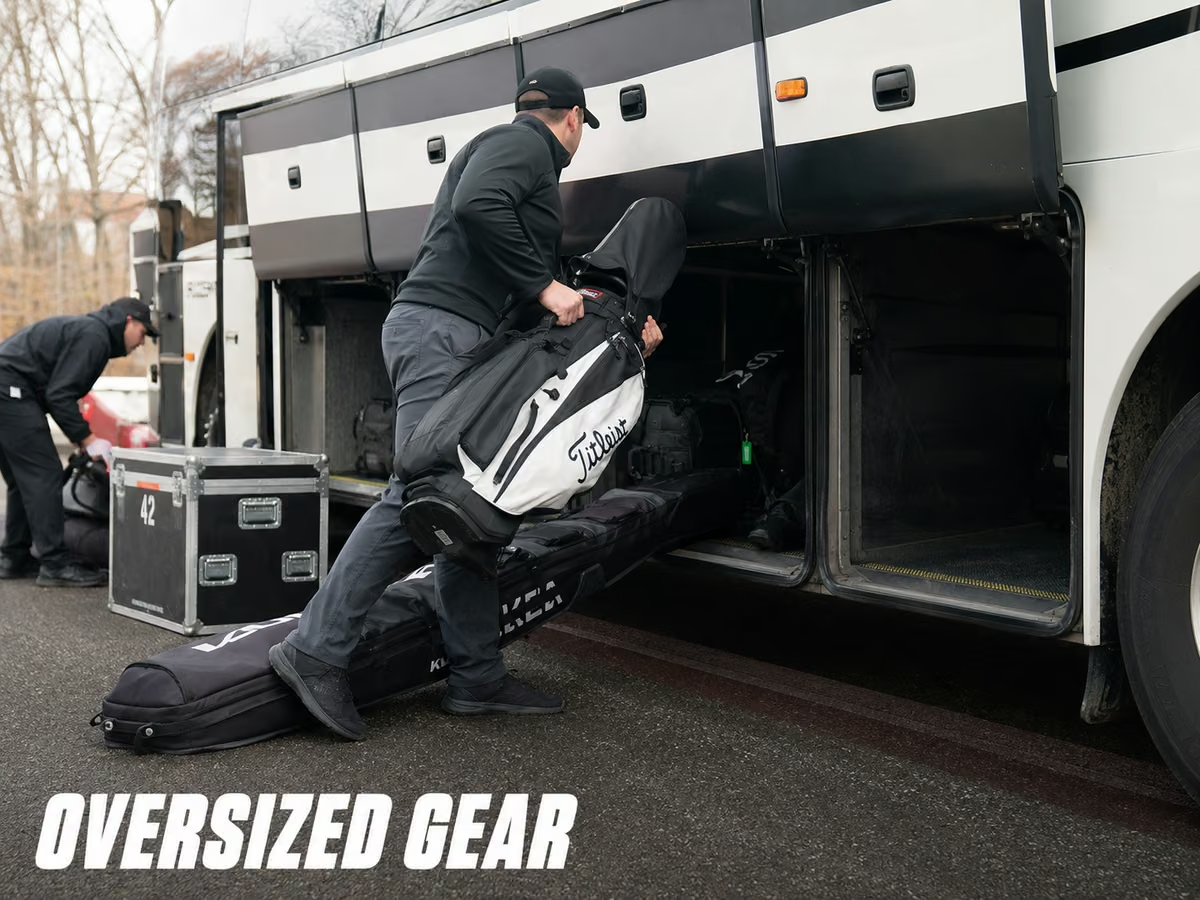
Cubic feet stop being useful the moment an item won't turn a corner. Bay doors on a full-size coach open roughly four feet wide and under three tall, so rigidity is the constraint. A cased double bass, a road case of stage lights, golf and ski bags — each belongs on its own line in the request rather than folded into a bag count.
Full-size coaches have bays that take crates and instrument cases; a mid-size coach's 215 cubic feet holds far less once three are in it.
Seats, Legroom, and Why 56 and 60 Are Not the Same Bus
Reclining seats with armrests and footrests are standard on every full-size model here — Prevost's CloudOne, MCI's Amaya A-220, Van Hool's Kiel 1020, with each builder's other seat brands (Amaya Sigma and GT, Kiel 2050 on MCI, Kiel 2025 or 1030 on Van Hool) listed as options. That part you can promise your group without checking first.
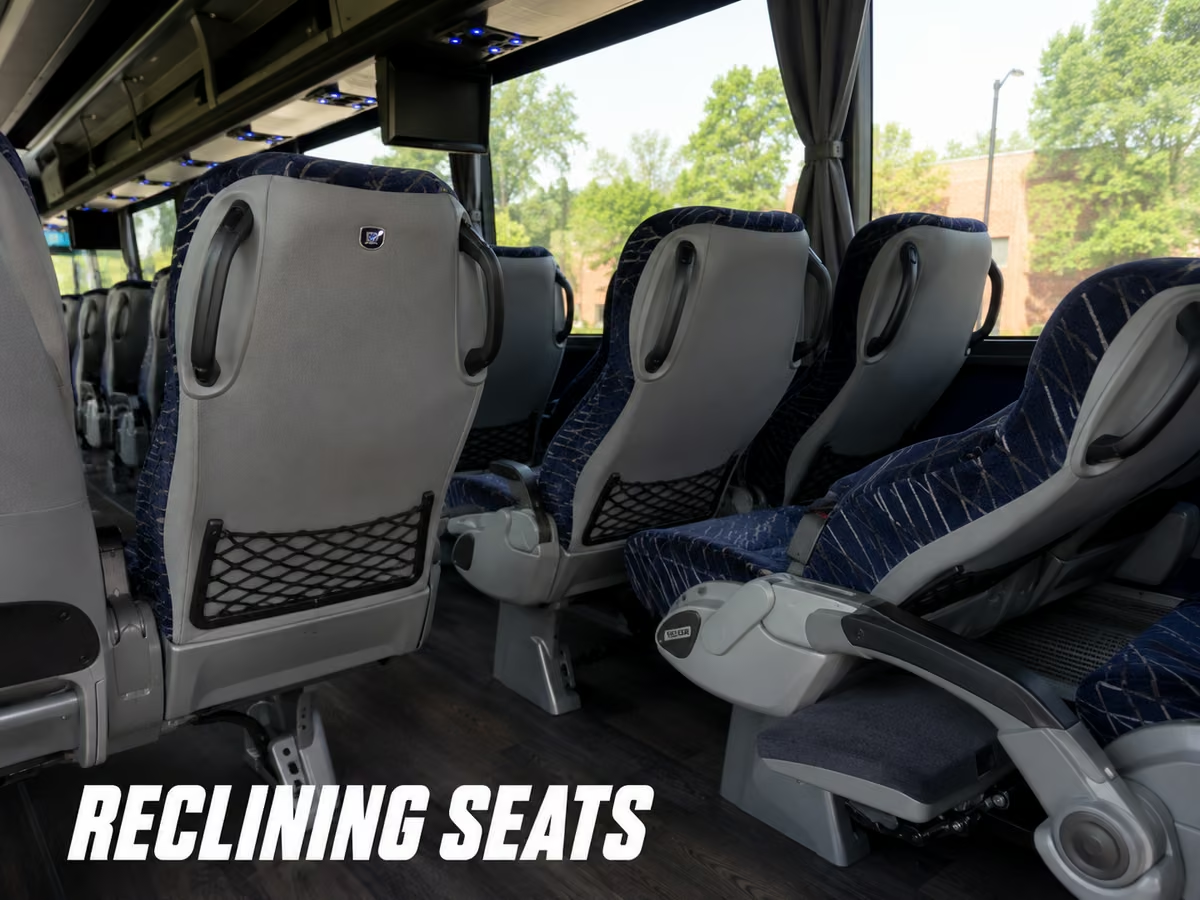
The number of them isn't. The MCI J4500 is built with 56 seats as standard and seats up to 60; Van Hool's CX45 spec sheet does the same, 56 Kiel seats standard with up to 60 available. The floor doesn't grow.
Those four extra seats come out of the legroom of the other 56. On a 30-minute hotel shuttle nobody notices; on a five-hour run to a conference everyone does.
So when you're comparing charter bus rentals for a long haul, ask for the seat count, not just "a 56-passenger bus." A 56-seat coach with 47 people on it is a comfortable day. A 60-seat coach with 58 people on it is a long one.
Interior height runs about 75 to 77 inches on the models here, so standing up mid-aisle is fine for most adults and a duck for a few.
Seat-back tray tables, card tables, cup holders, magazine nets and 2+1 seating all show up as options rather than standard fittings. If your group is playing cards to Vegas or your wedding party shuttle needs somewhere to set a drink down, those are nameable requests, not assumptions.
Screens, Sound Systems, and the Tour Guide Microphone
This is where the two flagship coaches part ways.
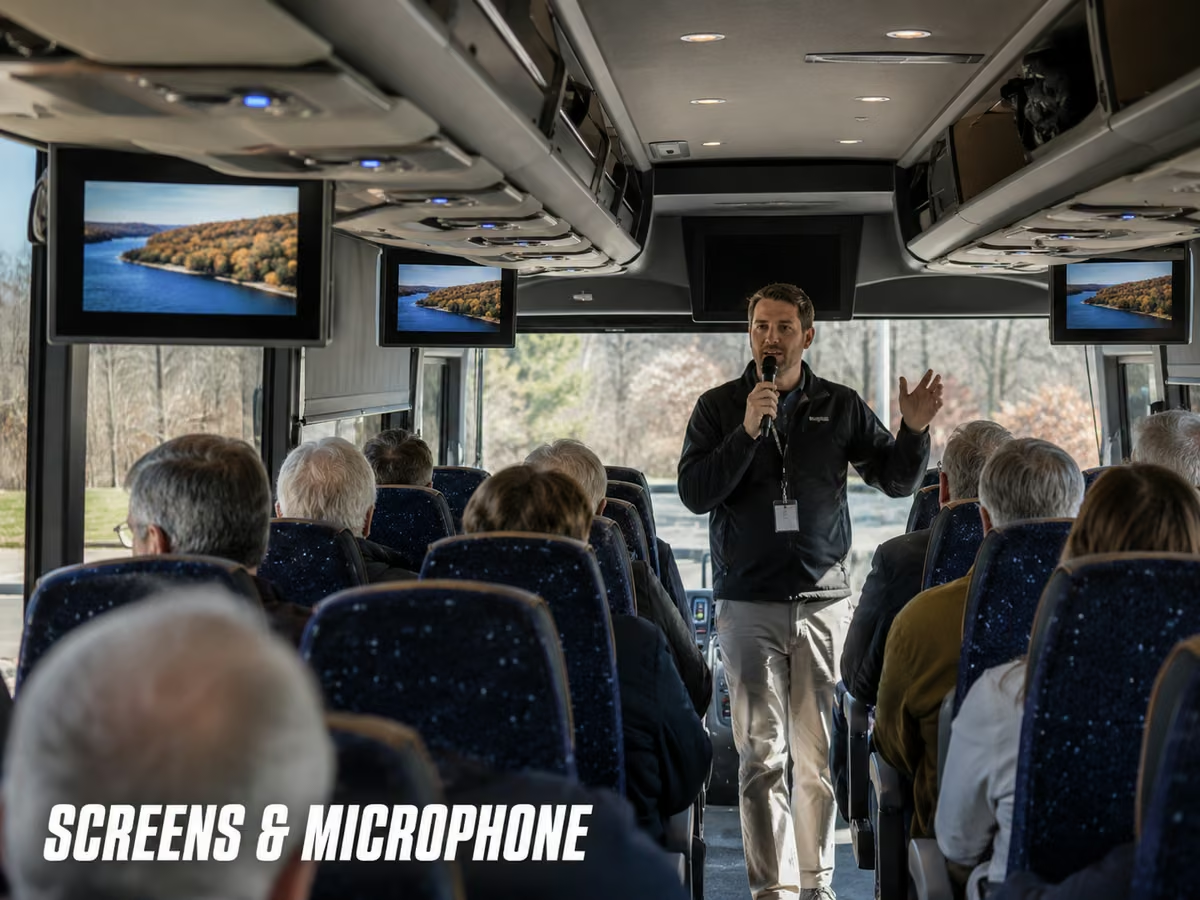
On the MCI J4500, six 15-inch HD wide-screen monitors and an AM/FM/CD/DVD head unit are standard (four monitors on the shorter J3500). On the Prevost H3-45, the 15-inch monitors are optional and so is the DVD player. Same model year, same 45-foot class, opposite answers to "does it have TVs."
Audio splits the same way. Prevost lists the PA system and a tour guide microphone as standard — so there is always a way to talk to the whole bus — while the wireless microphone is an option. That distinction matters for a guided tour, where a guide wants to walk the aisle instead of staying at the front.
Individual headsets with plug-ins are optional too. MCI offers a media panel with HDMI and USB inputs in the tour guide area as an upgrade, which is what you want if your school group transportation plans to play something off a laptop on the way. A monitor wired only to a disc player is a monitor you can't use.
"Wireless mic." "HDMI input." "Monitors."
Two words each, and they change which buses come back in your comparison.
Climate Control and the Overhead Air Vents
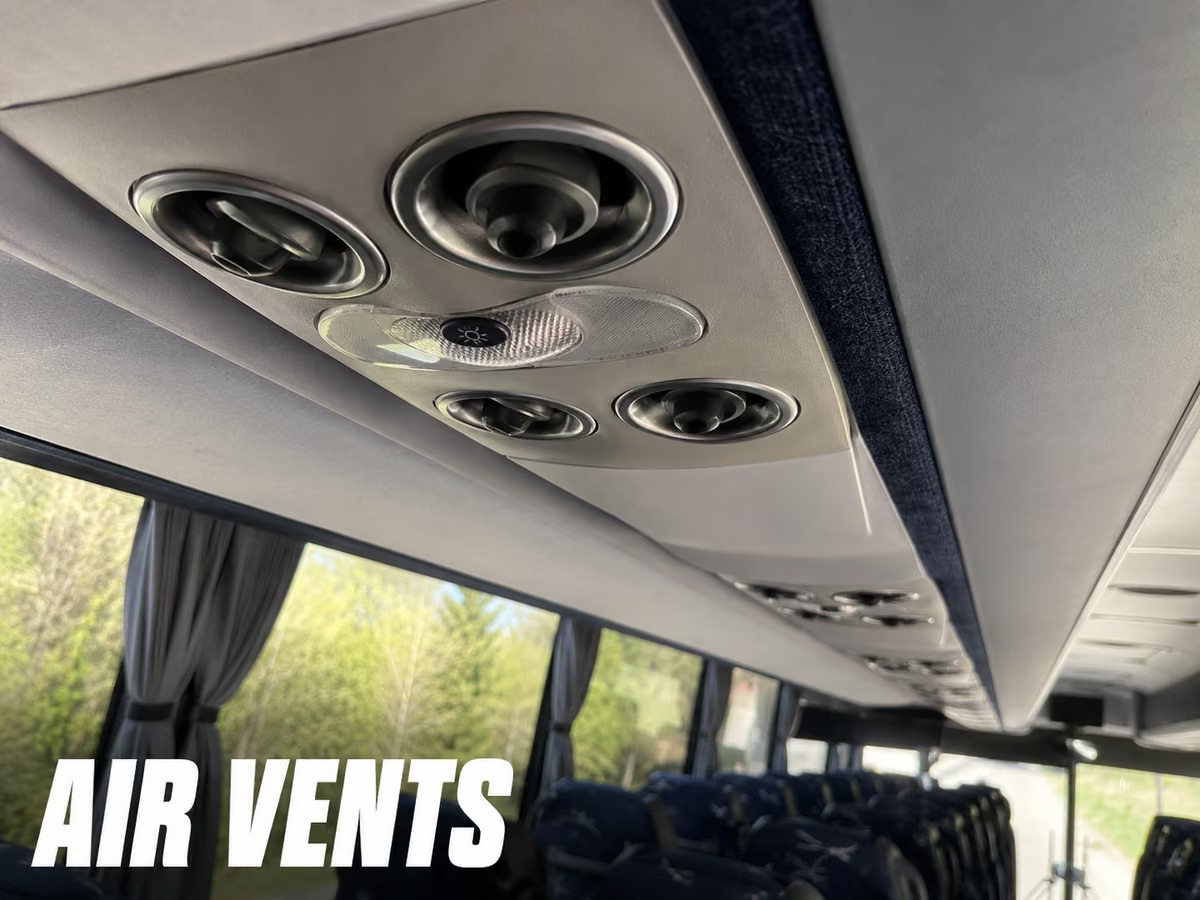
Air conditioning is standard on every full-size charter bus. What surprises people is that the little adjustable nozzle above your seat is not. Prevost lists integrated A/C routed to individually adjustable overhead outlets as an option on the H3-45.
Plenty of buses simply blow conditioned air into the cabin as a whole, which means the temperature is one setting for 56 people and the person under the vent and the person by the window will disagree about it for the entire trip.
Heat is the same story in reverse. Auxiliary heaters are options: Prevost lists a 100,000 BTU unit, MCI offers a 45,000 BTU ProHeat or a 120,000 BTU Valeo. Those matter for cold-weather trips where the bus sits parked for three hours at a stadium or a ski lodge and needs to still be warm when everyone piles back on.
If your trip runs January in the upper Midwest, an aux heater is worth asking about by name. If it runs July in Phoenix, ask instead whether the bus has the individually adjustable outlets.
Wheelchair Lifts and Accessible Seating
Lift-equipped charter buses exist across every major model, and on every one of them the lift is an ordered option rather than a build standard. Prevost offers a swap-and-plug removable lift, Van Hool's CX45 spec sheet lists a rear-position Braun NL-501 with two tie-down positions and passenger chime buttons at the securement seats, and MCI pairs its Braun lift with sliding seats so the spacing stays even after the securement area is set.
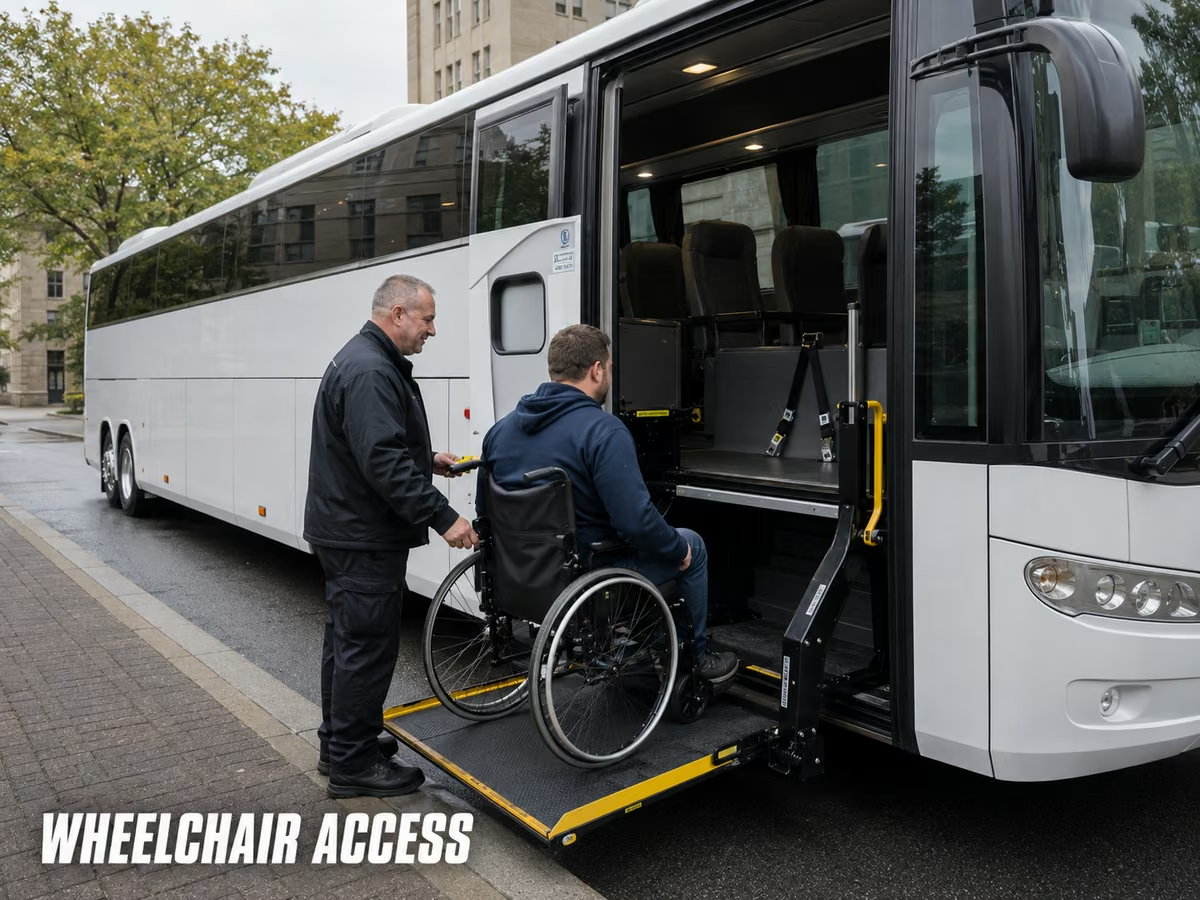
Two consequences for your planning, both from published numbers. The lift costs luggage volume — 460 cubic feet down to 430 on the H3-45 — and it costs seats, because each securement position takes the floor space of a row. So a 56-passenger bus with two wheelchair positions is not a 56-passenger bus anymore, and your headcount has to be recalculated, not estimated.
Accessible vehicles are a small slice of what's out there on any given date, which makes this the one amenity where lead time changes what you can get. Six weeks out is a different question than six days out.
So put three details in the very first quote request, not the second: how many wheelchair positions, whether the chairs are manual or powered (platform capacity varies by model), and whether anyone needs the lift to board or just a step-free entrance.
Amenities by Bus Size: Sprinter Van to 45-Foot Charter Bus
Before anyone gets to an options list, the length of the vehicle has already ruled things in and out. A restroom needs floor space. Bays need a frame built around them.
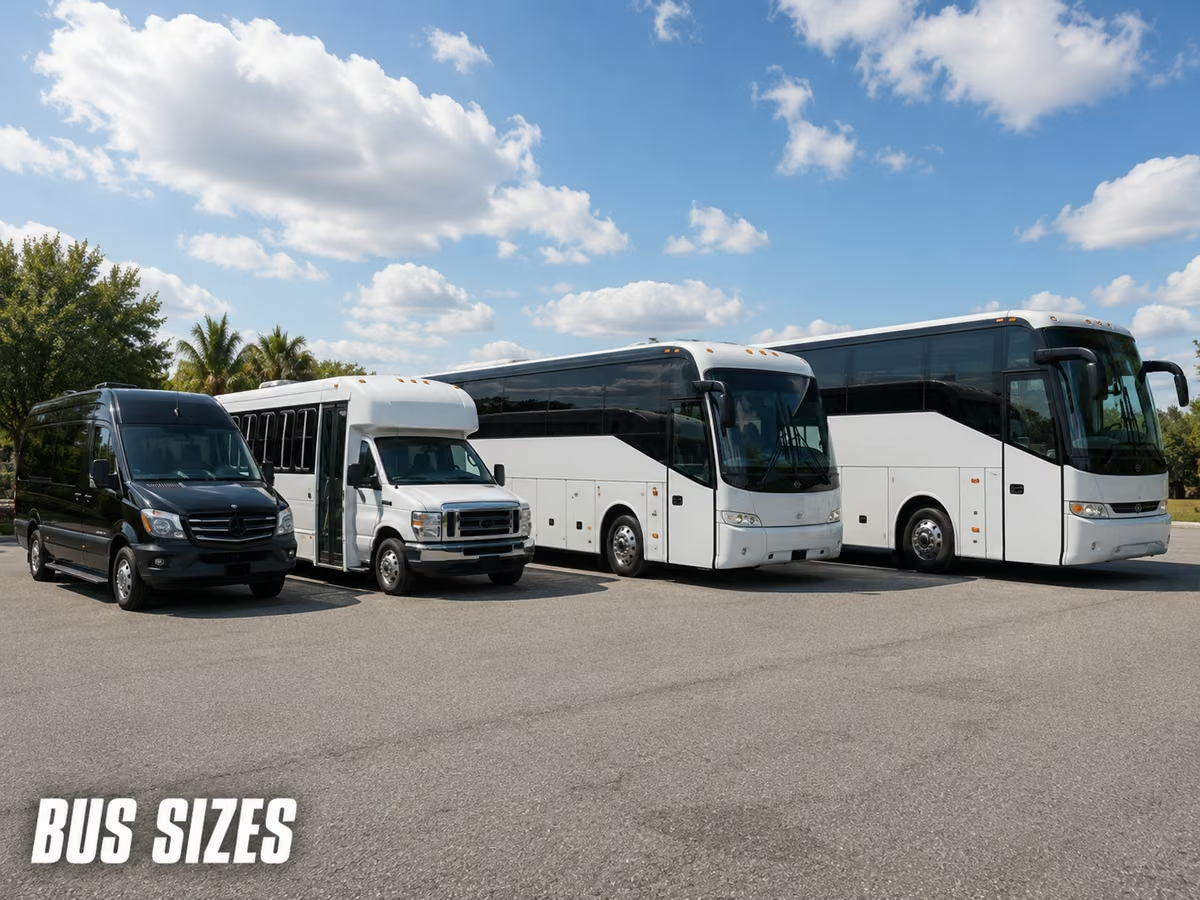
| Vehicle | Seats | Restroom | Luggage | Typically on board |
|---|---|---|---|---|
| Sprinter van | Around 12–15 | No | Rear area and laps | Leather seating, USB charging, tinted windows |
| Minibus, 15–35 passengers | 15–35 | Rare, built to order | Rear compartment, trades against seats | Reclining seats, roof-mounted A/C, PA, overhead racks, DVD screens on many builds |
| Mid-size coach, 35 ft | Around 40 | Usually yes | 215 cu. ft. on the TS 35 | Reclining seats with footrests, USB charging, parcel racks, tight turning radius for city work |
| Full-size charter bus, 45 ft | 56, up to 60 | Standard | 440–460 cu. ft. underfloor | Everything above, plus real luggage bays, PA, and the option list for WiFi, outlets and screens |
The jump that matters most is from minibus to full-size, and it isn't really about seats. It's about the restroom and the bays. A 30-person group fits on a minibus all day long for a two-hour hop.
That same 30-person group on a six-hour run with checked bags belongs on a 45-footer with 20 empty seats. Compare both in the same search rather than guessing — the guide to bus types lays out the classes side by side, and the full vehicle lineup shows what's available for your dates.
How to read a fleet photo
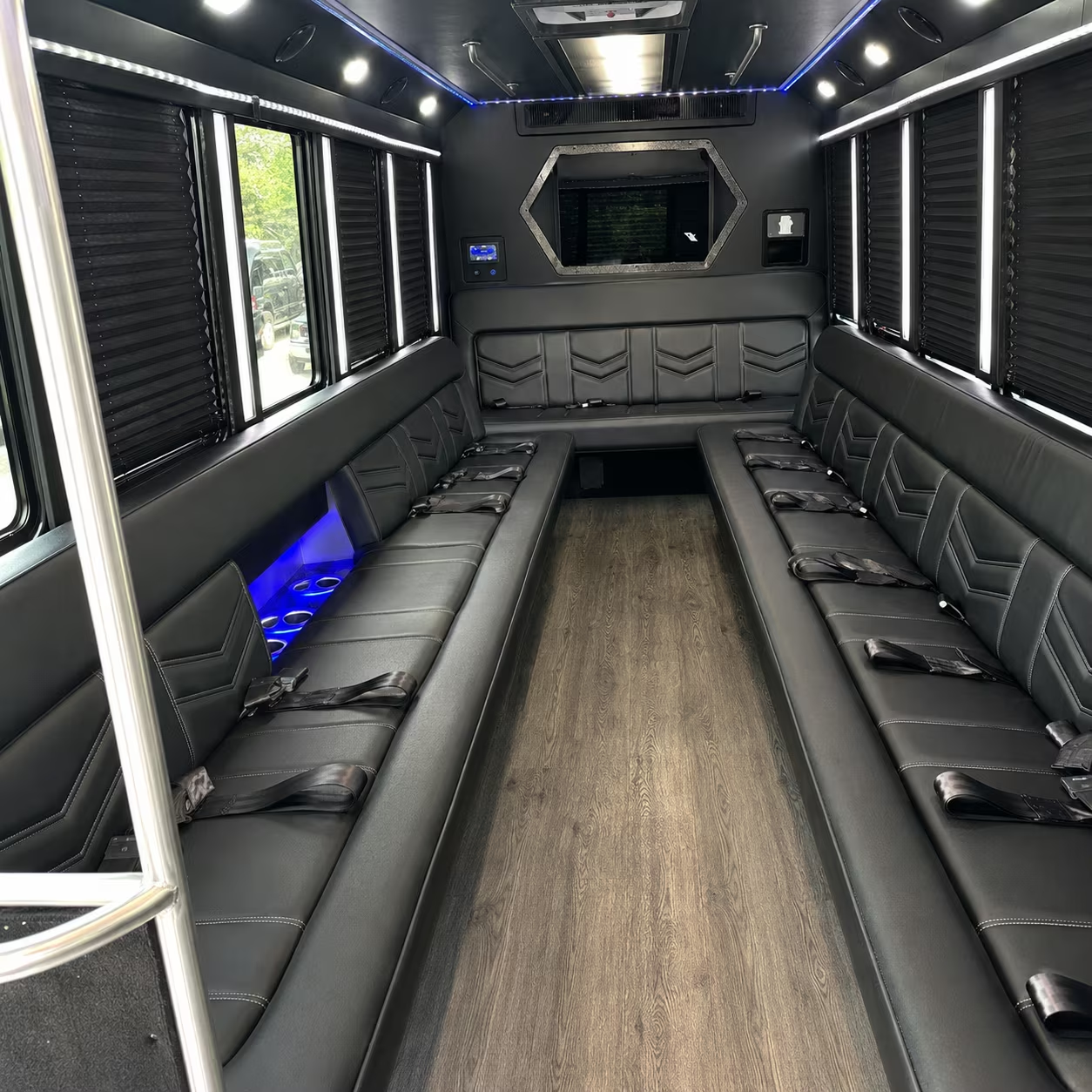
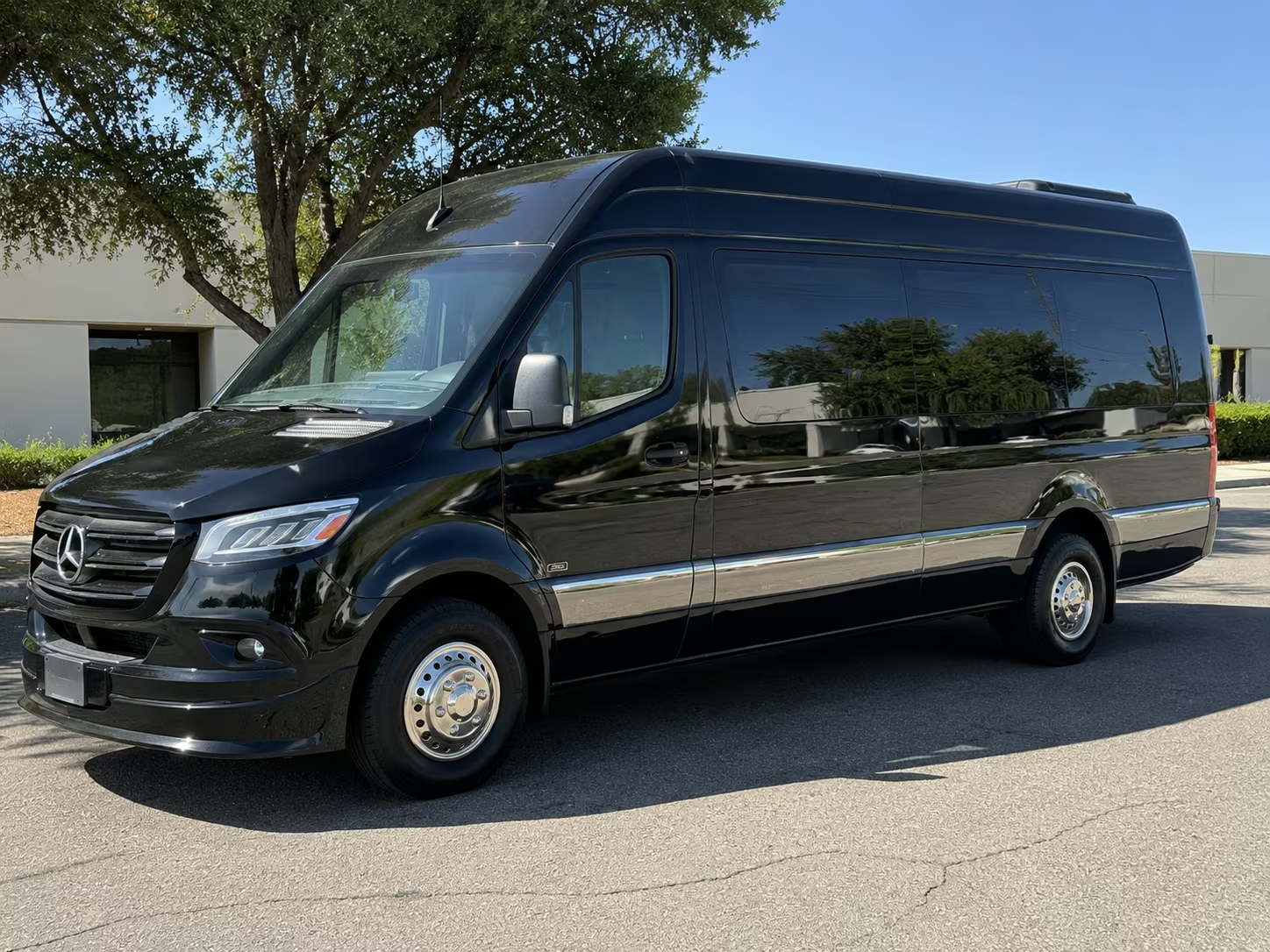
A photo can't confirm an option, but it rules things in and out. Outside, count the bay doors: a full-length row means real underfloor volume, a single door behind the rear axle means a minibus with a rear compartment, a wide squared-off door ahead of the rear wheels is a lift enclosure.
Inside, the tells are small. Outlet plates at the base of the seat pedestals. A parcel rack that's either an open shelf or a hinged bin.
Drop-down monitor housings along the aisle ceiling. Individual nozzles overhead, which mean the vents adjust.
No photo shows whether the router is live. So when one looks right, ask whether it's the vehicle offered for your date or a stock shot of the class.
How Amenities Affect What a Charter Bus Costs
Amenities are one of several things that move a quote, along with your dates, hours, mileage and how much demand there is that weekend. As a rough national picture, full-size charter bus rentals commonly land in the range of $206 to $327 an hour on a weekday, or roughly $1,331 to $2,841 a day, with newer vehicles carrying more equipment sitting toward the top of it. A 15 to 35 passenger minibus runs $207 to $246 an hour on a weekday, or about $1,098 to $2,105 a day — the two hourly ranges open within a dollar of each other, which is why the minibus-versus-coach call usually comes down to the restroom and the bays rather than the entry hourly rate.
Treat those as planning figures, not quotes. They're wide because the country is wide, and a range that broad won't tell you what your Saturday costs.
Here's the case against everything above. Every feature you name shrinks the list of vehicles that can be offered to you, and a shorter list is rarely a cheaper one. Asking for WiFi, outlets at every seat and a restroom on a two-hour hop with 30 people can price you into a coach at $1,331 a day when the minibus at $1,098 would have done the job — and for most groups under about 30 on a short ride, the smaller bus is the better call.
So name what the trip fails without. Not what would be nice.
You don't have to guess for long, either. Fill out the quick form or call 833-458-7001 and you could have pricing for your own trip in about a minute, with no account and no obligation. There's more detail on what drives the number in the charter bus cost breakdown and the party bus pricing page.
What to Put in Your Quote Request
Work through these eight lines, swap in your own numbers, and paste the result into the request form.
This writes the request, it does not send it. Availability, pricing and what is fitted to any specific vehicle are confirmed by the companies serving your area.
Paste this into your quote request:
- Group size and bag count — "42 people, about 40 checked bags, plus six equipment cases."
- Trip length — "five hours each way, round trip, same day."
- Restroom — required, or not required.
- WiFi — required, or nice to have, plus "is the router live on that vehicle."
- 110V outlets — at every seat, or not needed.
- Screens and audio — monitors, HDMI input, wireless microphone.
- Accessibility — how many wheelchair positions, manual or powered chairs.
- Seat count — ask for the actual seat count, not just the capacity class.
Eight lines. That's the difference between "we need a bus for 40" and a comparison that actually reflects your trip. Send them once to everyone you're comparing, so every reply answers the same question.
If you'd rather just talk it through, the number is 833-458-7001, any day, any time — and if you're new to the process, the step-by-step rental walkthrough covers the rest. The charter bus manufacturers guide maps model names to equipment.
None of this trips people up because they were careless. Every other way of moving a group teaches the opposite lesson: pick a fare class on a plane and the class decides the equipment, down to the seat pitch. Buses don't work like that.
A coach is a one-off order, and a rental listing describes a fleet while your trip gets one vehicle out of it.
What you're comparing is somebody else's order form, filled out years before your date existed. Ask which boxes got ticked.
Frequently Asked Questions About Charter Bus Amenities
Do charter buses have bathrooms?
Full-size 45-foot charter buses have a bathroom as standard equipment. Prevost lists the lavatory as standard on the H3-45 and MCI lists one as standard on every J-Series trim level. It's a chemical toilet over a holding tank at the rear of the bus, and on the standard build there is no wash basin, so bring hand sanitizer.
Minibuses and Sprinter vans usually have no restroom at all, which is why a group with a long ride ahead of it often moves up a vehicle class.
Is there a sink in a charter bus bathroom?
Usually not. MCI's published standard spec is a chemical lavatory without wash basin. Where a sheet does offer a flush lavatory, as Van Hool's CX45 does, that's the toilet mechanism rather than a sink.
Sanitizer dispensers are the norm. Buses with sinks and fresh water tanks exist, mostly on custom and entertainer builds, but don't plan on one.
Do charter buses have WiFi?
WiFi on a charter bus is an option, not a build standard, on both MCI and Prevost coaches. MCI even ships a power supply in the parcel rack for a WiFi install, or other added accessory, as standard, which tells you the wiring comes from the factory and the router doesn't. When one is fitted, it's a cellular router with a roof antenna, so it hits dead zones where your phone does.
Download what you need before you board and ask for WiFi by name.
Are there power outlets on charter buses?
Sometimes, and the coverage varies. MCI offers 110V outlets with USB at every seat with a 4,000-watt inverter as an option that's bundled into its upper trim packages. Prevost lists outlets as optional and notes that the number installed varies, so a bus can have outlets without having one at every seat.
Temsa's TS 35 puts dual USB-A and USB-C at the seats. Ask for "110V at every seat" if a laptop is involved.
Do charter buses have TVs?
It depends entirely on which bus. Six 15-inch HD monitors are standard on the MCI J4500 and four on the J3500, while on the Prevost H3-45 the monitors and the DVD player are both optional. If you're planning to play something on the ride, ask about monitors and an HDMI input together, since a screen with no way to plug into it doesn't help you.
How much luggage fits under a charter bus?
On the three 45-footers with published figures, a coach carries roughly 440 to 460 cubic feet under the floor — 460 on the Prevost H3-45, 445 on the MCI J4500, 440.4 on the Van Hool CX45 — plus about 87 to 131 cubic feet in the overhead parcel racks. Across 56 seats that's about 8 cubic feet a person below and 2 above, or in plain terms one large checked bag plus a carry-on each with room to spare for a few odd-shaped items. Add a wheelchair lift and you lose up to about 30 cubic feet of it.
Do minibuses have restrooms?
Minibus restrooms are rare and built to order. The standard build sheets for popular models like the Grech GM33 list a rear luggage compartment rather than a lavatory, and that compartment already costs four seats — 28 passengers with it versus 32 without. For any trip over about two hours, price a mid-size or full-size charter bus alongside the minibus and compare, because the restroom often comes free with the extra length.
Can I get a wheelchair accessible charter bus?
Yes. Lift-equipped charter buses are available across every major model, always as an ordered option rather than standard equipment. Because each securement position takes the floor space of a row and the lift also costs about 30 cubic feet of luggage bay, your usable seat count and bag capacity both change.
Put the number of wheelchair positions in your very first quote request and give as much lead time as you can, since accessible vehicles are a limited share of what's available on any given date.
Do charter buses have reclining seats?
Reclining seats with armrests and footrests are standard on full-size charter buses across MCI, Prevost, Van Hool and Temsa. What varies is how many of them are packed onto the same floor: the J4500 and CX45 are built with 56 seats standard but can be ordered up to 60, and those four extra seats come out of everyone's legroom. On a long trip, ask for the seat count.
How do I make sure the bus arrives with the amenities I asked for?
Specify it up front rather than assume it. List the features you need in the quote request, compare what comes back, and have the ones that matter written onto the confirmation. That takes an extra minute at the request stage and settles the question before the date.
Compare Charter Buses With the Amenities You Want
Partybus-rental.net isn't a bus company, and that's the best part of it — you're not stuck with whatever one company happens to have parked out back. We compare quotes and connect groups with the bus companies and transportation providers serving each area; we don't own vehicles, employ anyone who takes the wheel, or operate the trips, and every amount shown is example pricing rather than a quote. Fill out one quick form or call, and you compare vehicles and online rates from a large network of bus companies, with the amenities you asked for right there in front of you.
No account required, no obligation. Party buses, charter buses, minibuses and Sprinter vans, all in one place.
You already know what your group needs on board. Go get pricing for it: call 833-458-7001 any time, or use the quote tool and see your options in about a minute.
Specifications on this page come from the manufacturers' own published model pages and specification sheets, cited where they appear: MCI's J-Series specification brochure and its published J-Series model specifications, Prevost's H3-45 specification sheet, the Van Hool CX45 specification sheet published by ABC Companies, Temsa North America's TS 35 product page and Grech Motors' GM33 model page. Figures last checked July 2026; builders revise configurations between model years, so confirm the exact specification for the vehicle on your quote. Partybus-rental.net is a comparison and quote-request website — it does not own vehicles and does not provide the transportation itself. Corrections: contact page.