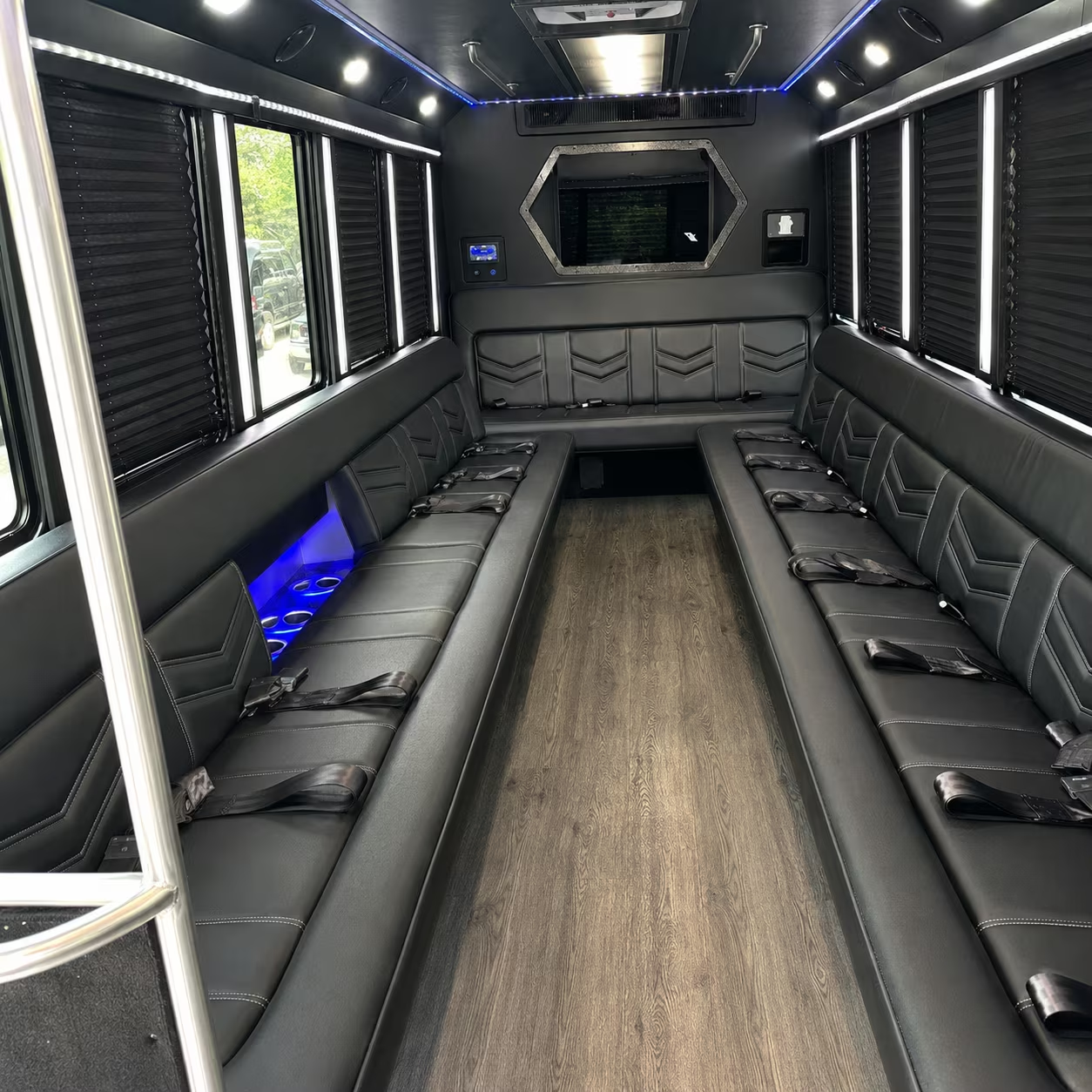
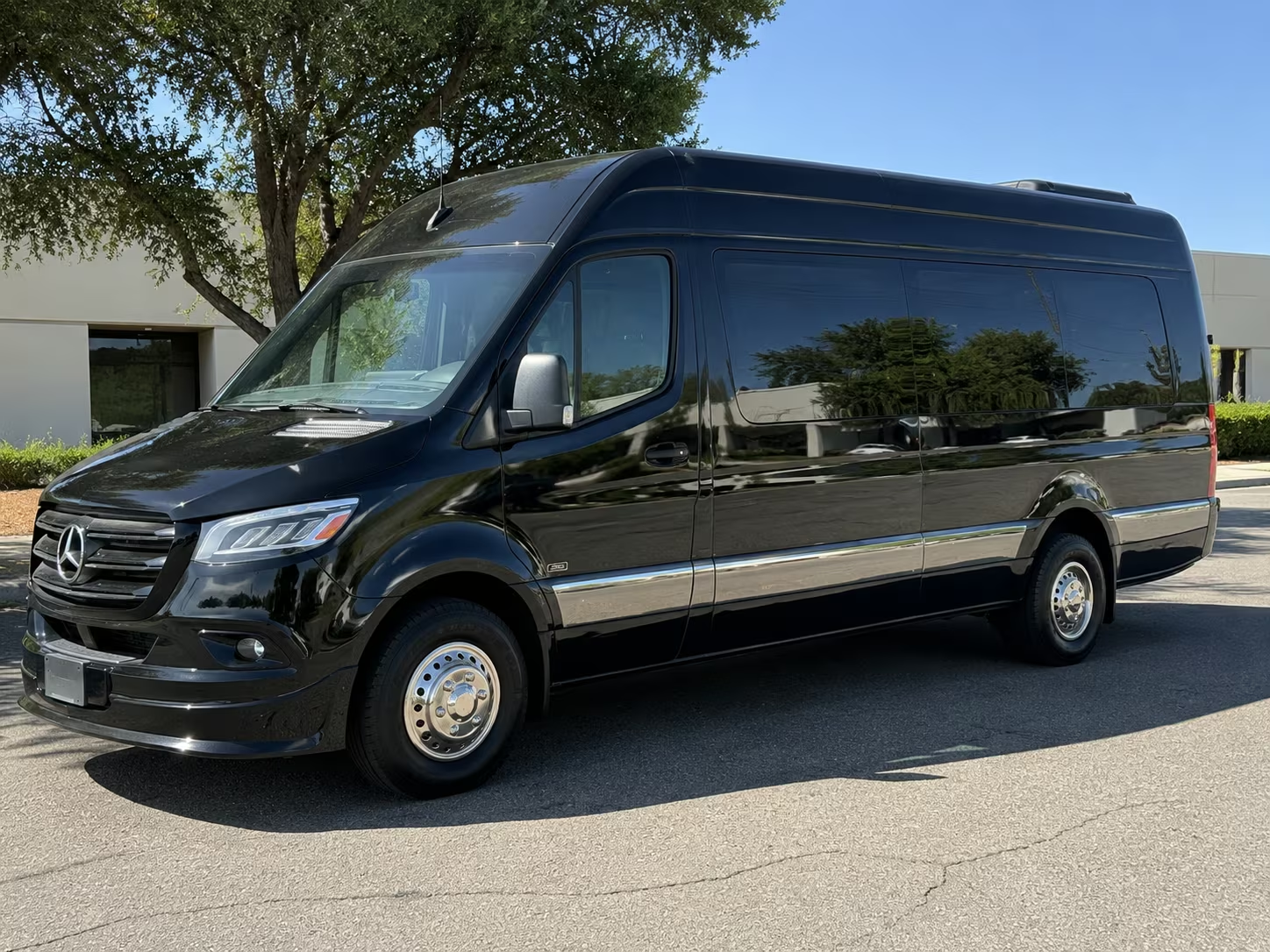
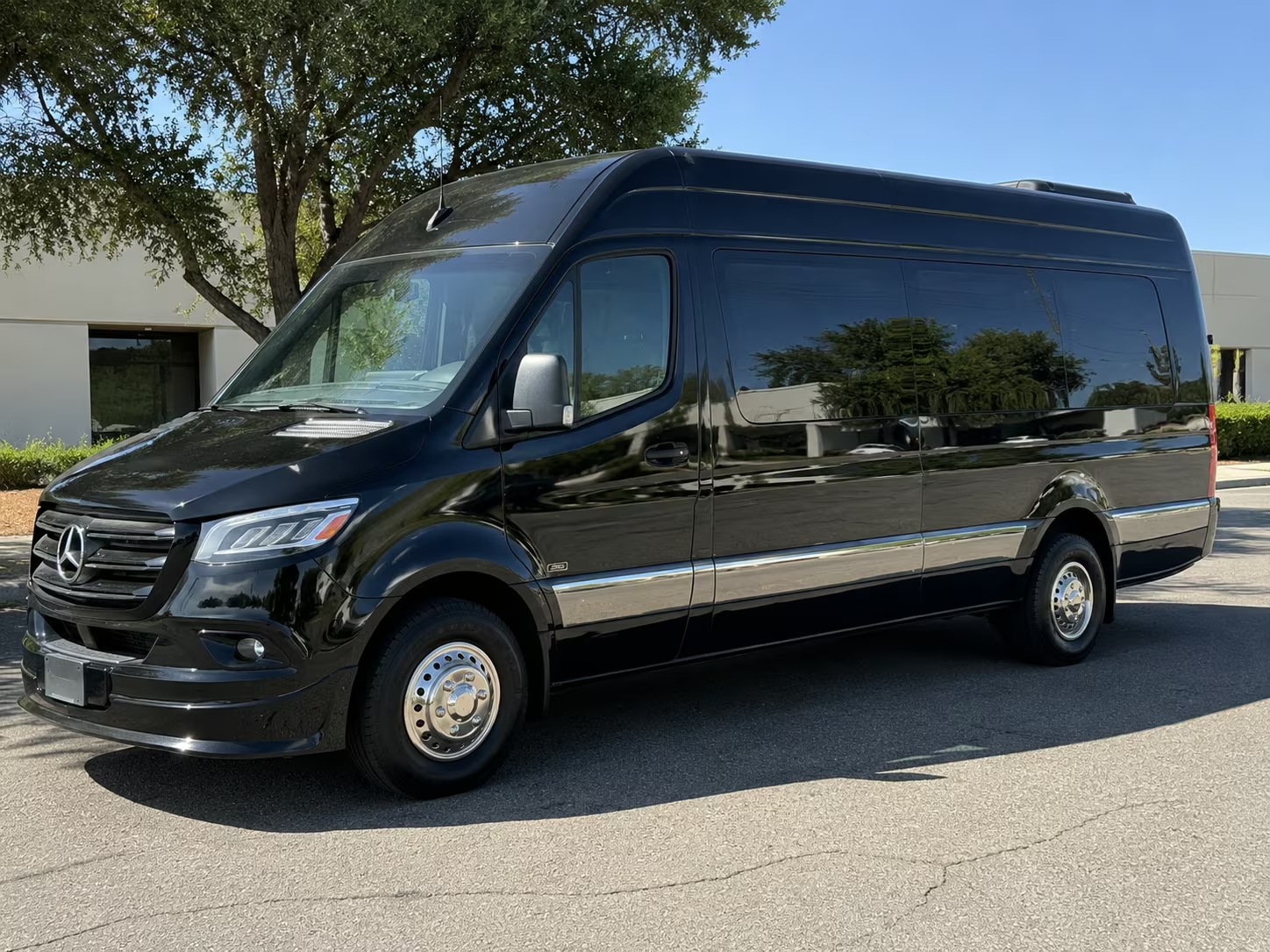
A minibus is a small bus seating roughly 8 to 35 passengers, built by mounting a bus body onto a van or truck chassis, and in the US, the same vehicle in service is usually called a shuttle bus.
But a quote will list one as a 25-passenger minibus and stop there — no photo, no dimensions, no floorplan. It's a word most Americans rarely use, so it isn't obvious whether that means a large van, a small bus, or something in between.
Two things catch people out: a minibus has no underfloor luggage bays, and the seat count changes with the floorplan — the same body sells as 25 seats, 21 with luggage, or 12 with wheelchair positions. If a quote gave you a number, it came with conditions.
What Is a Minibus?
More people than a van, fewer than a full-size bus: 8 seats to the mid-30s. Past that you're into a midibus. Below it you're into a Sprinter van.
Dictionaries that split usage by region give the word both a British and an American entry, which is part of why it reads slightly off to an American ear.
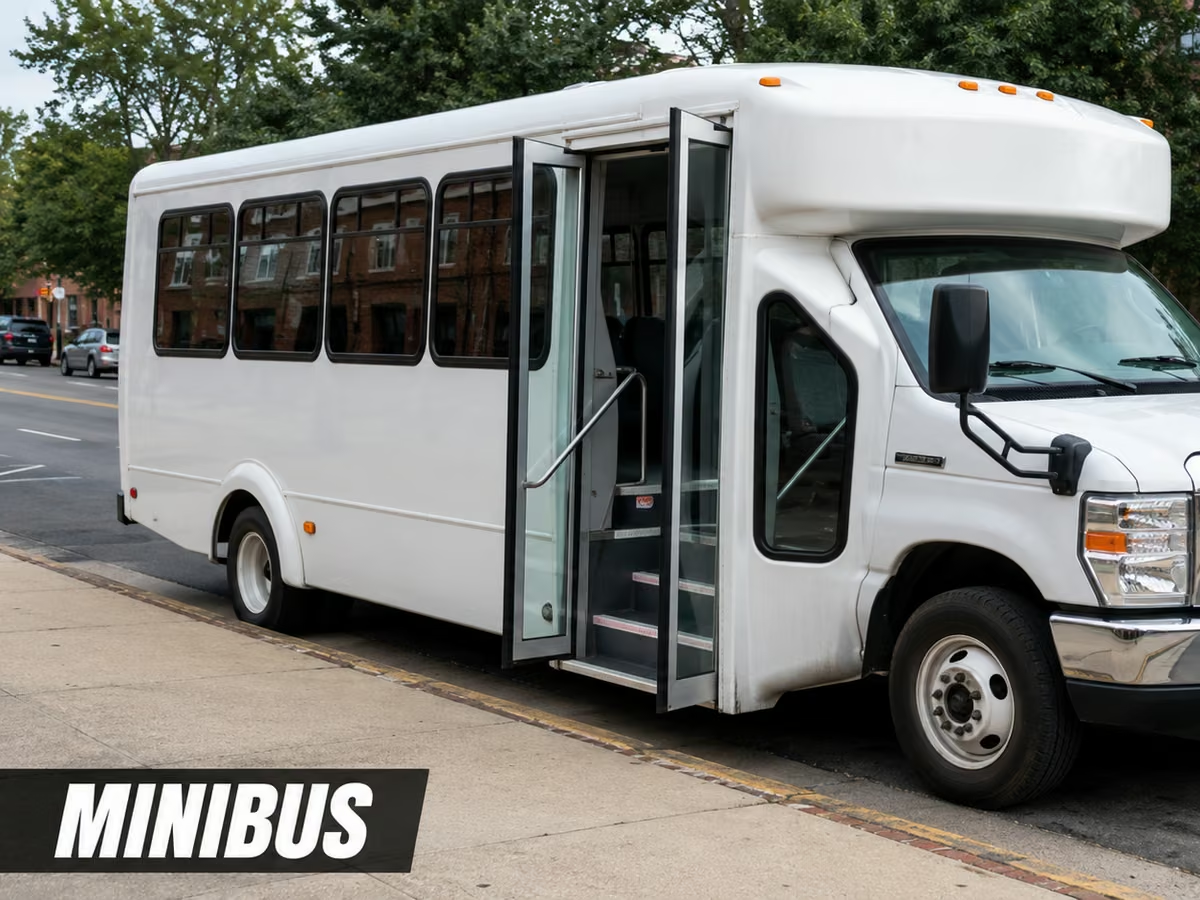
It's the body that makes it a bus, not the badge on the front. A real entry door with steps and a grab rail. A center aisle you can walk down.
Floor-mounted seat track, roof-mounted air conditioning, push-out egress windows. A van has none of that. A van has a van body with rows of seats in it.
Minibus, Mini Bus, Shuttle Bus: What Americans Actually Call It
Only some of these terms mean the same vehicle.

| Term | What it means | Same vehicle? |
|---|---|---|
| Minibus | A small bus, roughly 8 to 35 seats. Standard usage in British English, industry shorthand in the US. | Yes |
| Mini bus | Spelling variant. Nothing else changes, and it's the version Americans type more often. | Yes |
| Shuttle bus | The American term for this vehicle in service. Hotel loops, airport runs, campus circulators, event park-and-rides. | Yes |
| Small bus | The plain-English catch-all. Broader, but it points at the same thing. | Yes |
| Minicoach | A small body with a higher-end interior: reclining seats, wood-look flooring, frameless windows. | Yes, upgraded |
| Midibus | The size band directly above. Bigger than a minibus, smaller than a full-size bus. | No, one class up |
| Microbus | A different vehicle entirely. Americans hear this and picture the Volkswagen van. | No |
Watch what manufacturers call their own products. Glaval calls the Commute a narrow-body shuttle. Ford runs an entire commercial page headed Shuttle Bus, and sells a factory Shuttle Bus Prep Package as an order code on the chassis.
Champion doesn't reach for "minibus" either — it pitches the Defender S2C as a "high capacity 44 passenger, heavy duty performance vehicle." Up and down the American supply chain, the word on the box is "shuttle," and almost never "minibus."
"Minibus" is a market term, not a fixed size. Nobody publishes an agreed seat range, and two fleets will draw the boundary in different places — one lists a 32-seat build as a minibus, the next calls the same vehicle a midibus. The word tells you roughly what size to picture.
The seat count and floorplan on your quote matter more than the label above them.
Is a Minibus the Same as a Minivan?
No, and they aren't close. Rental fleets split vans from buses at about 14 to 15 seats: above that line you're shopping buses, below it you're shopping vans, and a minivan sits two full size classes further down at seven or eight seats.
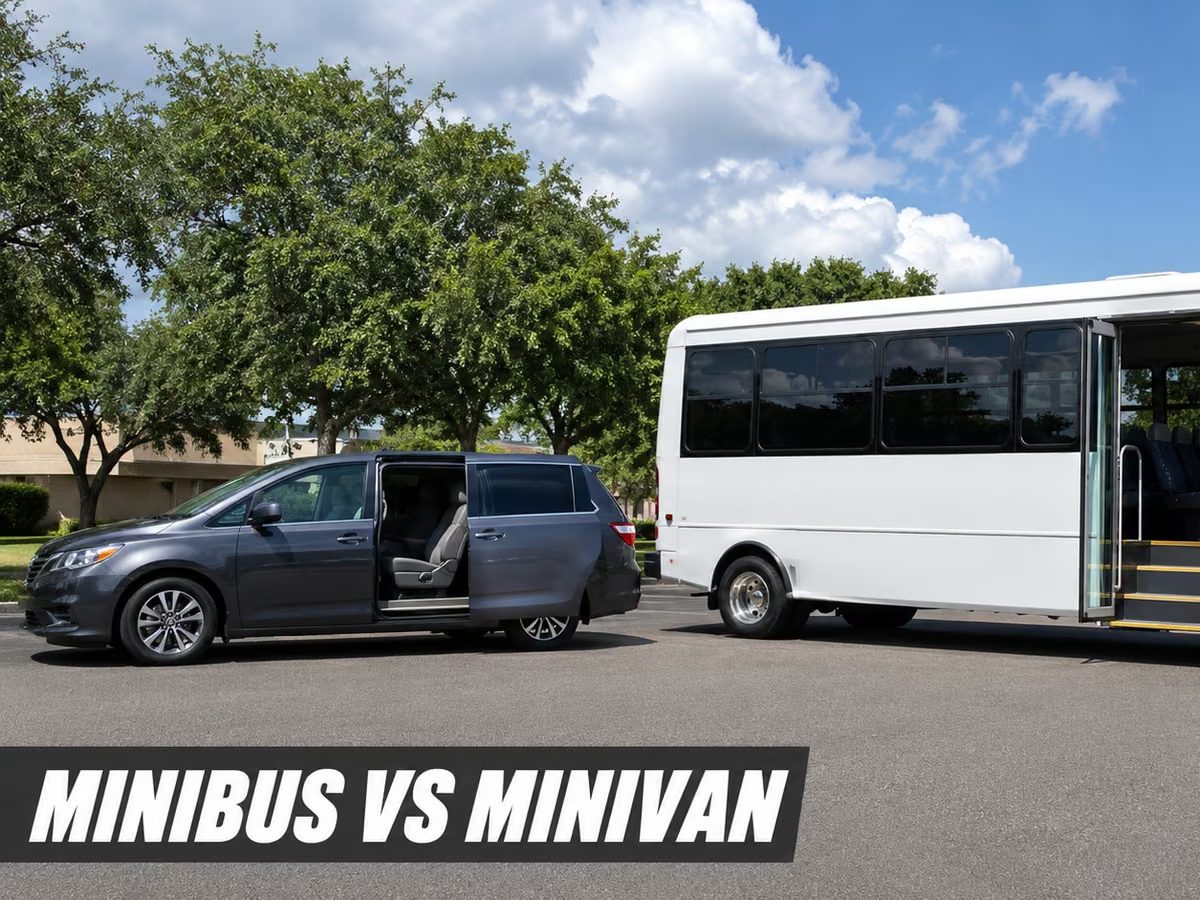
A minivan is a passenger car with three rows. You step across into it, the back row folds into the floor, and it handles like a large car. A minibus is a commercial vehicle with a floor 29 or 30 inches off the ground, steps to climb, a grab rail at the door, and a stand-up aisle.
Seven people going to dinner: minivan. Twenty-four people: it isn't in the conversation.
How a Mini Bus Is Built on a Cutaway Chassis
Almost every American minibus is a cutaway, and the term is literal.
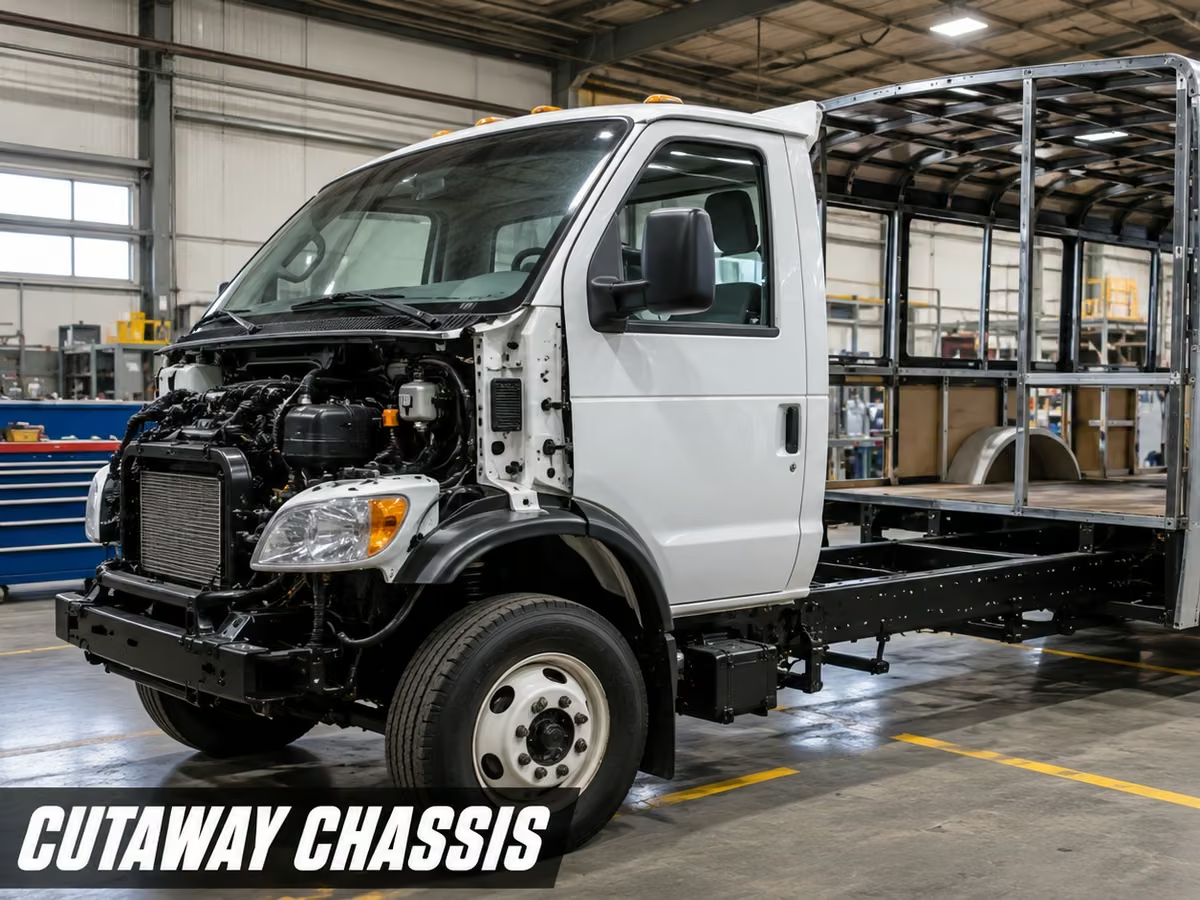
The back of the cab is open and the rails run bare behind it. Ford sells exactly this as the E-Series Cutaway. A separate company — a body builder — takes that rolling chassis and constructs a passenger body on the rails: welded steel cage, skinned, capped in fiberglass at both ends, interior finished.
The nose of a mini bus looks like a Ford truck because it is a Ford truck. Everything behind the doorpost is a separate product from a separate factory.
Who Builds Minibuses in the US
Six names cover most of what rolls through American group transportation. Champion Bus, Glaval Bus and Starcraft Bus are all Forest River brands, run out of Goshen, Indiana. Grech Motors builds the higher-end shuttle and minicoach end.
Turtle Top and Federal Coach round out the list. Underneath them sit five chassis: the Ford E-450, Ford Transit, Chevrolet 3500/4500, Mercedes Sprinter and Freightliner S2.
The bodies themselves are a fully welded steel cage, coated against corrosion, with one-piece fiberglass caps front and rear — Forest River lays out the construction stack panel by panel — and the individual model brochures add laminated sidewalls and 5/8-inch marine-grade plywood flooring. The same construction applies one size up — see the guide to charter bus manufacturers.
The chassis underneath is what sets the size class, and Ford's own shuttle bus lineup lays the ladder out in order: Transit Cutaway at the narrow-body end, then E-350 / E-450 Super Duty Cutaway, then the F-550 Super Duty at 17,500 to 19,500 lb GVWR, then the F-650 at 20,500 to 29,000 lb. Between those last two sits the F-600, which is the chassis under the Grech GM33 in the table below. Every step up that ladder buys seats, width and payload, and costs you maneuverability.
Chevrolet and Freightliner run parallel ladders of their own.
One distinction worth keeping straight: a van conversion is not a cutaway. That's an existing van body retrofitted with seats and trim — it keeps the van's roofline, the van's doors, and the van's step height. Different product, different feel, different headroom.
How Many Seats Are in a Minibus?
Between 8 and about 35 — and one shell gets published at four or five different counts, depending on what else the buyer ordered inside it.
| Size class | Example model | Chassis | Length | Published floorplans |
|---|---|---|---|---|
| Narrow-body, about 14 | Glaval Commute | Ford Transit | 22' – 24' | 14 · 14 with rear luggage · 13 · 12 with rear luggage · 8 with 2 wheelchair positions |
| Mid-size, 20 to 25 | Glaval Titan II | Chevrolet 3500 / 4500 | 20' – 25' | 25 · 21 with rear luggage · 20 with interior luggage · 16 with 2 wheelchair positions · 12 with 2 wheelchair positions |
| Medium-duty, 28 to 33 | Glaval Entourage | Ford F-550 | 28' – 32' | 32 · 29 · 28 with rear luggage · 24 with rear luggage · 24 with 2 wheelchair positions and flip seats · 24 with 2 wheelchair positions and foldaway seats |
| Higher-end build | Grech GM33 | Ford F600 | Not published | 32 · 28 with rear luggage |
| Top of the class, crossing into midibus | Champion Defender S2C | Freightliner | 32' – 40' | 45 · 41 with rear luggage · 37 · 36 with 2 wheelchair positions · 29 with rear luggage · 28 with 2 wheelchair positions |
Figures from the manufacturers' own published brochures and model pages: the Glaval Commute brochure, the Glaval Titan II brochure, the Glaval Entourage brochure, the Grech GM33 model page, and the Champion Defender S2C floorplan list linked earlier. Manufacturers list passenger seats separately from the front cab seats, and note that capacities are references subject to final weight analysis. Checked July 25, 2026.
Look at the Entourage row: three of its six published floorplans are 24-passenger layouts — one with rear luggage, two with wheelchair positions — on a bus that seats 32 when you ask for nothing but seats. Three configurations, one label, and they don't do the same job.
That last row is where the class boundary sits, which is why it straddles two labels: its 28- and 29-seat floorplans are minibuses, its 36-to-45-seat ones have crossed over. Once a build hits 40 feet and 45 seats, calling it a minibus stops making sense — that's a midibus, and it's shopping in the same aisle as a 40 to 56 passenger charter bus.
Give your headcount before you get attached to a number. A "25-passenger minibus" and a "21-passenger minibus" are often the same vehicle with different insides. If your group is 22 people with roller bags, the seat count you need and the seat count on the spec sheet are two different figures.
Get pricing for your actual headcount in about a minute — the online quote form on this website, or 833-458-7001.
Accessible Floorplans Change the Seat Count
Every builder above offers wheelchair lift and securement configurations, and the floorplans show the cost in seats. On the Titan II, accessible layouts drop from 25 seats to 16 or 12, because a securement area needs the footprint of several seats plus turning room. On the Entourage, two wheelchair positions take a 32-seat bus down to 24.
The narrow-body Commute's accessible plan seats 8 — though that same body can take up to five wheelchair positions if mobility capacity is the point rather than seat count.
Two details worth asking about by name. Flip seats and foldaway seats let a securement area convert back to seating when nobody needs it, which is why the Entourage lists two different 24-passenger accessible plans rather than one. And a lift adds cycle time at every stop, so a route with eight pickups runs longer than the same route without one.
So ask for a wheelchair position when you request pricing rather than mentioning it at the curb — ideally 48 hours or more ahead, since far fewer vehicles in any fleet are configured for it. The vehicle that seats your group and carries a securement position is usually one size class larger than you'd otherwise pick, and that changes what's available on your date.
Minibus Luggage Space: There Are No Bays Underneath
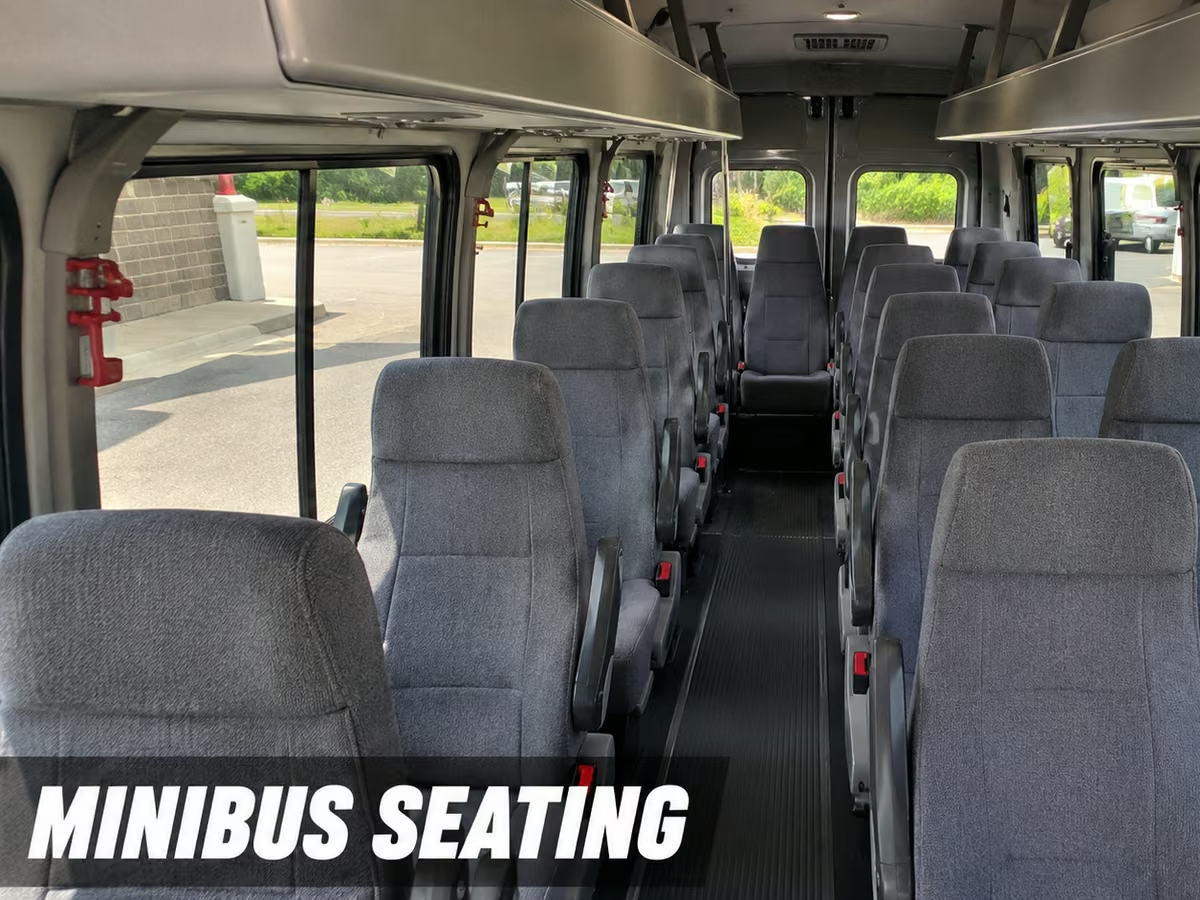
A minibus has no underfloor luggage bays. No side hatch. No compartment below the floor.
Not a trim level somebody skipped, either — the floor sits about 30 inches off the ground with the chassis rails right underneath it, so there's nowhere for a bay to go.

What you get instead, all of it optional rather than standard equipment:
- Overhead parcel racks down both sides, sometimes with reading lights built in. Fine for coats, totes, backpacks, a laptop bag.
- Interior luggage racks, a vertical stack usually placed just inside the entry.
- A rear luggage compartment behind the last row, walled off inside the body. This is the real one.
And the rear compartment is paid for in seats. The Titan II goes from 25 down to 21 when you add it. The Entourage goes from 32 down to 28, and its 29-seat plan drops to 24.
The Grech GM33 goes from 32 down to 28. That's three builders across two chassis families landing in the same place: a rear luggage compartment costs you roughly four to five seats. You're renting four seats to hold suitcases.
The math that decides your vehicle: 24 people going to a wedding across town, no bags — a mid-size minibus is the right pick. The same 24 people arriving from the airport with a checked bag each — that same minibus now seats 21 with the luggage compartment, and you're a vehicle short. Airport groups usually want one size above their headcount, or a full-size charter bus with real bays underneath.
So put a count in your quote request, not "some luggage." Oversized items — golf clubs, instrument cases, ski bags, coolers — don't fit an overhead rack, and on a minibus they take an aisle seat instead.
Minibus Dimensions and Where One Actually Fits
Seat counts get all the attention. Dimensions decide whether the vehicle can reach your door.
| Measurement | Narrow-body (Ford Transit) | Mid-size cutaway (Chevrolet) | Medium-duty (Ford F-550) |
|---|---|---|---|
| Overall length | 22' – 24' | 20' – 25' | 28' – 32' |
| Overall width | 84" (7'0") | 96" (8'0") | 96" (8'0") |
| Overall height | 110" (9'2") | 115" – 116" (about 9'7") | 123" (10'3") |
| Interior width | 81" | 93" | 93" |
| Interior height | 76" (6'4") | 80" (6'8") | 78" (6'6") |
| Wheelbase | 138" – 156" | 139" – 177" | 205" – 238" |
| Ground to first step | 11" | 12" | 10.5" |
| Ground to interior floor | 29" | 30" | 30.5" |
| Entry door clear opening | 30" – 31" | 30" – 31" | 30" – 31" |
| GVWR | 10,360 lb | 12,300 – 14,200 lb | 19,500 lb |
From the published Glaval Commute, Glaval Titan II and Glaval Entourage specification tables, linked above. Checked July 25, 2026.
Four of those numbers change how you plan the trip.
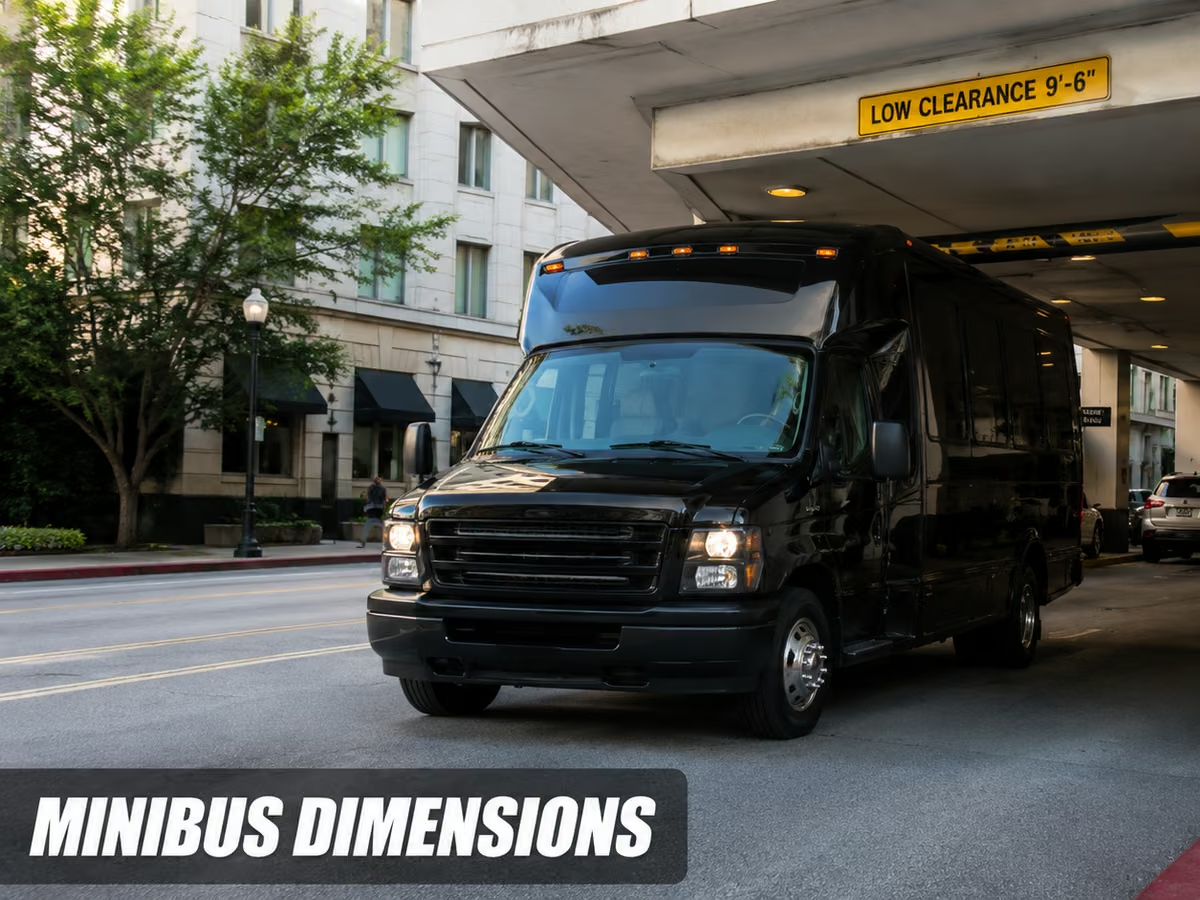
Height climbs faster than seat count. A narrow-body sits at 9'2". A mid-size cutaway is 9'7".
A medium-duty build is 10'3" — a full foot taller than the small one, for a vehicle most people would describe with the same word. Plenty of hotel porte-cocheres are no better than a garage. So if the plan involves a canopy, check the posted clearance at that property against the actual vehicle, not against "a minibus."
A curbside spot beats a covered entrance the vehicle can't enter.
Width, a full 8 feet on a mid-size, plus mirrors. It needs a genuine curb lane or a loading zone. Residential driveways and tight hotel turnarounds are where these plans come apart.
Wheelbase from 138 inches to 238 inches. That spread is the whole reason "minibus" isn't a single answer. A short narrow-body threads a downtown hotel loop, a winery driveway or a residential street that a 45-foot vehicle simply cannot enter.
A 32-foot medium-duty build on a 238-inch wheelbase does not. If your itinerary has more than three stops on tight streets, say so — that pushes you toward the smaller end of the class, not the bigger seat count.
Floor 29 to 30.5 inches up, with risers of 9 to 10 inches. That's three steps to board, every stop, on every build in the class. For a group with older passengers, or a wedding party in long dresses and heels, ask about a lift or ramp configuration when you request the quote instead of discovering the step height on the sidewalk.
Minibus vs Charter Bus: Which One Fits Your Trip
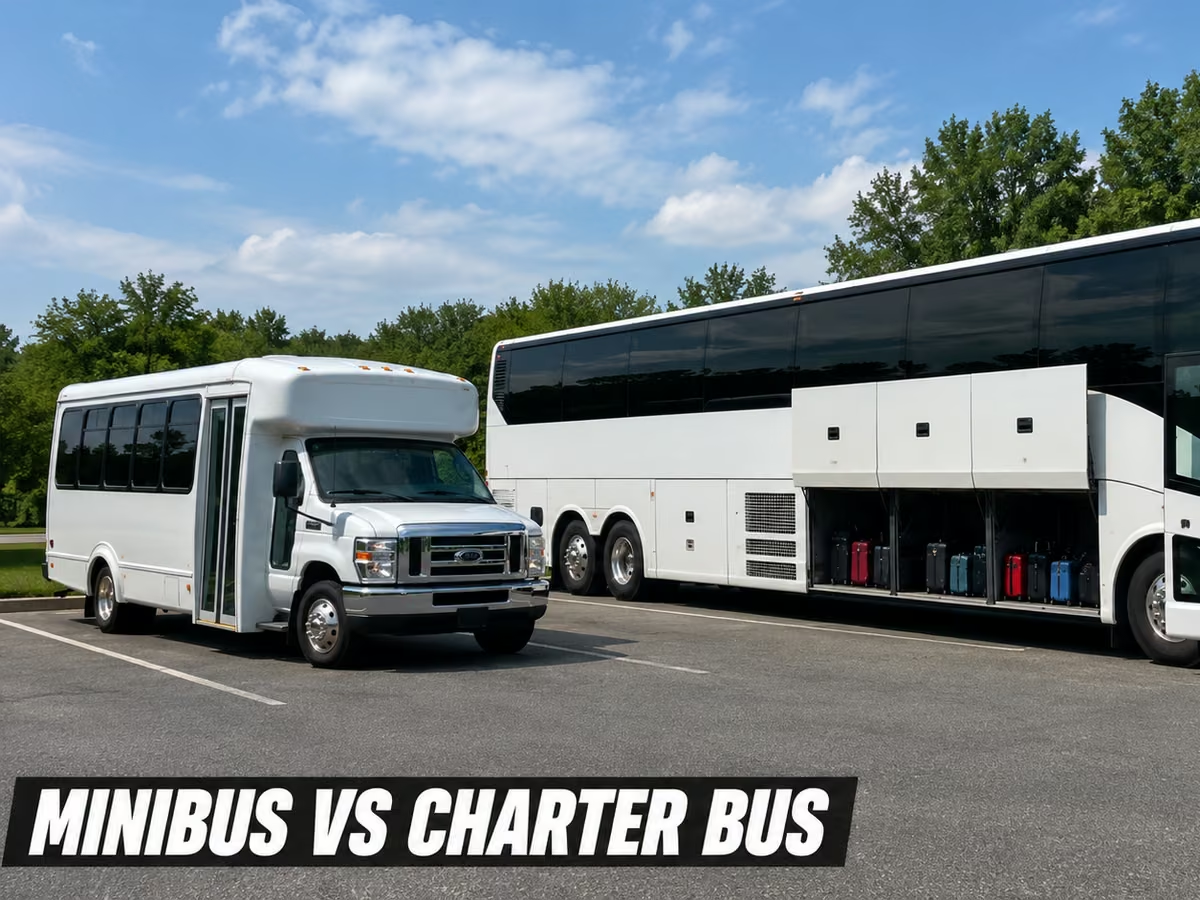
Group size doesn't decide this one. Luggage does.
| Minibus | Full-size charter bus | |
|---|---|---|
| Typical seats | 8 – 35 | 40 – 56 |
| Construction | Bus body on a cutaway van or truck chassis | Purpose-built integral coach |
| Luggage | Overhead racks, optional rear compartment. No underfloor bays. | Underfloor bays — 460 cubic feet on a Prevost H3-45, plus 117 more overhead |
| Restroom | Not on standard builds | Standard on most |
| Best trip length | Local hops and day trips | Multi-hour and interstate runs |
| Tight streets and hotel loops | Handles them | Often can't enter |
| Cost per head at full capacity | Higher, fewer seats to split across | Lower once you fill it |
A Prevost H3-45 spec sheet publishes 460 cubic feet of underfloor space. A minibus publishes none, because it doesn't have any. Every other row in that table is a matter of more or less.
Luggage is all or nothing.
So the deciding question is group size plus bags plus how long anyone is sitting. Thirty people, no luggage, four stops around town: minibus. Thirty people with suitcases going three hours each way: you want the bays and the restroom, which means the larger vehicle even though you're not filling the seats.
Seating figures across the whole range are laid out in the charter bus seating capacity guide.
Minibus vs Passenger Van: Where Groups Outgrow the Van
The seat count is rarely what pushes a group out of a van.

| Passenger van or Sprinter | Minibus | |
|---|---|---|
| Typical seats | Up to about 14 | 8 – 35 |
| Getting in | Van door, step up into the row | Bus entry door, steps and grab rail |
| Standing headroom | None to limited | 76" – 80" interior height, stand-up aisle |
| Aisle access | Climb past people to reach the back | Center aisle to every row |
| Luggage | Behind the last row | Overhead racks, optional rear compartment |
| Feels right for | Small groups, short hops | 12 – 35 people, multi-stop days |
The tipping point is usually the aisle. In a van, the eleventh person is climbing over the ninth every time the group stops, and on a day with six stops that gets old fast. In a minibus everyone walks to their own seat and stands up straight doing it.
If your group is genuinely small, there's no reason to size up — see the Sprinter van rental page or the 14-passenger Sprinter limo for the more sensible pick. The whole ladder is laid out in the bus types guide.
The other tipping point is splitting the group: two vans means two arrival times at every stop, and nobody has to skip the party to drive in a minibus.
When a Minibus Rental Is the Right Call
A mini bus earns its keep in a few specific situations:

- Wedding guest shuttles. Hotel block to ceremony to reception, looping all evening. Short legs, light bags, tight venue driveways. Wedding shuttle transportation sits right in the middle of what this class does well.
- Corporate and conference shuttles. Hotel to convention center on a repeating circuit, where a smaller vehicle running twice beats a large one that can't reach the loading zone. See corporate event transportation.
- Winery and brewery tours. Narrow rural driveways and gravel lots where a 45-footer has nowhere to turn around. A winery tour and pub crawl vehicle lives or dies on wheelbase.
- School and youth groups. Field trips, athletics, band. School event transportation in this size class covers most single-classroom trips.
- Small airport transfers. Works well when it's people and carry-ons. Airport transportation is where the bag count bites — see the luggage section above.
A minibus is the wrong pick in a few cases: when your group is flying in with checked bags, when anyone is sitting on board for more than a couple of hours without a restroom stop, or when your headcount is under about ten and you're paying for a bus you don't need. In the first two cases size up. In the third, size down.
What a Minibus Costs to Rent
A minibus and a full-size charter bus start at about the same hourly rate.
| Vehicle | Typical seats | Hourly | Full day |
|---|---|---|---|
| Sprinter van | 12 – 15 | $203 – $273 | — |
| Sprinter limo | 14 | $204 – $318 | — |
| Minibus | 15 – 35 | $207 – $246 | $1,098 – $2,105 |
| Party bus | 20 – 30 | $244 – $374 | — |
| Large party bus | 40 – 50 | $294 – $441 | — |
| Charter bus | 40 – 56 | $206 – $327 | $1,331 – $2,841 |
Those are example figures to help you plan, not quotes — the quote moves with your date, hours, mileage and how busy that weekend is.
Which is why a 30-person group with luggage often ends up in the larger vehicle for close to the same money. Quotes normally carry an hourly minimum, commonly three to five hours on a weekend evening, so ask what the minimum is and whether the figure is one total or a base rate with mileage and fuel still to come. The party bus cost guide breaks down what moves the number.
That's also the honest objection to this whole class. Under about 14 people, a van rents in the same hourly range and reaches doors a bus can't. Over about 30 with checked bags, a charter bus starts at about the same hourly rate and has the bays underneath.
The minibus owns the middle — and the middle is narrower than most quote requests assume.
How to Find the Right Minibus for Your Group
Finding the right size is the easy part. Partybus-rental.net is a comparison and quote-request website for group transportation — it does not own vehicles, employ anyone who drives, or operate trips. It compares quotes and connects groups with the bus companies and transportation providers serving each area, and any amount shown here is example pricing rather than a quote.
Nothing you see is limited to one fleet.
You fill out one quick form or call 833-458-7001, and you compare vehicles and online rates from a large network of bus companies serving your area. No account, no obligation, about a minute. You enter your details once and see every bus type side by side, instead of describing the same trip to company after company and waiting on callbacks that never quite line up.
Four things make your quote accurate on the first try:
- Real headcount, not a round number. Twenty-two is a different vehicle than twenty-eight.
- Bag count. "Carry-ons only" and "one checked bag each" point at different vehicles.
- Every stop, with addresses. Tight driveways and low canopies change the size class.
- Accessibility needs, said up front. Accessible floorplans seat fewer people, which changes what fits.
From there, browse 15 to 35 passenger minibus rentals or check the prices page for current rate ranges.
Frequently Asked Questions About Minibuses
What do Americans call a minibus?
A shuttle bus, most of the time. Americans also say small bus, mini bus, or just name the seat count — "a 24 passenger bus." The word minibus is standard in British English and survives in the US mostly as industry shorthand.
Are minibus and minivan the same thing?
No. Rental fleets split vans from buses at about 14 to 15 seats, and a minivan seats seven or eight — two size classes below the smallest minibus. A minivan is a passenger car with three rows and a floor you step across; a minibus is a commercial vehicle with a floor about 30 inches up, steps and a grab rail at the door, and a stand-up center aisle. In a photo, the giveaway is the forward entry door with visible steps just behind the front wheel.
What is the difference between a bus and a minibus?
Size and how it's built. A minibus is a bus body mounted on a van or truck chassis and seats roughly 8 to 35. A full-size bus is a purpose-built vehicle seating 40 to 56, with underfloor luggage bays and a restroom.
The differences that reach you: luggage, the restroom, and whether the vehicle can get down the street you need it on.
How many seats does a minibus have?
Between 8 and about 35, depending on size class and floorplan. One Glaval Titan II body is published in five layouts: 25 seats, 21 with a rear luggage compartment, 20 with interior luggage, and 16 or 12 with wheelchair positions.
What is a 24 passenger minibus?
It depends which one, and that's not a dodge. The Glaval Entourage alone publishes three separate 24-passenger floorplans on the same Ford F-550 body: 24 with a rear luggage compartment, 24 with two wheelchair positions and flip seats, and 24 with two wheelchair positions and foldaway seats. That same shell seats 32 with nothing but seats.
So if a quote says 24 and you have 24 people plus bags, confirm which floorplan it is before you book.
How tall is a minibus, and will it fit in a parking garage?
Heights run from about 110 inches (9'2") on a narrow-body Transit build to 123 inches (10'3") on a medium-duty F-550 build. Widths run 84 to 96 inches, so 7 to 8 feet plus mirrors. Parking structures commonly post 7 to 8 feet of clearance, so very few of these vehicles will clear one, and plenty won't clear a hotel canopy either.
Check the posted clearance at the specific property.
Do minibuses have luggage space?
Not underneath. There are no underfloor bays on this class of vehicle — the floor sits about 30 inches up with the chassis rails directly below. Storage comes as overhead parcel racks, interior racks, or a rear luggage compartment walled off behind the last row, and that rear compartment costs roughly four seats.
Do minibuses have a restroom?
Standard builds don't. A small number of high-end builds at the top of the class are configured with a lavatory, but you shouldn't assume one. For any trip where the group is aboard more than a couple of hours, either plan comfort stops into the itinerary or move up to a full-size charter bus, where a restroom is standard equipment.
What is a midibus?
The size band directly above a minibus. In practice it's where the 36 to 45 seat builds land, like a 40-foot Freightliner-based body. If a quote shows something in the low 40s on a cutaway chassis, that's the class you're looking at.
Is a minibus cheaper than a charter bus?
Per vehicle usually, per person often not. A smaller vehicle typically rents for less, but there are fewer seats to divide the cost across, so a full charter bus can work out lower per head. Rates move with the date, the hours, the mileage and the vehicle, so compare both against your actual itinerary rather than assuming.
The charter bus cost breakdown covers what moves the number.
How This Guide Was Put Together
Every capacity, dimension and floorplan on this page comes from a manufacturer's published brochure or model page, linked at the point where it's used: the Glaval Commute, Glaval Titan II and Glaval Entourage specification brochures, the Champion Defender S2C model page, the Grech GM33 model page, and Ford Pro's shuttle bus chassis lineup. The note on regional usage comes from dictionaries that mark regional labels. All figures checked July 25, 2026.
Manufacturers state that published capacities are references subject to final weight analysis, and they revise specifications during a model year. Treat the numbers here as what the class looks like, not as a promise about a particular vehicle on a particular date.
Specifications on this page come from the manufacturers' own published model pages and specification sheets, cited where they appear. Figures last checked July 2026; builders revise configurations between model years, so confirm the exact specification for the vehicle on your quote. Partybus-rental.net is a comparison and quote-request website — it does not own vehicles and does not provide the transportation itself. Corrections: contact page.
Find the Right Size Bus for Your Group
The confusion has a source. The word came over from British English; the vehicle came out of a Ford chassis catalog. The companies that build it say shuttle, the people riding it say bus, and "minibus" survives in the one place a normal person ever meets it — a line on a quote.
The next step takes about a minute. Enter your date, headcount and stops and compare minibus, party bus and charter bus options side by side, or call 833-458-7001 any time for a free quote at no obligation. Whatever's bringing your group together, the right size vehicle is one quote request away.