Almost every number and feature on a modern bus rental quote traces back to a decision made decades ago.
A floor height set in Oakland in 1921. A luggage-bay design worked out by Greyhound and General Motors in the early 1950s. A paint color chosen at a seven-day meeting in 1939.
A 45-foot length the largest builders settled on in the 1950s and never changed.
Bus history is usually told as a parade of inventors. But the version worth your time runs the other direction — backward from the quote form. This guide goes from the horse-drawn omnibus to the electric bus: where the word came from, who built the first bus, why the first motorized bus line went out of business in nine months, and what each turning point left behind in the vehicles rented today.
For a plain breakdown of the modern lineup, the guide to bus types covers what each vehicle is used for now.
Nine Dates That Still Show Up on a Quote
Nine dates account for most of it.
| Year | What happened | What it left behind |
|---|---|---|
| 1826 | Stanislas Baudry runs 16-passenger horse carriages in Nantes, France, and the name omnibus attaches to the service. | The word bus, and the idea of one vehicle for a whole group |
| 1829 | George Shillibeer opens London's first omnibus route, Paddington to Bank, on July 4. | Fixed routes, published times, no reservation needed |
| 1882 | Werner von Siemens demonstrates the Elektromote, the first trolleybus, on a 540-meter test track near Berlin. | The electric bus, roughly 100 years early |
| 1895 | The Netphener Omnibus-Gesellschaft opens the world's first motorized bus line in Germany, using a Benz. | The engine, and the first bus company to go broke |
| 1914 | Carl Eric Wickman starts hauling iron miners two miles for 15 cents in Hibbing, Minnesota. | Greyhound, and the American group transportation business |
| 1921 | The Fageol brothers of Oakland build the first bus designed as a bus instead of a truck with seats bolted on. | The word coach, the low floor, the center aisle |
| 1939 | A conference at Columbia sets 44 national school bus standards, including the color. | National School Bus Glossy Yellow |
| 1954 | Greyhound and GM launch the split-level Scenicruiser with a restroom and 344 cubic feet of baggage space underneath. | The undercarriage bays and onboard restroom on today's charter bus |
| 1955 | Rosa Parks refuses to move on Montgomery bus #2857 on December 1. | The most important bus in American history, now a museum piece in Dearborn |
Where the Word "Bus" Comes From
Stanislas Baudry built a steam-powered flour mill outside Nantes, France, and figured he could make a second income off the waste heat by opening public baths. The baths were a long walk from the middle of town, so almost nobody came. His fix was a horse-drawn carriage that ran from the town center to the baths on a schedule, seating 16, eight to a bench.
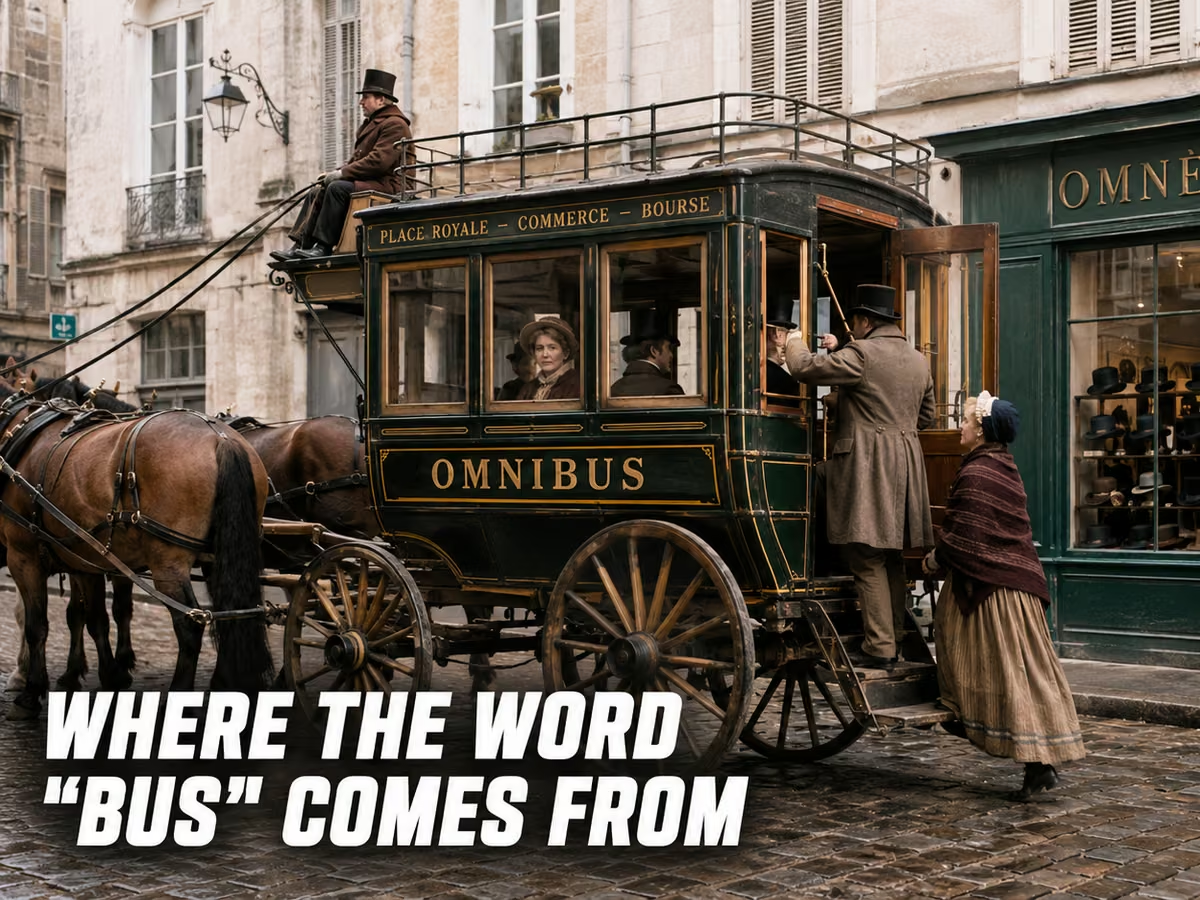
Passengers got on and off all along the route and mostly ignored the baths, so Baudry abandoned the bathhouse and ran the carriages as a business of their own. As the Library of Congress folklife blog lays out, the popular explanation for the name is that the stop sat outside a hat shop belonging to a man called Omnès, whose sign read Omnès Omnibus — "Omnès for everyone," a pun on Latin. Riders started calling the service the omnibus, and it stuck.
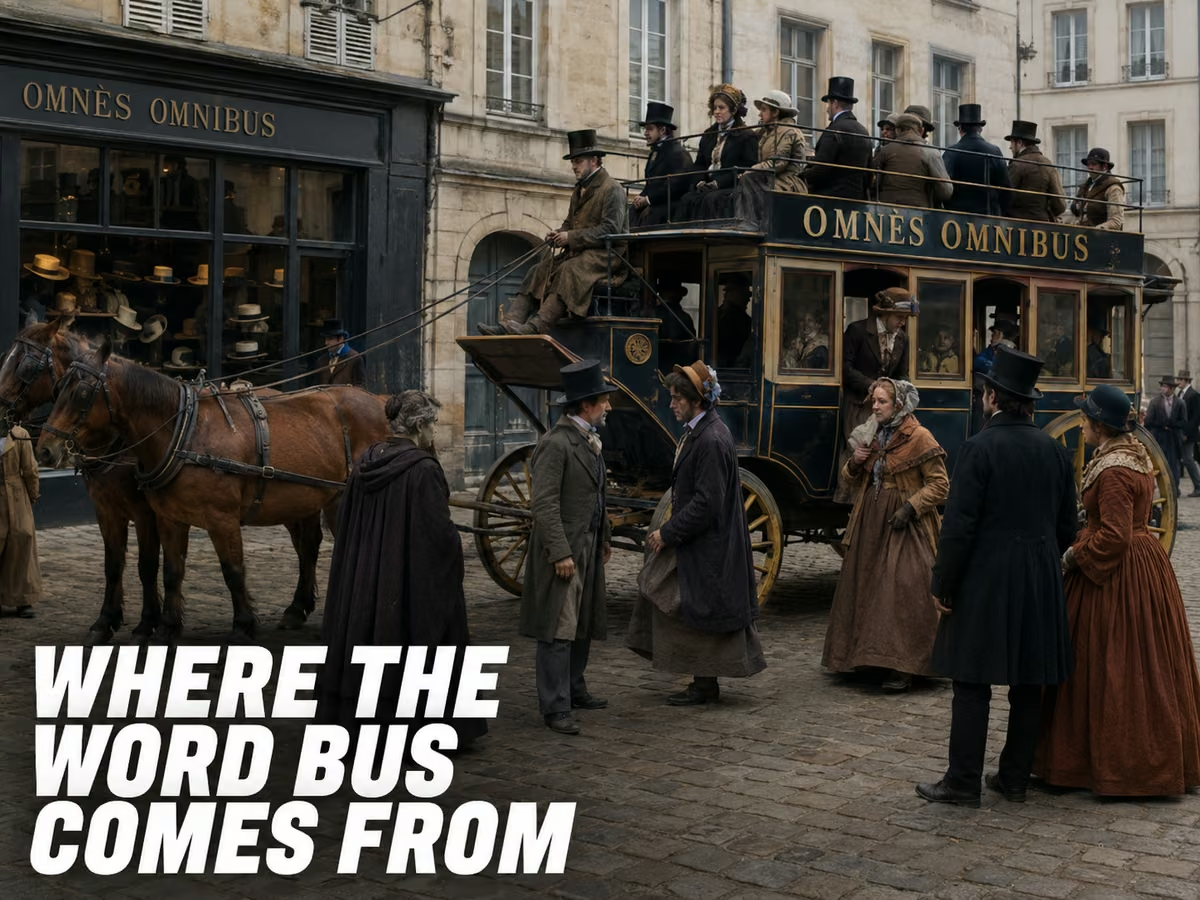
Historians don't all accept that story. The same Library of Congress piece surfaces a competing account from 1892, given by the son of Baudry's own accountant: the carriages were originally painted white and branded after a popular opera, and the name was changed to omnibus at a meeting because the whole point was that the vehicle was open to men, women, and children of every class. Latin for "for all."
Either way, English speakers had shortened it to bus within a few decades.
"Omnibus" means for all — one vehicle, one fare, the whole group. That idea is still the reason a group rents one bus instead of splitting into six cars.
London, 1829: The First Bus Route Anyone Could Hail
George Shillibeer was a London coachbuilder who had worked in Paris and seen the French version up close. On July 4, 1829 he put two of his own vehicles on the road between the Yorkshire Stingo pub in Paddington and the Bank of England, drawn by three horses abreast, carrying 22 passengers, one shilling for the whole run.
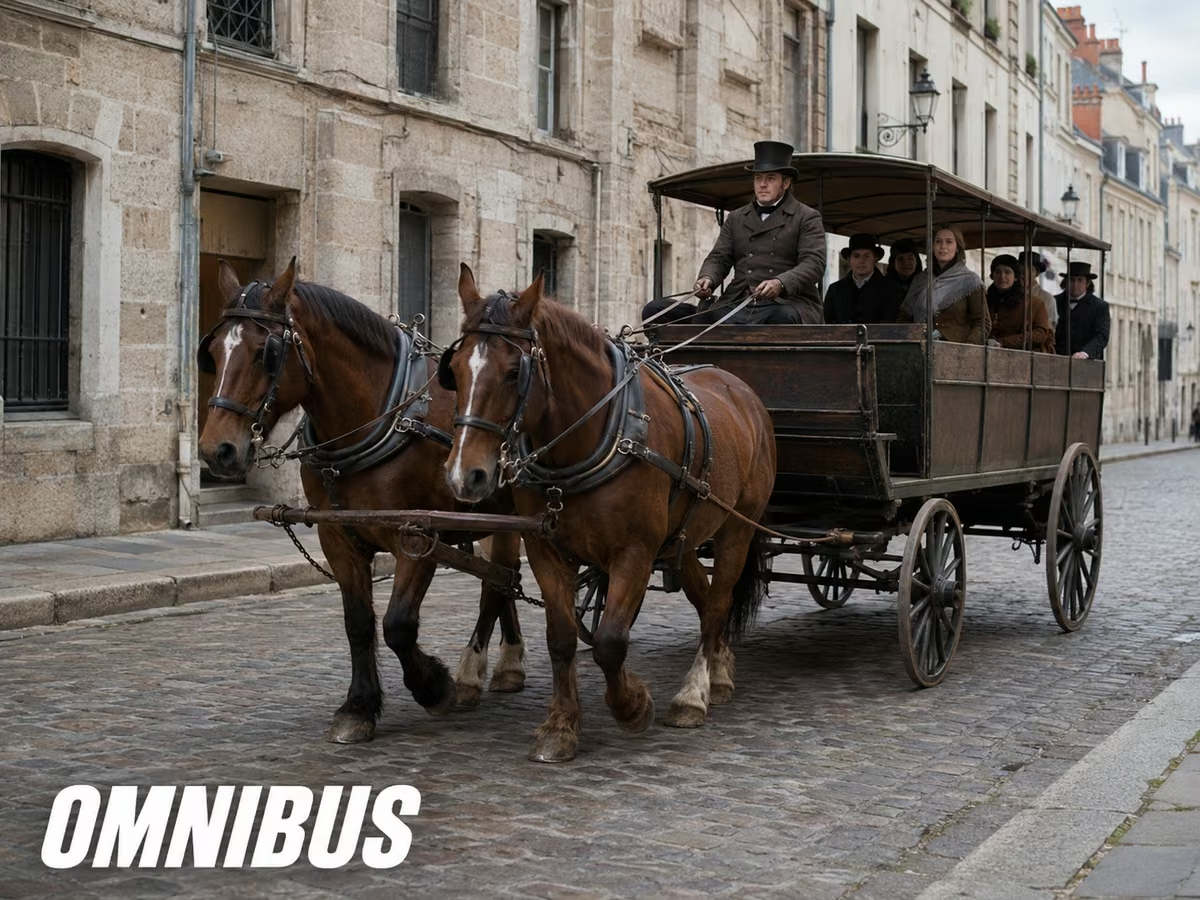
The innovation was the rules, not the vehicles. According to the London Transport Museum's history of the horse bus era, Shillibeer's service differed from the stage coaches already on those roads on four counts. A strict timetable.
No advance booking. Flag it down anywhere along the route. A conductor collecting fares.
That's still how public transit works.
Everything Shillibeer invented was built to serve strangers on a fixed line. A private group rental works the opposite way: the group sets the route, the pickup time, and the stops, and nobody else gets on. That's the difference between a charter bus and a public route or a stack of rideshares for a wedding block or a corporate offsite.
The group transportation services page covers how those bookings work.
The First Motor Bus Ran in 1895 and Was Dead by Christmas
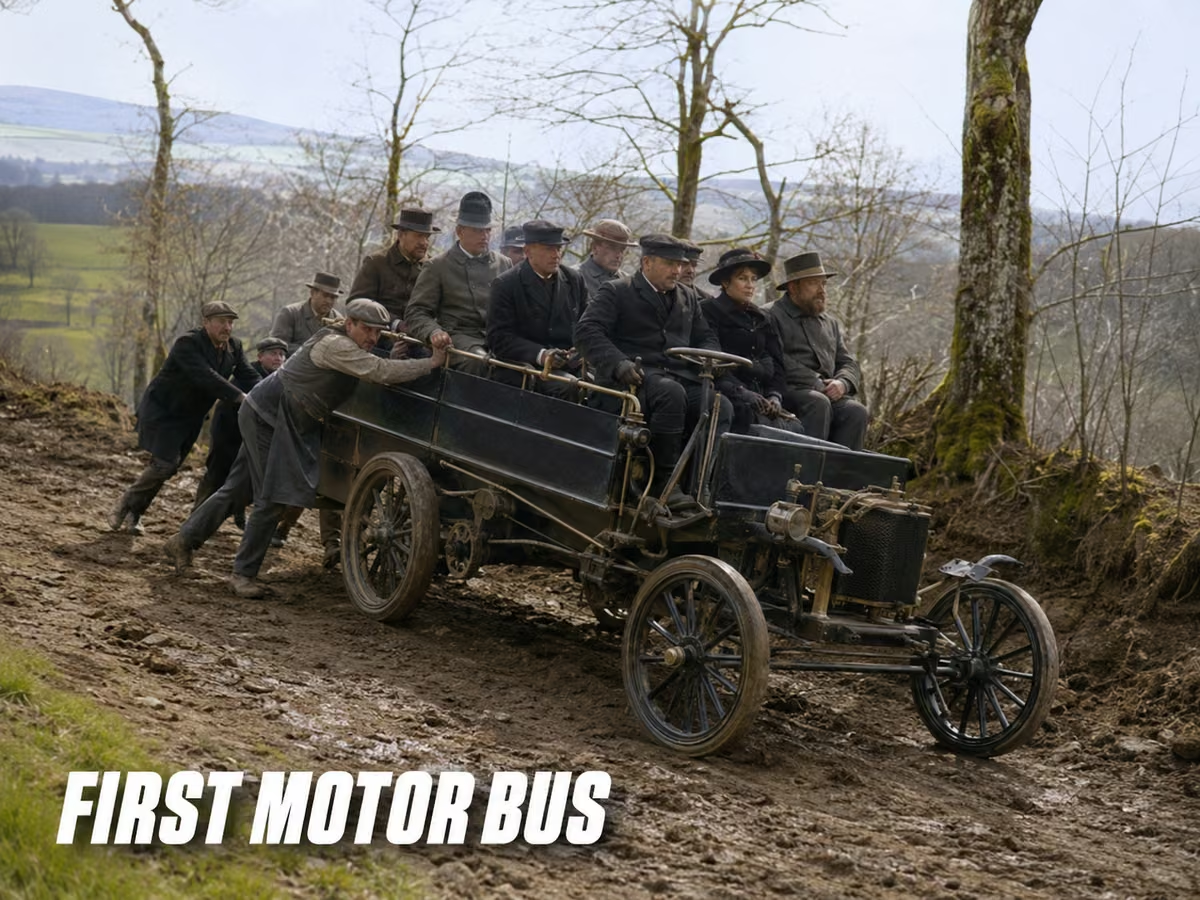
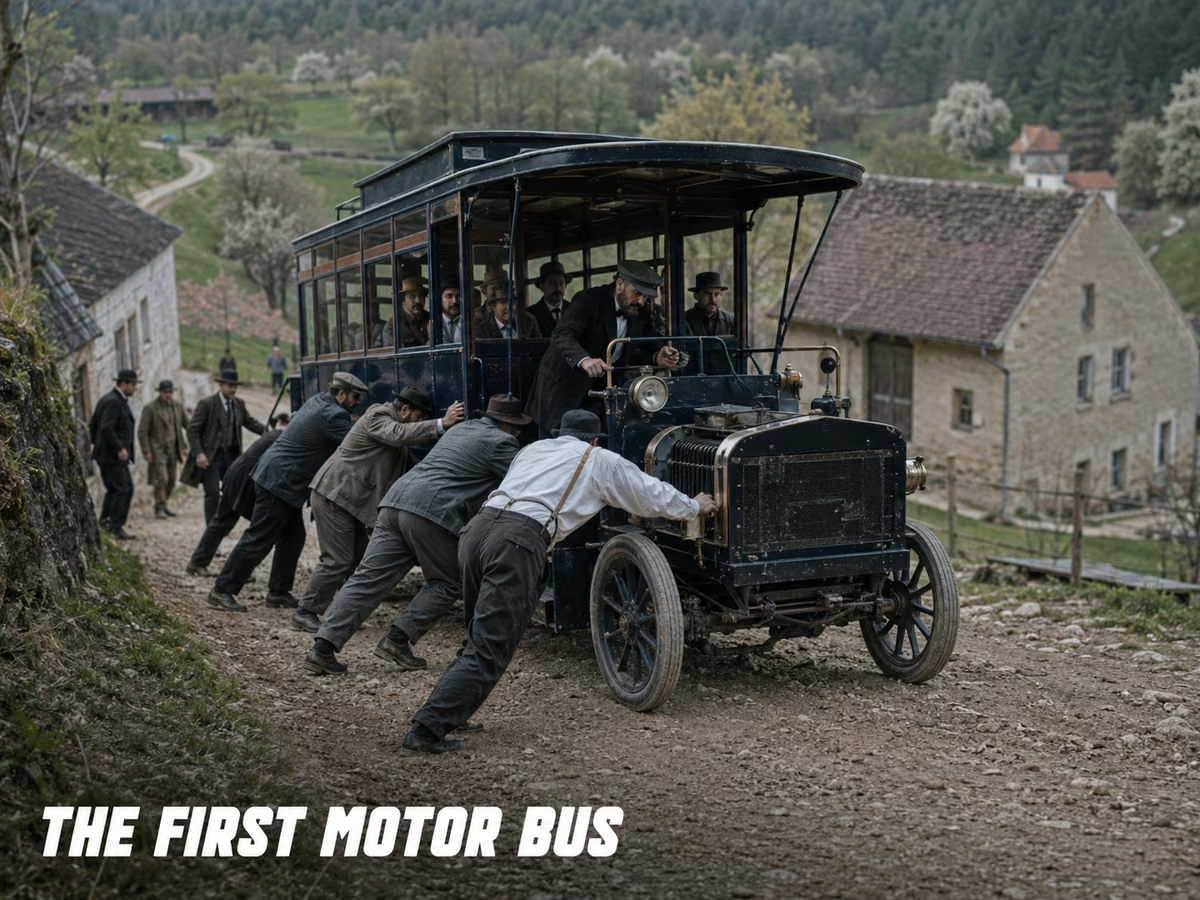
On March 18, 1895, the Netphener Omnibus-Gesellschaft opened the world's first motorized bus line, running roughly 15 kilometers between Siegen, Netphen, and Deuz in the German region of Siegerland. The vehicle was built by Carl Benz. Per the Mercedes-Benz public archive record of the first motor-powered omnibus in regular service, it made the first run at 6:26 in the morning, carried eight passengers behind a 5-horsepower single-cylinder engine, took an hour and twenty minutes — and on the steepest section, everybody had to get out and push.
It ran about nine months. Breakdowns, parts delays, and winter roads finished it, and the line shut down in December 1895 after carrying somewhere north of ten thousand passengers. The first bus company in history went broke on hills and reliability.
The failure left the two questions every quote still starts with: does the vehicle suit the terrain and distance, and does its size match the group. Answering them takes about a minute, on the quote form or at 833-458-7001.
1914: An Unsold Car, Two Miles of Road, and 15 Cents
The American group transportation industry started because a man couldn't sell a car.
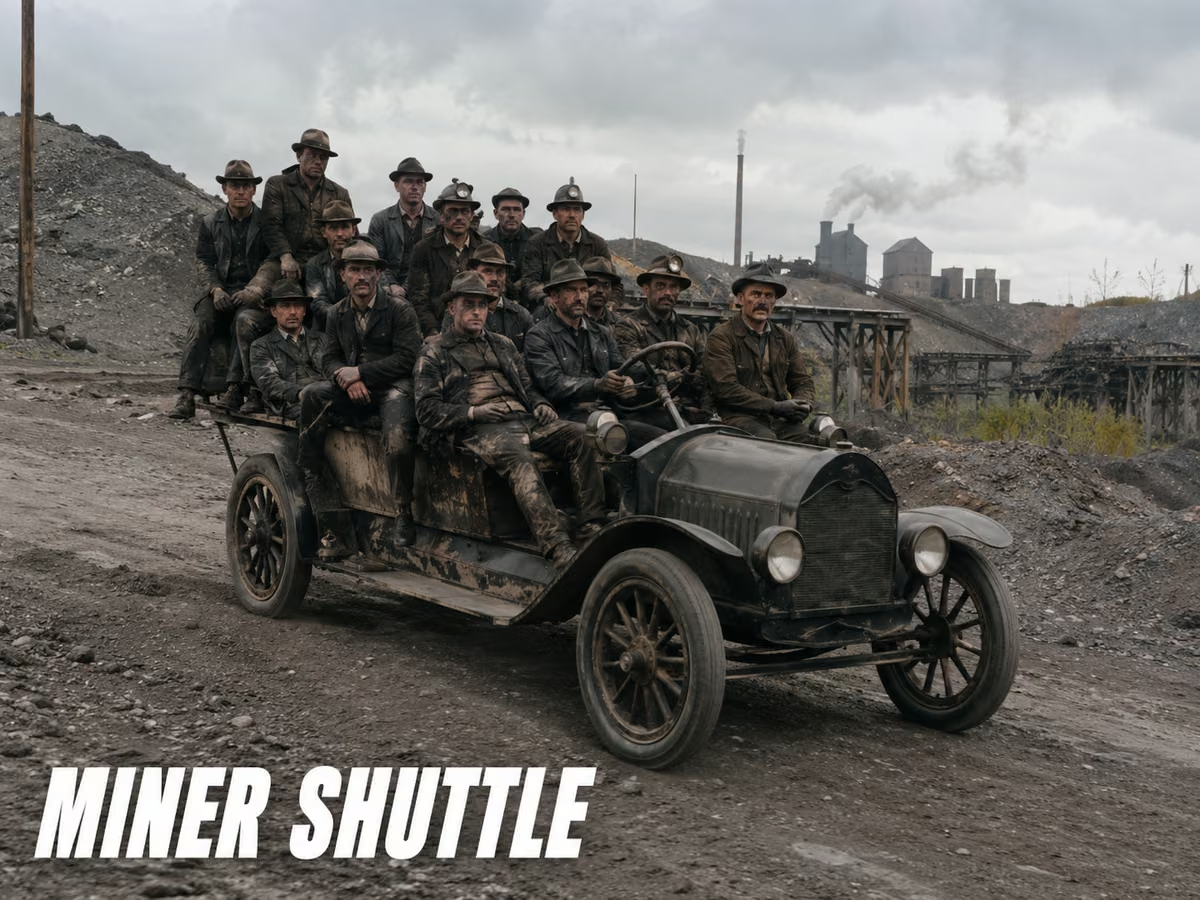
Carl Eric Wickman, a Swedish immigrant, was a former driller turned failing car salesman in Hibbing, Minnesota. In 1914 miners there were walking two miles from their homes in Alice to their jobs in the iron mines, so Wickman used a Hupmobile to carry them instead: 15 cents one way, 25 cents round trip, according to MNopedia's account of the Hibbing mine runs. Demand outran what one man and one car could handle almost immediately.
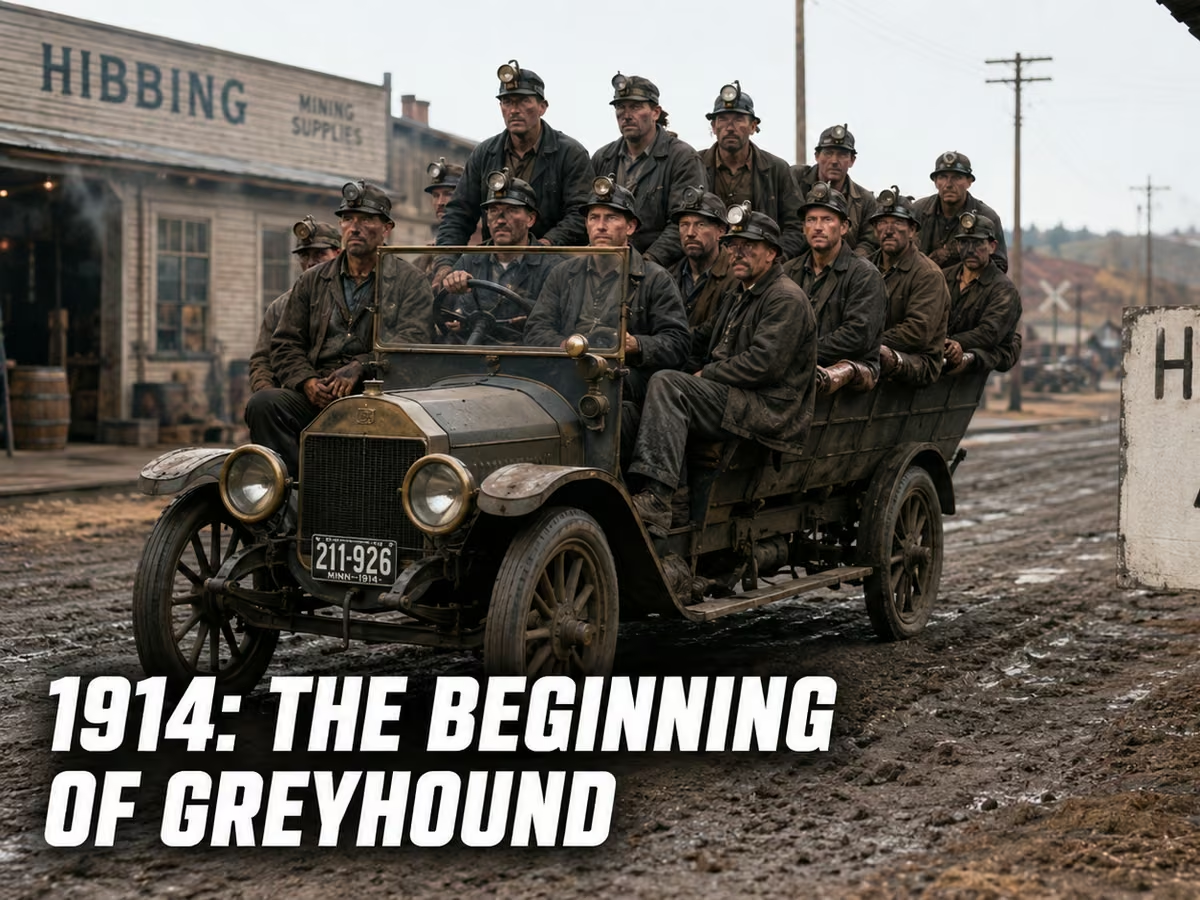
Wickman brought in partners, merged with a competitor, and the operation became the Mesaba Transportation Company, which grew into Greyhound by the end of the 1920s. The whole modern business — intercity lines, fan buses, tour operators, the network of companies whose vehicles you compare on this site — traces back to workers who needed to get somewhere together and couldn't afford to go separately.
For a club or museum group making that run from the Twin Cities, a Minneapolis bus rental covers the whole day on one quote instead of five separate cars.
1921: When the Bus Stopped Being a Truck With Seats
For the first twenty-five years of motorized service, a "bus" meant a wooden body bolted onto a truck or car chassis. Stiff ride, high center of gravity, poor engines. Then the Fageol brothers, already building trucks and tractors in Oakland, California, did something nobody had done: they designed a bus from the ground up.
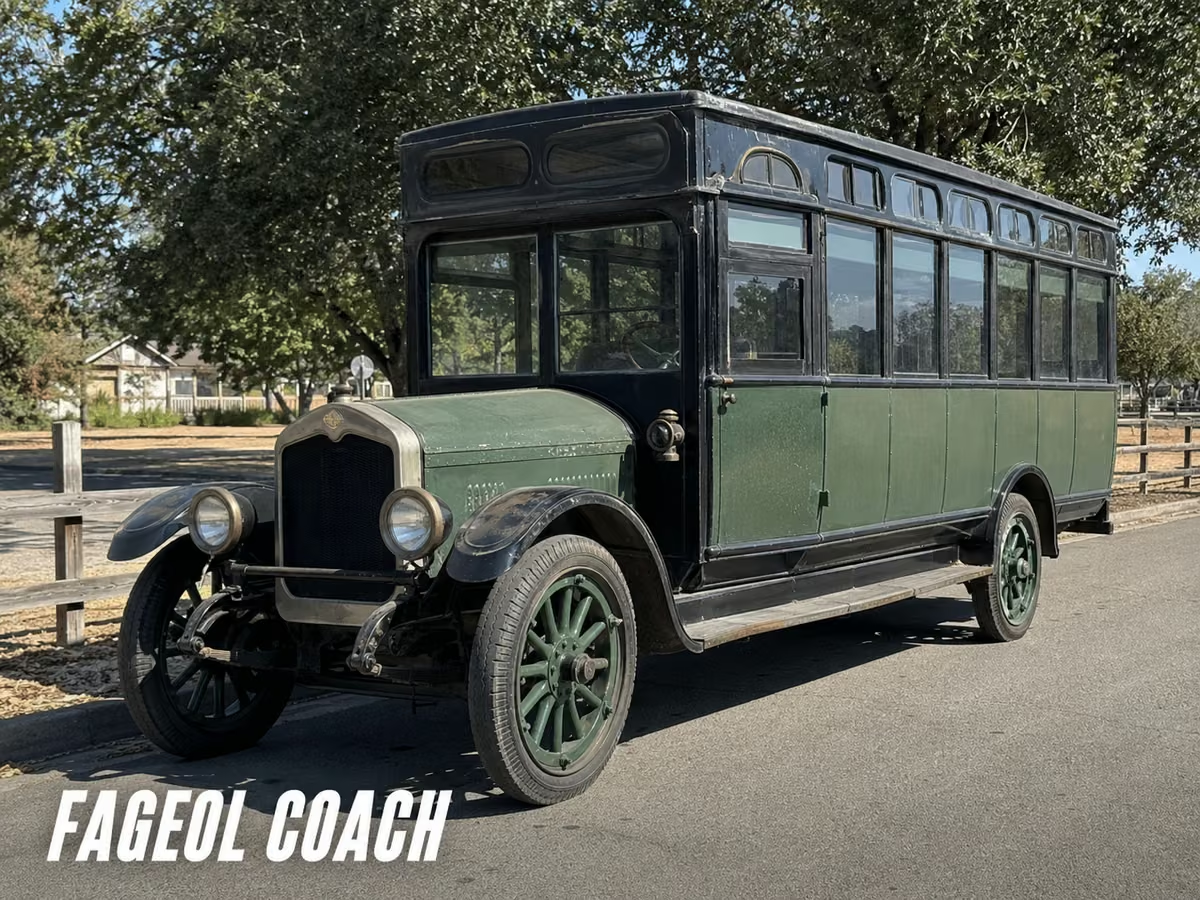
The 1921 result was, per the Pacific Bus Museum's history of the Fageol Safety Coach, the first "complete" bus — a purpose-built chassis with a wide track and a low center of gravity, purpose-built springs and axles, hydraulic braking, and Fageol's own body on top. The floor sat about 21 inches off the ground so people could actually get on. Early versions had a separate door for every bench; within a few years Fageol had settled on the single center aisle every bus still uses.
Around 2,500 were built, and a handful survive, including examples at the Pacific Bus Museum in Fremont, California and the AACA Museum in Hershey, Pennsylvania.
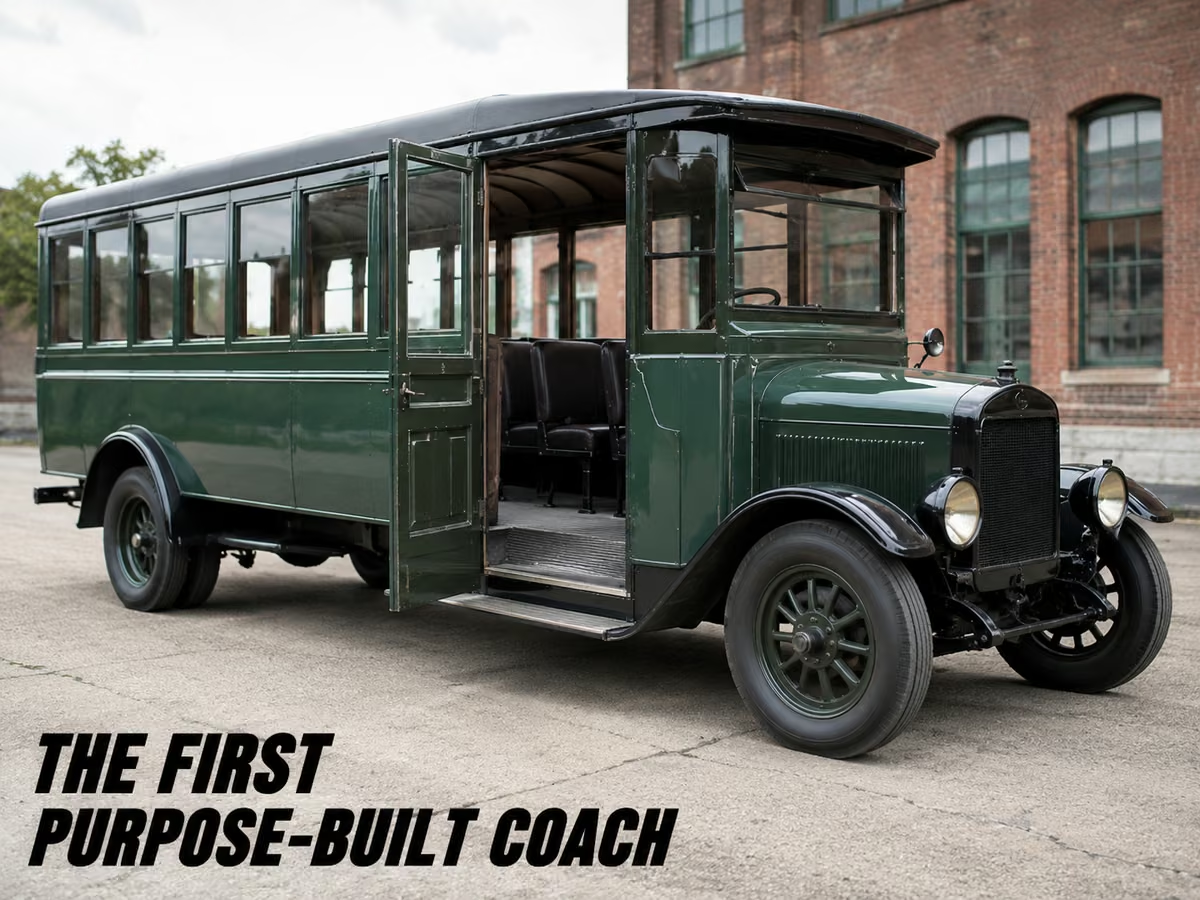
Fageol also renamed the thing. "Safety Bus" became "Safety Coach" as a marketing move, meant to imply something better than a bus — and that's why, a hundred years later, the over-the-road vehicle is still called a coach.
The 1921 split still shows up on a modern quote. A 40-to-56-passenger charter bus is a purpose-built vehicle in the Fageol tradition, engineered around passengers. A minibus is still, structurally, the older idea: a passenger body built onto a commercial cutaway chassis.
Neither is worse; they're built for different jobs, which is why a 15-to-35 passenger minibus gets picked for tight downtown streets and hotel loops, and a 40-to-56 passenger charter bus gets picked for the 200-mile day.
1939: Why School Buses Are Yellow
Before 1939 there was no such thing as a standard school bus. Frank W. Cyr, a professor at Teachers College, Columbia University, spent the late 1930s surveying how American children actually got to school and found them riding in trucks, in buses of every color, and in at least one district, in horse-drawn wheat wagons.
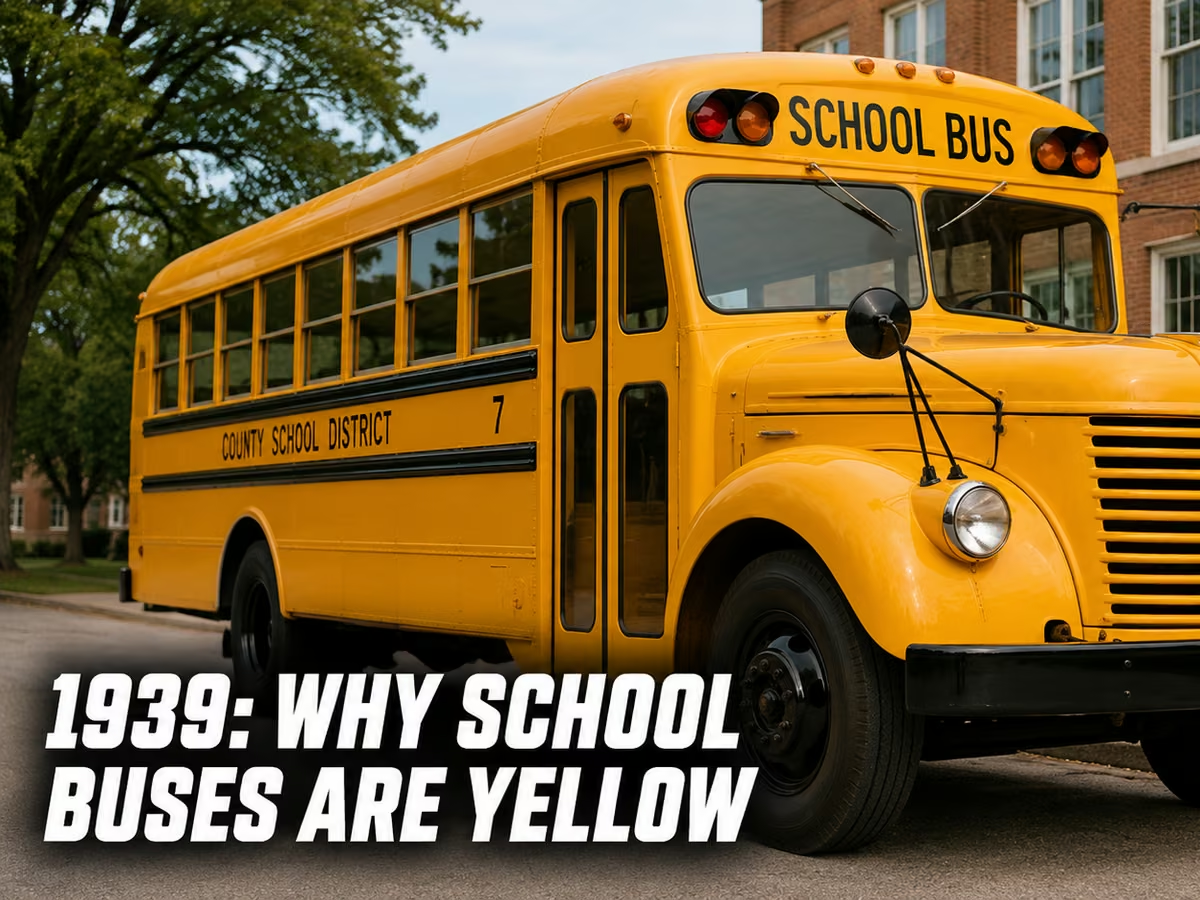
In the spring of 1939 he convened transportation officials from all 48 states, plus bus manufacturers and paint companies, for a seven-day conference funded by a $5,000 grant. As Teachers College tells the story, the group produced the nation's first set of school bus construction standards — 42 pages covering axles, batteries, emergency brakes, the inside height of the passenger compartment, and, yes, the color. They hung strips of paint on the wall and argued until they had it.
The winner was christened National School Bus Chrome, now called National School Bus Glossy Yellow. It was picked because it stands out at a distance and in bad weather. Smithsonian magazine's account counts the color as one of 44 standards the conferees voted on, and notes they hung 50 shades, from lemon yellow to deep orange-red, before the vote.
Most of those 44 specifications have been superseded since. The color never moved.
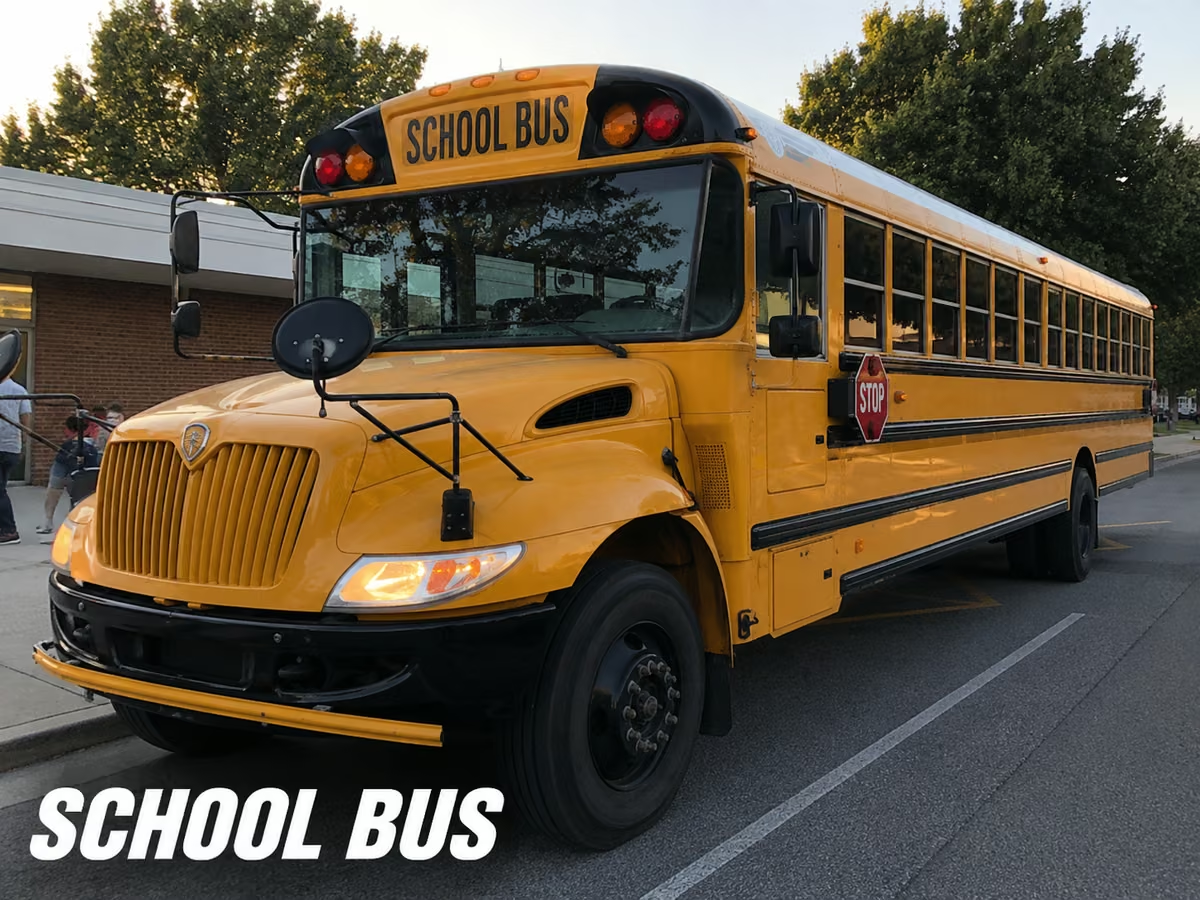
The 1939 standards were written around the daily neighborhood route: short runs, bench seats, no luggage space, no restroom. Fine for what it was built for, wrong for a 250-mile trip to a state competition. That's why so many school event bus rentals end up on a charter bus instead — reclining seats, overhead bins, deep bays underneath for equipment and instrument cases, and a restroom on board.
The charter bus amenities guide lists what comes on one.
1955: The Most Important Bus in American History
On December 1, 1955, Rosa Parks refused to give up her seat to a white passenger on a Montgomery, Alabama city bus, defying the segregation rules then enforced on Montgomery buses. The man at the wheel, James F. Blake, had her arrested, and the arrest set off the Montgomery Bus Boycott and helped ignite the Civil Rights Movement.
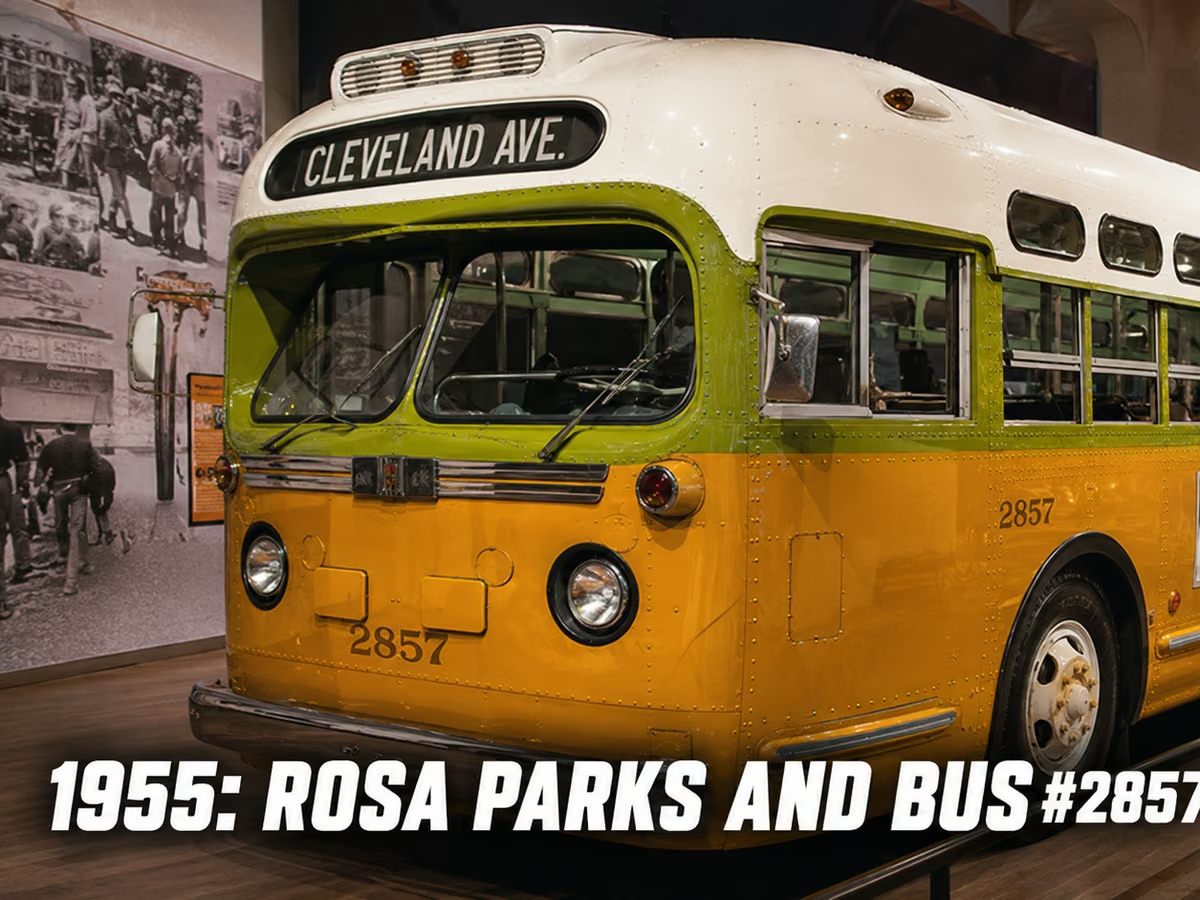
The bus itself nearly vanished. Nobody recorded its number officially. It was retired in the early 1970s, sold, and spent decades rusting in a field in Alabama as a storage shed for lumber and tools.
What saved it was a scrapbook: a Montgomery bus lines manager named Charles H. Cummings had clipped newspaper articles during the boycott, and beside the story of the arrest he had written Blake/#2857. The Henry Ford's account of acquiring and restoring the bus describes the forensic work that followed — verifying the scrapbook, interviewing people present in 1955, sending a conservator to Alabama — before the museum bought the wreck in 2001 and restored bus #2857, a 1948 GM transit coach, back to its 1955 condition. It has been on display in Dearborn, Michigan since 2003, and you can sit in it.
School groups, church groups, and history clubs visit Dearborn year-round. Groups coming from across the metro can price the run as a Detroit bus rental on one quote.
Why Your Charter Bus Is 45 Feet Long and Has Bays Underneath
Two decisions made in the 1950s shaped almost everything on a modern charter bus quote.
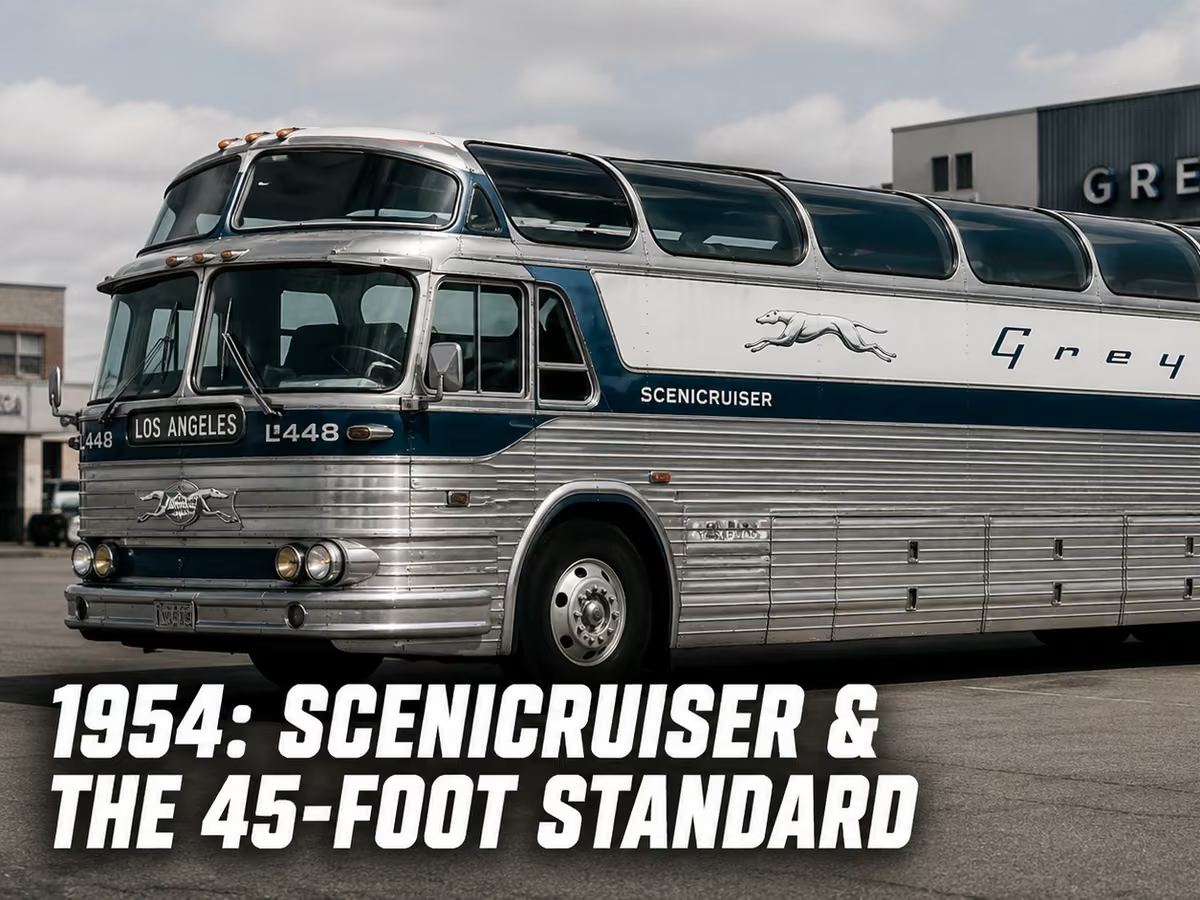
In the early 1950s Greyhound wanted a flagship. The first prototype, styled by industrial designer Raymond Loewy, was a true double-decker — and it was scrapped, partly because it was too tall for Greyhound's own garages and didn't have enough room for the luggage of 50 people. The replacement idea was a split level: the wheel and controls plus ten seats down low at the front, 33 seats up on a raised rear deck, a restroom at the back of the lower level, and an enormous baggage compartment tucked underneath the raised section.
That became the GM PD-4501 Scenicruiser, built exclusively for Greyhound from 1954 to 1956, 1,001 of them, with air-ride suspension, air conditioning, roughly 344 cubic feet of underfloor baggage space, and 43 seats. The Pacific Bus Museum, which keeps two Scenicruisers, records the rest of the saga: the original twin-engine setup was underpowered, and nearly the entire fleet was torn down and repowered with a single larger engine in 1961 and 1962.
The second decision was about length. Through the early 1950s most states capped buses at 35 feet, so Greyhound built a 40-foot tandem-axle prototype and used it to lobby the states into lifting that ceiling. It worked, state by state, and the ceiling kept climbing until 45 feet settled in as the length every over-the-road builder designed to.
A modern coach from MCI, Prevost, Van Hool, or Temsa runs 45 feet because that's where the market standardized seventy years ago. The number is a fossil, and the seat rows were filled in to match.
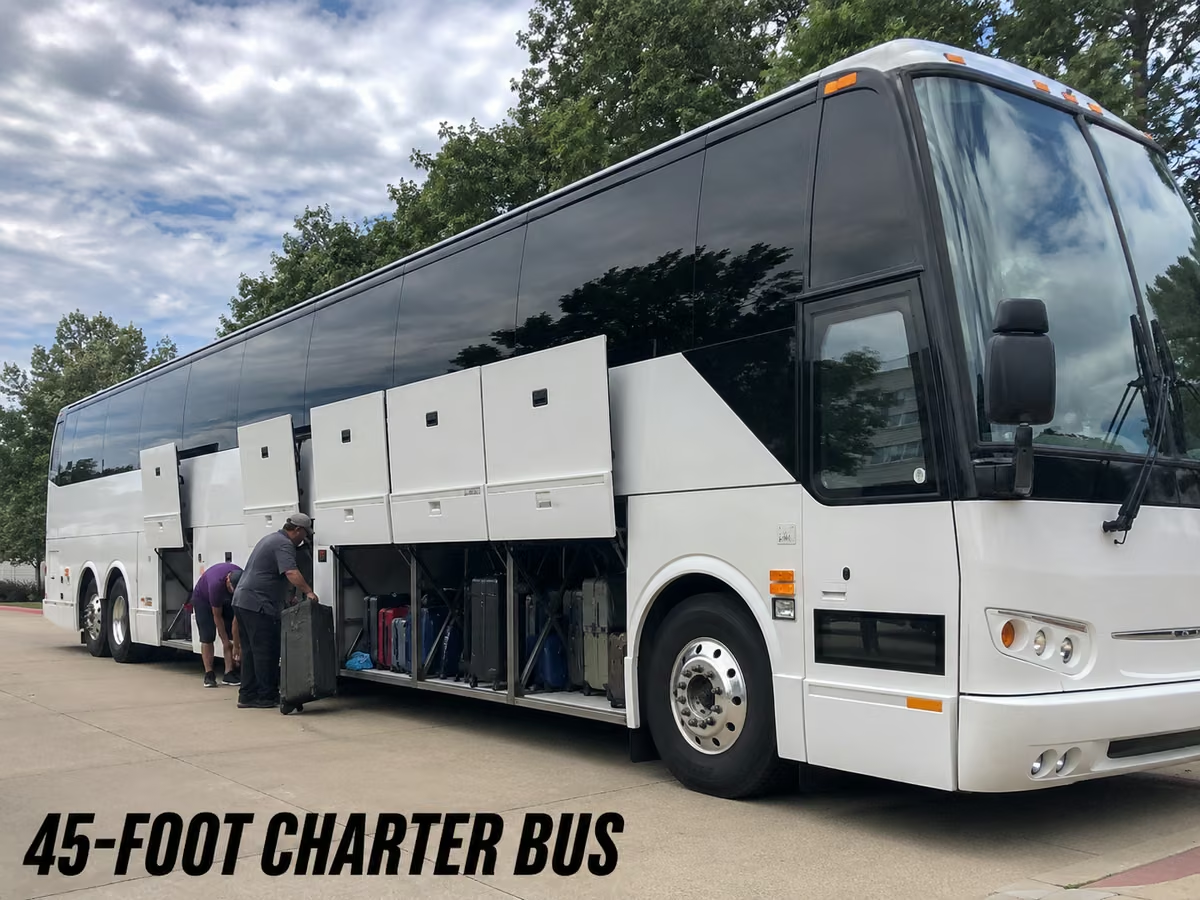
Forty-five feet is why the largest vehicle on a quote seats 56. Not a marketing round number — a length the industry settled on in the 1950s. That single dimension is why charter bus seating capacity tops out where it does, and why a 70-person group is quoted two vehicles rather than one.
The 45-foot length has a second consequence: a 45-footer needs a straight stretch of curb, a wide radius to turn out of it, and clear overhead. Cul-de-sacs, porte-cocheres, and steep driveways defeat it, so describe the pickup address and name a wide cross street as a fallback.
The engineering underneath is far better now, and the builders have changed hands more than once — the current lineup is covered in the roundup of charter bus manufacturers. The layout has barely changed in seventy years.
Where the Party Bus Came From
The party bus has a different bloodline, and it starts with musicians.
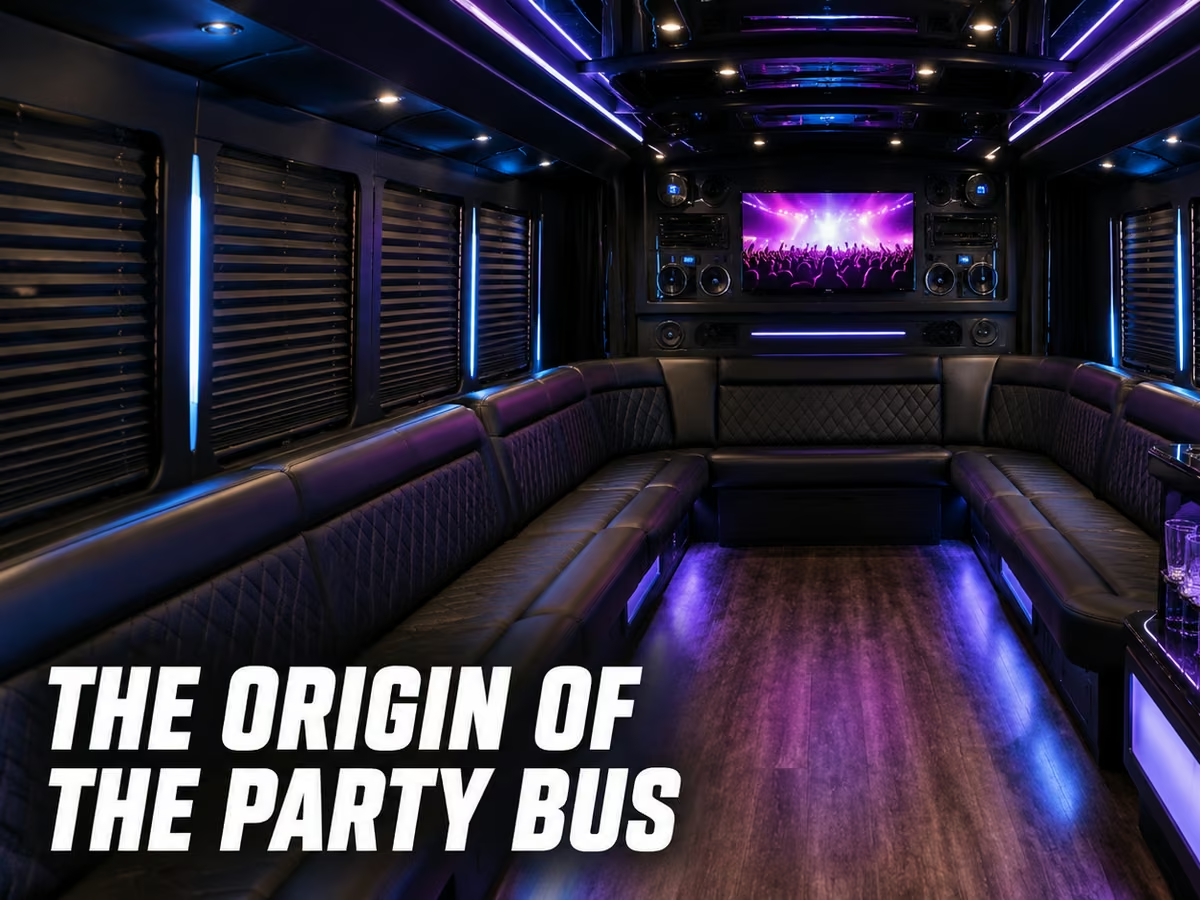
The account the limousine trade tells on itself is that the first stretch was built around 1928 by the Armbruster coach company in Fort Smith, Arkansas — long, multi-door vehicles built to move a band leader, the band, and all their equipment between engagements. They were nicknamed big band buses, and Glenn Miller's and Benny Goodman's outfits are the names always attached. This is industry lore more than documented history, so the date is approximate.
Either way, the stretch began as a working vehicle for a group that traveled together and carried gear, not as a status object. The glamour came afterward.
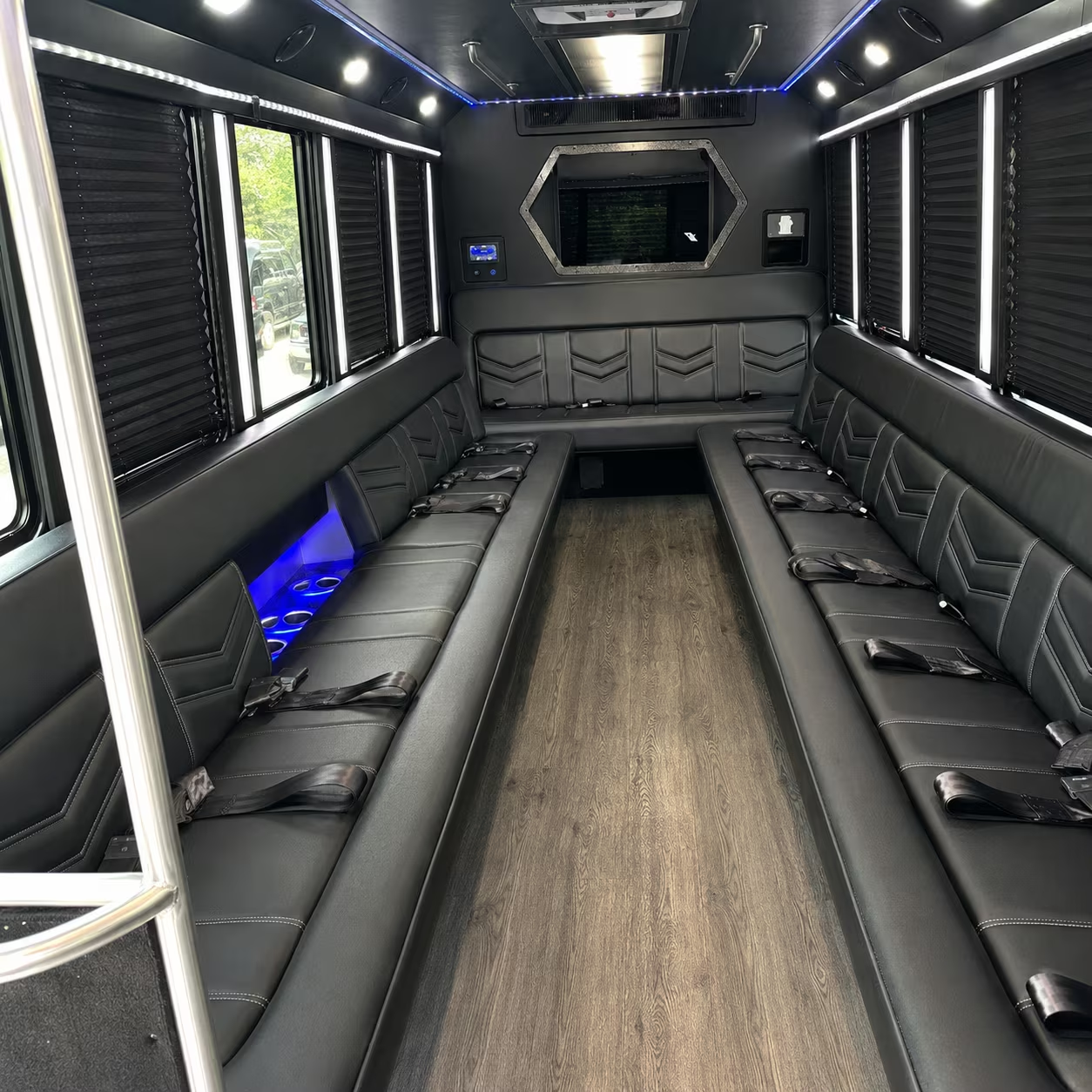
The modern party bus took the idea further. Instead of a stretched car, builders take a bus or cutaway shell and rebuild the interior around the group rather than the road: perimeter seating so everyone faces each other instead of the seat back in front of them, color-changing LED lighting, a premium sound system, flat-panel screens, and an open floor in the middle. That inward-facing layout is the one real structural break from every other bus.
The explainer on what a party bus is covers it in full, and the guide to party bus amenities lists the current features.
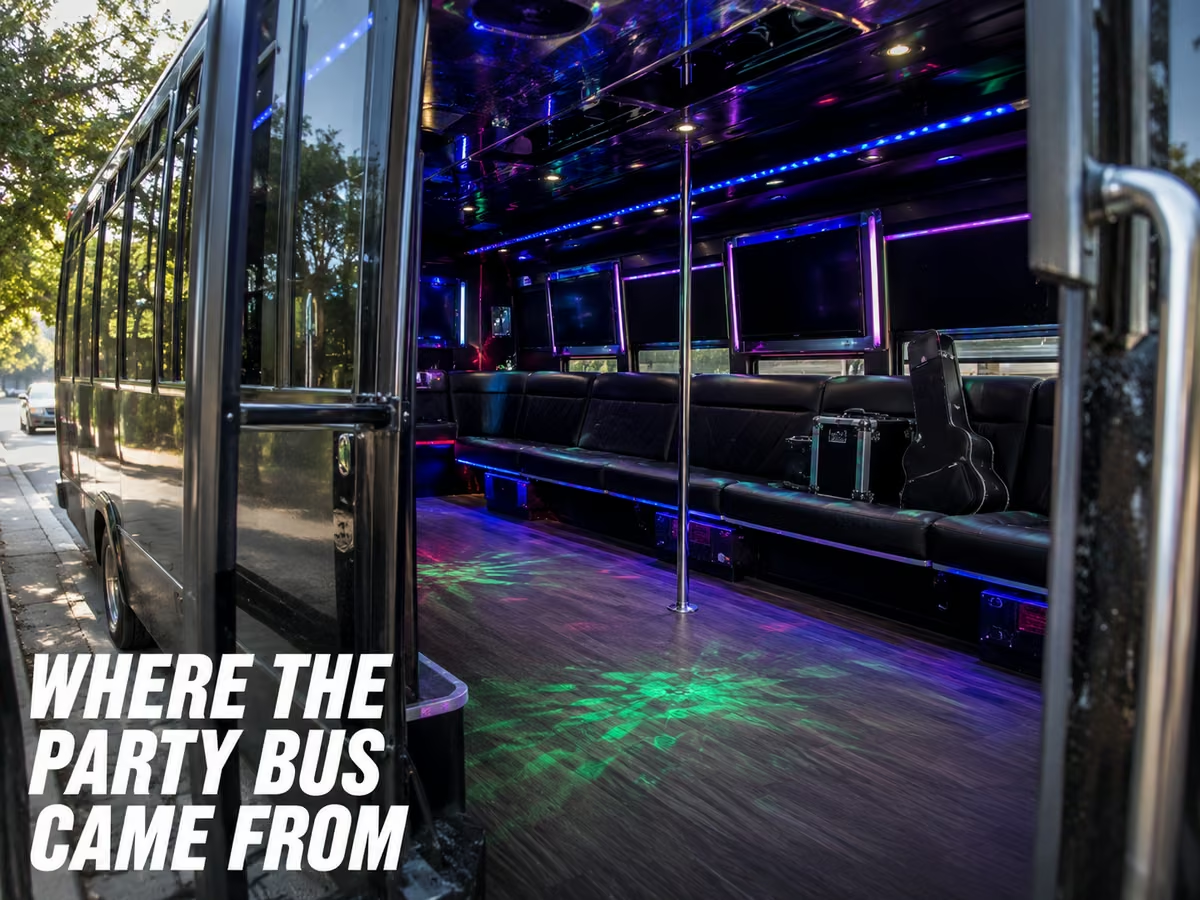
The conversion trade that grew up around it is why party bus manufacturers are a different set of companies from the ones building 45-foot coaches. And the painted lettering on Shillibeer's 1829 omnibus — OMNIBUS in huge letters down both sides — is the direct ancestor of the vinyl work covered in the bus wrapping guide. Buses have been advertising themselves on their own flanks since the first week.
The Bus Is Going Electric Again
The electric bus gets treated as new. It's the oldest motorized bus there is.
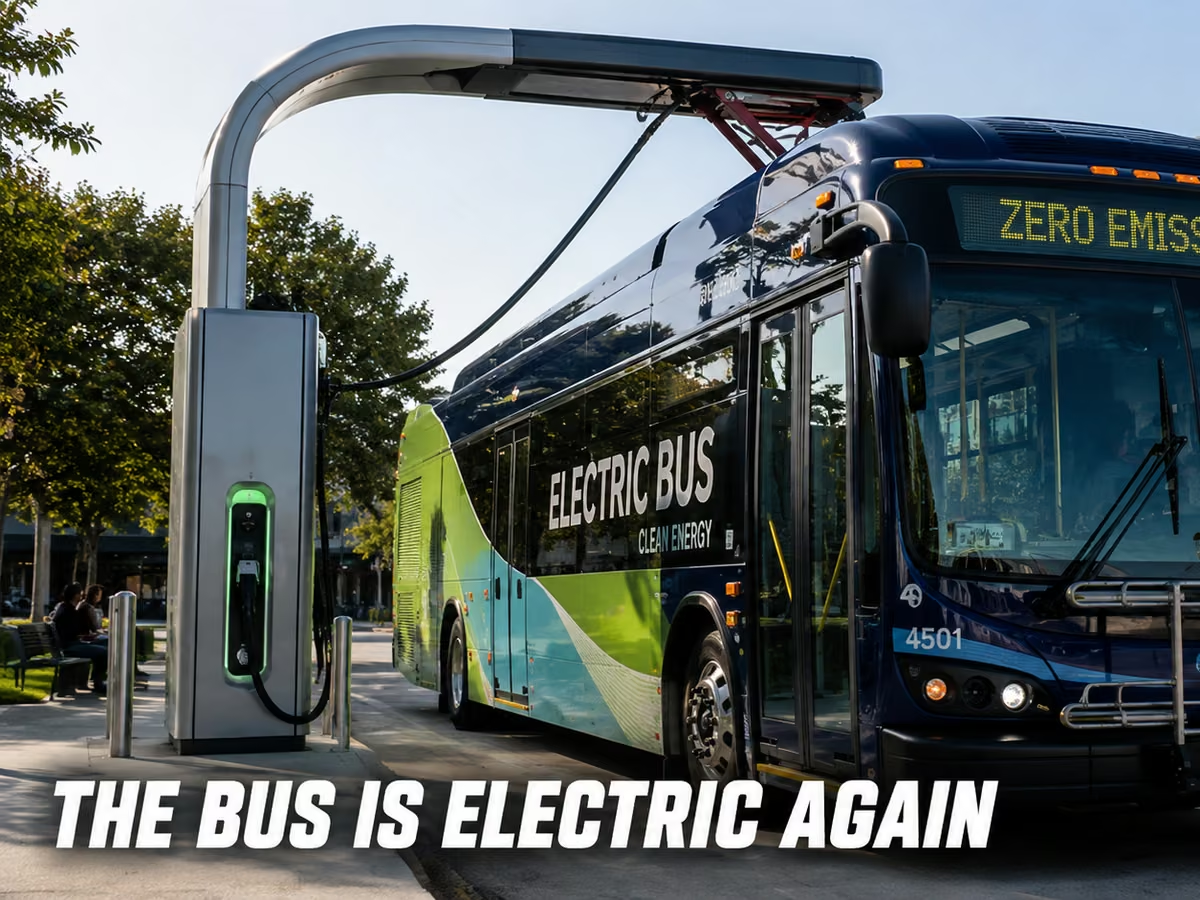
In 1882 — thirteen years before the Benz line in Siegerland — Werner von Siemens demonstrated the Elektromote near Berlin: a converted carriage drawing 550 volts from overhead wires through a small trolley car running along them. It operated from April 29 to June 13 that year on a 540-meter test track, and then the track was pulled up. The idea outlasted the demonstration; trolleybuses ran in cities worldwide for the next century, and the "trolley" in trolleybus is that little contact car.
Another branch came later. In 1946 an engineer at Maschinenfabrik Oerlikon designed the gyrobus, which stored energy in a flywheel spun up to 3,000 rpm at charging posts along the route, then coasted several kilometers on the stored spin. First commercial service opened in Switzerland in October 1953.
It worked, it just never made money, and the last routes closed by the early 1960s. No vehicles from the original Swiss service survive.
The current wave is battery-electric, and it's moving fastest in transit. CALSTART's March 2026 zero-emission bus report counts 8,116 full-size zero-emission transit buses funded, ordered, delivered, or deployed nationwide as of July 2025, up 16% year over year — of which 7,261 are battery-electric and 855 are fuel-cell. That count bundles buses still on order with buses already carrying passengers, so it runs ahead of what's on the road.
California leads by a distance, followed by New York, Washington, Florida, and Massachusetts.
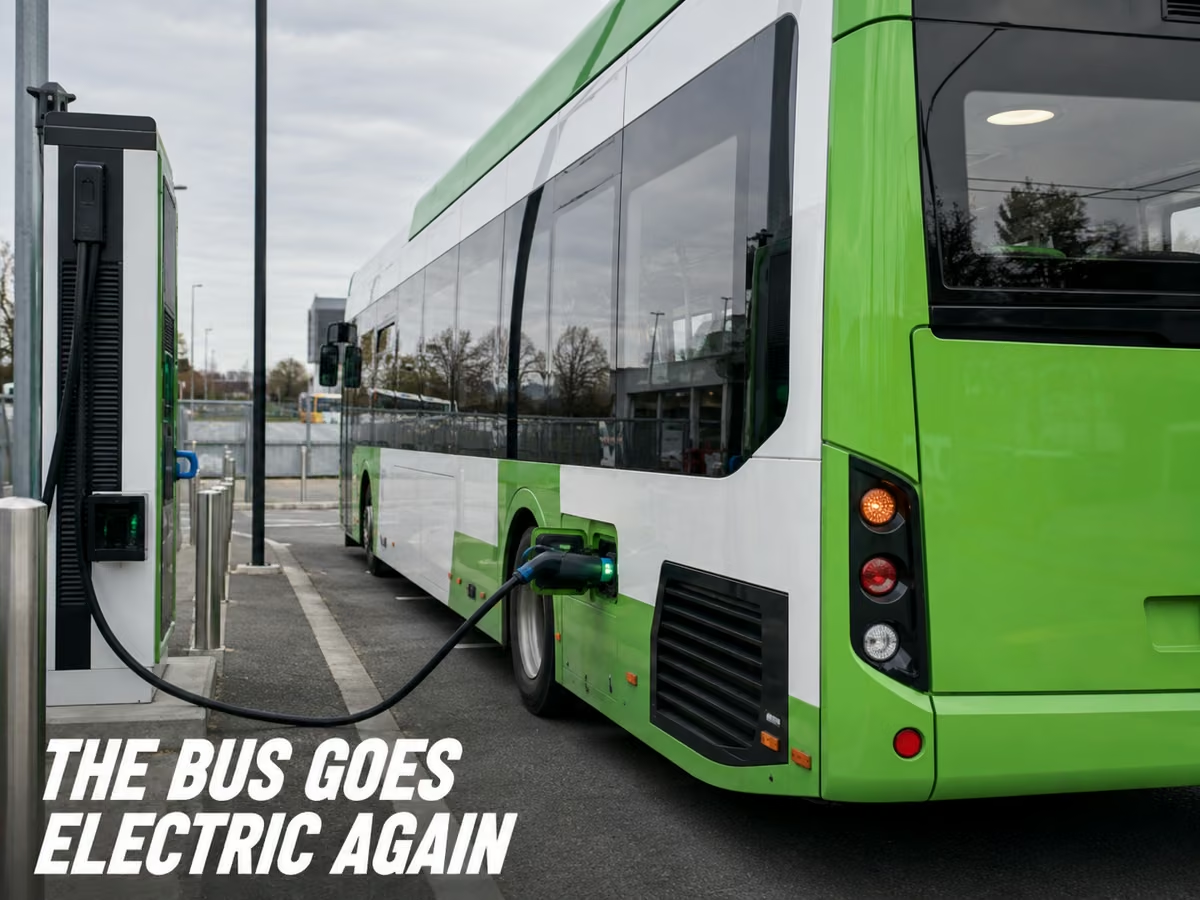
Electrification is arriving first in fleets that run fixed daily mileage and return to the same yard each night — city transit and school districts. Over-the-road group vehicles are a harder problem, because a 300-mile day with a 6-hour wait in a stadium lot is a very different energy question than a 40-mile loop. The vehicle available for a wedding or a game day is still overwhelmingly diesel, and the 1895 problem — range, terrain, reliability over distance — is still the one being solved.
What Each Vehicle on a Quote Inherited
Which ancestor a vehicle descends from predicts more about how it behaves on your day than the passenger count printed beside it.
| What you see on the quote | Where it actually came from | What it is genuinely best at |
|---|---|---|
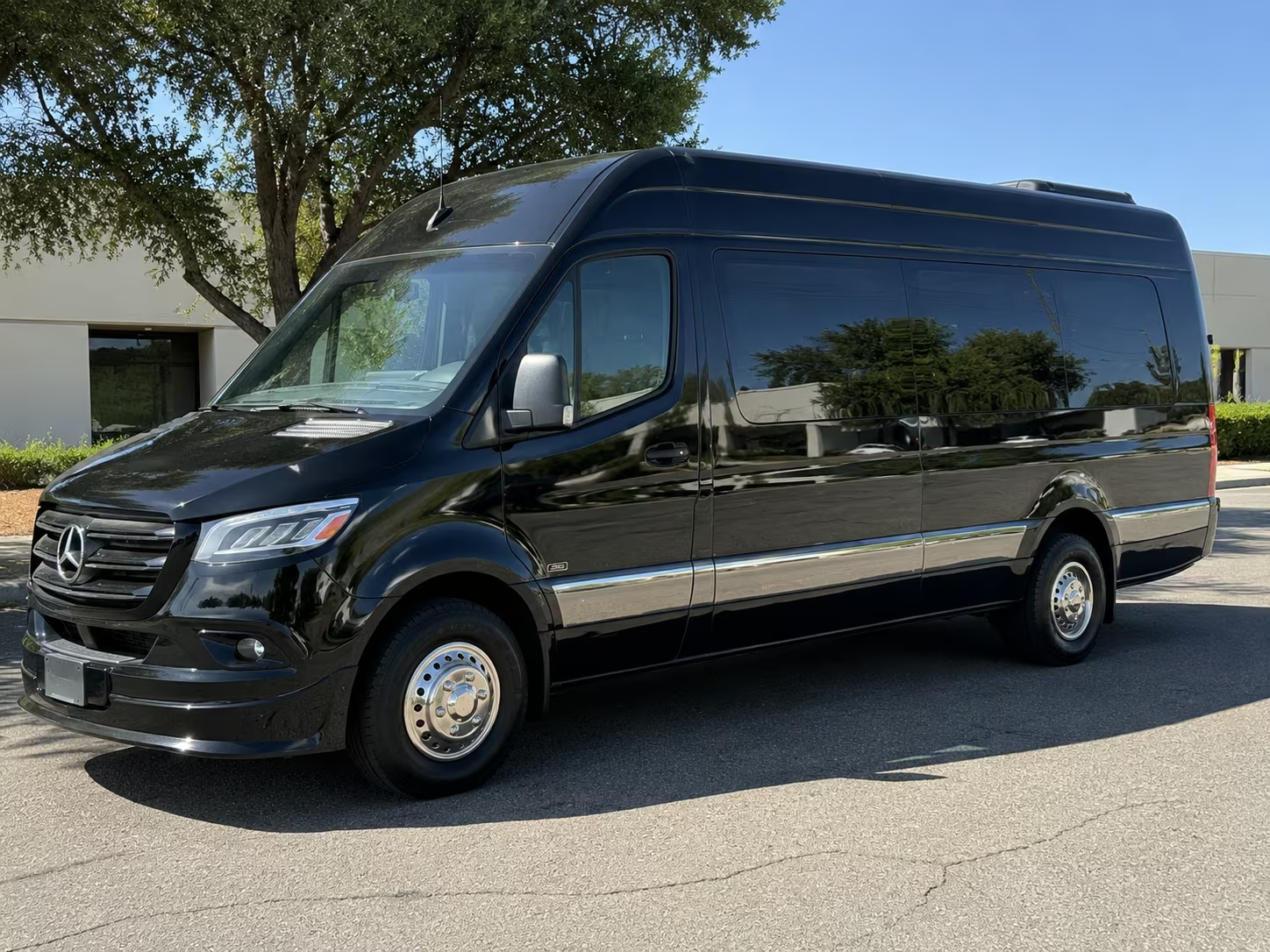
| 14-passenger Sprinter limo and the Sprinter van rental page | The 1928 stretch, built to move a band and its gear | Small groups, executive transfers, bridal parties, airport runs |
| 15-to-50 passenger party bus | The stretch idea rebuilt on a bus shell, with the seating turned inward | Nights out, birthdays, group tours with multiple stops |
| 15-to-35 passenger minibus | The pre-1921 pattern that never went away: passenger body on a commercial chassis | Tight city streets, hotel shuttles, short hops, mid-size groups |
| 40-to-56 passenger charter bus | Fageol 1921 plus Scenicruiser 1954 plus the 45-foot length the market settled on | Long distance, big luggage, conventions, sports and school travel |
| School bus | 44 standards written at Columbia in the spring of 1939 | Short daily routes, exactly what it was designed for |
The strongest argument against all of the above: none of this history should talk anyone into a bigger vehicle. A 14-passenger Sprinter costs less than a 56-passenger coach for the same hours, and for a group under 14 staying local it's the better call — quicker to load, easier to bring to the curb, cheaper. Lineage explains why the options exist.
It doesn't make the biggest one right.
Three rules follow. Match the vehicle to the distance, because that's what killed the 1895 line. Match it to the luggage, because that's why the Scenicruiser has a hump.
And match it to the headcount before anything else, because "for all" is the point of the word. Pricing ranges for each are on the party bus prices page, and the how to rent a bus guide walks through the process.
Spot Which Family a Bus Belongs To From the Photo
Fleet photos rarely come labeled with more than a passenger count, but the 1921 split is visible in every picture.
| What to look at | Body on a commercial chassis | Purpose-built coach |
|---|---|---|
| The nose | A van or truck cab: hood, grille badge | Flat front, no hood |
| The flank below the windows | Smooth sides, no bay doors — bags ride in the aisle | Long bay doors between the wheels: 200 to 400 cubic feet that takes hard cases |
| Steps at the door | Two shallow steps, low floor | Three or four steep steps over cargo |
| Windows and roof | Small or blacked-out glass, raised roof cap: a conversion | Big fixed panes at one height |
| Which way the seats point | Often perimeter benches, open floor | Forward-facing pairs, center aisle |
The seating detail is the one that costs money. If a photo shows perimeter benches and the listing claims 30 passengers, ask how many are comfortable positions for a two-hour leg — usually a few fewer than the headline. That gap is the subject of party bus capacity and, at the small end, of what a Sprinter van is.
Put These Six Things in a Quote Request
Each of these turning points becomes a line on a quote form.
| What to include | Why it changes the answer you get |
|---|---|
| Headcount, plus the number it could grow to | Moving up one size class beats adding a second vehicle late |
| Date, start time, end time | Hours move the price more than distance on local trips, and peak dates go weeks ahead |
| Every stop, in order | A ceremony, a photo stop, a reception and two drop-offs is not a there-and-back |
| What the pickup point looks like | Structures post 7-to-8-foot clearances; a Sprinter stands 8.5 to 9.5 feet tall |
| Luggage and gear in real terms | Bays that take hard cases are a feature, not a given |
| A wheelchair position, child seat, or extra legroom | Ask 48 hours or more ahead; few vehicles are configured for it, and each position replaces seats |
Those numbers look arbitrary because nobody selling a bus has any reason to explain them. Fifty-six seats reads like a marketing round number rather than the residue of a 1950s lobbying campaign over state length limits, so it feels negotiable. It isn't.
Almost every fixed constraint on a quote is an old argument that stopped being argued about, which is why the day goes better designed around them than pushed against them.
Partybus-rental.net compares quotes and connects groups with the bus companies and transportation providers serving each area. It does not own vehicles, employ anyone who drives, or operate trips, and amounts shown are example figures, not quotes — the quote moves with your date, hours, mileage and how busy that weekend is.
Frequently Asked Questions About the History of Buses
When was the first bus invented?
Two answers, depending on what counts. The first public bus service was the horse-drawn omnibus, running in Nantes, France from 1826 and in London from July 4, 1829. The first motorized bus line opened on March 18, 1895 in Germany, running between Siegen, Netphen, and Deuz with a vehicle built by Carl Benz.
It shut down before the end of the year.
Where does the word "bus" come from?
It's a shortening of omnibus, Latin for "for all." The name attached to Stanislas Baudry's horse carriages in Nantes in the 1820s. The popular story is that riders picked it up from a hat shop sign reading Omnès Omnibus at the stop; a competing 1892 account says the operators chose it deliberately because the vehicle was open to everyone regardless of class.
English speakers clipped it down to "bus" within a few decades.
Who invented the bus?
Nobody, in the single-inventor sense. Stanislas Baudry started the first sustained public service in 1826, George Shillibeer brought it to London in 1829 with timetables and no reservations, Carl Benz built the first vehicle used on a motorized line in 1895, and the Fageol brothers designed the first purpose-built bus in 1921. Each of them solved a different piece.
What is the difference between a bus and a coach?
Historically, marketing. Fageol renamed its 1921 vehicle from "Safety Bus" to "Safety Coach" to suggest something better. The distinction hardened into real meaning: in American use, "coach" generally means the over-the-road highway vehicle with reclining seats, an onboard restroom, and luggage bays underneath, while "bus" covers everything including transit and school vehicles.
On a rental quote the word you want is charter bus.
Why are school buses yellow?
Because of a seven-day conference at Teachers College, Columbia University in the spring of 1939, organized by professor Frank W. Cyr, that produced the first 44 national school bus construction standards. The color, originally called National School Bus Chrome and now National School Bus Glossy Yellow, was chosen because it stands out at a distance and in bad weather.
How did Greyhound start?
With a failing car salesman and a Hupmobile. Carl Eric Wickman, a former driller who wasn't selling cars in Hibbing, Minnesota, used one in 1914 to haul iron miners two miles between Hibbing and Alice for 15 cents one way, 25 cents round trip. That operation merged its way into the Mesaba Transportation Company and became Greyhound by the end of the 1920s.
Why are charter buses 45 feet long?
Because that's where the market settled. Into the early 1950s most states capped buses at 35 feet, so Greyhound built a 40-foot tandem-axle prototype and lobbied the states into raising that ceiling. Once it rose, the over-the-road builders standardized on 45 feet and never moved off it, and 45 feet of length is what produces the familiar 56-seat maximum.
Why do charter buses have luggage compartments underneath?
They inherited it from the 1954 GM Scenicruiser. Greyhound rejected a full double-decker design partly because it lacked luggage room, and went with a split level instead — a raised rear deck with roughly 344 cubic feet of baggage space tucked beneath it. Modern undercarriage bays are that same solution.
Where can I see the Rosa Parks bus?
At the Henry Ford Museum of American Innovation, 20900 Oakwood Boulevard, Dearborn, Michigan. Bus #2857 was found rusting in an Alabama field, authenticated partly through a bus lines manager's scrapbook notation, acquired by the museum in 2001 and restored to its 1955 condition. It has been on display since 2003 and visitors can sit inside it.
When did party buses start?
There is no clean founding date. The ancestor is the 1928-era stretch built for big band travel, and the modern version emerged from the conversion trade, which rebuilds bus and cutaway shells with perimeter seating, LED lighting, and sound systems instead of forward-facing rows. It is the only common passenger vehicle deliberately designed so the group faces each other.
Were buses ever electric before now?
Long before. The first trolleybus, Siemens's Elektromote, ran near Berlin from April 29 to June 13, 1882, thirteen years ahead of the first gasoline bus line. Switzerland even ran flywheel-powered gyrobuses commercially from 1953 to the early 1960s.
What was the first bus company?
Baudry's Nantes operation from 1826 is the usual answer for horse-drawn service, and the Netphener Omnibus-Gesellschaft of 1895 is the answer for motorized service. The Netphener line is also the first bus company to fail, closing in December of its opening year after mechanical trouble and winter roads.
How This Page Was Checked
Dates, figures, and quotations on this page come from museum and institutional sources: the Library of Congress folklife blog on the omnibus name, the London Transport Museum on Shillibeer's 1829 service, the Mercedes-Benz public archive on the 1895 Netphen line, the Pacific Bus Museum on the Fageol Safety Coach and the GM Scenicruiser, MNopedia on Greyhound's Hibbing origins, Teachers College Columbia and Smithsonian magazine on the 1939 school bus standards, The Henry Ford on bus #2857, and CALSTART's March 2026 zero-emission bus report for current electric bus counts. Where accounts conflict — the origin of the word "omnibus," the exact year of the first stretch limousine — this page says so rather than picking the tidier version. Historical figures are reported as published; figures last checked July 2026, so confirm the exact specification for the vehicle on your quote. Partybus-rental.net is a comparison and quote-request website — it does not own vehicles and does not provide the transportation itself. Corrections: contact page.
Find the Bus, Not the History Lesson
After two hundred years, the answer is the same one Baudry arrived at outside his bathhouse: one vehicle, the whole group, everyone arriving at once. Partybus-rental.net makes that part simple. Fill out one quick form in about a minute or call 833-458-7001, and compare party buses, charter buses, minibuses, Sprinter vans, and Sprinter limos from a large network of bus companies — vehicle types, features, and online rates side by side, free, no account required, no obligation, any time, any day.
Browse the full selection of bus types, check whether your area is covered on the service area page, read the common questions on the FAQ, or see how the site works on the about page. Partybus-rental.net is a comparison and quote-request website, not a bus company.